
Steroid Eye Risk Calculator
Personal Risk Assessment
Your Personal Risk Assessment
Next Steps
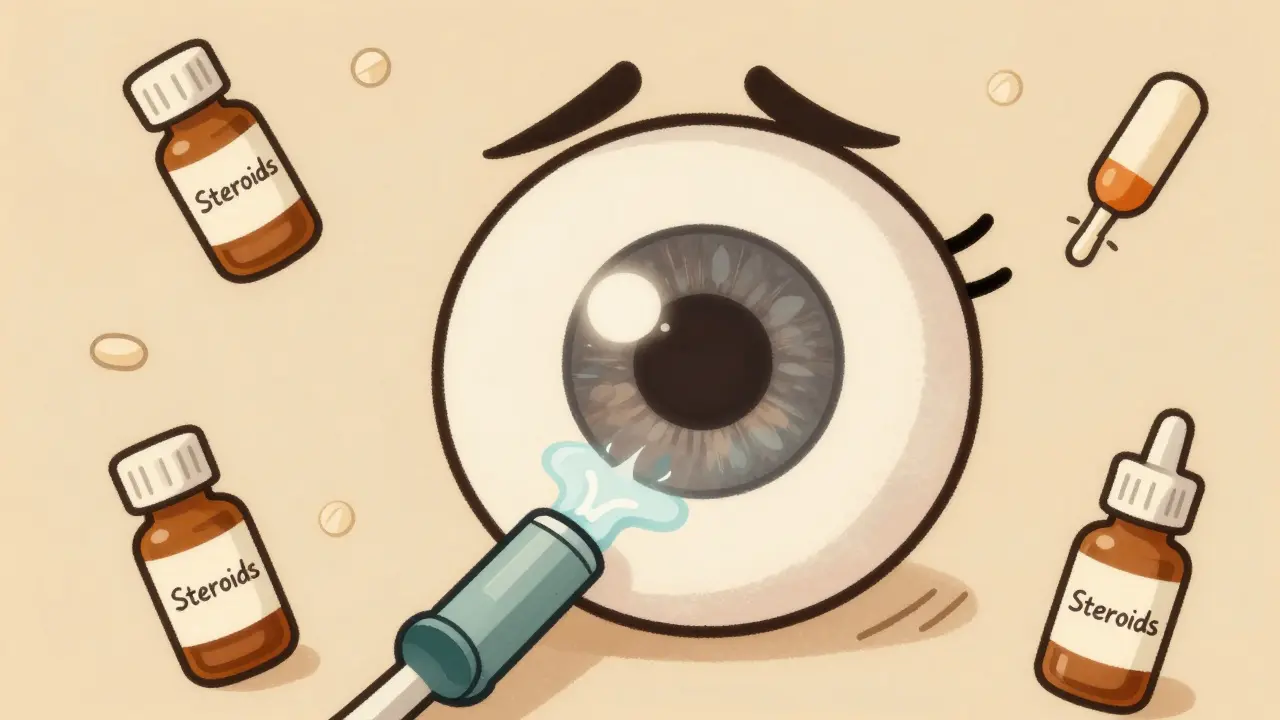
Many people take steroids for asthma, arthritis, eczema, or autoimmune diseases. They work fast. They reduce swelling. They save lives. But what most don’t realize is that even a few weeks of steroid use-whether as a pill, inhaler, injection, or eye drop-can quietly damage your eyes. Two of the most serious risks? Cataracts and glaucoma. And unlike some side effects, these aren’t rare. They happen often enough that doctors now treat them as a predictable consequence of long-term steroid therapy.
How Steroids Hurt Your Eyes
Steroids don’t just calm inflammation. They change how your eye works at a cellular level. For cataracts, the issue starts in the lens. Normally, the lens stays clear, letting light pass through cleanly. But when steroids hang around too long, they react with proteins in the lens, forming stubborn clumps. These clumps don’t dissolve. They scatter light. And the result? A cloudy spot forms right at the back of the lens-called a posterior subcapsular cataract. This isn’t the slow, fuzzy vision of aging. This is sudden. It can turn 20/20 vision into 20/80 in under six months.
Glaucoma works differently. Your eye constantly makes fluid. That fluid needs to drain out, like water through a sink. Steroids clog the drainage system. Fluid builds up. Pressure rises. That pressure crushes the optic nerve over time. And here’s the scary part: you won’t feel it. No pain. No redness. Just slowly losing side vision until it’s too late.
It doesn’t matter if you’re taking prednisone for lupus, using steroid eye drops for uveitis, or breathing in fluticasone for COPD. Any form of steroid can trigger this. Topical eye drops are the fastest route to trouble. But even a 30-day course of oral steroids can set off changes that last years.
Who’s at Risk?
Not everyone gets eye damage from steroids. But some people are far more vulnerable.
- People with a family history of glaucoma
- Those already diagnosed with glaucoma
- Patients who’ve had cataract surgery
- People with diabetes
- Anyone using steroid eye drops for more than 2 weeks
Studies show that up to one-third of people have some rise in eye pressure when they use steroids. Most of them bounce back once the drug stops. But 5% of the population? They’re ‘high responders.’ Their pressure spikes over 15 mmHg-enough to cause permanent nerve damage. And here’s the kicker: nearly 35% of steroid-induced glaucoma cases happen in people who never had eye problems before.
One patient from Bristol, who took oral prednisone for severe asthma, didn’t know anything was wrong until her optometrist noticed her lens was already clouded. She’d had no symptoms. No blurry vision. No halos. Just a routine check-up that caught it early.
How Fast Does It Happen?
There’s no single timeline. It depends on the dose, the form, and your body.
- Eye drops: Cataract risk rises after just 2-4 weeks. Glaucoma can develop in 3-6 weeks.
- Oral steroids: Cataracts may appear after 2-4 months of daily use. Glaucoma risk climbs after 3 months.
- Inhaled steroids: Lower risk, but still present. Especially if you don’t rinse your mouth after use.
One study tracked 120 patients on long-term steroid eye drops. By 6 months, 18% had developed cataracts. By 12 months, 32% had elevated eye pressure. And 8% of those went on to develop glaucoma.
The damage isn’t always obvious. You might notice halos around lights, colors looking duller, or trouble seeing at night. But glaucoma? It steals your side vision silently. By the time you notice, half your peripheral vision could be gone-and it won’t come back.
What Doctors Should Be Doing
The American Academy of Ophthalmology has clear guidelines. But most doctors don’t follow them.
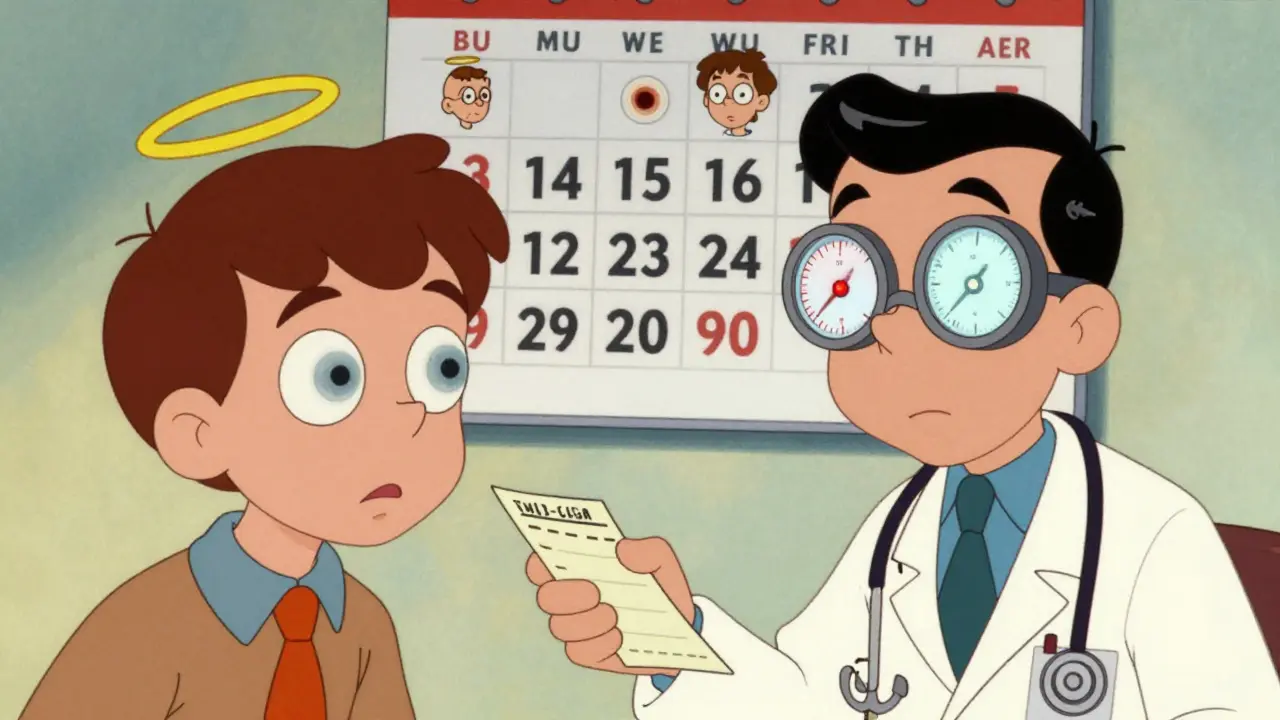
Before starting steroids, you should have a baseline eye exam. That means checking your eye pressure, looking at the lens, and testing your peripheral vision. After starting treatment, follow-ups should happen:
- At 2 weeks
- Then every 4-6 weeks for the first 3 months
- Then every 6 months if pressure stays normal
Yet, only 42% of primary care doctors refer their patients for this. Why? They don’t know. Or they assume the patient will bring it up. They shouldn’t. Most patients don’t.
Eye specialists see steroid-induced glaucoma ‘every other week,’ especially after cataract surgery. That’s because steroids are routinely prescribed to prevent swelling after surgery. But if you’re already at risk, those drops can turn a simple procedure into a vision disaster.
What You Can Do to Protect Your Eyes
You can’t always avoid steroids. But you can control how they affect your eyes.
- Ask your doctor: ‘Is there a non-steroid alternative?’ Sometimes, newer anti-inflammatories like loteprednol etabonate are just as effective but safer for the eyes.
- Use the lowest dose for the shortest time possible. Don’t extend the course just because you ‘feel better.’
- Never skip eye exams. Even if you feel fine. Glaucoma doesn’t announce itself.
- Use steroid eye drops exactly as directed. Don’t use them longer than prescribed. Don’t share them. Don’t refill them without a new prescription.
- Report symptoms immediately: Blurry vision, halos, faded colors, eye pain, or tunnel vision. Don’t wait.
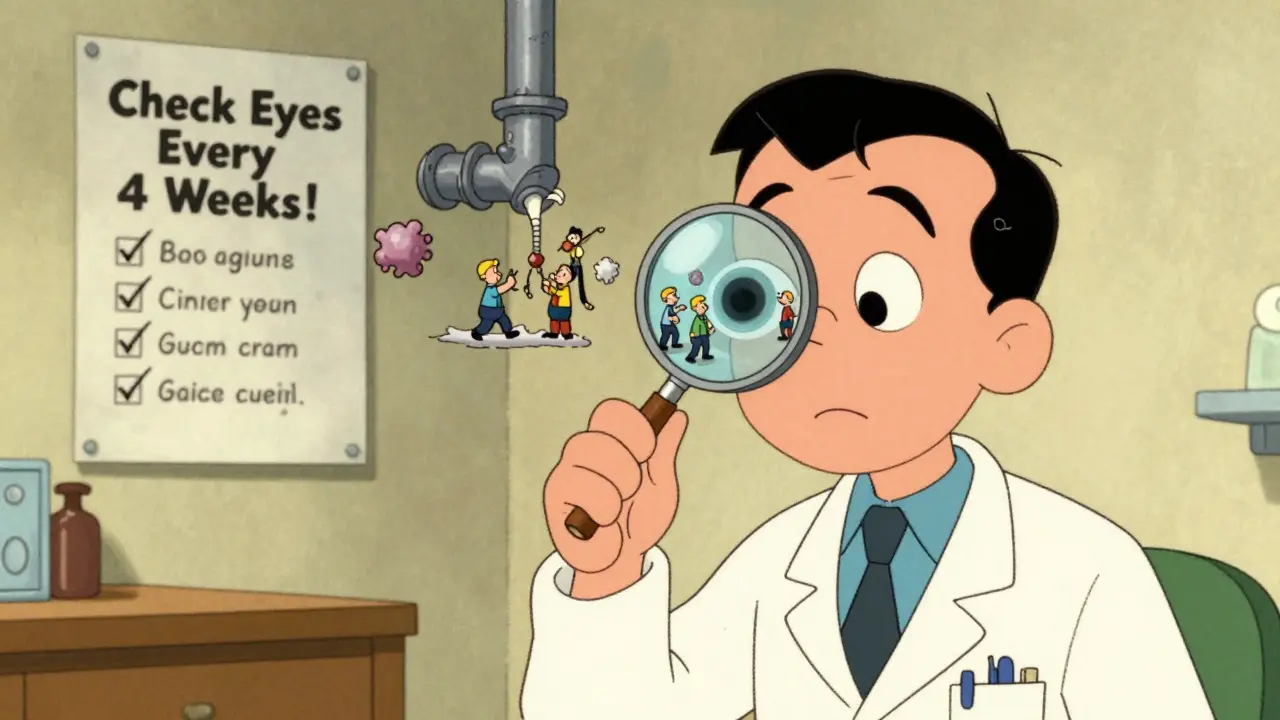
If you’ve been on steroids for more than 4 weeks, get a full eye exam-even if you’ve never had eye problems. It takes 20 minutes. It could save your vision.
What Happens After Damage Is Done?
Good news: if caught early, steroid-induced glaucoma can be reversed. Stop the steroid. Start pressure-lowering eye drops. Monitor closely. The pressure drops. The nerve stops dying.
But if pressure stays high too long? The nerve cells die. That’s permanent. No surgery can bring them back.
Cataracts? They don’t go away on their own. But they can be removed. Cataract surgery is safe and common. But if you have glaucoma too, the surgery gets more complicated. You might need both procedures at once. Recovery takes longer. And you’ll likely need lifelong glaucoma treatment.
One patient in her 40s, who’d been on steroid eye drops for uveitis for 10 months, ended up needing cataract surgery and a glaucoma implant. She now takes three eye drops every day. She didn’t know the drops were hurting her eyes until it was too late.
The Bigger Picture
More than 12 million steroid eye drops are prescribed in the U.S. every year. Over 3 million people take oral steroids long-term. And yet, most patients aren’t warned about the eye risks.
It’s not that doctors are careless. It’s that the problem is invisible. Until it’s not.
But here’s the hopeful part: if you get checked, you can avoid 70-80% of these complications. That’s not just a statistic. That’s your vision.
New tools are emerging. Home IOP monitors let high-risk patients check their pressure between visits. Genetic tests can now predict who’s likely to be a ‘steroid responder’ with 85% accuracy. Tele-ophthalmology programs are helping rural patients get monitored without driving hours to a specialist.
The message isn’t to stop steroids. It’s to use them wisely-with eyes wide open.
Can steroid eye drops cause glaucoma even if I don’t feel any pain?
Yes. Steroid-induced glaucoma often has no symptoms in the early stages. You won’t feel pain, redness, or pressure. The only way to know is through regular eye pressure checks. Many patients only discover they have it after losing peripheral vision during a routine exam.
How long after stopping steroids does eye pressure return to normal?
In most cases, eye pressure starts to drop within 1-4 weeks after stopping steroids. But it can take up to 6 months for full recovery. If pressure stays high after 3 months, you likely have permanent glaucoma and will need ongoing treatment. Never stop steroids abruptly without medical advice-this can trigger inflammation flare-ups.
Are steroid-induced cataracts different from age-related cataracts?
Yes. Steroid-induced cataracts are almost always posterior subcapsular cataracts (PSCs), which form at the back of the lens. They progress faster than age-related cataracts and often cause glare, halos, and blurry vision sooner. They’re also harder to treat if you have other eye conditions like glaucoma.
Can I use steroid eye drops if I already have glaucoma?
Generally, no. If you have glaucoma, steroid eye drops can make it worse quickly. In fact, up to 90% of people with glaucoma are ‘steroid responders’-their eye pressure spikes dangerously high. If you need anti-inflammatory treatment, your eye doctor should prescribe a safer alternative like loteprednol or non-steroidal drops.
What should I do if I’ve been on steroids for more than 6 weeks?
Schedule a comprehensive eye exam immediately. Ask for an intraocular pressure test, a lens exam, and a visual field test. Bring your medication list. Tell your doctor how long you’ve been taking steroids and in what form. Don’t wait for symptoms. The damage can already be happening without you knowing.

15 Comments
Write a comment