
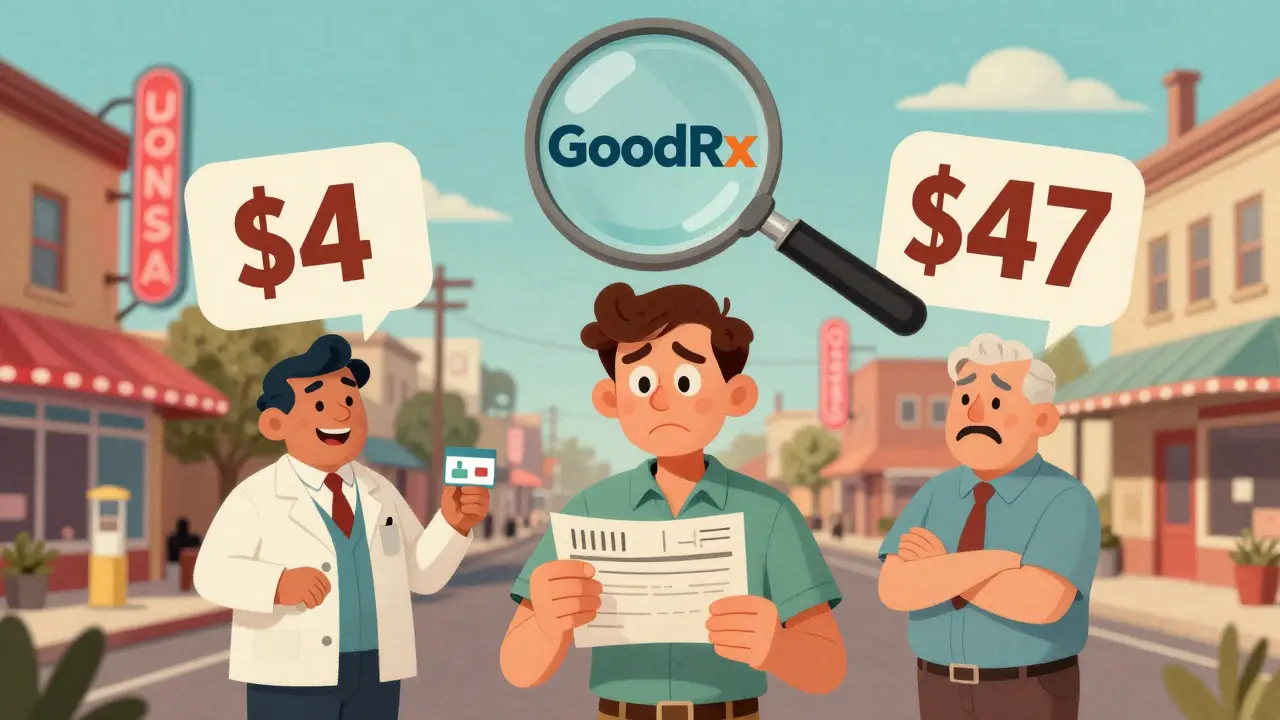
When you need a generic medication, you might expect the price to be simple: lower than the brand-name version, easy to compare, and fair. But that’s not always the case. A pill that costs $4 at one pharmacy might be $18 at another just a few miles away. Why? Because the system isn’t designed for clarity. It’s a maze of rebates, contracts, and hidden fees that even doctors struggle to untangle. The good news? There are tools out there that can cut through the noise and show you the real price - if you know where to look.
What Is Generic Price Transparency?
Generic price transparency means having clear, real-time access to what you’ll actually pay for a prescription - not the list price, not the wholesale cost, but the final amount after insurance, discounts, and rebates. It’s not about knowing what a drug manufacturer charges a pharmacy. It’s about knowing what you owe at the counter. This matters because in the U.S., the same generic drug can vary wildly in price depending on your insurer, your pharmacy, and even the day of the week. A 30-day supply of metformin might cost $3 at one pharmacy and $47 at another. That’s not a typo. That’s the system.
Since 2020, federal rules have required health plans to report negotiated drug prices, and since 2021, hospitals have had to publish their standard charges. But these rules don’t always reach patients directly. That’s where real-time tools come in.
Real-Time Benefit Tools (RTBTs): For Doctors and Clinics
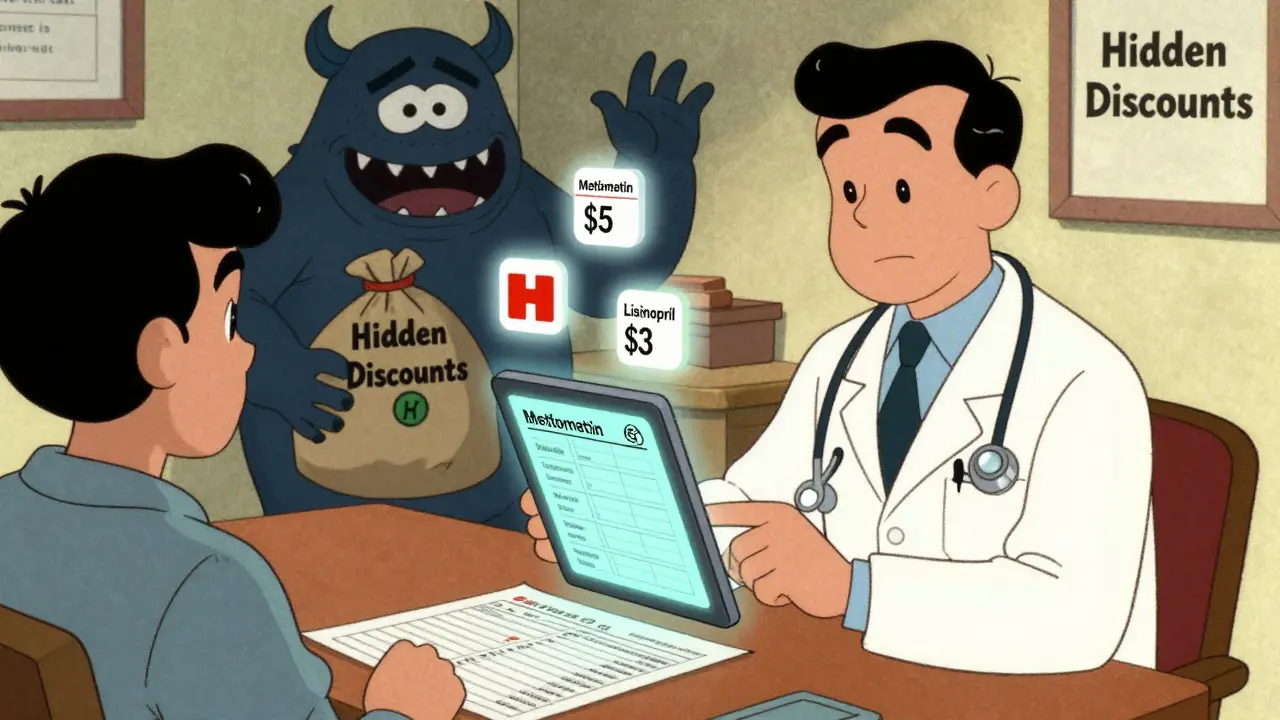
If you’re a patient, you probably won’t interact with these directly - but your doctor might. Real-Time Benefit Tools (RTBTs) are integrated into electronic health record systems like Epic and Cerner. When your doctor writes a prescription, the system checks your insurance plan and shows you the cost of each available option - including generics - before you leave the office.
Tools like CoverMyMeds and Surescripts connect to pharmacy benefit managers (PBMs) and pull your specific formulary data. That means if your plan covers a certain generic at $5 but another at $12, the tool shows both. In 2025, about 42% of U.S. physician practices used RTBTs, up from just 15% in 2022. One study found that when doctors used these tools, patients’ out-of-pocket costs dropped by an average of 37%. That’s not just savings - it’s better adherence. People are more likely to fill a prescription if they know they can afford it.
But RTBTs aren’t perfect. They depend on accurate, up-to-date data from your insurer. If your plan changed its formulary last week but the system hasn’t synced yet, you might get outdated info. And they only work if your doctor uses an EHR that supports them - which many small practices still don’t.
GoodRx and Other Consumer Apps: For You
For most people, the easiest way to find the best price is through apps like GoodRx, SingleCare, or RxSaver. These tools scan thousands of pharmacies nationwide and show you the lowest cash price - no insurance needed. As of 2024, 43% of U.S. pharmacies participate in GoodRx’s network. That means if you’re paying out of pocket, you can often get a generic drug for less than your insurance co-pay.
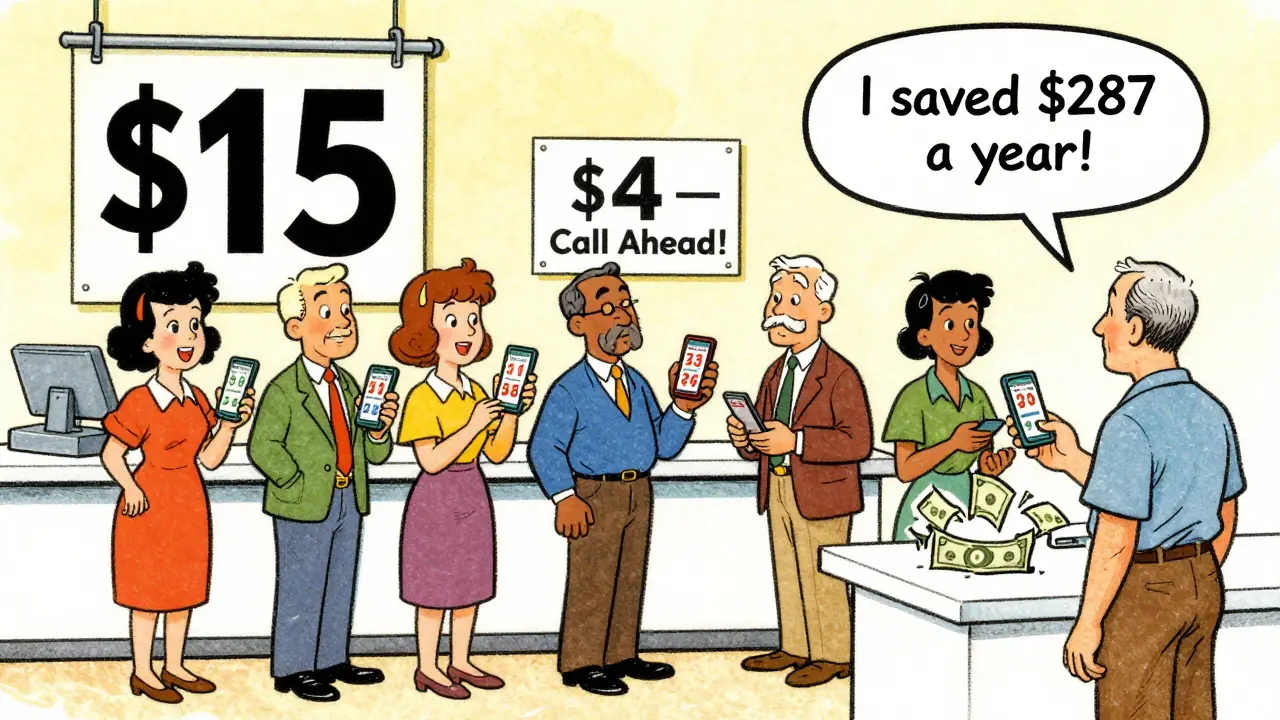
Here’s how it works: You search for your drug - say, lisinopril 10mg. The app shows prices at CVS, Walgreens, Walmart, and local independents. It even tells you which location has the lowest price and how far away it is. In Minnesota, one patient found a 92% price difference between two nearby pharmacies for the same generic, saving $287 a year just by switching.
But here’s the catch: The price you see on the app isn’t always the price you pay. Some pharmacies have system delays. A Trustpilot review from March 2025 said: “The app shows $4, but when I get there, they say $15.” That’s not fraud - it’s a lag in their inventory system. Always call ahead. Also, these apps don’t use your insurance. If your insurance gives you a better deal, you can’t combine it with the app’s discount.
State Laws Are Changing the Game
While federal rules move slowly, states are stepping in. As of April 2025, 23 states have passed their own drug price transparency laws. California requires drugmakers to report price hikes over 16% in two years. Minnesota went further: it created a Prescription Drug Affordability Board that can cap prices on high-cost generics. These laws don’t just require disclosure - they force action.
Some states now require pharmacies to display price tags clearly at the counter. Others mandate that insurers provide cost estimates before you fill a prescription. These aren’t just nice-to-haves. They’re changing behavior. A 2025 study in Health Affairs found that when patients had access to real-time pricing, brand-name prescriptions dropped by 8.2% - not because people stopped taking meds, but because they switched to cheaper generics.
Why the System Is Still Broken
Here’s the hard truth: Most transparency tools only show you the wholesale acquisition cost (WAC) - what the pharmacy pays the manufacturer. They don’t show you the net price - what the insurer actually paid after rebates. And that’s where the real savings are.
Pharmacy benefit managers (PBMs) get rebates from drugmakers to put their drugs on formularies. Those rebates can be huge - sometimes 70% of the list price. But you never see them. The money doesn’t go to you. It goes to the PBM or the insurer. That’s why a drug might be listed at $100, but the insurer only paid $30 after rebates. You still pay $20. The system is designed to hide this.
Experts like Dr. Karen Van Nuys say price transparency alone won’t fix this. “List prices have little to do with what’s actually paid,” she wrote in March 2025. “Without addressing rebates, we’re just shining a flashlight on a broken floor.”
What You Can Do Right Now
You don’t need to wait for Congress or your doctor to fix this. Here’s how to save money today:
- Use a price comparison app. GoodRx, SingleCare, and RxSaver are free. Search your drug. Call the pharmacy with the lowest price. Ask if they’ll honor it.
- Ask your doctor for alternatives. Not all generics are the same. Sometimes, a different manufacturer’s version costs half as much. Ask: “Is there a cheaper version of this?”
- Check for patient assistance programs. Organizations like RxAssist help people get free or low-cost meds from drugmakers. In 2024, 78% of applicants got their medication through these programs.
- Buy in bulk. Many pharmacies offer discounts for 90-day supplies. If you take a drug daily, this can cut your cost by 30%.
- Don’t assume insurance is cheaper. Sometimes, paying cash with a coupon is better than using your insurance - especially if you haven’t met your deductible.
What’s Coming Next
The Drug-price Transparency for Consumers Act of 2025 (S.229) could force drug companies to include the wholesale cost in TV ads. That’s a big deal. If you see an ad for a diabetes drug and it says, “30-day supply: $147 WAC,” you’ll know the real starting point.
But the cancellation of the Medicare Two Dollar Drug List Model in March 2025 was a setback. That program would’ve capped prices on certain generics at $2. Without it, the pressure to lower costs has lessened.
Still, the trend is clear: Patients are demanding clarity. Tools are getting better. And more people are using them. In 2024, the U.S. prescription transparency market was worth $2.17 billion. By 2029, it’s projected to hit $4.89 billion. That growth isn’t happening because of regulation alone. It’s happening because patients are finally taking control.
Final Thought
Price transparency doesn’t mean everything will be cheap. But it means you won’t be surprised. You won’t walk out of the pharmacy thinking, “I could’ve paid less.” You’ll know. And that’s power.
Why do generic drug prices vary so much between pharmacies?
Generic drug prices vary because pharmacies negotiate different contracts with pharmacy benefit managers (PBMs) and wholesalers. Some pharmacies get better bulk deals, others rely on cash discounts, and some still use outdated pricing lists. Insurance networks also play a role - a drug might be covered at $5 at one pharmacy but $20 at another because of how your insurer’s contract is structured. There’s no national price for generics - only a range.
Can I use GoodRx and my insurance at the same time?
No. You must choose one or the other. GoodRx gives you a cash discount, which is often cheaper than your insurance co-pay - especially if you haven’t met your deductible. But if you use GoodRx, the pharmacy won’t count the purchase toward your deductible or out-of-pocket maximum. If you want to build toward your insurance limits, use your card. If you want the lowest immediate price, use the coupon.
Are all generic drugs the same?
Yes, legally - they must contain the same active ingredient, strength, and dosage as the brand-name drug. But different manufacturers produce them, and some have better quality control or faster absorption rates. More importantly, their prices vary wildly. One manufacturer’s metformin might cost $3; another’s might cost $15. Always check the price - not just the name.
What if my pharmacy says the app price isn’t valid?
Call the pharmacy and ask them to check their system again. Sometimes, the price hasn’t updated due to technical delays. If they still refuse, ask if they’ll match the price. Many will - especially if you’re willing to walk to another location. You’re not asking for a favor. You’re exercising your right to shop around.
Do patient assistance programs really work?
Yes - but they’re hard to navigate. Programs like RxAssist connect you directly with drugmakers who offer free or low-cost meds to people who qualify based on income. In 2024, 78% of applicants got their medication. The problem? The application process can take weeks, require proof of income, and ask for medical records. Start early. Use the RxAssist website to find programs by drug name. Don’t give up if the first one says no - try another.
Next steps: Download GoodRx or SingleCare tonight. Search for your most common prescription. Call three local pharmacies. Compare prices. You might be surprised - and you’ll definitely be saving.

Anyone else notice how the prices change by the day? I swear, Tuesday is always cheaper than Friday.
And don’t get me started on how they hide the rebate data. If you think this is about transparency, you’re the product they’re selling.