When fluid builds up in the macular edema, a condition where fluid accumulates in the macula, the part of the retina responsible for sharp central vision. It’s not a disease on its own—it’s a symptom, often caused by swelling of the macula. Without treatment, this swelling can blur or distort your vision, making reading, driving, or even recognizing faces impossible.
Most cases of macular edema happen because of diabetic retinopathy, damage to blood vessels in the retina from high blood sugar. But it can also come from eye surgery, inflammation, blocked veins, or even certain medications. If you have diabetes, high blood pressure, or a history of eye surgery, you’re at higher risk. The good news? It’s often treatable if caught early. Doctors use imaging like OCT scans to see the fluid buildup, then pick a treatment based on what’s causing it.
One of the most common and effective treatments is anti-VEGF injections, medications injected directly into the eye to stop abnormal blood vessels from leaking. Drugs like Avastin, Lucentis, and Eylea are used regularly and can restore vision in many patients. Steroid implants are another option, especially when inflammation is the main problem. But these aren’t quick fixes—you usually need multiple treatments over months. Some people also use eye drops, but those rarely help unless the swelling is very mild.
What you won’t find in most online guides is how often macular edema gets missed. People think their blurry vision is just aging, or they blame it on screen time. But if your vision feels wavy, colors look dull, or you see dark spots in the center of your sight, it’s not normal. It’s not something to wait on. The same goes for people on long-term steroid therapy or those with uveitis—these groups need regular eye checks, not just when symptoms get bad.
There’s no magic supplement or herbal remedy that cures macular edema. Some blogs push antioxidants or omega-3s as solutions, but the science doesn’t back them up for this specific issue. What works is targeted medical care: proper diagnosis, timely injections, and managing the root cause—like controlling blood sugar or lowering blood pressure. If you’ve been told your vision is fine but you still feel something’s off, get a second opinion. A simple retinal scan can reveal problems before you lose more sight.
Below, you’ll find real-world advice from people who’ve dealt with this condition, doctors explaining treatment choices, and breakdowns of the medications that actually make a difference. No fluff. No guesswork. Just what helps—and what doesn’t.
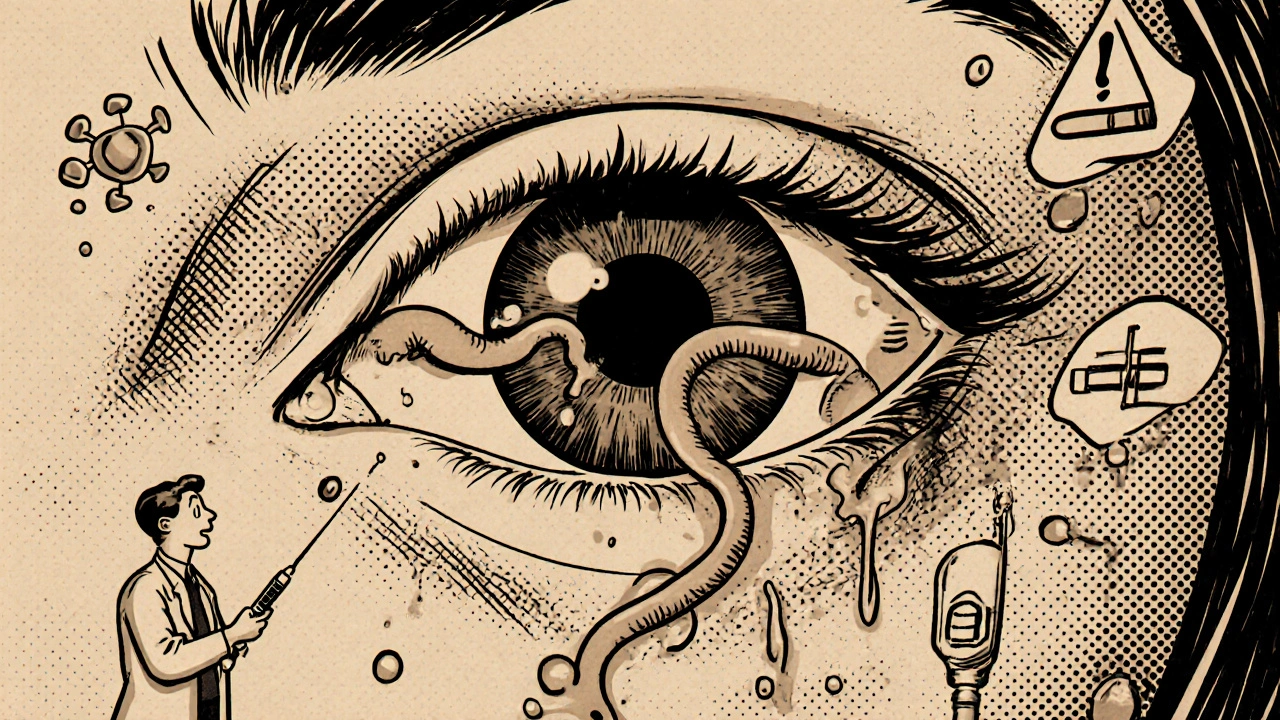
Retinal vein occlusion causes sudden vision loss due to blocked retinal veins. Learn the top risk factors like high blood pressure and diabetes, and how anti-VEGF injections can restore vision. Understand treatment options, costs, and what to expect during and after eye injections.
full article