When your retinal vein occlusion, a blockage in the vein that drains blood from the retina. It’s not rare, and it’s not random. It happens when blood flow gets stuck, often because the vessel walls are damaged or thickened. Also known as an eye stroke, it can blur or wipe out vision suddenly—and it’s linked to conditions you might already be managing.
Most people with RVO have at least one major risk factor. high blood pressure, the top driver behind most cases. It’s not just about numbers on a monitor—it’s about years of pressure wearing down the tiny blood vessels in your eye. diabetes, another leading cause. High sugar levels make blood thicker and vessels more fragile. Even if your diabetes is "controlled," the damage builds quietly. Then there’s glaucoma, a condition that raises pressure inside the eye. That pressure doesn’t just hurt the optic nerve—it can squeeze the veins too. These three aren’t just listed in medical guides; they show up again and again in real cases.
Other factors matter too. Age over 50 is a big one—your veins don’t bounce back like they used to. Smoking? It thickens your blood and narrows arteries. High cholesterol? It clogs the system from the inside. And if you’ve ever had a blood clot elsewhere, your risk jumps. These aren’t abstract risks—they’re daily choices. A morning cigarette. Skipping meds. Ignoring that last blood test. The posts below show how people connect these dots: how one person’s uncontrolled blood pressure led to vision loss, how another found out their glaucoma was worsening because they stopped checking pressure, how diabetes meds alone aren’t enough if diet and movement aren’t part of the plan. You won’t find fluff here. Just real stories, real data, and real steps to lower your odds.
What you’ll find in these articles isn’t theory. It’s what works when your vision is on the line. From how to track your numbers to what drugs help—and which ones to avoid—you’ll see the practical side of protecting your eyes. No jargon. No guessing. Just clear, tested info from people who’ve been there.
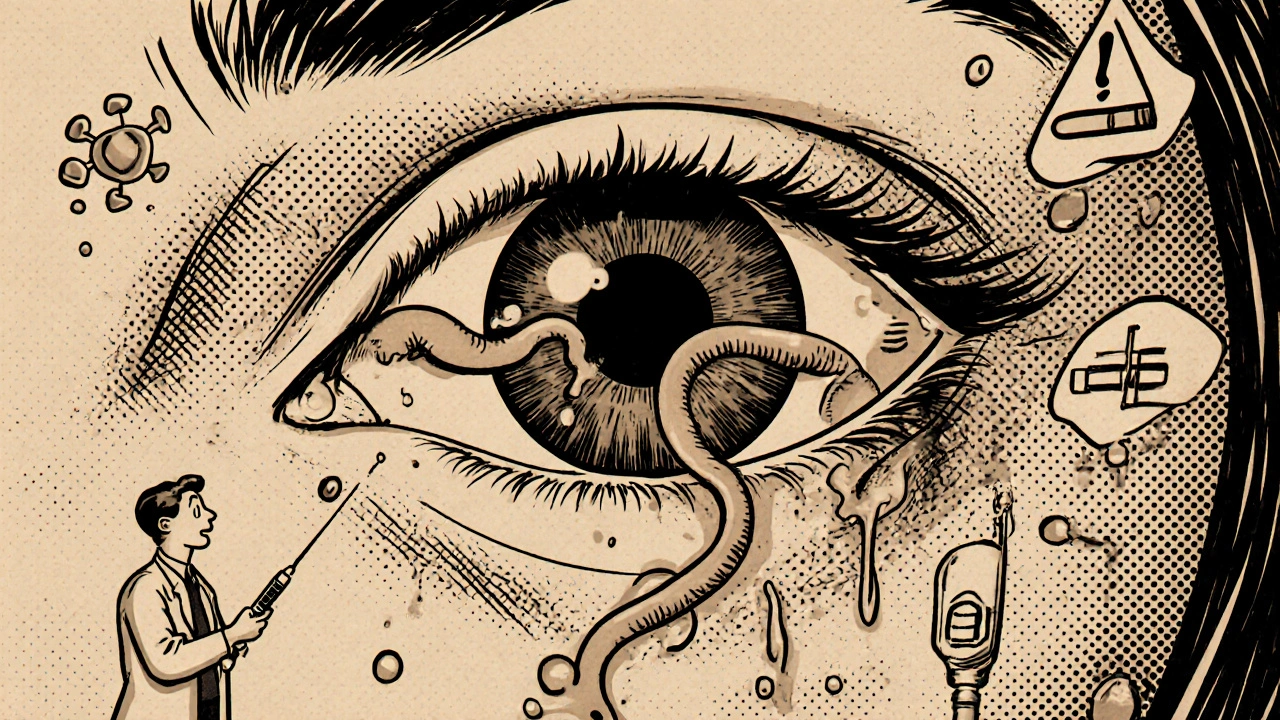
Retinal vein occlusion causes sudden vision loss due to blocked retinal veins. Learn the top risk factors like high blood pressure and diabetes, and how anti-VEGF injections can restore vision. Understand treatment options, costs, and what to expect during and after eye injections.
full article