
When you walk into a pharmacy to pick up your blood pressure pill or diabetes medication, you might assume the generic version is cheaper. But here’s the truth: sometimes it’s not. And when it is, you might still be overpaying - not because of the drug, but because of the system around it.
What Exactly Is a Generic Drug Price War?
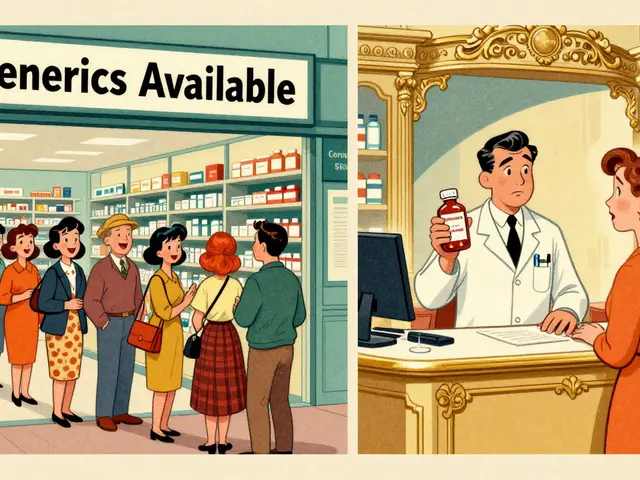
A generic drug price war happens when multiple companies start making the same off-patent medication. Once a brand-name drug loses its patent, other manufacturers can legally copy it. They don’t need to run expensive clinical trials. All they need is proof that their version works the same. That’s it. So they undercut each other on price. And the more companies join the race, the lower the price drops. The FDA found that when six or more companies make the same generic drug, prices fall over 95% compared to the original brand. That’s not a guess. That’s data. For example, metformin, a common diabetes drug, used to cost over $300 a month as a brand. Today, with 15+ manufacturers, you can get a 90-day supply for $4 at Walmart. That’s the power of competition. But here’s where it gets messy. That 95% savings doesn’t always reach you.Why You’re Not Always Seeing the Savings
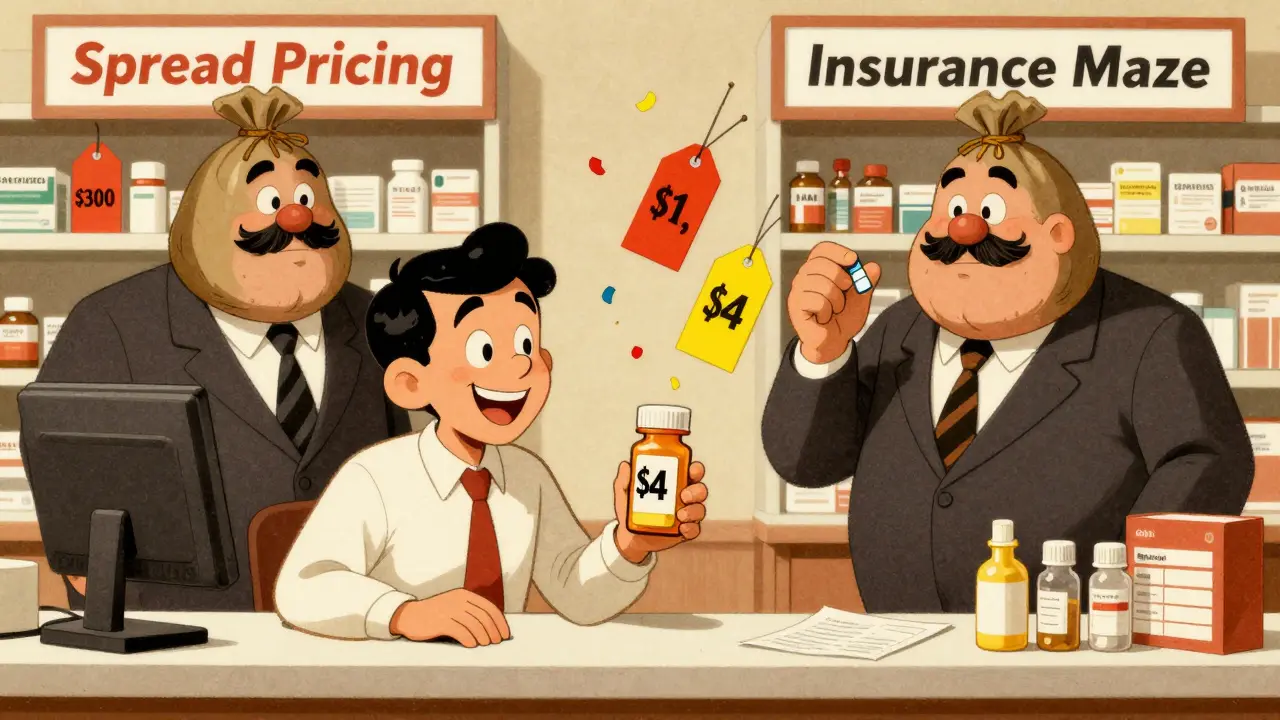
You might think: if generics are so cheap, why am I paying $20 for a 30-day supply of lisinopril when my friend got it for $3? The answer isn’t about the drug. It’s about the middlemen. Pharmacy Benefit Managers (PBMs) are the hidden players. They negotiate prices between drug makers, insurers, and pharmacies. But instead of passing savings to you, many PBMs use a trick called “spread pricing.” They tell your insurer they paid $5 for the drug. They actually paid $1. You pay your $10 copay. The PBM pockets the $4 difference. Even though the drug cost $1, you’re still paying $10 because your insurance doesn’t know the real price. Some pharmacies even charge you more than the cash price because your insurance plan forces you to use their formulary. You’re locked in. You can’t switch. And pharmacists used to be legally blocked from telling you the cash price was lower. That’s changed since 2018, but many people still don’t know they can ask.How Many Competitors Actually Matter?
Not all generic markets are equal. The number of manufacturers makes a huge difference. - With just one generic maker: Price is 15-30% below brand. You’re barely saving anything. - With two to three: 40-60% savings. Still not great. - With four to five: 80-85% savings. Now you’re getting real value. - With six or more: Over 95% savings. This is where the real price war kicks in. Take apixaban (Eliquis). When only two generics were available, the price stayed high. Once five more manufacturers entered, the price dropped 90% in six months. But if only one or two companies make your drug - and they’re the only ones who can - prices can stay high or even spike. That’s not competition. That’s a monopoly.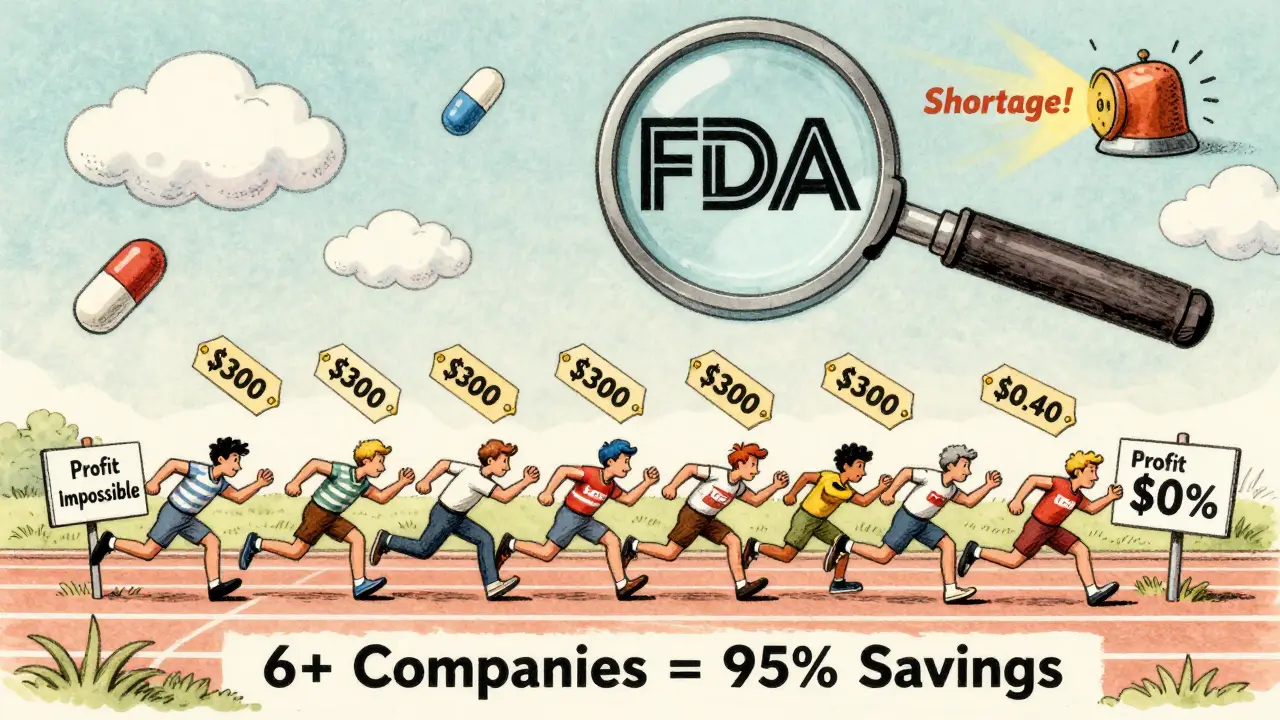
Where the System Breaks Down
Here’s the scary part: when prices drop too low, manufacturers quit. They can’t make money. So they stop making the drug. And then - boom - you get a shortage. In 2024, 30% of generic drug shortages happened in markets with four or more competitors. Why? Because the price got so low that no one could profit. The FDA says this is a direct result of “unsustainable competition.” A drug like doxycycline, used for infections, dropped to 15 cents a pill. Then three manufacturers left. The price jumped 300%. You didn’t get a deal. You got a crisis. And it’s not just small drugs. Even life-saving ones like insulin biosimilars have seen minimal savings because only a handful of companies make them. One study found insulin biosimilars were only 15% cheaper than the brand - even after years on the market. That’s not a price war. That’s a cartel.How to Actually Save Money - Even When the System Fails
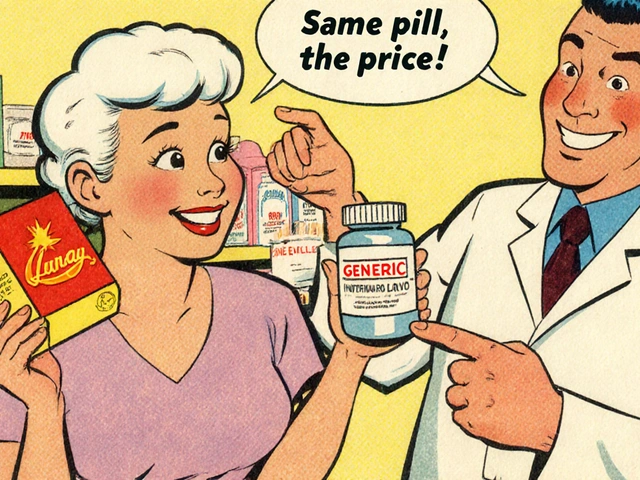
You can’t fix the system overnight. But you can outsmart it. Step 1: Always ask for the cash price. Even if you have insurance. In 28% of cases, the cash price is lower than your copay. Pharmacists are now legally required to tell you. Don’t be shy. Say: “What’s the lowest price I can pay today?” Step 2: Use GoodRx or SingleCare. These apps compare prices across pharmacies. For the same generic drug, one CVS might charge $12. A nearby Rite Aid might charge $3. A Walmart might charge $0. It’s not a typo. Some chains offer $4 or $0 generics for chronic meds. You just have to look. Step 3: Check the AB rating. Not all generics are created equal. The FDA gives them an AB rating. If it says AB, it’s bioequivalent. If it says something else, ask why. Some generics have different fillers or coatings that might affect how your body absorbs them. Rare, but possible. Step 4: Stick to chronic meds first. A $2 difference on your blood pressure pill seems small. But over a year? That’s $730 saved. Multiply that by three or four meds? You’re saving over $2,000 a year. That’s a vacation. That’s groceries. That’s peace of mind.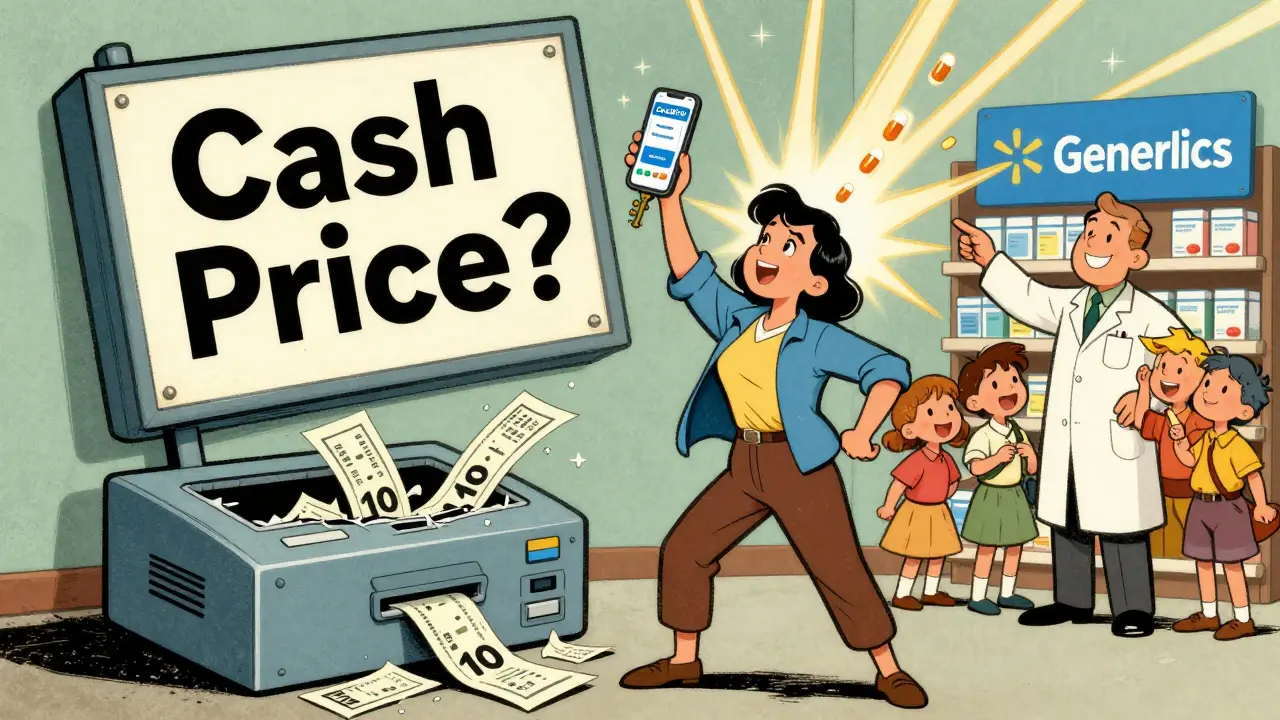
What’s Changing - And What’s Not
The government is starting to act. The Inflation Reduction Act lets Medicare negotiate some drug prices. The Pharmacy Benefit Manager Transparency Act is moving through Congress to ban spread pricing. The FDA approved over 1,000 generics in 2023 - up from 750 in 2022. That’s good news. But here’s the catch: five companies control over 60% of the U.S. generic market. Teva, Viatris, Sandoz, Amneal, Aurobindo. That’s not competition. That’s an oligopoly. And they know it. They’re not rushing to make cheap drugs. They’re waiting for the next patent to expire - and then they’re the first to jump in, often with just one or two versions. The system is rigged to protect profits, not patients. But you’re not powerless.The Real Benefit Isn’t Just Lower Prices - It’s Control
The biggest win from generic price wars isn’t the dollar amount. It’s knowing you have options. You can choose where to buy. You can compare prices. You can walk out and say, “No, I’m not paying that.” That’s power. And it’s something no insurance plan can give you. The next time you get a prescription, don’t just hand it over. Ask. Compare. Walk away if you need to. The drug is cheap. The system isn’t. But you? You’re smarter than the system.Are generic drugs really as effective as brand-name drugs?
Yes. The FDA requires generic drugs to have the same active ingredient, strength, dosage form, and route of administration as the brand-name version. They must also prove they work the same way in your body. Over 90% of prescriptions filled in the U.S. are generics - and they’re used safely every day by millions.
Why is my generic drug suddenly more expensive?
It’s usually because a manufacturer left the market. When competition drops - even from five companies to two - prices can spike. This often happens when the price gets too low for companies to profit. Check GoodRx or call other pharmacies to see if another location has it cheaper. You might also have a shortage on your hands.
Should I always use my insurance for generics?
Not always. Many insurance plans have high copays for generics because of how PBMs structure deals. The cash price - especially at Walmart, Costco, or through GoodRx - is often lower. Always ask your pharmacist for the cash price before you pay with insurance.
What if my doctor only prescribes the brand-name drug?
Ask them if a generic is available. Most doctors know, but they may not always mention it. You can also ask your pharmacist. If the brand is the only option, check if there’s a therapeutic alternative - another generic drug in the same class that works just as well. Sometimes switching drugs is safer than overpaying.
Can I trust generic drugs from online pharmacies?
Only if they’re verified. Look for the VIPPS seal (Verified Internet Pharmacy Practice Sites) from the National Association of Boards of Pharmacy. Avoid websites that don’t require a prescription or offer “miracle” discounts. The FDA warns that many online generics are counterfeit or contaminated. Stick to U.S.-based, licensed pharmacies.

So let me get this straight-you’re telling me the system is rigged, but the solution is to ask your pharmacist for the cash price? That’s not empowerment, that’s just surviving. I’ve been doing this for years, and every time I think I’ve cracked the code, the price jumps because someone else got tired of losing money. This isn’t a fix. It’s a bandage on a hemorrhage.
According to the FDA’s 2023 Generic Drug Market Report, 68% of shortages occurred in markets with 4–6 competitors, directly correlating with price erosion below marginal cost. The real issue isn’t spread pricing-it’s the structural disincentive to produce low-margin, high-volume generics. PBMs are symptoms, not the disease.
I love how this post turns a broken system into a DIY hack. You’re right-ask for the cash price. Use GoodRx. But let’s not pretend this is justice. Millions of people don’t have time to shop around for their insulin. They’re working two jobs, skipping meals, and hoping their pharmacy doesn’t run out. This isn’t about being smart. It’s about being lucky.
One must observe, with the utmost rigor, that the so-called 'price war' is not a war at all, but rather a carefully orchestrated auction among oligopolistic entities, wherein the consumer is not a participant but a passive recipient of artificially depressed valuations that inevitably collapse under the weight of unsustainable production economics. The notion that individual agency-such as inquiring about cash pricing-constitutes meaningful resistance is, frankly, a delusion propagated by neoliberal mythology.
Oh honey. You think asking for the cash price is revolutionary? Sweetie, the real power move is refusing to buy the damn drug until the manufacturer has to beg you to take it. You’re not a patient-you’re a consumer with a pulse and a bank account. Stop being a good little sheep and start acting like the market’s boss. If they can’t make money on $0.15/doxycycline, maybe they shouldn’t be in the business. Let the market eat itself.
Ask for cash price.
And yet, the same people who scream about 'big pharma' are the first to buy their $4 metformin from Walmart like it’s a bargain bin sale. You want change? Stop being a hypocrite. Don’t buy the cheap stuff unless you’re willing to pay more for the ones that actually matter. Otherwise, you’re just feeding the machine that screws you.
Thank you for this post 🙏. In India, we have a similar issue-but the government caps prices, and generics are often cheaper than bread. I remember my grandfather taking metformin for 15 years at ₹10 ($0.12) per tablet. Here, it’s a battle. I hope U.S. policy learns from places like India and Thailand. We don’t need middlemen-we need people.
So beautiful to see someone explain this so clearly 🙌 I live in India, and we call this 'pharma democracy'-when everyone can access medicine. America has the tech, the science, the wealth... but not the heart. Please share this with your friends. This isn’t politics. This is survival.
Actually, you’re all wrong. The real problem is that the FDA allows too many generics too fast. It’s not about competition-it’s about quality control. I’ve seen generics with inconsistent bioavailability. You think $4 is good? Until you have a seizure because your epilepsy med wasn’t absorbed right. Then you’ll thank the brand-name drug.
It is worth noting, with due consideration to the regulatory architecture of pharmaceutical distribution, that the persistent misalignment between nominal pricing and actual patient outlay is not merely a function of PBM opacity, but rather a systemic consequence of the third-party payment model itself. The incentive structure is fundamentally misaligned with therapeutic outcomes.
Look. I don’t care if it’s $4 or $40. I just want my blood pressure med to work. I’ve had two different generics that made me dizzy. One was AB-rated. The other wasn’t. Turns out, the fillers matter more than the FDA admits. So yeah, save your money. But don’t save it by risking your health. Ask your doc. Test it. Don’t just trust the app. I learned the hard way.