
Colchicine-Macrolide Interaction Checker
Check Your Antibiotic Safety
Check if your antibiotic is safe to take with colchicine. This tool alerts you to potentially dangerous drug combinations that can cause life-threatening toxicity.
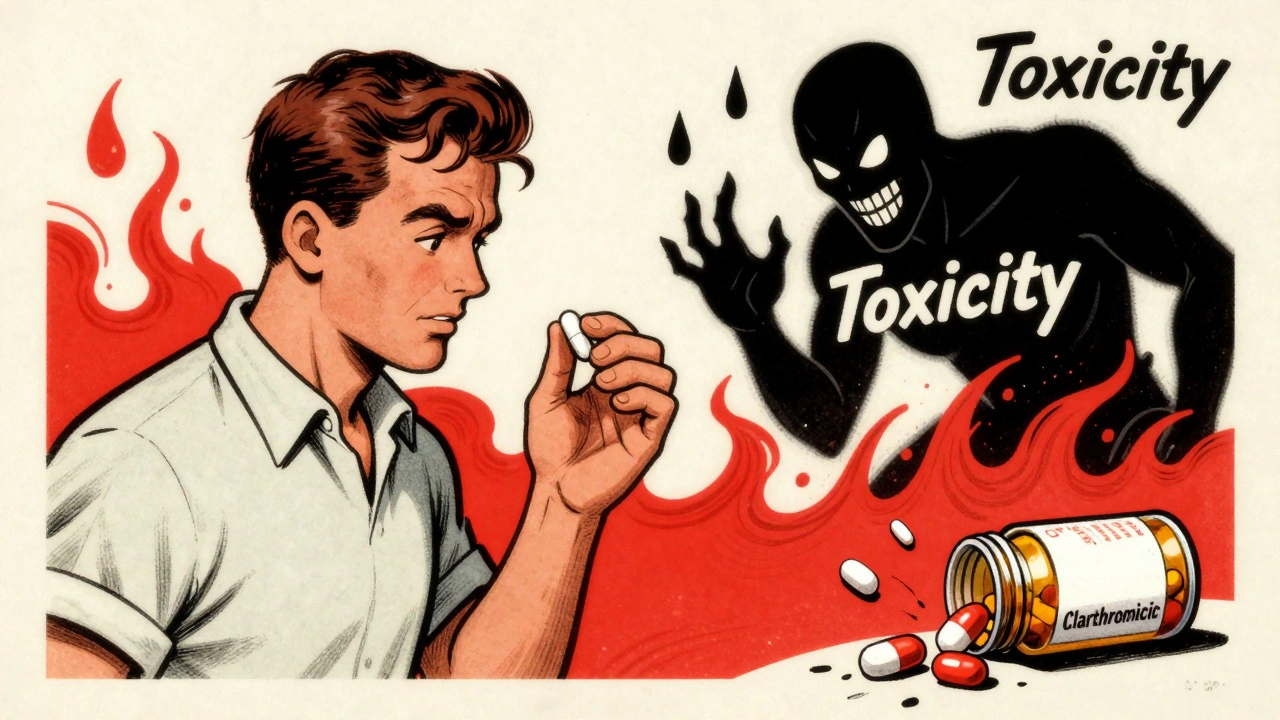
Imagine taking a simple pill for gout or heart inflammation, then getting a prescription for an antibiotic like clarithromycin for a sinus infection. Sounds harmless, right? But here’s the truth: colchicine and macrolides can team up to create a silent, life-threatening storm inside your body. This isn’t theoretical. It’s happened. People have ended up in the ICU. Some didn’t survive.
Why This Interaction Isn’t Just a Warning on a Label
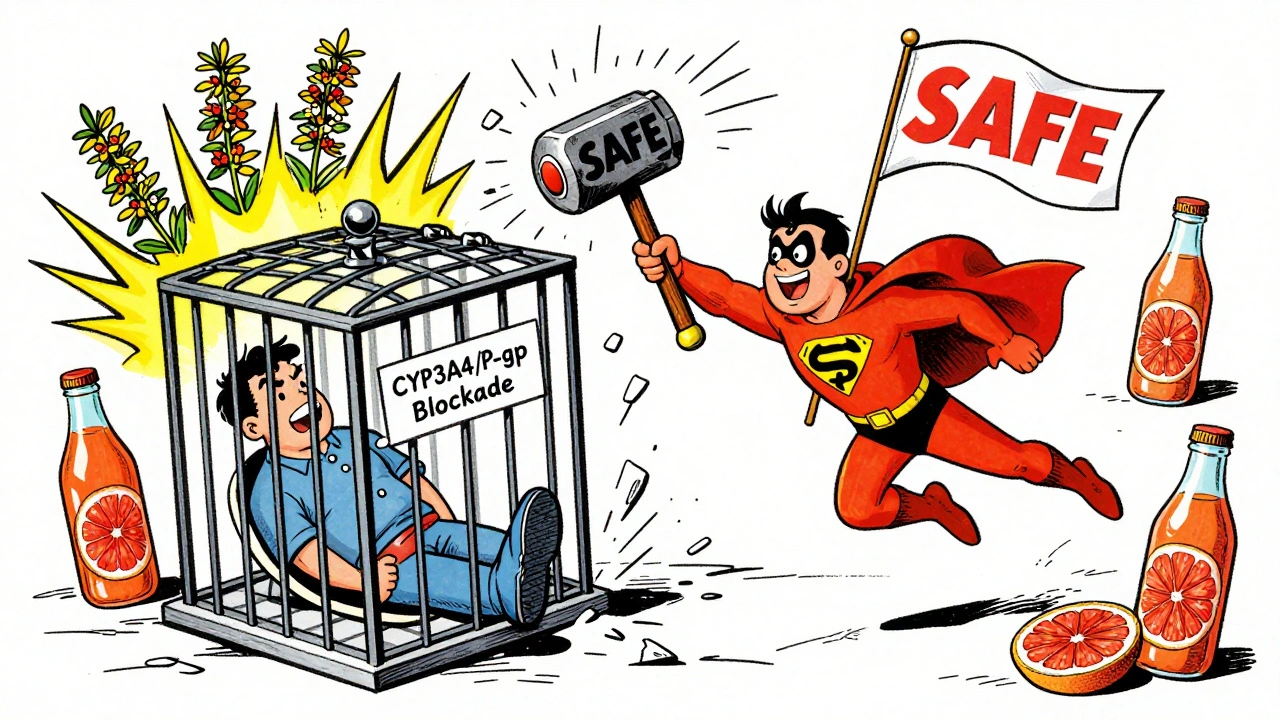
Colchicine is old. Like, ancient. Used since Egyptian times for gout. Today, it’s still a go-to for gout flares, pericarditis, and even after heart attacks. But it’s also incredibly dangerous if your body can’t clear it properly. The drug has a razor-thin safety margin - the difference between a helpful dose and a toxic one is tiny. When you take colchicine, your body tries to get rid of it through two main systems: the liver (using CYP3A4 enzymes) and the gut/kidneys (using P-glycoprotein, or P-gp). These are like security guards that either break down the drug or push it out of cells. Now, add a macrolide antibiotic - say, clarithromycin - and those guards get knocked out. Clarithromycin doesn’t just block CYP3A4. It also shuts down P-gp. That’s rare. Most drugs only do one. But this combo? It’s a double whammy. Colchicine can’t be broken down. It can’t be flushed out. It piles up. Plasma levels can jump 4x higher than normal. And at concentrations above 3.3 ng/mL, you’re in danger zone territory.Not All Macrolides Are the Same
Here’s where things get messy. Not every macrolide is equally dangerous. Azithromycin? Safe. It barely touches CYP3A4 or P-gp. You can take it with colchicine without breaking a sweat. But clarithromycin? That’s the worst offender. It’s the strongest CYP3A4 inhibitor among macrolides - and it’s also a potent P-gp blocker. Erythromycin is in the middle: weaker than clarithromycin, but still risky. A 2022 study of over 12,000 patients found that those on clarithromycin with colchicine had more than double the risk of toxicity compared to those on other antibiotics. Real-world data backs this up. The FDA’s adverse event database from 2015 to 2020 recorded 147 cases of colchicine toxicity linked to macrolides. Nearly two-thirds involved clarithromycin. One 2019 case series showed 12 patients with severe muscle damage, low blood cell counts, and organ failure after taking both drugs. Three died.Why Doctors Miss It - And Why Patients Pay the Price
You’d think hospitals would flag this. But they don’t always. A 2021 study found that 43% of internal medicine residents failed to spot high-risk combinations like colchicine and clarithromycin. Even experienced clinicians get caught off guard. Why? Because alerts in electronic health records are often ignored. Or worse - they’re too vague. “Avoid combination” doesn’t tell you *why* or *what to do instead*. Many doctors don’t even know azithromycin is the safe alternative. Patients don’t tell their doctors they’re taking colchicine for pericarditis because they think it’s just “gout medicine.” And over-the-counter supplements? Things like grapefruit juice or St. John’s wort? They also inhibit CYP3A4. No one asks. Emergency physicians see this most often. In one survey, 82% of ER doctors reported seeing at least one case. Rheumatologists? Only 54%. That gap? It’s because gout patients are often managed long-term and monitored. But someone with a heart condition on colchicine who gets pneumonia? They get a quick antibiotic script - and no one connects the dots.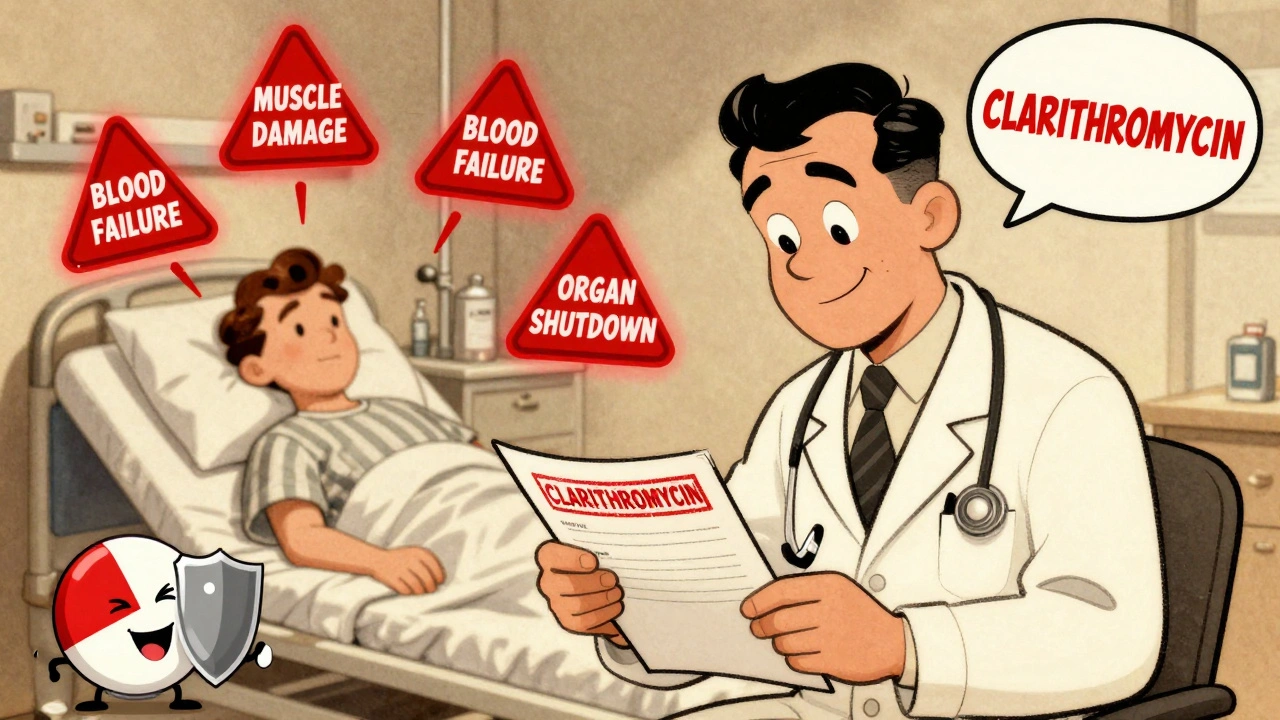
What Happens When Toxicity Hits
Toxicity doesn’t come with a warning siren. It creeps in. First, nausea, vomiting, diarrhea - easy to blame on the antibiotic. Then, muscle pain, weakness, dark urine. That’s rhabdomyolysis. Your muscles start breaking down. Kidneys get overwhelmed. Next, your blood cells crash. Neutropenia. Thrombocytopenia. Pancytopenia. Your immune system shuts down. You get fevers, infections, bleeding. In severe cases, multi-organ failure follows. And it can happen fast - within days of starting the combo. The worst part? There’s no antidote. You stop the drugs. Supportive care. Dialysis if kidneys fail. But if it’s too late, it’s too late.How to Stay Safe - Step by Step
If you’re on colchicine, here’s what you need to do:- Know your meds. Are you taking colchicine for gout, pericarditis, or after a heart attack? Don’t assume it’s “just for gout.”
- Ask: Is this antibiotic safe? If your doctor prescribes clarithromycin or erythromycin, say: “I’m on colchicine. Is there a safer option?”
- Insist on azithromycin. It’s just as effective for most infections and doesn’t interact. No trade-off.
- Don’t take grapefruit juice. It’s a hidden CYP3A4 blocker. Same with certain supplements.
- Know the red flags. Unexplained muscle pain, extreme fatigue, dark urine, unexplained bruising, or fever? Get checked immediately.
What’s Being Done to Fix This
Hospitals are waking up. Epic’s EHR system added a tiered alert in 2023. When a doctor tries to prescribe clarithromycin with colchicine, the system now blocks it unless they override with a reason - and even then, it forces them to pick azithromycin as the default alternative. In a multi-center trial, this cut dangerous prescriptions by 63%. Pharmaceutical companies are working on new versions of colchicine that don’t rely on P-gp or CYP3A4. Takeda’s experimental drug, COL-098, showed 92% less interaction risk in early trials. It’s not on the market yet - but it’s coming. Genetic testing is also emerging. A 2023 study found that people with two copies of the CYP3A5*3 mutation and the ABCB1 3435C>T variant had a 78% higher chance of colchicine toxicity - even without other drugs. That means your genes might make you more vulnerable. Testing isn’t routine yet, but it’s coming.The Bigger Picture: Why We Can’t Just Stop Using Colchicine
Colchicine isn’t going away. It’s cheap - about $4,200 a year. Compare that to canakinumab, a newer anti-inflammatory for heart disease that costs $198,000. And it works. For gout, it’s unmatched. For recurrent pericarditis, it’s a game-changer. For preventing heart attacks after stents, it reduces events by 30%. The goal isn’t to avoid colchicine. It’s to use it safely. That means knowing the risks, choosing the right antibiotics, and speaking up.Final Reality Check
This isn’t a rare edge case. An estimated 1.2 million Americans get colchicine and a macrolide together every year. That’s over a million chances for disaster. Most of those cases are preventable. You don’t need to be a doctor to save your life. You just need to ask one question: “Is this antibiotic safe with colchicine?” If your doctor says yes - push back. If they say no - thank them. And if they don’t know? Tell them about azithromycin. Because in this case, the safest antibiotic isn’t the one with the strongest name. It’s the one that doesn’t kill you.Can I take azithromycin with colchicine?
Yes. Azithromycin does not significantly inhibit CYP3A4 or P-glycoprotein, making it the safest macrolide option when you’re taking colchicine. It’s just as effective as clarithromycin or erythromycin for most bacterial infections and carries no known interaction risk. Always confirm with your pharmacist or doctor, but azithromycin is the preferred choice in this scenario.
What happens if I accidentally take clarithromycin with colchicine?
Stop the clarithromycin immediately and contact your doctor or go to the ER. Symptoms of colchicine toxicity - nausea, vomiting, muscle pain, weakness, unusual bruising, or fever - can appear within days. There’s no antidote, so treatment is supportive: fluids, monitoring blood counts, and possibly dialysis. The sooner you act, the better your outcome. Don’t wait for symptoms to get worse.
Is colchicine toxicity common?
It’s not common in healthy people taking low doses alone. But when combined with strong CYP3A4 or P-gp inhibitors like clarithromycin, the risk jumps dramatically. In one study, the odds of toxicity increased 2.3 times. With over 1.2 million annual combinations prescribed in the U.S., even a small percentage of cases adds up to hundreds of hospitalizations and dozens of deaths each year.
Do all antibiotics interact with colchicine?
No. Only macrolides like clarithromycin and erythromycin pose a major risk. Other antibiotics - penicillins, cephalosporins, fluoroquinolones like levofloxacin, and tetracyclines - do not inhibit CYP3A4 or P-gp significantly. Azithromycin is the only macrolide that’s safe. Always check the specific drug, not just the class.
Should I get genetic testing before taking colchicine?
Not routinely - yet. A 2023 study showed that people with certain genetic variants (CYP3A5*3/*3 and ABCB1 3435C>T) are at much higher risk of toxicity, even without other drugs. But testing isn’t widely available or recommended by guidelines yet. The best approach now is to avoid interacting drugs and monitor for symptoms. Genetic testing may become standard in the next 5-10 years.
Can I take colchicine with over-the-counter supplements?
Many can be dangerous. Grapefruit juice is a well-known CYP3A4 inhibitor - avoid it completely. St. John’s wort, turmeric in high doses, and certain herbal extracts can also interfere. Always tell your doctor or pharmacist about every supplement you take. What seems “natural” can be just as risky as prescription drugs.



Man, I had no idea colchicine and clarithromycin could be a death combo. My uncle took both after a gout flare and got hospitalized with muscle necrosis. Docs never warned him. He’s lucky he made it. Now I make sure everyone I know checks their med interactions - even if they think it’s just ‘gout stuff.’
It is imperative to underscore the pharmacokinetic implications of concurrent CYP3A4 and P-glycoprotein inhibition. The synergistic blockade of these efflux and metabolic pathways results in a non-linear pharmacodynamic escalation of colchicine plasma concentrations, thereby precipitating a high-risk clinical scenario characterized by multi-system toxicity, including rhabdomyolysis, bone marrow suppression, and subsequent organ failure. This is not merely a drug interaction - it is a pharmacogenomic emergency.
People these days take pills like candy. No wonder we got this mess. You want to live? Learn your meds. Don’t be lazy. Doctor don’t owe you a lecture. You got a prescription? Read the damn leaflet. Or just die. Your choice.
Ugh another long ass post about drugs I don’t even take 😴
I’ve been on colchicine for pericarditis for two years now. My cardiologist switched me to azithromycin last winter when I got a sinus infection - and honestly, I didn’t even know there was a risk. I just trusted him. But after reading this, I went back and checked my entire med list. Turns out I was also taking grapefruit juice every morning. I stopped. I don’t know how many others are doing the same thing. This post saved me from a nightmare.
How is this even a topic? This isn’t medical breakthrough material - it’s basic pharmacology 101. The fact that hospitals still allow this combo to slip through is a testament to the systemic collapse of clinical diligence. And yet, we still have people acting surprised. The system is broken. And the people paying? The ones who can’t afford to be wrong.
i had no idea grapefruit did this too. i drink it every day. i just stopped. also, i think the doc forgot to tell me i was on colchicine. i thought it was just for my toe. lol. i’m not smart but i’m not dumb either. thanks for the heads up.
This is the kind of post that makes me believe in the power of patient advocacy. I’ve had friends who almost didn’t make it because they trusted the system too much. But you? You didn’t just post facts - you gave people a script. ‘Is this antibiotic safe with colchicine?’ That’s the line. That’s the weapon. I’m printing this out and giving it to my mom. She’s 72, on colchicine, and just got a new prescription. Thank you for turning fear into action.
Colchicine? How quaint. The real tragedy here isn’t the interaction - it’s that we’re still relying on 19th-century molecules while Silicon Valley churns out AI-driven precision therapeutics. The fact that we’re still debating macrolides instead of deploying targeted, gene-informed alternatives speaks volumes about the inertia of modern medicine. Azithromycin? A Band-Aid on a hemorrhage.
Interesting how we pathologize patient ignorance while ignoring systemic failures. The EHR alert that blocks prescriptions? Brilliant. But why wasn’t it implemented 15 years ago? And why does it still require manual override? We’re treating symptoms, not the disease - institutional complacency. 🤷♂️
Just read the Takeda COL-098 trial data - 92% reduction in interaction risk? That’s game-changing. The real question isn’t ‘what’s the safe macrolide?’ but ‘why are we still prescribing the old version?’ The pharmacokinetic redesign of colchicine could eliminate 90% of these deaths. This isn’t just about antibiotics - it’s about next-gen drug development. We need to fund this faster.