

Spotting a fake or tampered medication can be scary. Maybe the pills look different than usual. Maybe the packaging feels cheap, or the bottle has no batch number. You might even notice the medicine doesn’t work like it should. If something feels off, reporting counterfeit or tampered medications isn’t just a good idea-it could save a life.
Why Reporting Matters
Counterfeit drugs aren’t just fake-they’re dangerous. They might contain the wrong dose, no active ingredient at all, or even toxic substances like rat poison or paint thinner. The World Health Organization estimates that 1 in 10 medical products in low- and middle-income countries is substandard or falsified. Even in high-income countries like Australia, the U.S., or Canada, fake medicines are growing in number, especially online. The good news? Reporting these products works. Between 2015 and 2022, the U.S. FDA removed over 2,300 counterfeit drug products from the market because someone spoke up. In one case, a pharmacist reported a fake insulin product. Within 11 days, the FDA traced 142 affected batches. Without that report, people could have been poisoned.What Counts as Counterfeit or Tampered?
Not every odd-looking pill is fake. But here’s what to watch for:- Packaging that looks blurry, misspelled, or different from what you usually get
- Pills that are the wrong color, shape, size, or texture
- Missing or altered batch numbers, expiration dates, or barcodes
- Seals that are broken, resealed, or don’t match the manufacturer’s design
- Medication that doesn’t work as expected-or causes new side effects
- Prescriptions filled from unlicensed online pharmacies or street vendors
How to Report as a Patient or Consumer
If you suspect a medication is fake, don’t throw it away. Don’t take it. Don’t give it to someone else. Here’s what to do:- Preserve the evidence. Keep the medicine, its packaging, receipt, and any labels. Don’t wash, crush, or dispose of it. If possible, take a clear photo of the packaging and the pills under good lighting.
- Write down details. Note the drug name, dosage, batch number, expiration date, where you bought it, and when. If you got it from a pharmacy, write down the name and address.
- Report it. In the U.S., use the FDA’s MedWatch program. Go to fda.gov/medwatch and fill out Form 3500 online. Or call 1-800-FDA-1088. The form takes 12-15 minutes. You don’t need to be a doctor-patients can report too.
- For controlled substances (like opioids or Adderall), also report to the DEA’s RxAbuse Tip Line at 1-800-882-9539 or online at dea.gov/report. This helps track diversion and illegal sales.
How Healthcare Professionals Should Report
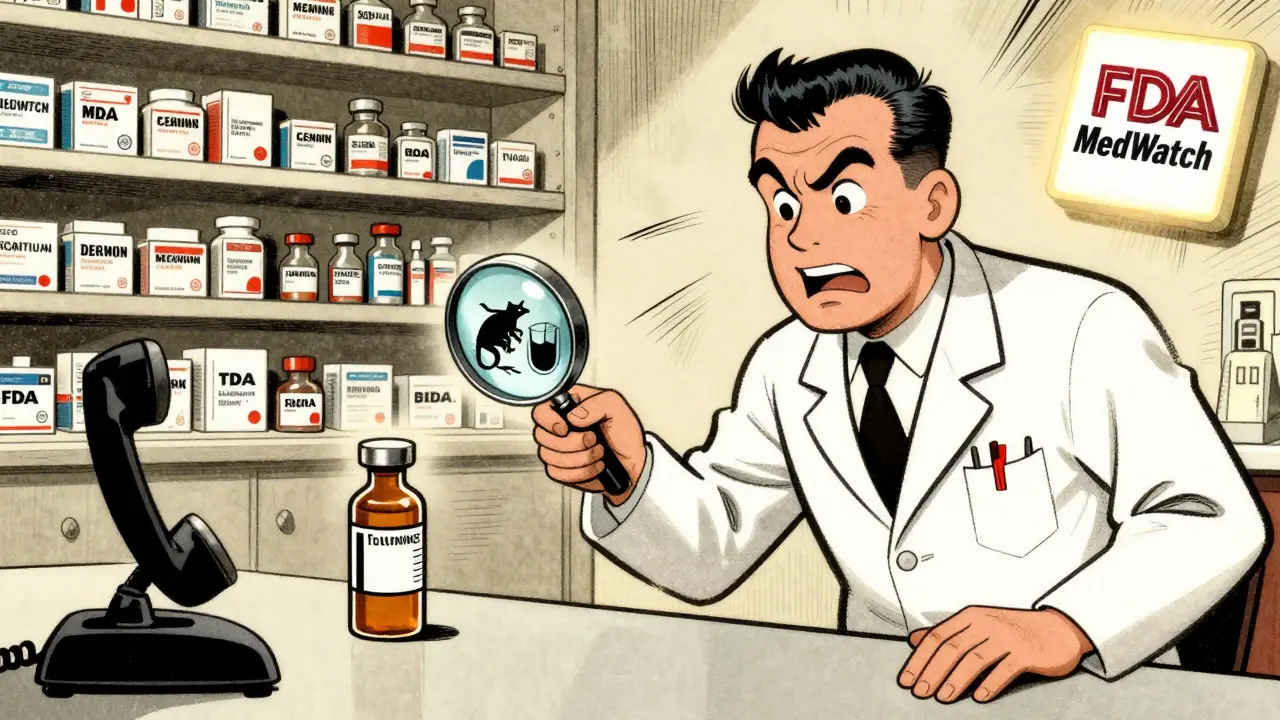
Pharmacists, nurses, and doctors have a legal and ethical duty to report. The stakes are higher because you’re handling these products daily.- Don’t dispense it. If you suspect a prescription is forged or a product is counterfeit, do not give it to the patient.
- Document everything. Record the product name, batch, manufacturer, supplier, and the exact issue. Include photos if possible.
- Report immediately. In the U.S., under the Drug Supply Chain Security Act (DSCSA), dispensers must notify the FDA within 24 hours of identifying a suspect product. Use the 3911 platform in CDER NextGen or email Form FDA 3911 to [email protected].
- Call local law enforcement. If you suspect a forged prescription, contact police. DEA’s Pharmacist’s Guide lists red flags: prescriptions written in different ink, call-back numbers that ring to the patient’s phone, or prescriptions for unusually large quantities.
What Happens After You Report?
Once you submit a report, it goes into a national database. The FDA or TGA will review it. If multiple reports come in about the same product, they launch an investigation. They may:- Trace the product back through the supply chain
- Test the medicine in a lab
- Issue a public alert
- Seize or recall the product
- Shut down illegal online sellers
Why Some Reports Get Ignored
Not every report gets a personal reply. The FDA received over 1.5 million MedWatch reports in 2022. They prioritize cases with clear evidence of harm or widespread risk. But that doesn’t mean your report didn’t matter. Consumers report frustration: 67% of dissatisfied users said they never got a follow-up. But behind the scenes, those reports build patterns. One report might seem small. Ten reports about the same fake pill? That’s a red flag. If you don’t hear back after 14 days, call again. Ask: “Has my report been reviewed? Is there a recall?” Persistence helps.Online Pharmacies Are the Biggest Risk
Most counterfeit drugs come from illegal online sellers. The National Association of Boards of Pharmacy found that 96% of online pharmacies they checked in 2022 broke U.S. laws. They sell fake versions of Viagra, insulin, cancer drugs, and antibiotics. Never buy medicine from a website that:- Doesn’t require a prescription
- Is based overseas without a local address
- Offers “too good to be true” prices
- Has poor spelling or grammar on the site
What’s Being Done to Stop Fake Drugs
Governments and manufacturers aren’t sitting still. The FDA is testing a new smartphone app that lets you take a photo of a pill and automatically pulls up its batch info. In 2023, tests showed it cut reporting time from 14 minutes to under 4 minutes. The WHO is using AI to scan images of packaging and spot fakes with 94% accuracy. The DSCSA now requires blockchain tracking for drug shipments by 2024. Manufacturers like Novo Nordisk and Eli Lilly have direct reporting portals on their websites. But none of this works without you.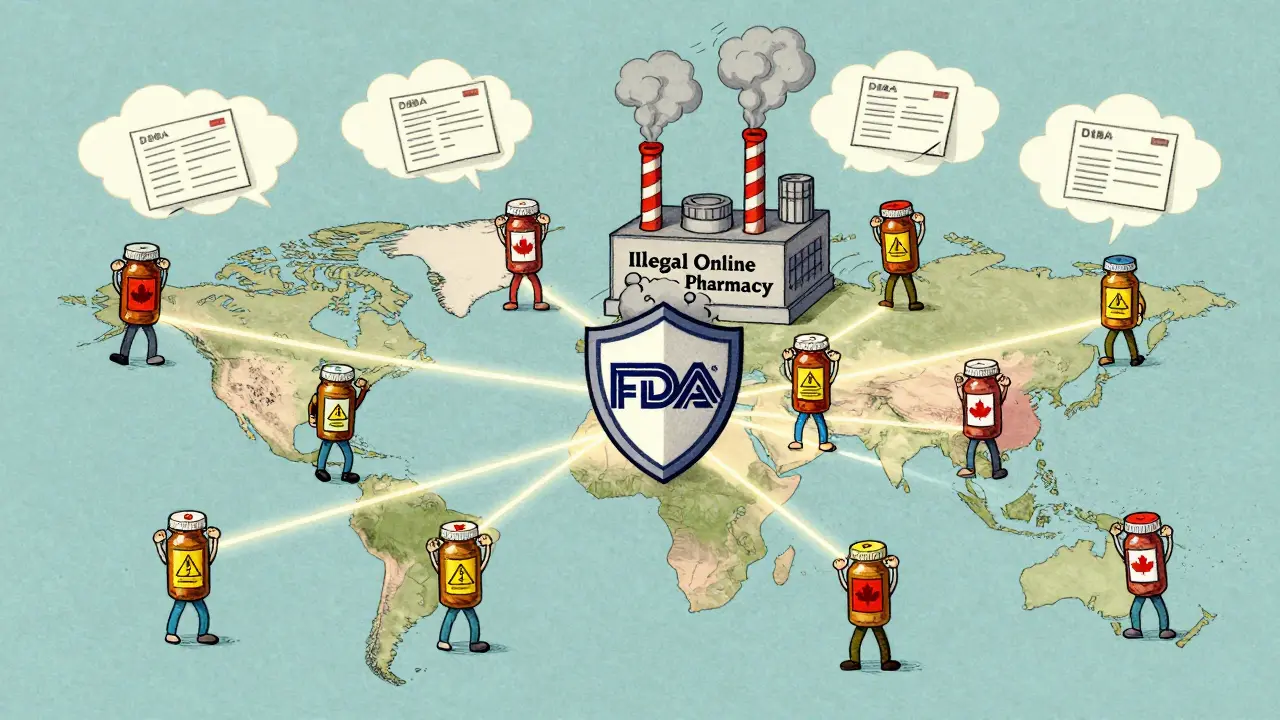
What Not to Do
Don’t:- Take the medicine anyway, hoping it’s okay
- Give it to someone else
- Throw it in the trash without reporting
- Wait to see if others report it first
- Try to return it to the seller-many are scams
Global Reporting Systems at a Glance
| Country | Reporting Agency | How to Report | Response Time |
|---|---|---|---|
| United States | FDA MedWatch | Online form or call 1-800-FDA-1088 | 24-72 hours for urgent cases |
| Canada | Health Canada | Online portal or email to Office of Controlled Substances | 10-day deadline for controlled substances |
| Australia | Therapeutic Goods Administration (TGA) | Online form or call 1800 020 653 | Varies, but prioritizes high-risk products |
| United Kingdom | Medicines and Healthcare products Regulatory Agency (MHRA) | Yellow Card Scheme online | Within 5 working days for urgent reports |
| European Union | Each member state’s national authority | Report to your country’s health regulator | Varies by country |
Frequently Asked Questions
Can I report a fake medication if I bought it online?
Yes. Whether you bought it from a shady website, a social media seller, or an unlicensed pharmacy, you can and should report it. The FDA, TGA, and other agencies track these sources. Your report helps shut them down.
What if I don’t have the packaging or batch number?
Still report it. Even without a batch number, details like the drug name, how it looked, where you got it, and when you took it can help. Photos of the pill and packaging are the next best thing. Don’t wait for perfect information-report what you have.
Will I get in trouble for reporting a fake drug I took?
No. Reporting is protected. Agencies aren’t looking to punish patients-they’re looking to stop dangerous products. Your identity is kept confidential unless you choose to share it.
How long does it take to get a response?
There’s no guaranteed timeline. The FDA processes thousands of reports. If your case is urgent-like a life-threatening reaction or a known fake batch-you’ll get faster attention. If you haven’t heard back in 14 days, call back and ask for an update.
Can I report a medicine that made me sick?
Absolutely. The FDA’s MedWatch system accepts reports of adverse reactions, product failures, and suspected counterfeits. If you had an unexpected reaction, especially after taking a new batch of medicine, report it. That data helps identify patterns before more people are harmed.
Next Steps: What to Do Right Now
If you’ve ever had doubts about a medication you took or filled:- Go to your medicine cabinet. Check one bottle. Look at the batch number. Does it match the label?
- If you bought drugs online recently, check the website against the TGA, FDA, or Health Canada’s approved lists.
- Bookmark the reporting page for your country. Save the phone number.
- Tell a friend or family member about this. Fake drugs don’t care who you are. But your awareness can protect someone.

Just wanted to say thanks for putting this together. I work in a clinic and we’ve had a few close calls with suspicious prescriptions. This guide is clear, practical, and exactly what we need to train new staff. Especially the part about documenting photos - we started doing that last year and it made our reports way more useful to the FDA.
Also, the 68% stat about batch numbers and photos? That’s huge. We’re now training patients to take pictures before they leave the pharmacy if something feels off. Small step, big impact.
Appreciate the global breakdown. I’ve had patients from India and Nigeria ask me how to report meds they bought online while visiting home. This makes it easier to point them to the right agency. The WHO AI tool sounds promising - imagine if we could scan a pill in real time at the pharmacy counter. That’d be a game-changer for low-resource settings.
Also, no one talks enough about how stigma stops people from reporting. Some think they’ll get blamed for taking a fake drug. We need to normalize this like reporting a faulty car part - it’s not your fault, it’s the system’s job to fix it.
Let me ask you something - how do we know the FDA isn’t just using these reports to justify more surveillance? Or worse - that they’re *in bed* with Big Pharma to suppress generic alternatives? You think they really care about patients? Or are they just protecting their billion-dollar profit margins by shutting down the only cheap source for people who can’t afford insulin?
I’ve seen it. The same pills sold on shady sites are chemically identical to the branded ones. The FDA calls them ‘counterfeit’ - but they’re just the same drug, cheaper. Why? Because they don’t want competition. The real danger isn’t fake medicine - it’s corporate control over what you’re allowed to take.
And don’t get me started on blockchain. That’s just another way to track you. They want to know every pill you swallow. It’s not safety - it’s control. Wake up.
Also, the TGA? Same story. They banned a perfectly good antimalarial because it competed with a patented drug. Coincidence? I think not.
Very good information. In India, many people buy medicines from local shops because they trust the shopkeeper, not the brand. Sometimes, the medicine is real but stored badly - hot, damp, past expiry. We don’t always know if it’s fake or just bad. Reporting is hard because we fear getting in trouble or being ignored.
But your guide gives hope. Maybe if more people like us speak up, the system will listen. I will share this with my village pharmacy. Thank you for not making it too complicated. Simple words matter.
OMG I JUST REPORTED A FAKE OXYCODONE LAST WEEK 😱 I bought it off a guy on Instagram for $20… looked like the real thing but tasted like chalk. Took it anyway bc I was in pain… then got dizzy AF. Called my pharmacist - she freaked out and told me to bring it in. We took pics, saved the bag, and filed a MedWatch report. No reply yet but I feel like a hero. 🙌 #ReportFakeMedicine #SaveLives
Love this. So many people don’t realize how powerful a single report can be. I used to think ‘someone else will report it’ - until my mom took a fake blood pressure pill and ended up in the ER. She didn’t even know it was fake until the hospital tested it.
Now I keep a printed copy of the FDA MedWatch link on my fridge. I’ve sent it to my book club, my yoga class, even my cousin who’s into biohacking and buys supplements online. If we all do this, it adds up. No one should have to risk their life because they trusted a sketchy website.
Also - yes, the app that scans pills? I tried it. It worked. Like, instantly. I’m obsessed.
Effective reporting requires precise documentation. Preservation of physical evidence is non-negotiable. The 24-hour reporting window for dispensers under DSCSA is legally binding and ethically imperative.
Do not delay. Do not assume. Act.
This is so important... I can't believe how many people just throw away pills or keep taking them... I once found a bottle of my dad's blood thinner that looked... off. The color was wrong, the numbers were smudged. I called the pharmacy, they said, 'Oh, that's just a different batch,' but I didn't believe them. I kept it, took photos, reported it... turned out it was fake. My dad could've died.
Thank you for saying this clearly. I'm printing this out for my senior group. We need to talk about this more. And yes - take the photo. Save the receipt. Don't be shy. It matters.
How quaint. You think the FDA cares about your little pill report? The real counterfeiters aren’t the shady Instagram sellers - they’re the multinational conglomerates that outsource production to unregulated factories while marketing their drugs as ‘premium.’ The FDA’s entire system is a charade designed to placate the public while allowing corporate interests to flourish. The blockchain? A digital leash. The app? A surveillance tool disguised as safety. You think you’re saving lives? You’re just feeding the machine.
And yet - I still report. Because the act of resistance, even if futile, is the only moral posture left in a world that has sold its soul for profit.
Still. Report. But don’t expect justice. Expect complicity.
Everyone talks about reporting fake medicine like it’s the solution, but no one talks about why it happens in the first place. Why do people buy from shady websites? Because the real medicine is too expensive. Why do pharmacies get compromised? Because they’re underpaid and overworked. Why does the government not fix this? Because they don’t care about poor people. You want to stop fake drugs? Fix the healthcare system. Fix the prices. Fix the access. Stop putting the burden on patients to become detectives. That’s not safety - that’s negligence dressed up as empowerment.
And don’t get me started on the WHO’s AI. It’s great for rich countries. What about rural villages in Bihar where people don’t even have smartphones? You think they’re gonna scan a pill? They’re just trying to survive. Stop praising tech fixes and start fixing the root.
Why are we letting foreign countries sell us fake meds? This is a national security issue. If a Chinese or Indian pharmacy can send poison pills into America, we’re already losing. We need to ban all foreign online pharmacies. No exceptions. No ‘but they’re cheaper’ - I don’t care. Your life isn’t worth $10. We need border checks on every package. We need military drones over shipping warehouses. This isn’t about health - it’s about sovereignty. And if you’re not willing to fight for it, you’re part of the problem.
This is such a helpful guide - thank you for writing it with so much care. I’m a nurse, and I’ve seen too many patients afraid to speak up because they think they’ll be judged. I always tell them: ‘You’re not the problem. The fake pill is.’
Just last week, a woman brought me a bottle of her diabetes meds. Said the pills felt ‘gritty.’ I didn’t know what to do - then I remembered this post. We took photos, called the pharmacy, filed the report. Two days later, the FDA confirmed it was counterfeit. She cried. Said she thought she was imagining things.
You’re not imagining things. You’re saving lives. Keep going.
It’s ironic. We’re told to report fake meds to save lives - but the same system that asks us to report also makes those meds unaffordable. Why should a diabetic in Ohio have to choose between insulin and rent? Why does a cancer patient in Texas have to Google ‘how to buy chemo online’ because insurance denied coverage?
Reporting fake pills is noble. But it’s also a Band-Aid on a gunshot wound. The real counterfeit isn’t the pill - it’s the system that lets people die so corporations can profit.
So yes. Report. But don’t stop there. Demand change. Because no amount of MedWatch forms will fix a broken economy.
Good point about affordability. I’ve had patients say, ‘I know it’s fake, but I have no choice.’ We need policy change - but until then, reporting is still the only tool we have. I’m pushing our clinic to start a ‘safe meds’ pamphlet for low-income patients. Maybe we can link them to patient assistance programs too.