

Imagine being in severe pain and getting a dose of medication that's supposed to help, only to suddenly feel like your skin is on fire with an unbearable itch. For many, the immediate thought is, "I'm allergic to this!" But here is the surprising part: in the vast majority of cases, that itching isn't an allergy at all. In fact, about 70% to 80% of people who think they have an opioid allergy are actually experiencing something called a pseudoallergic reaction. This mistake is a huge problem in healthcare; when a patient is wrongly labeled as "allergic," it can strip away their best options for pain relief and cost the healthcare system billions in unnecessary medication switches.
Understanding the difference between a side effect and a dangerous immune response is the key to getting the right treatment. Whether you are a patient dealing with these symptoms or someone caring for a loved one, knowing what is actually happening in the body can change the entire course of pain management.
The Big Difference: True Allergy vs. Pseudoallergy
To figure out what is happening, we first need to define the players. A True Opioid Allergy is a genuine immune system response where the body produces IgE or T-cell antibodies to fight the drug . This is incredibly rare, affecting only about 0.1% to 0.3% of people. When this happens, your body treats the medication like a dangerous virus and attacks it violently.
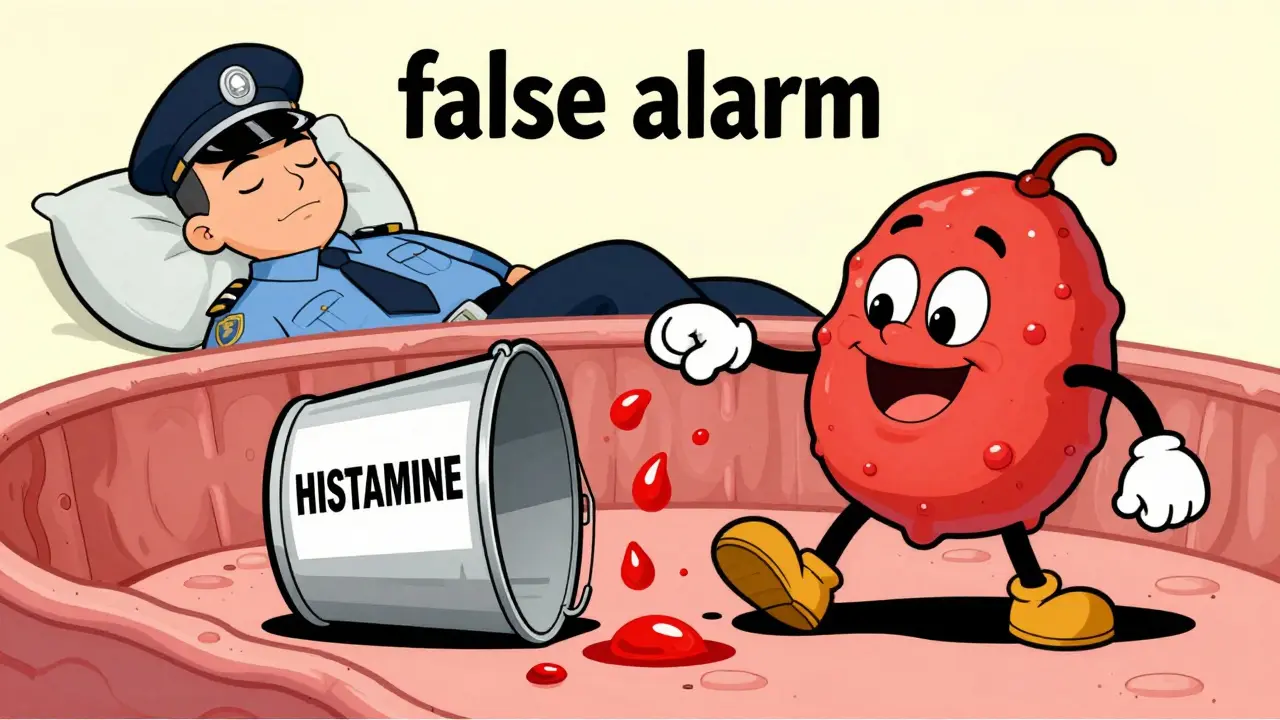
Then there is the Pseudoallergic Reaction, which is a non-immune response where the drug directly triggers mast cells to release histamine without any antibodies involved . Think of it like a "false alarm." Your body isn't allergic to the drug; the drug is just poking your cells in a way that makes them leak histamine, which causes that classic itchy, flushed feeling.
There is also a third category: simple opioid-induced pruritus. This is itching that doesn't even involve histamine. Instead, it's caused by the drug triggering specific receptors (GRPR) in the spinal cord. This explains why some people still itch even when they take a strong antihistamine.
How to Spot the Warning Signs
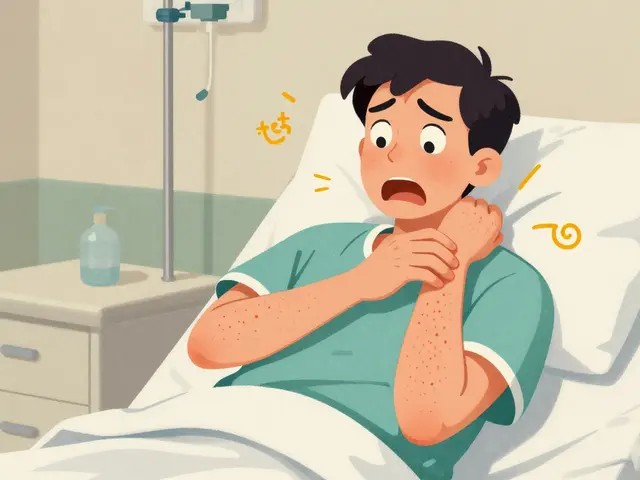
If you're trying to tell these apart, look at the symptoms and the timing. A true allergy usually hits multiple systems in the body very quickly. If you experience swelling of the lips or tongue (angioedema), severe difficulty breathing (bronchospasm), or a sudden drop in blood pressure, you are likely dealing with a medical emergency. These reactions are rapid and systemic.
On the other hand, pseudoallergies are usually more "localized" or mild. Common signs include:
- Flushing of the skin (redness)
- Itching or sneezing
- Mild sweating
- A slight dip in blood pressure
One of the biggest clues is the dose. Pseudoallergic reactions are often dose-dependent. If you get more of the drug, or if it's pushed into your vein faster, the itching usually gets worse. This is because the more of the drug that hits those mast cells, the more histamine they dump into your system.
| Feature | True Allergy | Pseudoallergy |
|---|---|---|
| Cause | Immune system (IgE/T-cells) | Direct histamine release |
| Frequency | Very Rare (<1%) | Common (70-80% of reports) |
| Key Symptoms | Hives, swelling, anaphylaxis | Itching, flushing, sneezing |
| Dose Relation | Can happen at any dose | Often correlates with dose/speed |
| Management | Complete avoidance | Dose adjustment or antihistamines |
Why Some Opioids Cause More Itching Than Others
Not all painkillers are created equal. The chemical structure of the drug determines how likely it is to trigger that histamine release. Morphine is a classic example of a naturally occurring opioid that is notorious for releasing high levels of histamine-up to 3-4 times more than some alternatives. Codeine behaves similarly.
However, synthetic opioids are often much "quieter" in the body. For example, Fentanyl and Methadone lack the specific chemical group (a tertiary amine) that triggers mast cells to burst open. Because of this, the incidence of histamine-mediated reactions drops from 30-40% with morphine down to just 5-10% with these synthetics.
This is why a patient might be told they are "allergic to all opioids" after a bad reaction to morphine, only to find that a fentanyl patch works perfectly. They weren't allergic to the class of drug; they were just sensitive to the histamine-releasing properties of one specific molecule.

What to Do: Management Strategies
If you are experiencing opioid reactions, the strategy depends entirely on which type you have. If it's a true allergy, you must stop the drug immediately. But for those "false allergies," there are several ways to keep the pain relief while losing the itch.
The "Low and Slow" Approach
Since pseudoallergies are dose-dependent, doctors often reduce the opioid dose by 25% to 50%. By lowering the amount of drug hitting the mast cells, the histamine release often drops below the threshold where you actually feel the itch.
Using Antihistamines
Pre-treating with an H1 antihistamine, such as diphenhydramine, about 30 minutes before the opioid dose can block the histamine receptors. This approach resolves symptoms in up to 90% of pseudoallergic cases. It basically puts a "shield" over the receptors so the histamine has nowhere to bind.
Rotating the Medication
If the itching is still too much, switching to a different chemical class can help. Moving from phenanthrenes (like morphine or oxycodone) to phenylpiperidines (like fentanyl) can slash the incidence of itching from 40% down to 15%.
Navigating the Recovery and Future Treatment
For those who have already been labeled "allergic" in their medical records, it's worth having a conversation with an allergist. Evidence shows that over 90% of patients with an "opioid allergy" label can safely use an alternative opioid after a proper evaluation. Getting that label corrected is important because it prevents future doctors from denying you effective pain meds during a crisis.
Looking forward, science is finding even better ways to stop the itch. New medications called kappa opioid receptor agonists, like nalfurafine, are being studied to target the spinal cord's itch receptors directly. These drugs could potentially stop the itching by 70% without affecting how well the pain medication works. We are also moving toward a world of personalized medicine, where a simple genetic test might tell your doctor exactly which opioid your body will tolerate and which one will make you itch.
Is itching always a sign of an allergy?
No. Most opioid-induced itching is a pseudoallergic reaction caused by the direct release of histamine or the activation of GRPR receptors in the spinal cord, not a true immune system allergy.
What are the danger signs of a true opioid allergy?
Watch for symptoms that affect multiple systems: swelling of the face or throat (angioedema), difficulty breathing, severe hives, and a rapid drop in blood pressure. These require immediate emergency medical attention.
Can I take Benadryl if I get itchy from my pain meds?
In many cases, yes, as antihistamines can block the effects of histamine. However, you should always consult your doctor first, as some antihistamines can cause extra drowsiness when combined with opioids, which may increase the risk of respiratory depression.
Why does morphine make me itch more than other opioids?
Morphine has a chemical structure that is more likely to trigger mast cells to release histamine compared to synthetic opioids like fentanyl or methadone.
What happens if I'm incorrectly labeled as "allergic" in my chart?
It can limit your pain management options and increase costs. If you suspect your "allergy" was actually a side effect, ask your doctor for an evaluation to potentially update your medical records.





Oh man, this is such a revelation because I remember this one time back in the day when I was absolutely convinced my body was rejecting a medication in the most violent way possible, and I spent hours spiraling into a panic thinking I was facing some catastrophic medical failure, only to find out later that it was just a quirk of how the drug interacts with the body's chemistry, which just goes to show how easily we can misinterpret these wild physical sensations as life-threatening disasters when they're actually just a common side effect of the very thing trying to help us!
Typical healthcare system propaganda, acting like a few labels in a chart are the only problem when they're probably just pushing synthetic opioids like fentanyl because it's more profitable for the labs to keep us on the newer stuff while dismissing the real systemic failures in how these drugs are administered in the first place.
How quaint that we're treating this like a discovery, as if anyone with a basic understanding of pharmacology wouldn't already know the difference between a mast cell trigger and an IgE-mediated response, but I suppose we must simplify everything for the masses who think a little itch is a near-death experience.