
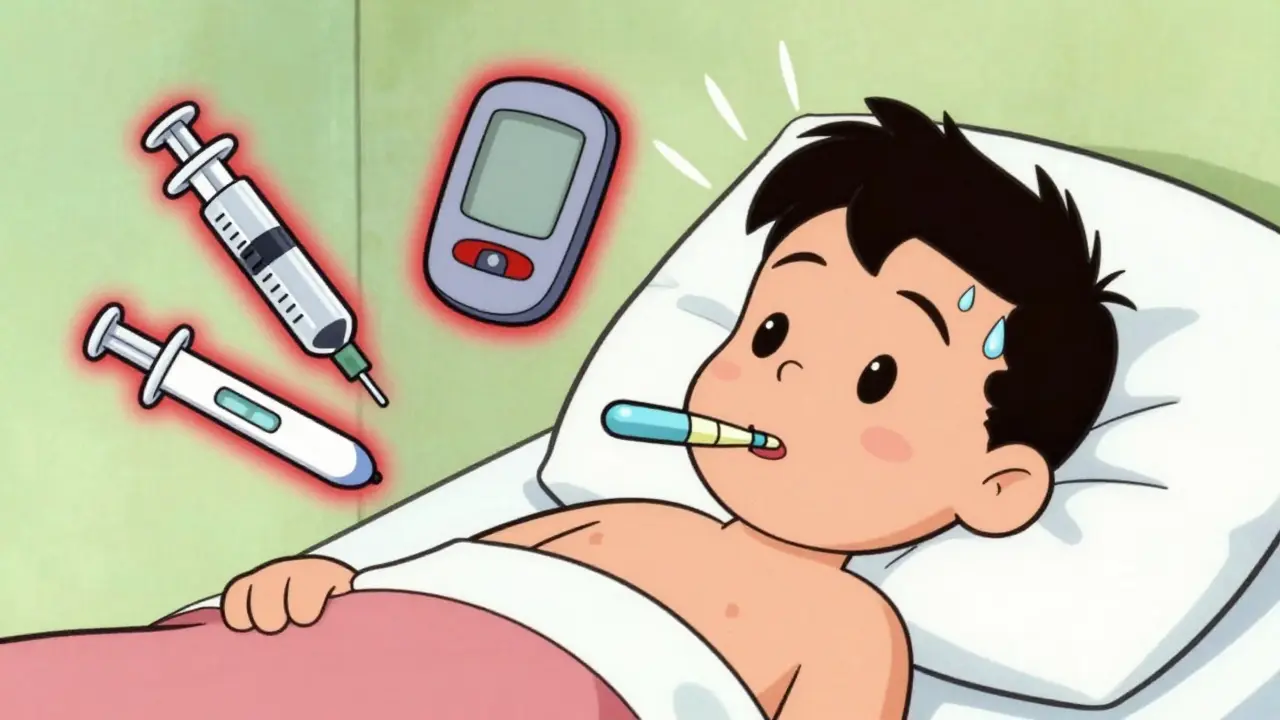
When you’re sick, your body doesn’t just want rest-it wants insulin. For people with diabetes, especially Type 1, getting sick isn’t just about feeling bad. It’s a medical event that can quickly turn dangerous if you don’t know what to do. Fever, vomiting, or even a bad cold can spike your blood sugar, flood your system with ketones, and push you toward diabetic ketoacidosis (DKA)-a life-threatening condition that sends thousands to the hospital every year. The good news? You can prevent it. The key is knowing exactly what to do when you’re too sick to eat, too nauseous to drink, or too tired to think clearly.
Never Skip Your Insulin, Even If You’re Not Eating
This is the most critical rule, and it’s the one most people get wrong. You might think, “I didn’t eat breakfast, so I don’t need my insulin.” That’s a dangerous mistake. When you’re sick, your liver dumps extra glucose into your bloodstream to help your body fight infection. At the same time, stress hormones like cortisol and adrenaline make your body resistant to insulin. The result? Blood sugar can jump 30-50% higher than normal-even if you’re not eating a thing.Long-acting insulin (like Lantus, Levemir, or Basaglar) is your anchor. You need it to keep your body from breaking down fat and producing ketones. Skipping it, even for one dose, can trigger DKA within hours. Studies show that up to 30% of DKA cases happen because people reduced or stopped their insulin when they were sick. Don’t do it. Keep your basal insulin on schedule. If you use an insulin pump, you may need to increase your basal rate by 20% for 12 hours if ketones are moderate or high. If you use injections, keep your usual dose. Talk to your doctor before making bigger changes.
Check Your Blood Sugar Every 2-4 Hours
Normal monitoring isn’t enough when you’re sick. You need to check more often-not just in the morning and at night. For adults, check every 3-4 hours. For children, check every 2-3 hours. That’s not optional. It’s your early warning system.Use these numbers as your guide:
- Below 100 mg/dL (5.6 mmol/L): Risk of low blood sugar. Time to take fast-acting carbs.
- 100-180 mg/dL (5.6-10 mmol/L): Target range during illness. Stay hydrated and keep insulin going.
- 180-240 mg/dL (10-13.3 mmol/L): High. Give a correction dose of rapid-acting insulin.
- Over 240 mg/dL (13.3 mmol/L): Danger zone. Test for ketones immediately.
If your blood sugar stays above 240 mg/dL for two checks in a row, don’t wait. Test for ketones right away. Don’t assume you’re fine because you’re not vomiting or feeling dizzy. DKA doesn’t always come with obvious symptoms until it’s too late.
Ketone Checks Are Non-Negotiable
Ketones are your body’s emergency fuel. When it can’t use glucose for energy, it burns fat instead. That’s normal during fasting-but not during illness. When you’re sick and insulin is low, your body overproduces ketones. Too many, and your blood becomes acidic. That’s DKA.Use a blood ketone meter, not urine strips. Urine tests are slow, unreliable, and can show “negative” even when you’re in danger. Blood ketone meters give real-time numbers:
- Below 0.6 mmol/L: Normal
- 0.6-1.5 mmol/L: Moderate. Increase insulin, drink fluids, retest in 2 hours.
- Over 1.5 mmol/L: High. Call your doctor or go to the ER. If you use a pump, change your infusion site immediately.
One Reddit user, u/SickDayStruggles, shared how conflicting advice from two doctors led to a DKA hospitalization. One said to skip insulin when vomiting. The other said never to stop it. He followed the first-and ended up with ketones at 22 mmol/L. He survived, but barely. Don’t be that person. Trust the science: ketones above 1.5 mmol/L mean you need help now.
Hydration Is Your Lifeline
When your blood sugar is high, your kidneys work overtime to flush out excess glucose. That pulls water out of your body. Dehydration makes everything worse-it thickens your blood, makes insulin less effective, and speeds up ketone buildup.Drink fluids constantly. Adults should aim for 6-8 ounces every hour. For kids, use the “age in ounces” rule: a 10-year-old needs 10 ounces per hour. Don’t wait until you’re thirsty. Sip even if you feel nauseous.
What you drink matters too:
- If blood sugar is under 100 mg/dL: Use sugary drinks like regular soda, juice, or Gatorade (15g carbs per 8 oz).
- If blood sugar is between 100-180 mg/dL: Mix half sugary fluid with half water. This keeps you hydrated without spiking sugar.
- If blood sugar is over 180 mg/dL: Stick to sugar-free fluids like water, unsweetened tea, or diet soda.
Some people try to “power through” vomiting by forcing fluids. Don’t. If you can’t keep anything down for more than 4 hours, call your doctor or go to the ER. IV fluids are often the only way to break the cycle.

Carbohydrates Still Matter-Even When You’re Sick
You don’t need to eat a full meal. But you do need to keep your body from burning fat. That means getting in 15-50 grams of carbohydrates every few hours, even if you’re not hungry.For adults: Aim for 50 grams of carbs every 3-4 hours. For kids: 15 grams per serving, every 1-2 hours. Choose easy-to-digest sources:
- Glucose tablets or gel
- Applesauce or banana
- Plain crackers or toast
- Regular gelatin or popsicles (check labels for sugar content)
If you’re on insulin, you’ll need to cover these carbs with your usual insulin-to-carb ratio. Don’t skip correction doses just because you’re sick. Your body still needs insulin to process glucose-even if it’s coming from a juice box.
Type 1 vs. Type 2: The Differences Matter
Not all diabetes is the same when you’re sick. Type 1 patients are at much higher risk for DKA because they have no insulin production. For them, ketone checks are mandatory during any illness.Type 2 patients on insulin also need to check ketones if blood sugar is over 240 mg/dL. But if you’re on pills like metformin or GLP-1 agonists, ketone testing isn’t always needed-unless your blood sugar stays high for more than a day. Still, you should monitor closely. Illness can make Type 2 patients suddenly need insulin, even if they’ve never used it before.
Also, your target blood sugar range widens during illness. For Type 2, aim for 110-180 mg/dL. For Type 1, 100-180 mg/dL is safer. Don’t stress over perfection. Focus on avoiding lows and preventing ketones.
Build Your Sick Day Kit Now
Don’t wait until you’re feverish to scramble for supplies. Put together a sick day kit now:- Extra ketone test strips (check expiration dates-expired strips can give false negatives)
- Glucose tablets or gel
- Electrolyte drinks (sugar-free and sugary options)
- Easy-to-digest snacks (crackers, applesauce, broth)
- Extra insulin and syringes or pump supplies
- A measuring cup (8 oz) to track fluid intake
- A list of emergency contacts and your doctor’s number
Store it in a cool, dry place. Check it every 3 months. Replace expired strips. Keep your glucagon kit handy too-especially if you’re prone to lows.
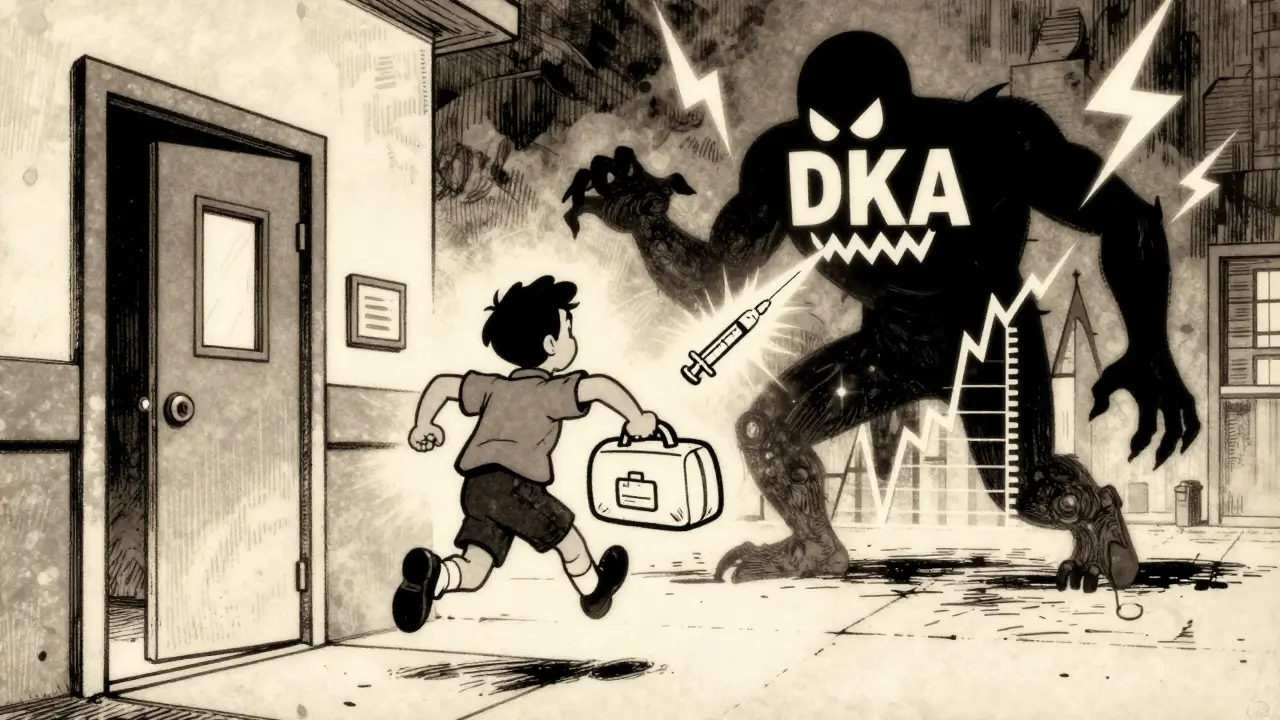
When to Call for Help
You don’t have to tough this out alone. Call your doctor or go to the ER if:- Your ketones are over 1.5 mmol/L and rising
- You’ve been vomiting for more than 4 hours
- You can’t keep any fluids down
- Your blood sugar stays above 300 mg/dL for two checks
- You feel confused, have trouble breathing, or your breath smells fruity
- You’ve lost 5 pounds or more in a few days
These aren’t signs to “wait and see.” They’re red flags. DKA doesn’t wait. Neither should you.
What About New Tech? CGMs and Closed-Loop Systems
If you use a continuous glucose monitor (CGM) or closed-loop system, you’re ahead of the game. But your device doesn’t know you’re sick. It can’t tell the difference between a spike from food and a spike from infection.Don’t rely on alerts alone. Check your blood sugar with a meter if your CGM reads over 250 mg/dL for more than 12 hours. Even if your pump is automating insulin, you may still need to manually increase your basal rate. Most pump manufacturers now include sick-day protocols in their manuals-but you have to read them. And if your pump suspends insulin because of a low reading, you may need to override it during illness. Talk to your diabetes team about your device’s settings before you get sick.
Common Mistakes and How to Avoid Them
- Mistake: Skipping insulin because you’re not eating. Fix: Basal insulin is not optional.
- Mistake: Using urine ketone strips. Fix: Blood ketone meters are faster and more accurate.
- Mistake: Drinking only water when blood sugar is low. Fix: Use sugary fluids to prevent lows.
- Mistake: Taking OTC cold meds with sugar or alcohol. Fix: Read labels. Choose sugar-free and alcohol-free options.
- Mistake: Waiting until you feel awful to act. Fix: Start your sick day plan at the first sign of illness.
One of the biggest problems? Inconsistent advice. One doctor says “never skip insulin.” Another says “cut it in half if you’re vomiting.” That confusion costs lives. Stick to evidence-based guidelines from the ADA, IDF, and CDC. If your doctor gives you conflicting advice, ask for the source. You deserve clear, consistent instructions.
Can I skip my insulin if I’m vomiting and not eating?
No. Even if you’re not eating, your body still needs insulin to prevent ketone buildup. Skipping insulin during illness is the leading cause of diabetic ketoacidosis. Keep your long-acting insulin on schedule. If you’re vomiting, try small sips of fluids and take your insulin as usual. If you can’t keep anything down for more than 4 hours, call your doctor or go to the ER.
Should I use urine or blood ketone tests?
Always use a blood ketone meter if you have one. Urine strips are outdated and unreliable. They can show a negative result even when ketones are dangerously high. Blood ketone meters give you real-time numbers and respond faster to changes. If you only have urine strips, use them-but treat any moderate or large result as a medical alert and act immediately.
How much fluid should I drink when I’m sick?
Adults should drink 6-8 ounces of fluid every hour. For children, use the “age in ounces” rule: a 10-year-old should drink 10 ounces per hour. Choose fluids based on your blood sugar: sugar-free if over 180 mg/dL, half sugary/half water if between 100-180 mg/dL, and sugary fluids if under 100 mg/dL. Don’t wait until you’re thirsty-sip constantly.
Do I need to eat carbs when I’m sick?
Yes-even if you’re not hungry. Your body needs fuel to avoid breaking down fat and producing ketones. Aim for 15-50 grams of carbs every 3-4 hours. Choose easy-to-digest options like glucose tablets, applesauce, crackers, or juice. Cover these carbs with your usual insulin dose. Skipping carbs doesn’t help your blood sugar-it makes ketones worse.
Is it safe to take over-the-counter cold medicine?
Some are, but many aren’t. Check labels for hidden sugar, alcohol, or decongestants like pseudoephedrine, which can raise blood sugar. Choose sugar-free, alcohol-free options. Brands like Tussin DM Sugar-Free or Claritin-D (without sugar) are safer. Always test your blood sugar after taking any new medication-even if it’s labeled “for diabetics.”
When should I go to the hospital?
Go to the ER if: your ketones are over 1.5 mmol/L and rising, you’ve been vomiting for more than 4 hours, you can’t keep fluids down, your blood sugar stays above 300 mg/dL for two checks, you’re confused or having trouble breathing, or you’ve lost 5 pounds or more in a few days. These are signs of diabetic ketoacidosis, which requires emergency treatment with IV fluids and insulin.
Can I use my insulin pump normally when I’m sick?
You can, but you may need to adjust it. Most pumps will not automatically increase your basal rate during illness. If ketones are moderate or high, you’ll likely need to manually increase your basal rate by 20% for 12 hours. Also, change your infusion site if ketones are high-clogged sites can cause insulin delivery issues. Don’t rely on automation alone during sickness.
If you’re managing diabetes, sick days are inevitable. But they don’t have to be scary. With the right plan, the right tools, and the right mindset, you can get through illness without ending up in the hospital. Prepare now. Know your numbers. Trust your meter. And never, ever skip your insulin.


basal = non-negotiable.
❤️❤️❤️
hydration + insulin + ketone checks = survival kit.
please share this with someone who needs it.
Doctors give conflicting advice because they're lazy. Pharmacies sell sugary cold meds because they make money. You think this is about health? It's about profit.
And you? You're just another statistic waiting to happen.
Stop trusting the system. Trust your meter. Trust your body. Or die quietly.
Why do they want you to drink sugar-free soda instead of real juice?
Something's off.
Also, why do they hate sugar so much? Sugar is natural!