
SSRI/SNRI Discontinuation Timeline Calculator
Discontinuation Timeline Calculator
Enter your medication and tapering approach to see your estimated discontinuation timeline.
Stopping SSRIs and SNRIs isn’t as simple as taking your last pill and calling it done. Many people assume that once they feel better, they can quit without issue. But for a large number of patients, the body doesn’t reset that easily. Withdrawal symptoms can hit hard, fast, and sometimes unexpectedly - and they’re often mistaken for a return of depression or anxiety. That’s why understanding SSRI and SNRI discontinuation timelines isn’t just helpful - it’s essential.
Why Discontinuation Symptoms Happen
SSRIs and SNRIs work by increasing serotonin (and in SNRIs’ case, norepinephrine) in the brain. Over time, your brain adapts to this higher level. When you suddenly cut the drug out, your brain is left scrambling. It hasn’t had time to readjust its own production and receptor sensitivity. This mismatch causes what’s known as Antidepressant Discontinuation Syndrome (ADS). It’s not addiction - it’s a physiological adjustment reaction.
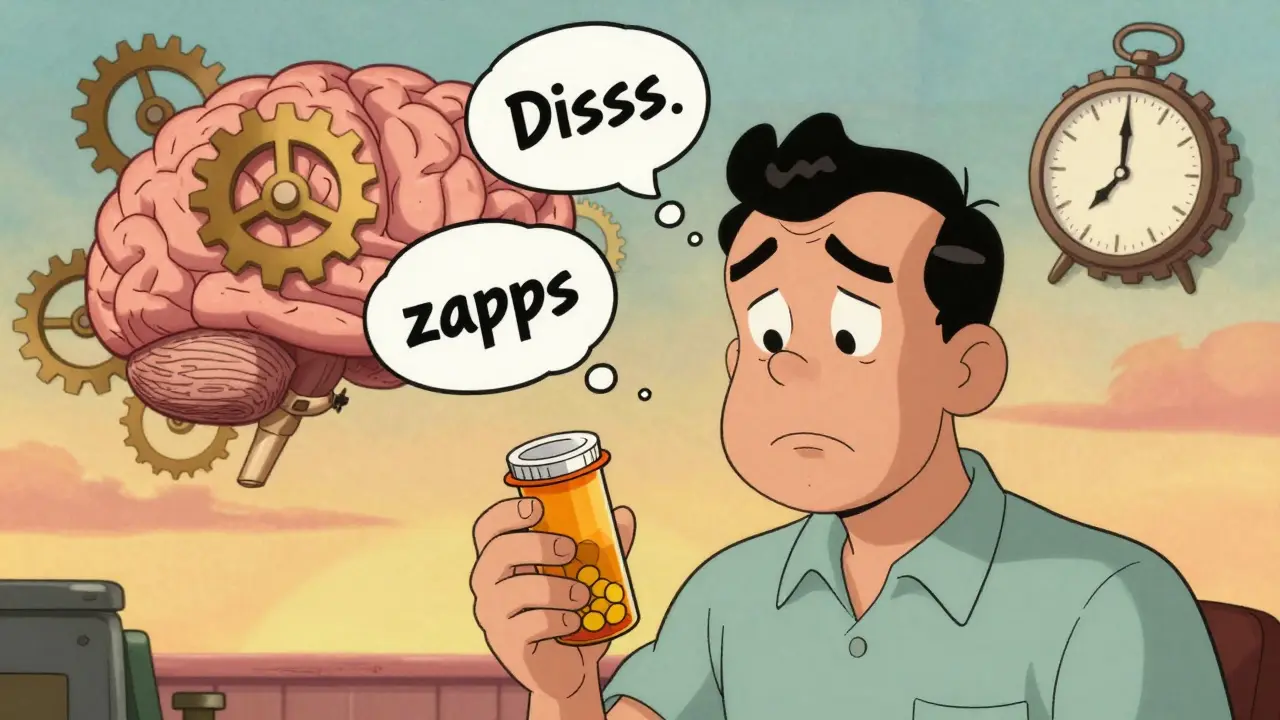
The good news? Most symptoms are temporary. The bad news? They can be intense. Common signs include dizziness, nausea, brain zaps (that electric-shock feeling in your head), insomnia, anxiety spikes, flu-like fatigue, and mood swings. These aren’t signs you’re getting sick again - they’re signs your nervous system is rewiring itself.
Timeline Depends on Half-Life - Not Just How Long You Took It
The biggest factor in how soon symptoms start? The drug’s half-life - how long it takes for half the dose to leave your body. Shorter half-life = faster withdrawal.
- Paroxetine (Paxil) and venlafaxine (Effexor) have half-lives under 24 hours. Symptoms can appear within 1-3 days of stopping. Venlafaxine is especially tough - 65% of people report severe symptoms, including dizziness (78%) and brain zaps (62%).
- Sertraline (Zoloft), escitalopram (Lexapro), and citalopram (Celexa) last a bit longer (26-36 hours). Symptoms usually show up in 2-4 days.
- Fluoxetine (Prozac) is the outlier. With a half-life of 4-6 days, it lingers in your system. Symptoms may not appear for weeks - sometimes even after you’ve gone 30 days without a dose. That’s why you need to monitor yourself for up to 3 months after stopping fluoxetine.
This means someone on paroxetine might feel awful by day two, while someone on fluoxetine might feel fine for weeks - then suddenly crash. That delay can trick people into thinking they’re “out of the woods” too soon.
How Long Do Symptoms Last?
Most people think withdrawal lasts a few days or weeks. That’s what many guidelines say. But real-world experience tells a different story.
Research from the American Family Physician journal says 80% of symptoms resolve within 1-2 weeks. But here’s the catch: that’s an average. In practice, 10-20% of patients experience symptoms lasting months. Reddit’s r/antidepressants community - with over 285,000 members - has more than 15,000 posts from people describing withdrawal that lasted 6, 12, even 18 months. One user reported paroxetine symptoms for 11 months despite following a 6-month taper.
A 2019 Lancet Psychiatry study found that 46% of people trying to quit SSRIs needed more than 6 months to fully taper. The Surviving Antidepressants community, which tracks patient experiences, says 73% needed over a year. That’s not rare. It’s common.
So if your doctor says, “Just cut it in half over two weeks,” and you feel awful - you’re not alone. The guidelines don’t match what most patients actually go through.

Tapering: The Only Safe Way
There’s no approved “cold turkey” method. The only way to reduce risk is a slow, symptom-guided taper.
Here’s what works based on evidence and patient reports:
- Start slow. Reduce your dose by no more than 10% every 4-8 weeks. For short-half-life drugs like venlafaxine or paroxetine, even 5% reductions may be needed.
- Listen to your body. If symptoms pop up after a reduction, hold the dose. Don’t push forward. Wait until symptoms ease - sometimes that takes weeks.
- Use liquid formulations. If your pharmacy offers it, switching to a liquid form lets you make tiny, precise cuts. A 2023 University of Toronto study found this reduced severe symptoms by 63% compared to tablet tapers.
- Switch to fluoxetine. If you’re on a short-half-life SSRI or SNRI, your doctor might suggest switching to fluoxetine first. Its long half-life acts like a buffer, smoothing the transition.
- Don’t switch generics. A 20% concentration difference between brand and generic can trigger withdrawal - even if you didn’t change your dose. Ask your pharmacist for consistency.
Some guidelines suggest a 2-4 week taper. But a 2023 British Medical Journal analysis found that 68% of people who tapered in under 8 weeks ended up with relapse or severe withdrawal. Those who took over 20 weeks had only a 22% failure rate. Slower isn’t just safer - it’s more effective.
What to Watch For
Not all symptoms are normal. Some need immediate attention.
- Brain zaps - electric-shock sensations - are common but usually harmless. If they’re constant or accompanied by seizures, get help.
- Severe anxiety or panic attacks - affecting nearly 29% of people - can be a sign you’re tapering too fast.
- Suicidal thoughts - reported in 4.2% of discontinuation attempts - require urgent medical care. This isn’t depression returning. It’s a neurological reaction.
- Heart palpitations or high blood pressure - especially with SNRIs - should be checked by a doctor.
Most withdrawal symptoms improve within days if you restart your original dose. That’s a key clue: if you feel better after taking your last pill again, it’s withdrawal - not relapse.
What Doctors Get Wrong
A 2022 JAMA Internal Medicine study found only 31% of primary care doctors followed tapering guidelines. Over half recommended tapers shorter than 4 weeks - even though evidence shows those tapers fail in two out of three cases.
Many doctors still believe “if you’re not depressed anymore, you can stop.” But that’s like saying, “You’re not having a migraine anymore, so stop taking your painkillers.” Your brain is still healing.
The Cleveland Clinic reports that 92% of successful discontinuations happen when patients work with providers who specialize in gradual tapering. General practitioners? Only 47% success rate.
What You Can Do Right Now
If you’re thinking about stopping:
- Don’t make the decision alone. Talk to a psychiatrist or prescriber experienced in tapering.
- Ask if your medication is available in liquid form. If not, ask about switching to fluoxetine temporarily.
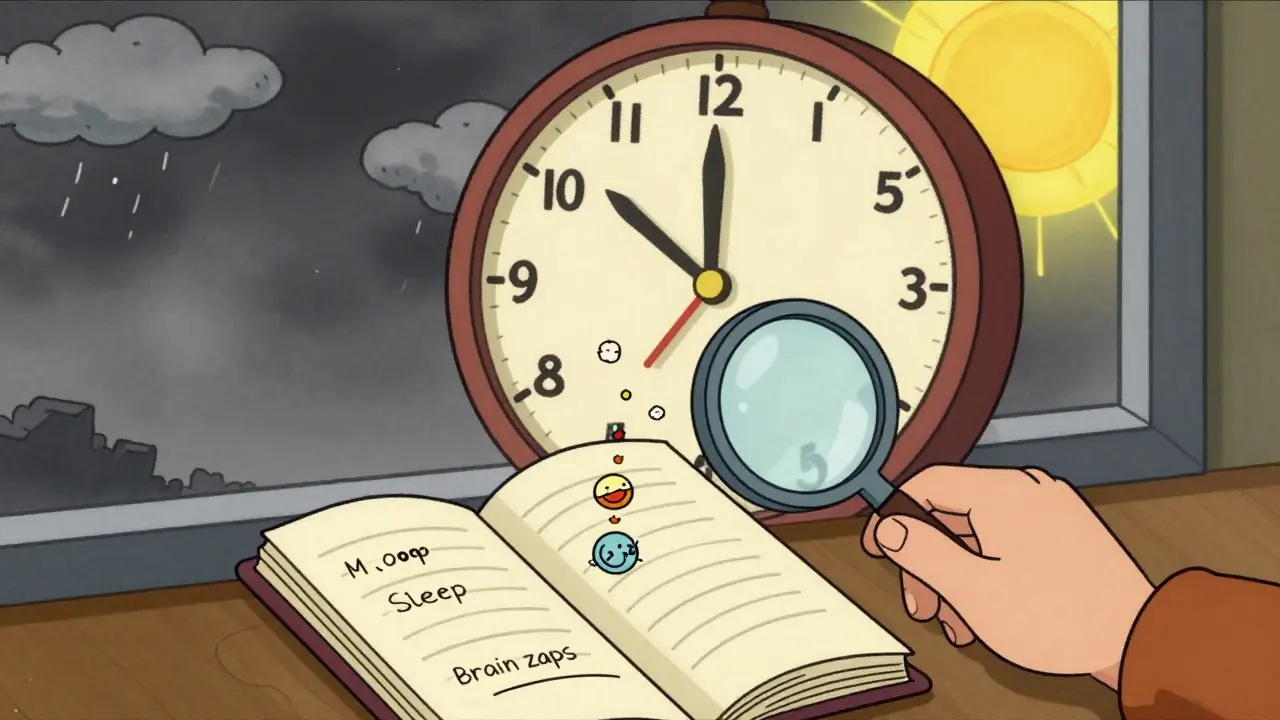
- Track your symptoms daily. Use a simple journal: rate mood, sleep, brain zaps, nausea on a scale of 1-5.
- Plan for at least 6 months. Even if you feel fine, give your brain time to reset.
- Know your exit plan. If symptoms hit hard, have a clear step: “If I feel worse than a 4/5 for more than 5 days, I’ll return to my last dose.”
There’s no one-size-fits-all timeline. Your body isn’t a lab. It’s you. And you deserve a plan that respects that.
How long does SSRI/SNRI withdrawal last?
For most people, symptoms last 1-2 weeks. But 10-20% experience symptoms for months, and some report them lasting over a year. Duration depends on the drug, how long you took it, your metabolism, and how fast you taper. Fluoxetine can cause delayed symptoms up to 3 months after stopping.
Can I stop SSRIs cold turkey?
It’s not recommended. Stopping suddenly increases the risk of severe withdrawal symptoms like dizziness, brain zaps, nausea, and anxiety spikes. In some cases, it can trigger suicidal thoughts. A slow, symptom-guided taper reduces these risks dramatically.
Why do some people have worse withdrawal than others?
Several factors: medication half-life (shorter = worse), duration of use (longer use = more adaptation), genetics (how your body processes drugs), and taper speed. People on paroxetine or venlafaxine tend to have the toughest withdrawals. Those who taper too fast are far more likely to struggle.
Is it safe to switch from one SSRI to another during tapering?
Yes - and sometimes it helps. Switching from a short-half-life drug like paroxetine to fluoxetine (Prozac) can make tapering smoother because fluoxetine stays in your system longer, acting like a buffer. This is a common strategy used by specialists, especially for patients with severe withdrawal.
What should I do if I have withdrawal symptoms?
First, don’t panic. Most symptoms are temporary. If they’re mild, wait a few days - your body may adjust. If they’re moderate to severe, go back to your last tolerated dose and hold it for 2-4 weeks. Then try reducing again, but slower. If symptoms persist beyond 3 weeks or include suicidal thoughts, contact your prescriber immediately.
Are there alternatives to tapering?
Not really. There’s no approved shortcut. Some people try supplements like omega-3s or magnesium, but there’s no strong evidence they prevent withdrawal. The only proven method is a slow, individualized taper. Research is exploring micro-dose liquid tapers and new protocols - but for now, patience and precision are your best tools.





11 Comments
Write a comment