
AIN Risk Assessment Tool
Medication Risk Assessment
This tool helps identify potential risk factors for acute interstitial nephritis based on your medication history and symptoms. Important: This is not a medical diagnosis.
Risk Assessment Result
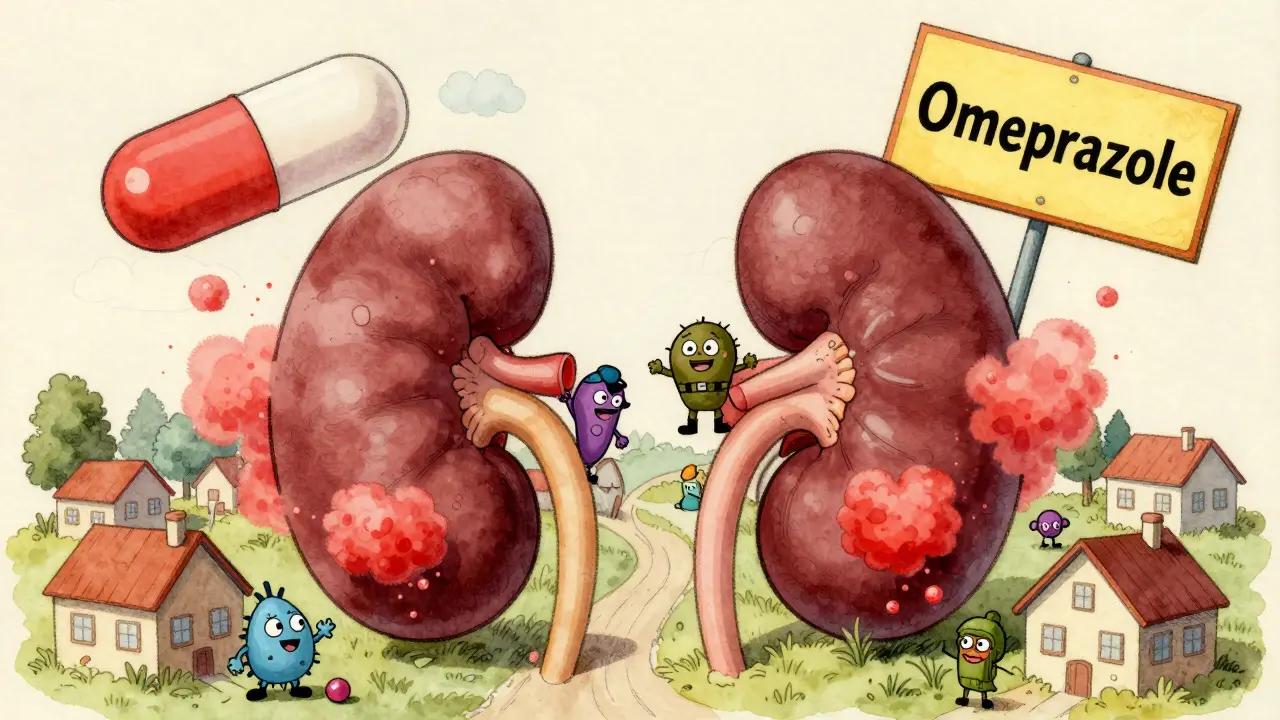
When your kidneys start acting up after you begin a new medication, it’s not always just dehydration or a urinary infection. Sometimes, it’s something more serious - acute interstitial nephritis (AIN). This isn’t a common term, but if you’ve been on antibiotics, proton pump inhibitors like omeprazole, or daily NSAIDs for months, you need to know the signs. AIN is kidney inflammation caused by your body’s immune system reacting to a drug. Left unnoticed, it can lead to permanent kidney damage. The good news? If caught early, you can often stop the damage before it sticks.
What Happens in Your Kidneys When a Drug Triggers AIN
Your kidneys don’t just filter waste. They also regulate fluid, electrolytes, and blood pressure. Between the tiny tubes that make urine - called tubules - lies the interstitium. It’s a space filled with connective tissue and blood vessels. When a medication triggers AIN, your immune system sends inflammatory cells into this space. Think of it like swelling in a neighborhood between houses. The swelling squeezes the tubules, blocks urine flow, and reduces kidney function. The result? Your creatinine levels rise, your urine output drops, and your body starts holding onto fluid.Over 250 medications have been linked to this reaction. The most common? Antibiotics (like penicillin and ciprofloxacin), proton pump inhibitors (PPIs) such as omeprazole and pantoprazole, and NSAIDs like ibuprofen and naproxen. Newer drugs like immune checkpoint inhibitors used in cancer treatment are also rising in cases. What’s surprising is that it doesn’t happen right away. Antibiotics might cause symptoms in 1-2 weeks. PPIs? Often after 10-12 weeks of daily use. NSAIDs? Sometimes after 3-6 months of regular use. That’s why it’s so easy to miss.
How to Spot the Warning Signs
Many people assume kidney problems mean swelling, fatigue, or dark urine. But AIN doesn’t always show up that way. In fact, about half of patients don’t even notice a change in how much they pee. Here’s what to look for:- Decreased urine output - less than usual, especially if you’ve been drinking enough water
- Fever - not from a cold or flu, but appearing alongside new kidney issues
- Rash - often itchy, red, or patchy, not typical acne or allergy
- Joint pain or body aches - without injury or recent illness
- Unexplained fatigue - not from sleep loss, but from rising waste levels in your blood
Here’s the catch: the classic “hypersensitivity triad” of rash, fever, and eosinophilia (a type of white blood cell spike) happens in fewer than 10% of cases. So if you’re waiting for all three, you’ll miss most cases. Blood tests will show rising creatinine - usually a jump of 0.3 mg/dL or more within 48 hours. Urine tests may show sterile pyuria (white blood cells in urine without infection) or eosinophiluria (eosinophils in urine), which are strong clues. Protein in the urine? Usually mild, but NSAID-induced AIN can cause heavy protein loss - over 3 grams per day - which mimics nephrotic syndrome.
Why Diagnosis Is So Often Delayed
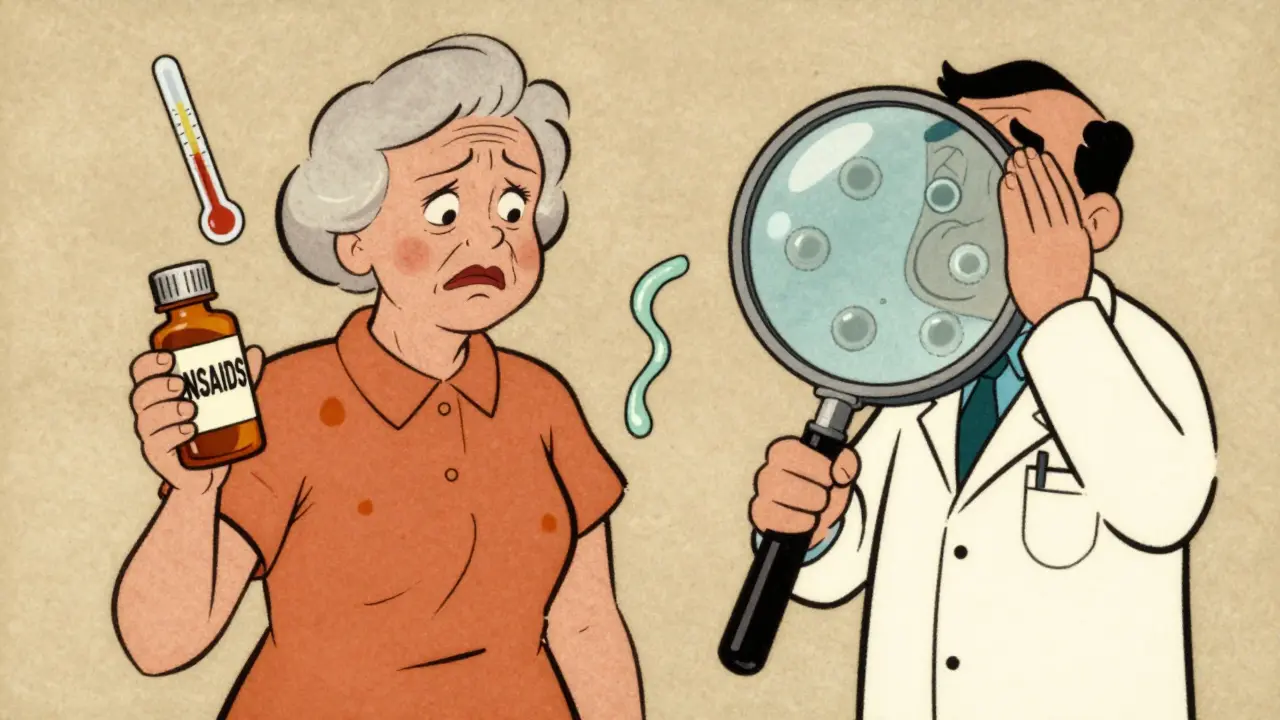
Doctors don’t always think of AIN when someone has acute kidney injury. In fact, studies show only half of patients with biopsy-proven AIN even meet the standard criteria for kidney failure. Many are misdiagnosed with urinary tract infections, dehydration, or even heart failure. One patient on a health forum described being told for two weeks that her “UTI wasn’t clearing up” - until her creatinine hit 4.2 and a nephrologist asked about her daily omeprazole. She’d been taking it for 4 months for heartburn.Another problem? Medication history. People forget to mention over-the-counter drugs. A 2022 study found 40% of AIN cases involved NSAIDs or PPIs that patients didn’t report because they thought they were “harmless.” If you’re on five or more medications, your risk jumps nearly fivefold. Older adults - especially women over 65 - are at highest risk. They’re more likely to be on PPIs for acid reflux, NSAIDs for arthritis, and multiple antibiotics for recurring infections.
What Happens After Diagnosis
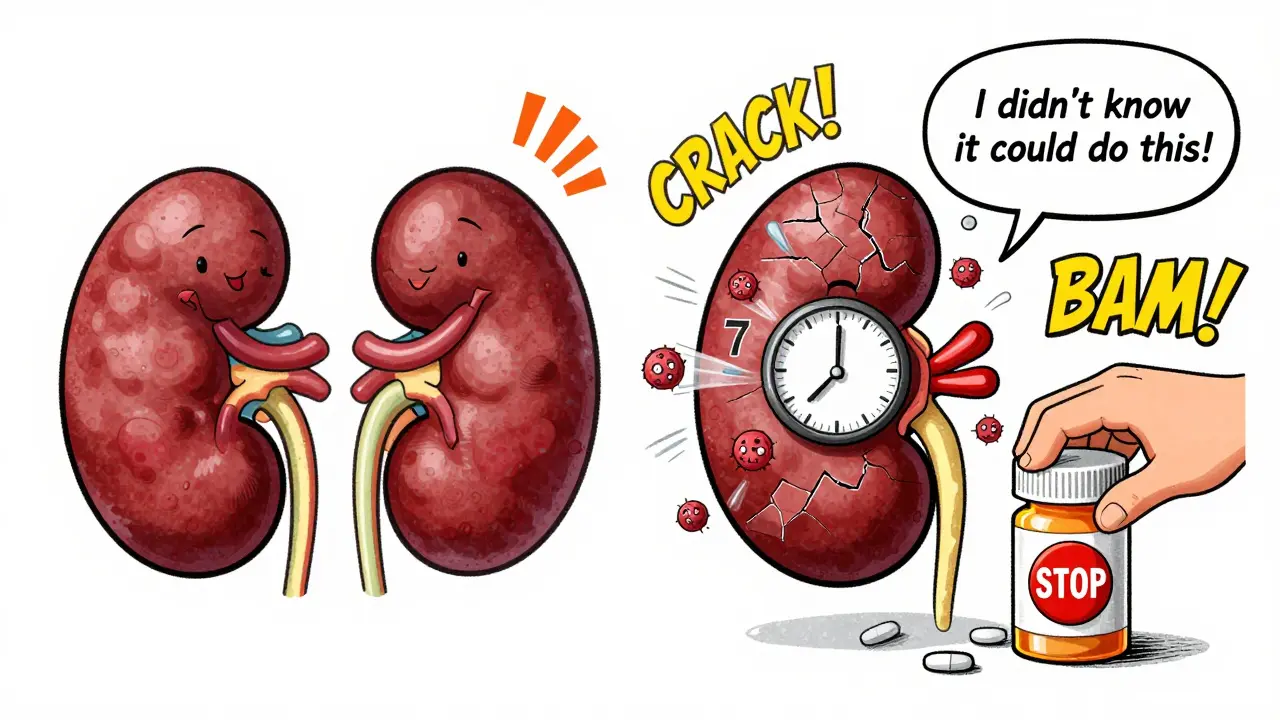
The first and most important step is stopping the drug. No exceptions. If you’re on omeprazole and your creatinine rises, you stop it - even if it’s helping your heartburn. The second step is a kidney biopsy. It’s the only way to confirm AIN. The biopsy looks for immune cells in the interstitium, eosinophils, and signs of tubule damage. If you wait too long - beyond 7-10 days after symptoms start - the damage can become permanent.Should you get steroids? That’s where things get messy. Some nephrologists give prednisone (0.5-1 mg/kg per day) if kidney function doesn’t improve after stopping the drug. Others wait. The European Renal Association recommends steroids if creatinine hasn’t dropped after 7 days. The American Society of Nephrology says only use them if creatinine is above 3.0 mg/dL. Why the difference? Because there are no randomized trials proving steroids work. Observational studies suggest they help, but we don’t know for sure. One 2022 survey found 30-70% of nephrologists use steroids - depending on the hospital.
Recovery varies. Younger people under 50 often bounce back in 6-8 weeks. Those over 65? It can take 12-16 weeks. About 15-25% of untreated cases progress to chronic kidney disease. Even with treatment, some people never fully recover. One Reddit user, a nurse practitioner, said she’s seen five cases from antibiotics - and three had permanent damage despite early action.
What You Can Do Now
If you’re on any of these drugs and notice new symptoms:- Check your medication list - include every pill, even aspirin or ibuprofen you take for headaches
- Look for timing - did symptoms start within 3 months of starting a new drug?
- Get a urine test - ask your doctor for urinalysis and look for white blood cells
- Test creatinine - if it’s up by 0.3 mg/dL or more from baseline, ask about AIN
- Stop the drug - don’t wait for a biopsy if suspicion is high
- See a nephrologist - within 48 hours if kidney function is declining
Don’t assume your doctor will think of it. Ask: “Could this be medication-induced kidney inflammation?” If they hesitate, push for a referral. Early action is everything.
The Bigger Picture: Why This Is Getting Worse
From 2005 to 2020, hospitalizations for drug-induced AIN jumped by 237%. Why? PPIs. Nearly 40% of Americans over 65 take them daily. The FDA added warnings in 2021. But most people still don’t know the risk. The same goes for NSAIDs. People take them for years for back pain or arthritis, thinking they’re safe. Meanwhile, research is moving fast. New biomarkers like NGAL can detect AIN before creatinine rises. Genetic testing is starting to identify who’s at highest risk - like people with the HLA-DRB1*03:01 gene, who are over four times more likely to develop AIN from PPIs.What’s next? AI tools are being trained to flag at-risk patients from electronic records - spotting patterns like “PPI + rising creatinine + no infection” before the patient even feels sick. But for now, the best defense is awareness. If you’re older, on multiple meds, or have kidney issues, know this: a simple pill you’ve taken for months could be quietly harming your kidneys. Pay attention. Speak up. And if something feels off - get it checked.



8 Comments
Write a comment