FDA Drug Interaction Checker
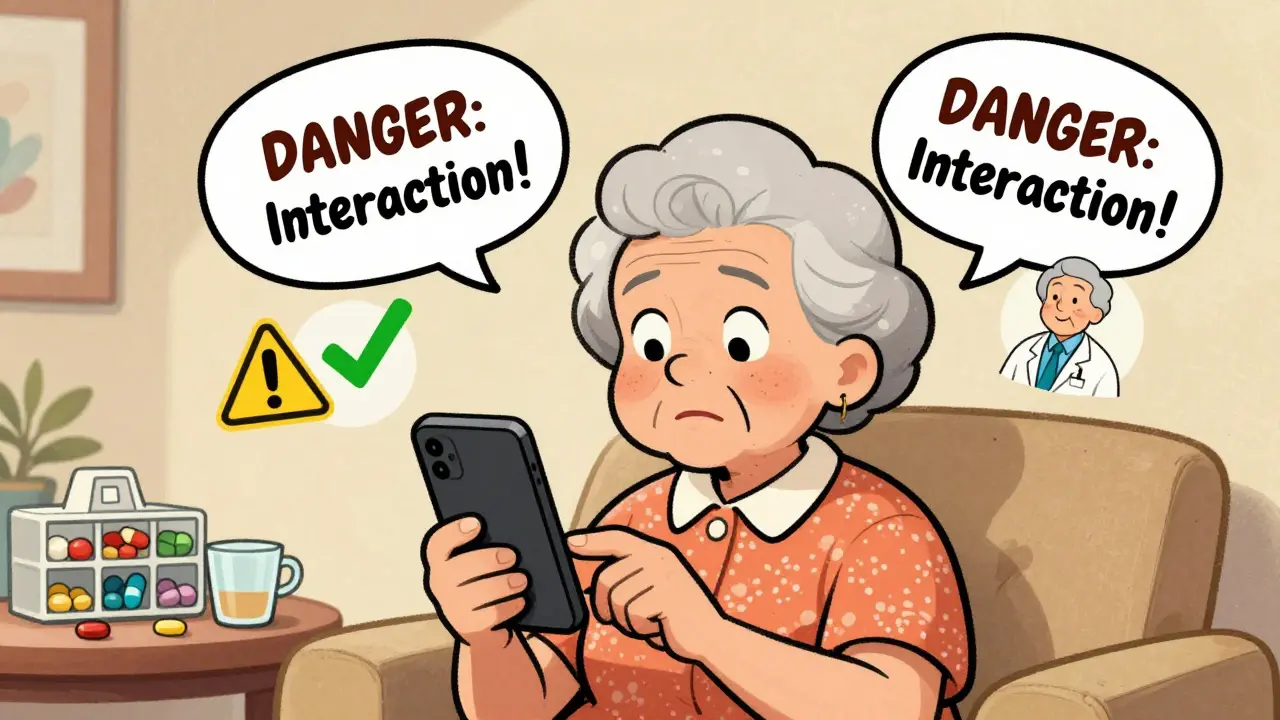
All medications appear safe to take together based on current FDA data.
This combination may cause side effects or reduce effectiveness. Consult your healthcare provider before continuing.
This combination can cause serious health consequences including hospitalization or death. Do NOT take these together without medical supervision.
Every year, over 1.3 million people in the U.S. end up in emergency rooms because of medication errors. Many of these mistakes happen because people forget when to take their pills, mix up dosages, or don’t realize how a new drug interacts with something they’re already taking. That’s where FDA medication safety apps come in. These aren’t just handy reminders-they’re tools built to give you accurate, real-time information about your drugs, side effects, and dangerous interactions. And they’re used by millions every month.
What Makes an App a "FDA Medication Safety App"?
Not every app that talks about drugs is regulated by the FDA. In fact, most aren’t. The FDA doesn’t approve every medication app you find on the App Store or Google Play. But when an app does more than just list drug facts-when it tells you whether a combination of pills could kill you, or if a dose is dangerously high-it crosses into medical device territory. That’s when the FDA steps in.
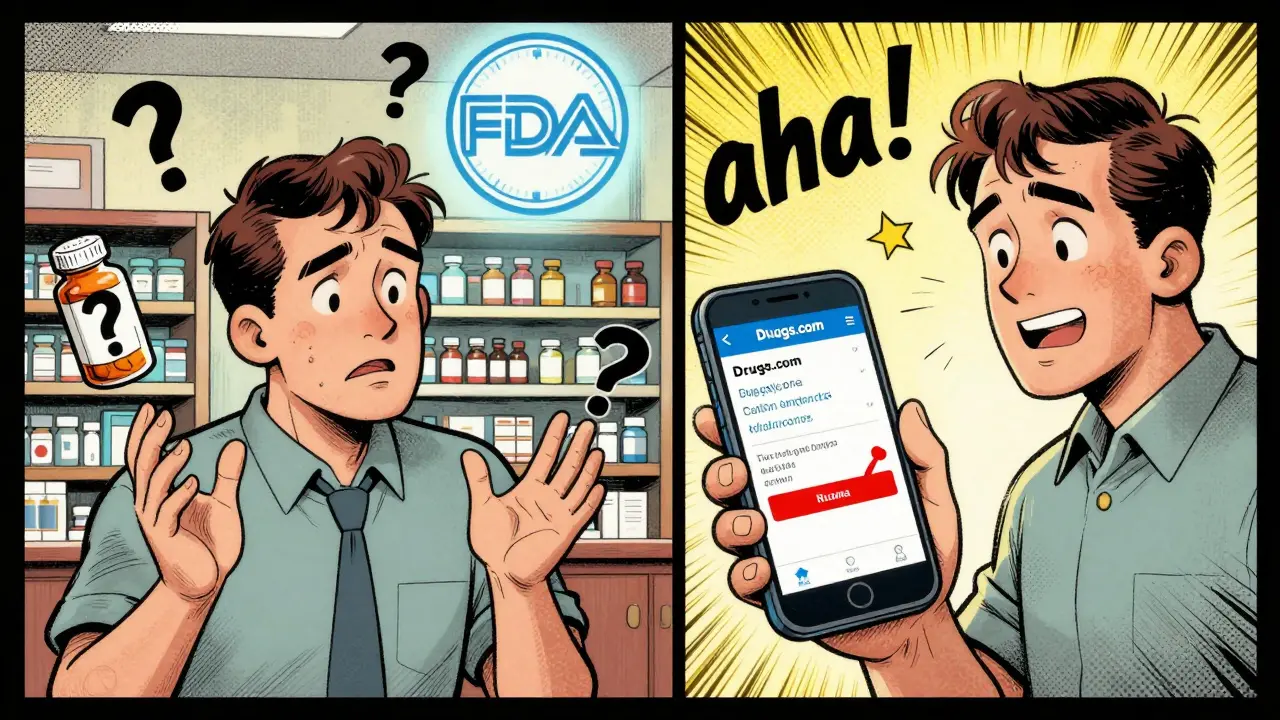
Apps like Medisafe and Drugs.com are among the most popular because they pull data directly from FDA-approved drug labels. They don’t guess. They don’t rely on crowd-sourced opinions. They show you what the official FDA database says about each medication: dosage, warnings, pregnancy risks, alcohol interactions, and even what to do in case of overdose.
Only a few apps, like Somryst, are actually FDA-approved as medical devices. Somryst isn’t just an app-it’s a prescribed digital treatment for chronic insomnia. It’s been clinically proven to work. Most other apps? They’re information tools. But that doesn’t mean they’re not powerful.
Top 3 Apps You Can Trust Right Now
There are dozens of medication apps out there. But only a handful have earned real trust from users and medical professionals. Here are the three that stand out in 2026.
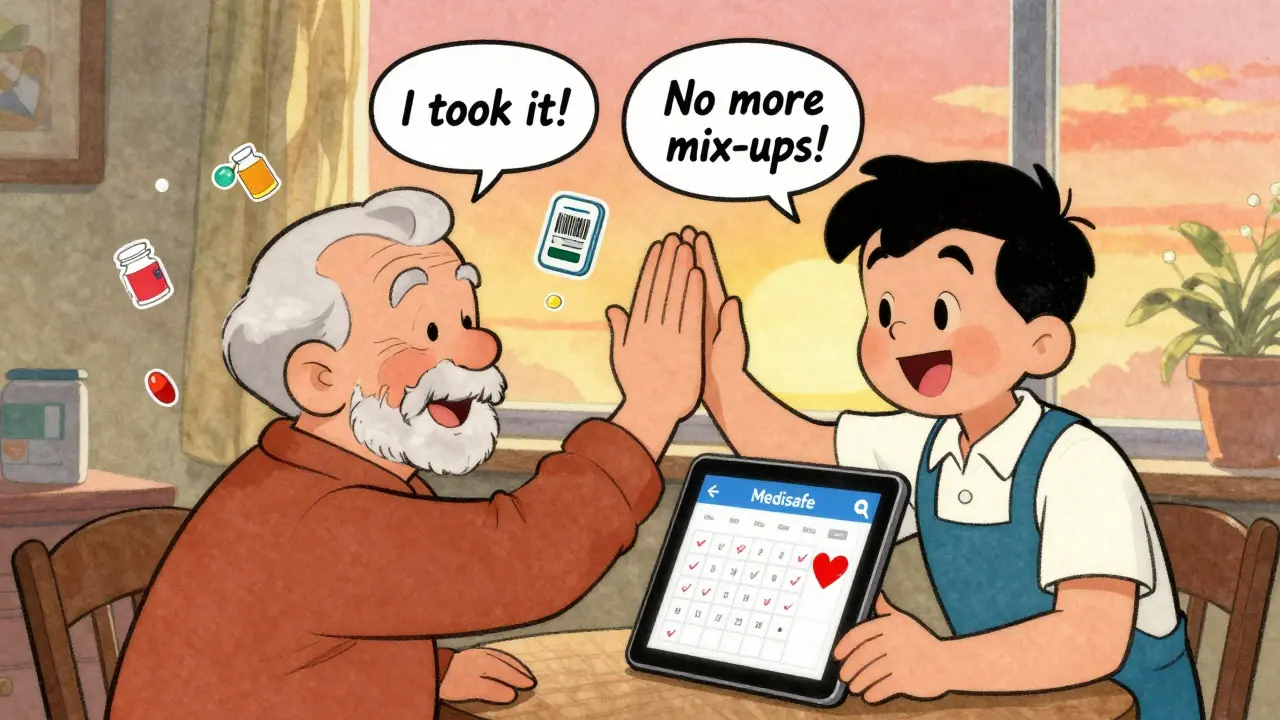
- Medisafe: This app is built for people on multiple medications. It tracks when to take each pill, sends custom reminders, and even lets caregivers monitor your adherence remotely. Over 7 million people use it monthly, and 40% of them are 65 or older. Its biggest strength? Real data. It shows you that Friday and Saturday are the hardest days to stick to a schedule-based on actual usage from millions of users.
- Drugs.com: If you Google a drug name, this site often shows up first. The app mirrors that same database with offline access, a symptom checker, and an interaction tracker that checks up to 50 drugs and foods at once. It also includes FDA alerts, pregnancy safety ratings, and overdose treatment steps-something only UpToDate offers too. It’s free, no subscription needed, and updated daily.
- UpToDate: This one’s mostly for doctors, but patients can use it too. It has over 11,000 peer-reviewed medical topics, including rare drug reactions and treatment protocols. It’s not free-annual access costs $499-$699-but if you’re managing a complex condition like epilepsy or kidney disease, the depth of info is unmatched. Over 78% of U.S. teaching hospitals rely on it.
How These Apps Actually Prevent Mistakes
Let’s say you’re on blood thinners, antidepressants, and a statin. Your doctor adds a new antibiotic. You don’t know it could raise your risk of bleeding or cause muscle damage. That’s where the interaction checker comes in.
Apps like Medisafe and Drugs.com scan all your medications and flag risks in seconds. They don’t just say "possible interaction." They tell you: "This combo increases your risk of dizziness by 40% and may raise your potassium levels. Talk to your doctor before starting."
Some apps now use AI to go further. The Pill Identifier & Med Scanner app, updated in July 2025, lets you take a picture of a pill or scan its barcode. It then pulls up the exact drug name, dosage, manufacturer, and side effects-even if the label is worn off. This alone cuts down on errors from misidentified pills, which are common in older adults.
Another big win? Side effect tracking. Instead of guessing whether that headache is from the new pill or just stress, you log it in the app. Over time, patterns emerge. Did the nausea start after you took the pill at night? Did the dizziness disappear after you switched to morning doses? The app doesn’t diagnose-but it gives you data to take to your doctor.
What You Need to Set It Up
Setting up one of these apps takes 10 to 15 minutes. Here’s how:
- Download the app (iOS 9.0+ or Android 4.4+ required).
- Enter each medication: name, dose, frequency (e.g., "5 mg once daily"), and reason (e.g., "high blood pressure").
- Set reminders with sound and vibration. Don’t rely on silent alerts-many users miss them.
- Enable barcode scanning if available. Scan the bottle next time you refill.
- Add all supplements and OTC drugs. Many interactions happen with aspirin, ibuprofen, or melatonin.
- Invite a caregiver if you need help. Medisafe lets them see your schedule and send alerts.
For seniors or caregivers, apps like mySeniorCareHub (launched in February 2025) offer simplified layouts, larger text, pictorial guides, and one-touch help buttons. These features cut the learning curve from 3-5 sessions to just one.
What These Apps Can’t Do (And What You Still Need)
These tools are powerful, but they’re not magic. They can’t replace your doctor. Here’s what they don’t do:
- They don’t diagnose illnesses. If you have unexplained symptoms, see a provider.
- They don’t adjust your dose. Even if the app says "this looks high," only your doctor can change your prescription.
- They don’t guarantee safety. Some rare side effects aren’t in the database yet.
- They don’t always sync with your hospital’s EHR. If your doctor changes your meds, you still need to update the app manually.
Also, watch out for outdated info. Apps that don’t update daily can give you wrong data. Drugs.com and Medisafe update daily. Others? Not so much. Always check the app’s last update date.
The Big Change Coming in 2025
The FDA is rolling out new rules called PDURS (Prescription Drug Use-Related Software) in late 2025. This means apps that give advice on prescription drugs-like suggesting a dose or warning about interactions-will need to prove they’re accurate, safe, and reliable.
That’s good news. It means apps that cut corners will be weeded out. But it also means some free apps might disappear or start charging. Medisafe and Drugs.com are already preparing. Expect more transparency, clearer disclaimers, and possibly subscription fees for advanced features.
By 2027, analysts predict 40% of medication apps will need some level of FDA review. If you’re using an app that hasn’t updated its privacy policy or claims since 2022, it might not be around much longer.
Real People, Real Results
Jessica, 68, had a seizure and ended up on eight different medications. "I couldn’t remember which one to take when," she says. "I tried sticky notes. I tried alarms. Nothing worked. Then I got Medisafe. Now I know what’s due, what’s not, and if something feels off, I check the side effects right in the app. I haven’t had another episode in over a year."
On Reddit, users in r/medapps say Drugs.com’s symptom checker is "surprisingly accurate" for common issues like rashes or headaches-but they warn it fails for rare conditions. One user wrote: "It told me my tingling hands were likely from vitamin B12 deficiency. I got tested. It was right. Saved me three doctor visits."
That’s the power of these apps-not because they’re perfect, but because they give you control. You’re no longer just guessing.
Are FDA medication safety apps free to use?
Most core features are free. Apps like Drugs.com and Medisafe let you track medications, check side effects, and get reminders without paying. Premium upgrades-like unlimited caregiver access, advanced analytics, or ad-free use-cost $2.99 to $9.99 per month. UpToDate is the exception; it’s a paid clinical tool for professionals, but individuals can subscribe too.
Can these apps replace my pharmacist?
No. Pharmacists are trained to catch complex interactions, review your full history, and spot red flags apps might miss. But these apps are great companions. Use them to prepare questions before your pharmacy visit. For example, "I saw on Medisafe that this new pill might raise my blood pressure. Is that true?" That kind of conversation leads to better care.
Do these apps work offline?
Some do, partially. Drugs.com lets you view previously searched drug pages without internet. Medisafe stores your medication list and reminders locally, so alerts still go off. But real-time interaction checks, FDA alerts, and updates require an internet connection. Always keep Wi-Fi or data turned on when possible.
What if I take supplements or herbal products?
Enter them anyway. Many interactions happen between prescription drugs and common supplements like St. John’s Wort, fish oil, or magnesium. Apps like Medisafe and Drugs.com include these in their interaction databases. Ignoring them leaves a dangerous blind spot.
Are these apps safe for seniors?
Yes-if you pick the right one. Apps like Medisafe and mySeniorCareHub are designed with older users in mind: big buttons, clear fonts, simple navigation, and caregiver alerts. Avoid cluttered apps with too many tabs. If your parent struggles with tech, help them set it up once, then check in weekly. Most seniors get comfortable after one or two tries.
How often should I update my meds in the app?
Update it the same day your doctor changes your prescription. Don’t wait. Even a small change-like switching from 10 mg to 5 mg-can cause serious side effects if the app doesn’t reflect it. Some apps, like Medisafe, have a "Just-In-Time-Intervention" feature that reminds you to update after a doctor visit.
What to Do Next
If you or someone you care for takes three or more medications, start with Drugs.com or Medisafe. Download the app, enter your current list, and turn on reminders. Set a calendar alert for next week to check if the app flagged any interactions you didn’t know about. Then, bring that list to your next doctor visit. You’ll be surprised how much more informed you feel-and how much more your doctor listens.
By 2026, using one of these apps isn’t optional anymore-it’s basic health literacy. Medication errors are preventable. You just need the right tools.