

Why Diabetic Foot Care Isn’t Optional
If you have diabetes, your feet are at risk-even if they feel fine. About 1 in 4 people with diabetes will develop a foot ulcer in their lifetime. And once an ulcer forms, the chance of amputation jumps dramatically. The good news? Most of these ulcers are preventable. The key isn’t fancy treatments or expensive gadgets. It’s a simple, daily habit: checking your feet.
The Real Danger: Silent Damage
Diabetes doesn’t just raise blood sugar. Over time, it damages nerves in your feet. This is called peripheral neuropathy. You might not feel a blister, a cut, or a hot spot from your shoe. That’s the problem. What starts as a tiny sore can turn into a deep ulcer in days. By the time you notice pain, infection may already be spreading. The CDC reports over 82,000 amputations happen each year because of diabetes-related foot problems. Most of them could have been avoided.
Who’s at Risk? Know Your Level
Not everyone with diabetes has the same foot risk. Experts classify risk into four levels:
- Risk 0: No nerve damage, no past ulcers. Low risk, but still need annual checks.
- Risk 1: Nerve damage but no foot deformities. Need checks every 6 months.
- Risk 2: Nerve damage with foot deformities (like bunions or hammertoes). Need checks every 1-3 months.
- Risk 3: History of foot ulcers or amputations. Need monthly checks and professional care.
If you’ve had a foot ulcer before, you’re 7 times more likely to get another. That’s why daily inspection isn’t optional-it’s your first line of defense.
The Daily Foot Inspection Checklist
Every day, follow this 7-step routine. Do it at the same time, preferably between 10 a.m. and 2 p.m. when your body temperature is most stable. Use natural light if you can. A mirror helps if you can’t see the bottom of your feet.
- Wash your feet. Use lukewarm water-between 90°F and 95°F. Test it with your elbow or a thermometer. Hot water can burn you without you realizing it.
- Dry thoroughly. Pay special attention to the spaces between your toes. Moisture there breeds fungus and bacteria.
- Look everywhere. Check the tops, sides, soles, and between toes. Look for blisters larger than 3mm, cuts deeper than 1mm, redness bigger than 1cm, swelling, or any change in skin color. Don’t skip the heels or the ball of your foot-these are the most common ulcer sites.
- Check for warmth. If one foot feels noticeably warmer than the other, that’s a red flag. A temperature rise of more than 4°F can mean inflammation is starting, often days before a visible sore appears.
- Moisturize. Use unscented lotion on dry skin. Never put lotion between your toes-that invites infection.
- Trim nails straight. Cut them straight across, leaving a small edge-about 1 to 2mm above the skin. Don’t round the corners. Ingrown toenails are a major cause of ulcers.
- Look for signs of infection. Redness that spreads, pus, foul smell, or warmth that doesn’t go away after a few hours? Call your doctor immediately. Don’t wait.
Footwear: Your Hidden Shield
Shoes are your first and most important protection. The wrong pair can cause more damage than walking barefoot.
Here’s what to look for:
- Space: There should be at least 0.5 inches (12.7mm) between your longest toe and the end of the shoe.
- Width: Your toes should spread naturally. If your foot feels squeezed, the shoe is too narrow.
- Heel: The back of the shoe should be firm, not collapse when you press it. A rigid heel counter reduces pressure on the midfoot.
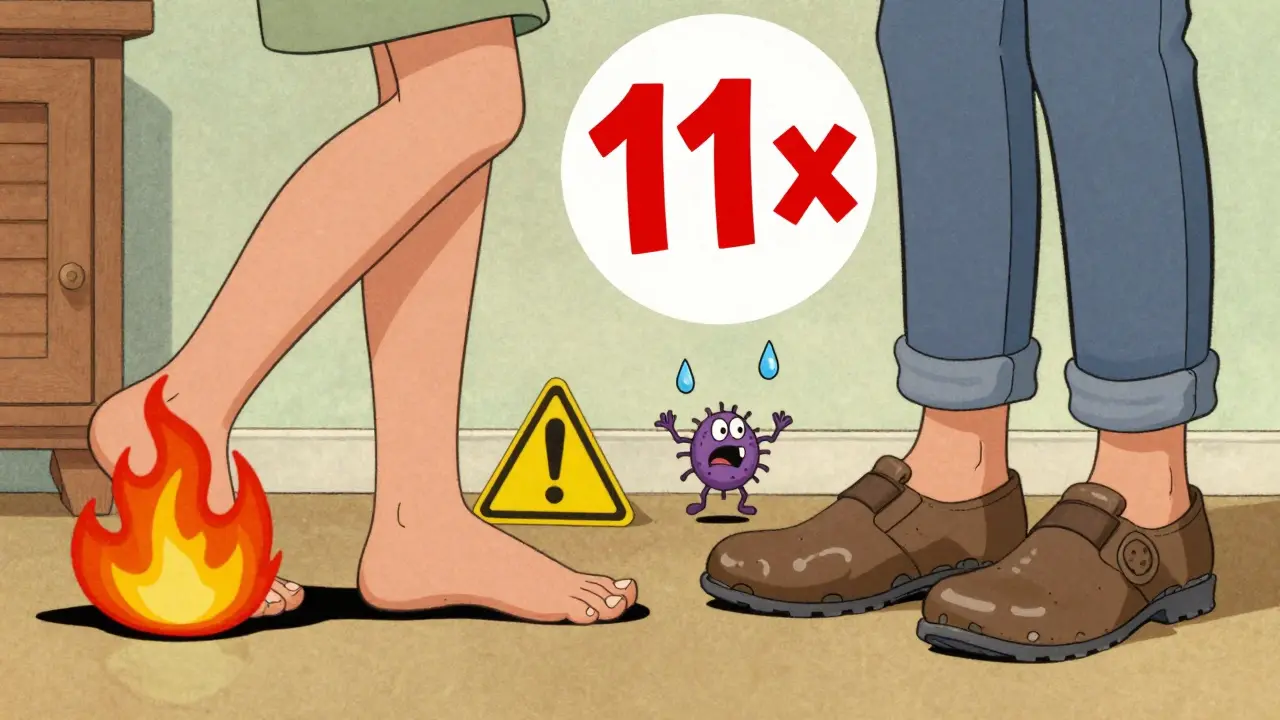
- No barefoot walking. Even indoors. The CDC says walking barefoot for just 5 minutes a day increases your ulcer risk by over 11 times.
For those at Risk 2 or 3, therapeutic shoes with custom inserts are often needed. These aren’t just “comfort” shoes-they’re medical devices designed to reduce pressure on high-risk areas. Studies show 87% of forefoot ulcers come from ill-fitting shoes.
What Not to Do
Some common habits make things worse:
- Don’t use heating pads or hot water bottles. You might not feel the burn.
- Don’t try to cut corns or calluses yourself. Use a pumice stone gently after bathing, or see a podiatrist.
- Don’t ignore small cuts. Even a tiny scratch can become infected if not cleaned and covered.
- Don’t wear open sandals or flip-flops. They offer no protection. Pressure mapping shows they increase ulcer risk by 4.3 times.
- Don’t assume exercise is always safe. Walking without proper footwear or monitoring can lead to ulcers. Only do foot-ankle exercises if your doctor approves them.
When to See a Doctor
You don’t need to wait for an emergency. Schedule regular foot exams based on your risk level:
- Risk 0: Once a year.
- Risk 1: Every 6 months.
- Risk 2 or 3: Every 1-3 months.
See your doctor immediately if you notice:
- A sore that doesn’t heal in 2 days
- Redness or swelling that spreads
- Any drainage or odor from the foot
- A change in foot shape or color
Early treatment cuts amputation risk by over 50%. That’s why integrated care-where your primary doctor, podiatrist, and diabetes educator work together-is so powerful. Programs that coordinate this care reduce ulcers by 36% and amputations by 42%.
Technology Can Help-But It’s Not a Replacement
There are new tools like smart socks and insoles that detect temperature changes before ulcers form. Some apps use your phone camera to analyze foot images for early signs of damage. These can be helpful, especially if you have trouble seeing your feet.
But they’re not magic. The most effective tool is still your eyes, your hands, and your daily routine. These tools cost money-up to $300 a year-and many people can’t afford them. Don’t wait for tech to save you. Start with the basics.
Adherence Is the Hardest Part
Studies show only 42% of people with diabetes do daily foot checks consistently. Why? Vision problems, nerve damage, lack of time, or just forgetting. If you’re struggling:
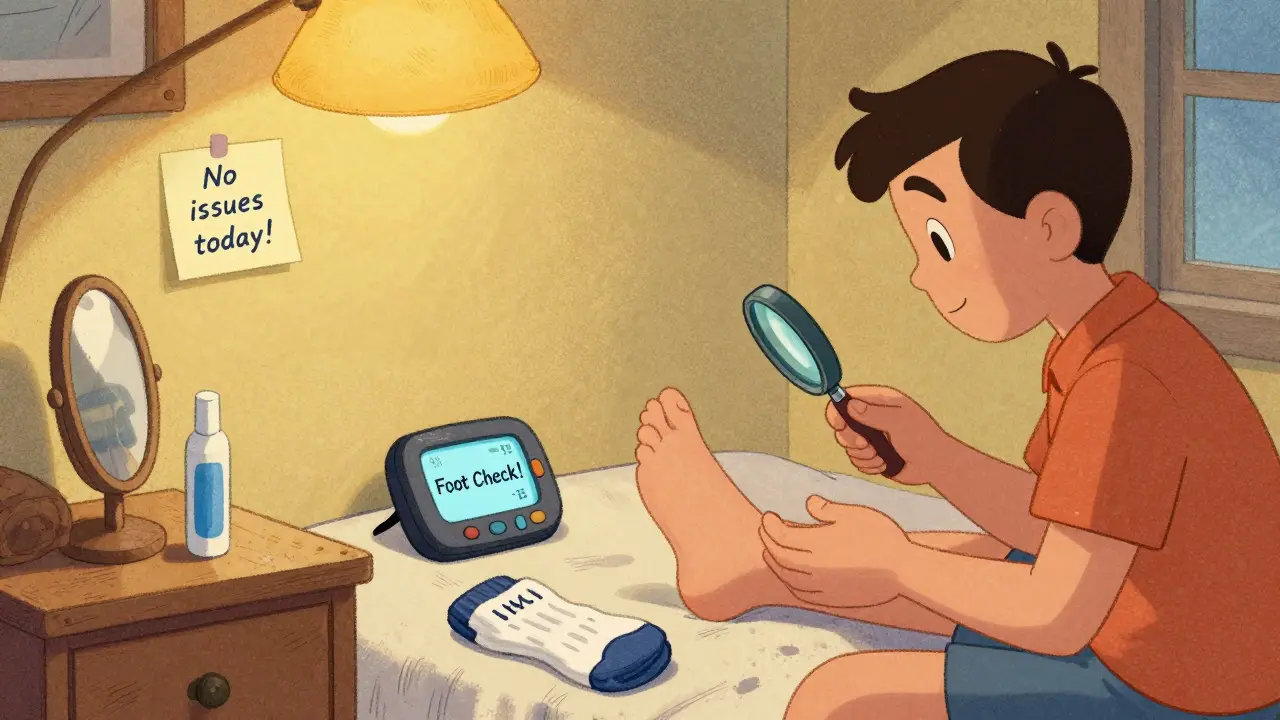
- Set a daily phone alarm labeled “Foot Check.”
- Ask a family member to help you look.
- Keep your mirror and lotion next to your bed or bathroom.
- Write a quick note after each check: “No issues today.”
It’s not about perfection. It’s about consistency. One missed day can be the day a small cut turns into a life-changing problem.
The Bottom Line
Diabetic foot ulcers are preventable. They don’t happen overnight. They happen because small problems go unnoticed. Your daily inspection checklist isn’t just advice-it’s your shield. It takes 5 minutes. It costs nothing. And it could keep you from losing a foot.
Start today. Check your feet. Don’t wait for pain. Don’t wait for a warning. Your feet can’t tell you when something’s wrong. You have to do it for them.
How often should I check my feet if I have diabetes?
You should check your feet every single day, no exceptions. This is non-negotiable if you have diabetes. Even if you feel fine, nerve damage can hide injuries. Daily checks catch problems before they become ulcers. Your doctor may recommend professional exams every 1 to 12 months depending on your risk level, but daily self-inspection is your responsibility.
Can I use a mirror to check the bottom of my feet?
Yes, using a hand mirror is a standard and recommended method. Place the mirror on the floor and position your foot over it to see the sole. If you can’t move your foot or have vision issues, ask a family member or caregiver to help. Some people use long-handled mirrors or smartphone cameras with selfie mode. The goal is to see every part of your foot, including between the toes and under the heel.
Is it safe to soak my feet in Epsom salt or warm water?
You can soak your feet in lukewarm water (90-95°F) with mild soap, but avoid Epsom salt or strong solutions. Soaking can dry out your skin and increase cracking, which leads to infections. Never soak for more than 5-10 minutes. Always dry thoroughly afterward, especially between the toes. If you have open sores, avoid soaking altogether-clean them gently with water and mild soap instead.
Should I wear socks to bed if I have diabetes?
Yes, if your feet get cold at night. Choose seamless, breathable socks made of cotton or moisture-wicking material. Avoid elastic tops that can restrict circulation. Never use heating pads or hot water bottles to warm your feet-use socks instead. Cold feet can lead to poor circulation, but heat can cause burns you won’t feel.
Do I need special shoes if I don’t have ulcers yet?
If you have nerve damage, foot deformities, or a history of foot problems, yes-special therapeutic shoes are recommended. Even if you don’t have ulcers, ill-fitting shoes are the leading cause of foot ulcers in people with diabetes. For low-risk patients without deformities, well-fitting, closed-toe shoes with good support are enough. Never wear sandals, flip-flops, or shoes with pointed toes or high heels.
Can exercise cause foot ulcers in people with diabetes?
Yes, if done incorrectly. Walking or standing for long periods without proper footwear or foot support can increase pressure on high-risk areas of the foot. Unsupervised ankle exercises may raise ulcer risk by 22% in some studies. The safest approach is to walk in well-fitting shoes, check your feet before and after, and avoid high-impact activities if you have nerve damage. Always talk to your doctor or podiatrist before starting a new exercise routine.
What should I do if I find a cut or blister on my foot?
Clean the area gently with mild soap and water. Pat it dry. Apply a thin layer of antibiotic ointment and cover it with a sterile bandage. Do not use hydrogen peroxide or alcohol-they delay healing. Check the wound daily. If it doesn’t improve in 2 days, gets bigger, turns red, or starts draining, call your doctor immediately. Never try to pop blisters or cut away dead skin.
Is it true that antibiotics can prevent foot ulcers?
No. Taking antibiotics to prevent ulcers is not recommended and can actually cause harm. Studies show it increases the risk of antibiotic resistance by 37% without reducing ulcer formation. Antibiotics should only be used when an infection is confirmed by a doctor. Prevention comes from daily foot checks, proper footwear, and controlling blood sugar-not pills.





10 Comments
Write a comment