
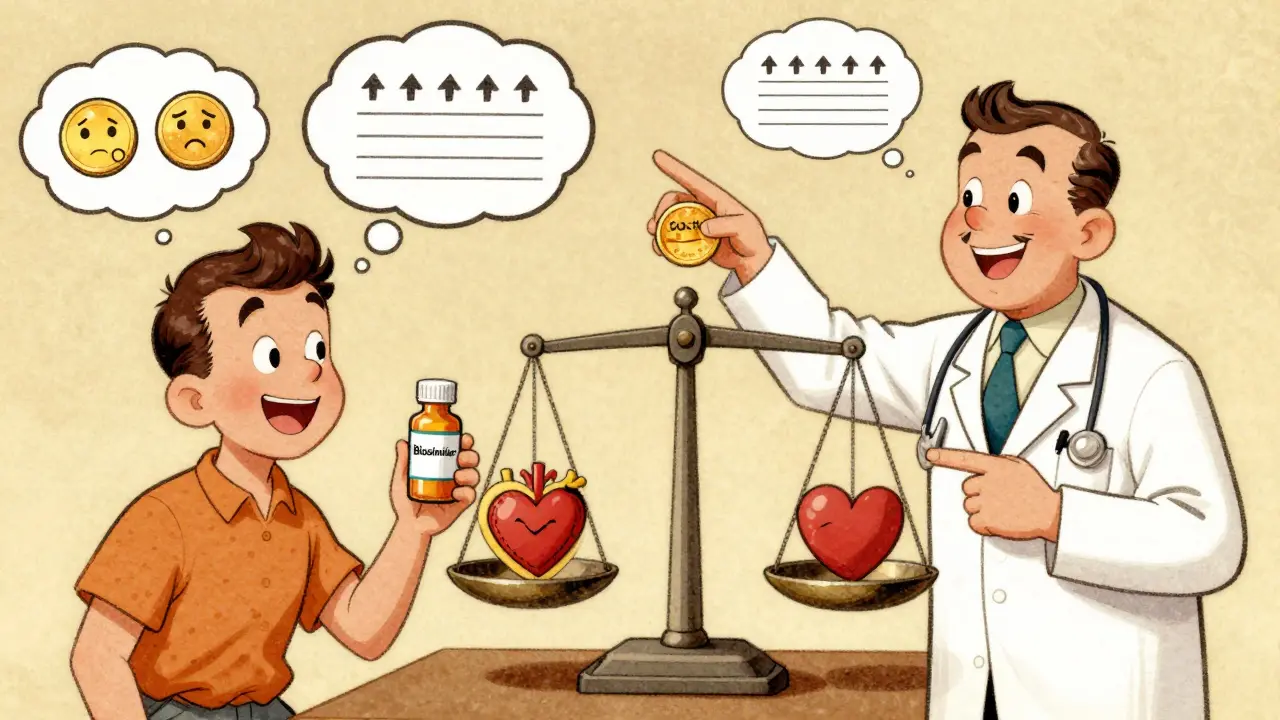
When a patient switches from an originator biologic to a biosimilar, it’s not like switching from one brand of painkiller to another. Biologics are complex molecules made from living cells - not simple chemicals. That’s why switching isn’t just a price change; it’s a clinical decision backed by years of data. In the UK, Europe, and increasingly in the US, health systems are pushing for biosimilar switches to save money without sacrificing care. But what does that actually mean for someone on the treatment? Let’s break it down.
What Exactly Is a Biosimilar?
A biosimilar isn’t a generic. Generics are exact copies of small-molecule drugs, like aspirin or metformin. Biosimilars are highly similar versions of biologic drugs - things like adalimumab (Humira), infliximab (Remicade), or etanercept (Enbrel). These drugs treat serious conditions: rheumatoid arthritis, Crohn’s disease, psoriasis, and more. Because they’re made from living organisms, no two batches are perfectly identical. That’s why regulators don’t demand perfect copies. Instead, they require proof that the biosimilar performs the same way in the body: same effectiveness, same safety profile, same risk of side effects. The European Medicines Agency (EMA) and U.S. FDA both require over 250 analytical tests to confirm this. If a biosimilar passes, it’s approved.
The first biosimilar in Europe was Omnitrope in 2006. In the U.S., Zarxio (a biosimilar to filgrastim) arrived in 2015. Since then, 37 biosimilars have been approved by the FDA, mostly targeting TNF inhibitors - the most common class of biologics. By 2023, nearly 70% of all biosimilar use in the U.S. was for drugs like infliximab and adalimumab.
What Happens When You Switch?
Switching can happen for two reasons: medical switching (your doctor recommends it) or non-medical switching (your insurer or pharmacy changes the drug without your doctor’s input). The latter is more common in countries with tight healthcare budgets.
Studies show that in most cases, switching doesn’t hurt outcomes. The NOR-Switch trial, which followed 481 patients with inflammatory conditions, found that switching from originator infliximab to its biosimilar CT-P13 led to similar disease control. At one year, 52.6% of patients stayed on the biosimilar, compared to 60% on the original - a difference that wasn’t statistically significant. That means: if you were stable on Humira, you’re just as likely to stay stable on its biosimilar.
Another study tracked 140 patients who switched multiple times - from originator to one biosimilar, then to another. Immunogenicity (the body making antibodies against the drug) stayed low. Only 3 out of every 100 patients per year developed new antibodies. Trough levels (the amount of drug in your blood) didn’t change meaningfully before and after switch. In other words, your body didn’t react differently.
Is It Safe? The Evidence
Over 30 randomized trials and 48 real-world studies have looked at this. The results? Consistent. Switching doesn’t increase serious side effects, hospitalizations, or death. The FDA analyzed 22 studies involving 5,700 patients and found no increased risk of serious adverse events. The EMA concluded in 2022 that switching between originators and biosimilars - or even between biosimilars - is not expected to compromise safety.
One concern is flare-ups. Patients with Crohn’s or rheumatoid arthritis fear losing control of their disease. But data from IBD (inflammatory bowel disease) patients switching from CT-P13 to SB2 showed 90.6% maintained remission. Fecal calprotectin - a marker of gut inflammation - stayed nearly identical before and after the switch.
Even in psoriasis, where skin reactions are common, the Danish nationwide study found retention rates were nearly the same: 79% for biosimilars vs. 81% for the original. The only notable difference? A slightly higher rate of mild skin reactions (14.3% vs. 10.7%), but these weren’t severe enough to stop treatment in most cases.
Why Do Some People Stop?
Here’s the tricky part: not everyone stays on the new drug. About 4% to 18% of patients discontinue after a switch - but not because the drug stopped working. In many cases, they feel like it did.
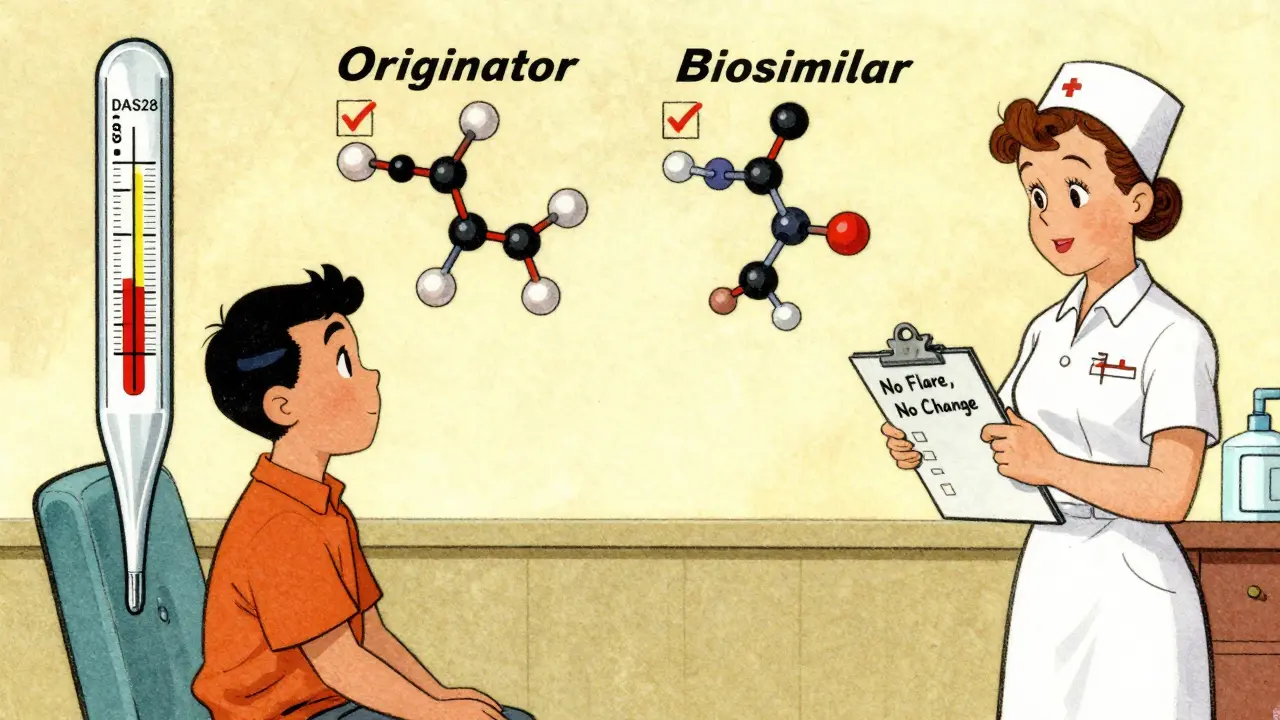
A 2021 study in Frontiers in Psychology found that 32.7% of patients reported new or worsening symptoms after switching - even though lab tests showed no change in disease activity. This is the nocebo effect: the expectation of harm causes real symptoms. On Reddit, hundreds of patients write about “feeling different” after switching. One user said, “I didn’t feel right. My joints ached. My skin got worse.” But when tested, their DAS28 score (a standard RA measure) was unchanged.
Actual reasons for stopping are rare. Injection-site reactions? About 7.8% of adalimumab switchers. Loss of effectiveness? Only 12.6% in one etanercept study. Immunogenicity-related discontinuation? Just 1.7 events per 100 patient-years. That’s lower than the natural rate of losing response to the originator itself - which is about 20% per year in IBD patients, regardless of the product.
Cost and Access
Biosimilars cost 15% to 35% less than originators. In 2023, Humira biosimilars launched at a 35% discount in the U.S. That’s billions saved for insurers and governments. In Europe, 67% of filgrastim use is now biosimilar. In the U.S., it’s only 24% - partly because of complex rebate systems that make originators cheaper for insurers than they appear.
But cost savings mean better access. More patients get treatment. More get it earlier. More stay on treatment long-term. Without biosimilars, many couldn’t afford biologics at all.
When Switching Gets Risky
Switching isn’t one-size-fits-all. It works best in patients with stable, low-activity disease. If your RA is under control (DAS28 < 3.2) or your Crohn’s is in remission, switching is low-risk.
But if you’re in flare, newly diagnosed, or have had multiple treatment failures, switching is not advised. The same goes for multiple switches. One switch? Fine. Two or three? Data gets shaky. A 2022 Spanish study found 15.3% of IBD patients stopped after switching from one biosimilar to another - compared to 8.7% in those who stayed on the same drug. Trough levels were fine, but something in the system triggered discontinuation.
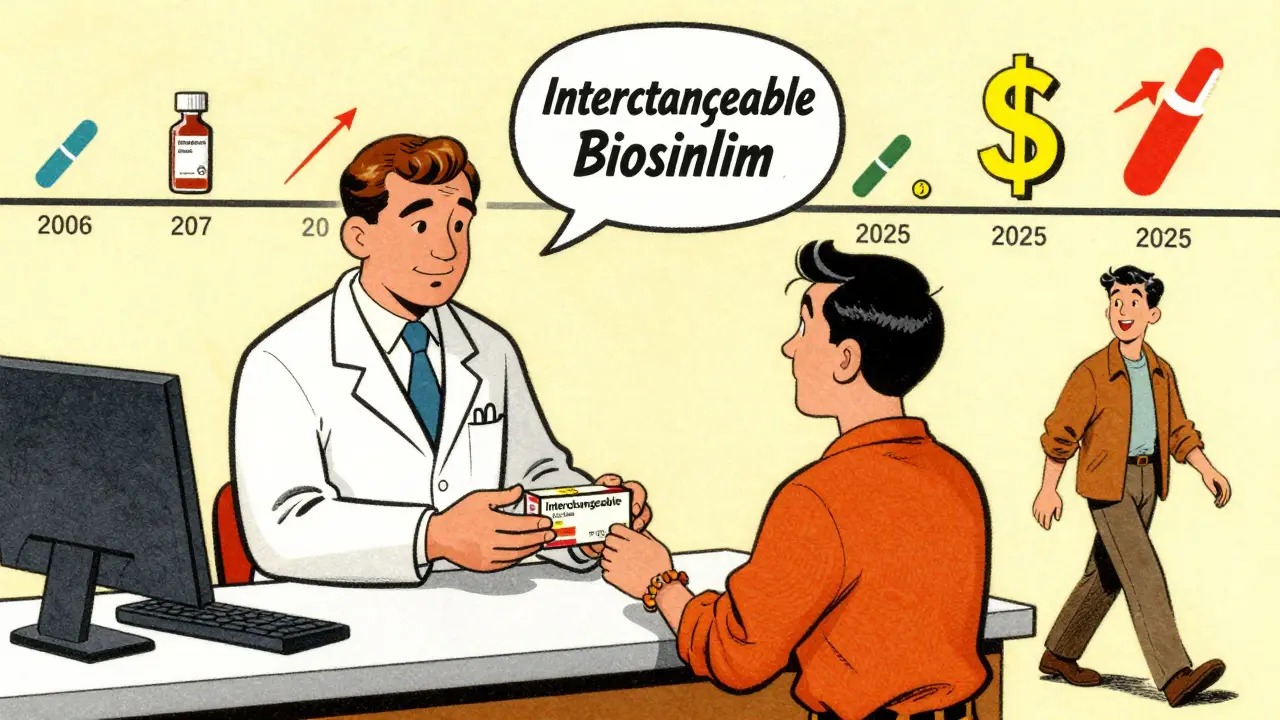
Also, not all biosimilars are created equal. While they’re all similar to the originator, they’re not all identical to each other. Switching between biosimilars is allowed in the EU, but the FDA only approves “interchangeable” biosimilars for automatic substitution. As of 2024, Cyltezo became the first interchangeable adalimumab biosimilar - meaning pharmacists can swap it in without asking the doctor.
How to Make the Switch Work
Successful switching isn’t just about the drug. It’s about communication. The PERFUSE study showed that with good education, discontinuation dropped from 18% to just 6.4%.
Here’s what helps:
- Pre-switch counseling - at least 20 minutes with your doctor or nurse. Explain why you’re switching. Show data. Answer questions.
- Shared decision-making - let patients voice concerns. Don’t assume they’re okay with it.
- 3-month monitoring - check disease activity scores (DAS28, PASI), trough levels, and symptoms. Don’t wait for a flare.
- Clear labeling - patients should know what drug they’re getting. No surprise switches.
Most patients - 68% according to the DANBIO registry - report no issues at all. But if you’re worried, ask for a trial period. Some clinics allow a 3-month trial with the biosimilar before finalizing the switch.
The Future of Switching
By 2025, over $178 billion in biologic patents will expire. That means dozens more biosimilars are coming. The global market is growing at 21.5% per year. Europe leads. The U.S. is catching up. The UK is adopting slowly but steadily.
What’s next? Longer-term data. The NOR-SWITCH II study followed patients for 24 months with multiple switches. Retention was 89.2%. That’s reassuring. More studies are underway. And with interchangeable biosimilars now approved, automatic pharmacy substitution is coming - just like with generics.
But the biggest challenge isn’t science. It’s trust. Patients need to believe that biosimilars are safe. Doctors need to feel confident prescribing them. And insurers need to stop using rebates to lock patients into expensive originators.
The evidence is clear: switching from an originator to a biosimilar is safe for most people. It doesn’t mean you’ll feel different. It doesn’t mean your disease will flare. It means you’re getting the same treatment - at a lower cost. And that’s a win for everyone.
Can I switch from my originator biologic to a biosimilar without my doctor’s approval?
In most cases, no - not legally or ethically. While insurers may try to force a switch to cut costs, your doctor must approve the change. In the UK and EU, switching without clinical oversight is discouraged. Even in the U.S., where pharmacy substitution is allowed for interchangeable biosimilars, prescribers must be notified. Always consult your rheumatologist or gastroenterologist before switching.
Will my insurance cover the biosimilar if I refuse to switch?
It depends. Some insurers require prior authorization for originators after a biosimilar is available. If you refuse to switch, you may have to pay more out of pocket, or your insurer might deny coverage entirely. Others allow exceptions - for example, if you’ve had a bad reaction to a biosimilar before, or if your condition is unstable. Talk to your doctor about filing a medical exemption.
Are biosimilars as effective as the original drug?
Yes - for the vast majority of patients. Clinical trials and real-world data show biosimilars match originators in efficacy, safety, and immunogenicity. Studies in rheumatoid arthritis, psoriasis, and inflammatory bowel disease consistently show no clinically meaningful differences. The FDA and EMA require proof of equivalence before approval. If your disease was stable on the originator, it should remain stable on the biosimilar.
Can I switch between two different biosimilars?
Yes - but with caution. Multiple switches are possible and often safe, as shown in long-term studies like NOR-SWITCH II. However, each switch increases the chance of patient anxiety or perceived loss of efficacy. In some cases, switching between biosimilars has led to slightly higher discontinuation rates (up to 15% in IBD). If you’re stable on one biosimilar, there’s usually no medical reason to switch unless your doctor recommends it.
What should I do if I feel worse after switching?
Don’t assume it’s the drug. First, track your symptoms and report them to your doctor. Ask for a disease activity test - DAS28 for arthritis, PASI for psoriasis, or fecal calprotectin for IBD. If your lab results are normal, your symptoms may be due to anxiety or the nocebo effect. If they’re abnormal, your doctor may switch you back temporarily. Never stop treatment without medical advice. Most patients who feel worse after switching return to baseline within 3 months.




so i switched from humira to one of those biosimilars last year and honestly? i didnt even notice. like, zero difference in how i felt. my joints still hurt sometimes (rheumatoid sucks) but not more than before. my dr said the data says it’s basically the same and i believed her. also saved me like $800 a month. win win. also my cat still hates me the same amount so nothing changed there lol 🐱
you people are brainwashed. biosimilars? more like bioshams. big pharma and the fda are in bed together. they don’t care about you - they care about profit. why should i trust some cheap knockoff made in a lab that probably uses recycled cells? i’ve seen what happens when you cut corners. remember the opioid crisis? this is the next one. don’t be a lab rat.
what’s fascinating is how much of this is psychological. the nocebo effect is real - and we’re not talking about placebo-level nonsense. we’re talking about deeply ingrained cultural narratives around medicine. if you’re told something is ‘less than’ - even if it’s scientifically identical - your body reacts. it’s not weakness. it’s neurobiology. we’ve been conditioned to equate cost with quality. what if we flipped that? what if we asked: why do we assume more expensive = better? maybe that’s the real disease.
OMG I CAN’T BELIEVE YOU’RE ALL JUST ACCEPTING THIS. I’M A PATIENT WITH CROHN’S AND I SWITCHED TO A BIOSIMILAR AND MY STOOL TURNED GREEN. I KNOW IT WASN’T THE FOOD. IT WAS THE DRUG. I FELT LIKE I WAS BEING USED AS A GUINEA PIG. THEY DON’T EVEN TELL YOU WHEN THEY SWITCH YOU. I HAD TO FIND OUT FROM MY PHARMACY’S WEBSITE. THIS IS A VIOLATION. I’M TAKING MY STORY TO THE MEDIA. #BIOBETRAYAL
thank you for writing this. i’ve been on adalimumab for 8 years. switched last spring. felt nervous but my nurse spent 30 mins explaining everything - even showed me the study graphs. i cried. not because i was scared - because someone finally listened. i’m still here. still working. still hiking. no flares. just… quieter bills. 🌿💛
real talk: if you’re stable, switch. the data is rock solid. 37 approved biosimilars? 5,700 patients studied? EMA and FDA both say it’s safe. stop listening to reddit fear-mongers. also - stop calling them ‘knockoffs.’ they’re not. they’re complex biologics with identical mechanisms. your body doesn’t know the difference. what it *does* know? a $2k co-pay vs. a $300 one. that’s not just money - that’s access. that’s dignity.
why are we even doing this why cant we just pay for the real drug if its better idk maybe im just lazy but i dont wanna deal with this drama its too much work
ah yes - the classic ‘trust the science’ narrative. charming. how quaint. you know what’s *really* revolutionary? when a patient’s voice is treated as data - not noise. the nocebo effect isn’t just ‘in their head.’ it’s a signal. a systemic failure. we’ve turned healthcare into a transaction, not a relationship. so now people feel abandoned when their drug changes. and we blame them for feeling it? how about we fix the system instead of fixing the patient? 🤔