
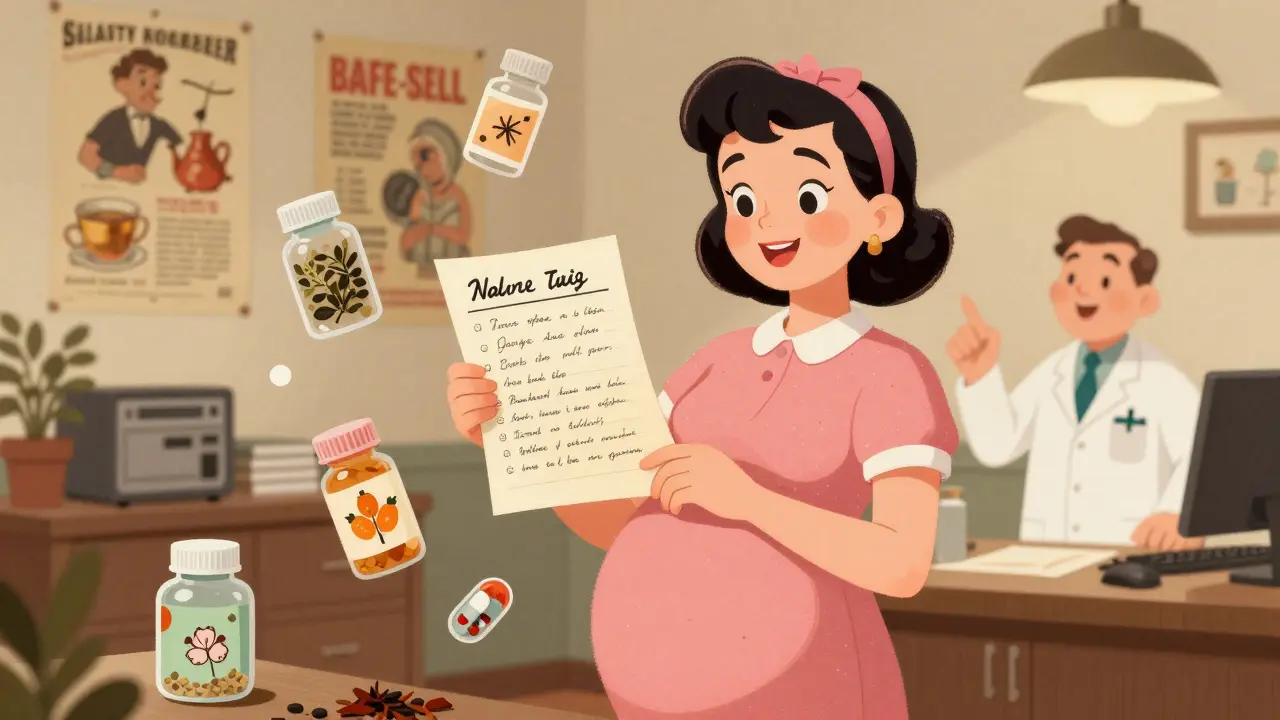
When you’re pregnant or breastfeeding, every pill, supplement, or over-the-counter remedy matters more than ever. What seemed harmless before might now carry risks you never considered. That’s why talking openly and clearly with your OB/GYN about medications isn’t just a good idea-it’s essential. But most people walk into their appointments unprepared, hoping they’ll remember everything. And then they forget. Or they think, ‘It’s just a herbal tea’ or ‘I only took that once’-and suddenly, a simple question turns into a missed warning.
The truth? You don’t need to be a medical expert. You just need to show up with the right information. The American College of Obstetricians and Gynecologists (ACOG) says every pregnant woman should have a full medication review before conception, and again at every prenatal visit. Why? Because nearly 90% of pregnant women take at least one medication during pregnancy, and about 68% continue taking drugs for conditions like thyroid disease, high blood pressure, or depression. Some of these are safe. Some aren’t. And without you bringing the full picture, your provider can’t help you choose wisely.
What You Need to Bring to Your Appointment
Start at least 72 hours before your visit. Don’t rely on memory. Go through your medicine cabinet, your purse, your bathroom drawer. Write down every single thing you’ve taken in the last three months-no matter how small or ‘natural’ it seems.
- Prescription meds: Name, dosage, how often you take it, and why. For example: ‘Levothyroxine 75 mcg, one pill every morning for hypothyroidism’.
- Over-the-counter drugs: Even if you only use them once in a while. That ibuprofen for headaches? The cold medicine you took last month? List them. ‘Ibuprofen 400 mg, 1-2 tablets every 6 hours as needed for pain’.
- Supplements: Prenatal vitamins? Iron? Omega-3s? Don’t skip these. Many women don’t realize that even ‘natural’ supplements like evening primrose oil, St. John’s Wort, or high-dose vitamin A can interfere with pregnancy or breastfeeding. Include brand names and doses: ‘Nature Made Prenatal, one tablet daily’.
- Herbs and teas: Ginger tea for nausea? Chamomile for sleep? Red raspberry leaf? These aren’t harmless. Some can trigger contractions. Others affect milk supply.
- Recreational substances: Alcohol, nicotine, cannabis, or opioids-even if you think you’re ‘only using it socially’ or ‘medically.’ OB/GYNs are trained to ask about these, but they won’t know unless you tell them. The CDC says 18% of reproductive-aged women use medical marijuana. Yet only 38% of providers routinely screen for it.
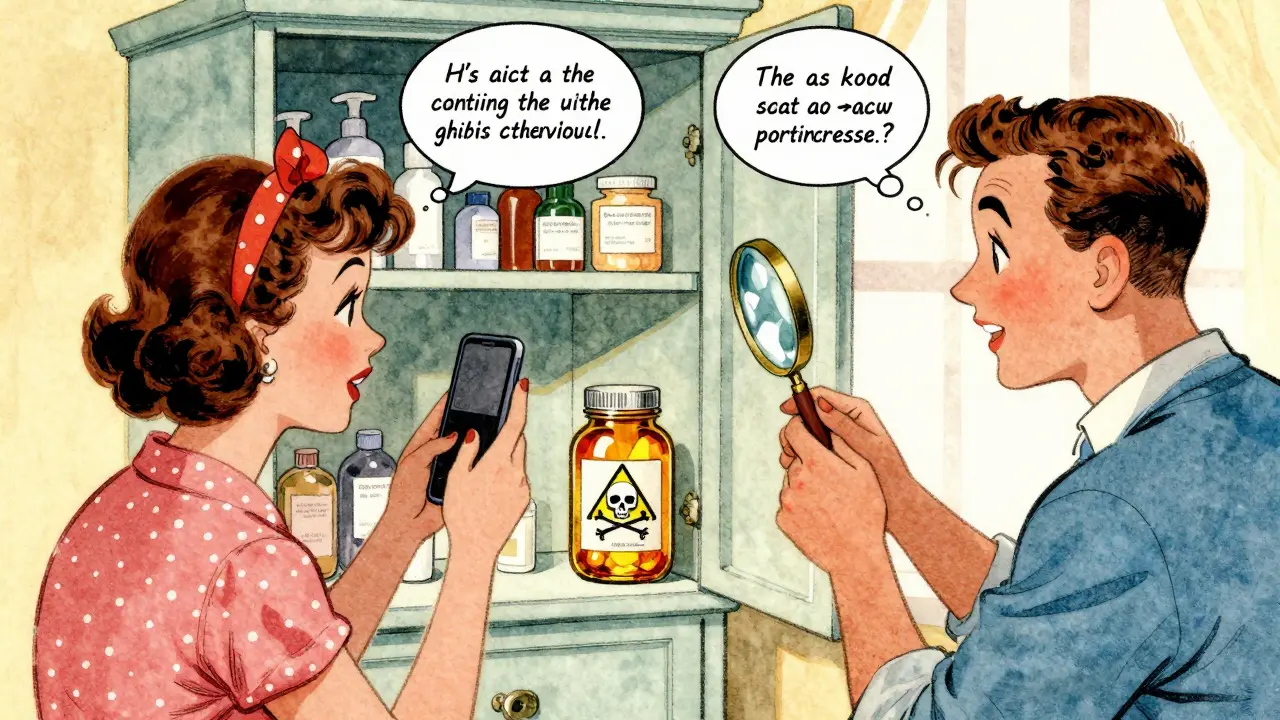
Pro tip: Take photos of your pill bottles with your phone. That way, if you forget a name or dose, you can pull up the picture. One patient on Reddit said her OB/GYN printed out her spreadsheet of supplements and kept it in her chart-because it was so thorough. That’s the kind of prep that makes your appointment smoother and safer.
What to Ask Your OB/GYN
Don’t wait for them to ask you. Come with questions. Here are the most important ones to ask at every visit:
- ‘Is this medication safe during pregnancy?’ Not all drugs are created equal. For example, ibuprofen is generally avoided after 20 weeks because it can affect fetal kidney development. Acetaminophen is usually the go-to for pain, but even that has limits.
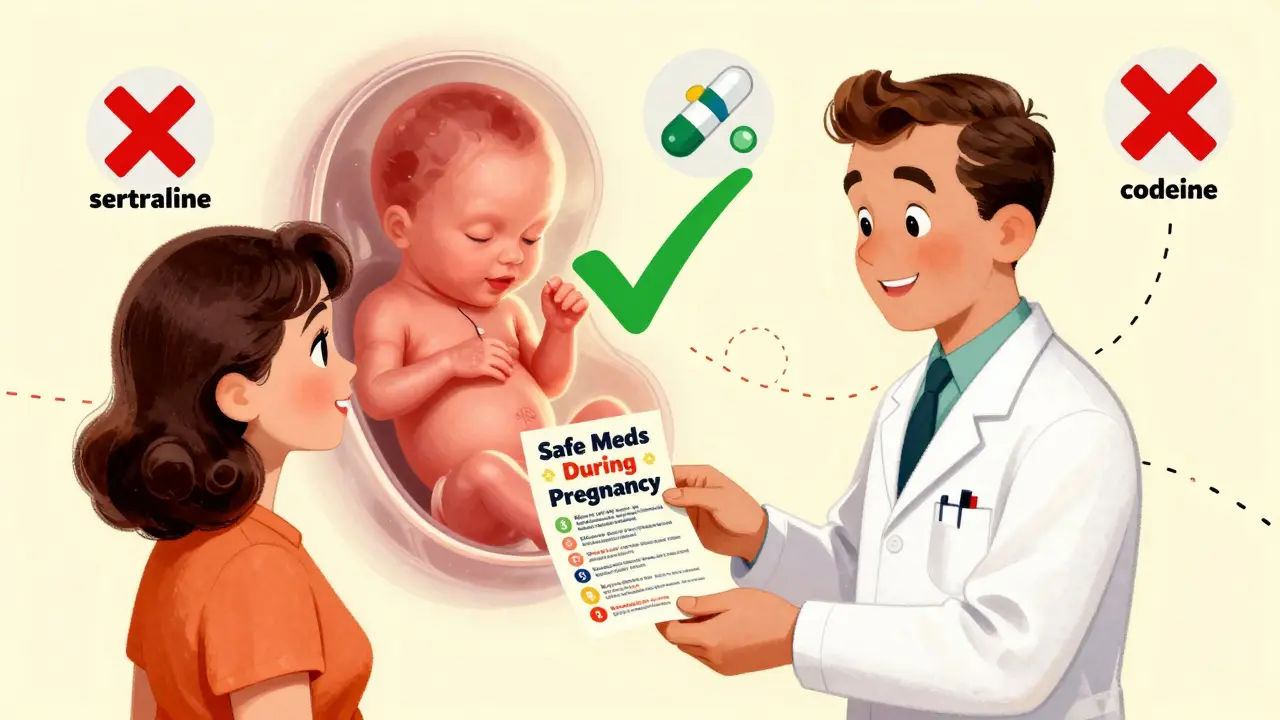
- ‘What’s the safest alternative if this isn’t recommended?’ If you’re on a medication that’s not pregnancy-safe, ask what else works. For anxiety, sertraline (Zoloft) is often preferred over others. For high blood pressure, labetalol and nifedipine are standard. For thyroid issues, levothyroxine doses often need adjusting-so ask about TSH testing schedules.
- ‘Should I stop this before I get pregnant?’ Some meds, like isotretinoin (Accutane), need to be stopped months before conception. Others, like certain antidepressants, may need gradual tapering. Don’t guess-ask.
- ‘Does this affect breastfeeding?’ Many women assume if it’s safe in pregnancy, it’s safe while nursing. Not true. Some drugs pass into breast milk and can affect your baby’s sleep, feeding, or development. For example, codeine can cause dangerous breathing issues in breastfed infants.
- ‘Do I need to change my dose now that I’m pregnant?’ Your body changes. Hormones shift. Kidneys filter faster. Many medications need higher doses during pregnancy. Thyroid meds, insulin, and some antidepressants often do. Ask for blood tests to check levels.
- ‘Is there a pregnancy safety category for this?’ Drugs are labeled A, B, C, D, or X based on risk. Category A means proven safe. Category X means don’t use-like isotretinoin. But many drugs are Category C-meaning we don’t have enough data. That’s okay. Your OB/GYN can help you weigh risks versus benefits.
Dr. Laura Riley from Weill Cornell Medicine says the most critical conversation is about folic acid. Start taking at least 400 mcg daily at least one month before you get pregnant. It reduces neural tube defects by up to 70%. Yet many women don’t start until after they find out they’re pregnant. Don’t wait.
Why OB/GYNs Are Different Than Your Regular Doctor
Your primary care doctor reviews your meds once a year. Your OB/GYN reviews them every time you walk in-especially if you’re pregnant or trying to conceive. Why? Because reproductive health adds layers most doctors don’t train for.
OB/GYNs are trained to spot drug interactions that affect fertility, implantation, or fetal development. They know that St. John’s Wort can cut the effectiveness of birth control pills by half. They know that certain antibiotics can interfere with hormonal contraception. They know which painkillers are safe in each trimester-and which ones can cause premature closure of a fetal blood vessel.
But here’s the catch: OB/GYNs aren’t specialists in every chronic condition. If you’re on four or more medications for diabetes, epilepsy, or autoimmune disease, they’ll often refer you to a pharmacist who specializes in women’s health or to a maternal-fetal medicine specialist. That’s not a bad thing-it’s teamwork.
One study found OB/GYNs catch 32% more drug interactions affecting fertility than general practitioners. But they also have a 28% higher rate of medication errors when managing complex diabetes cases-because it’s not their main focus. That’s why communication matters even more.
Common Mistakes Patients Make
These mistakes happen more than you think:
- ‘It’s just a supplement.’ People forget to mention vitamins, herbs, or fish oil. But supplements aren’t regulated like drugs. One brand might have more vitamin A than another. Too much can be toxic.
- ‘I only took it once.’ Even a single dose of certain medications can matter. For example, a one-time use of ibuprofen at 32 weeks can still affect the baby’s heart.
- ‘I stopped it last month.’ Some drugs stay in your system for weeks. Others need to be tapered slowly. Don’t assume stopping equals safe.
- ‘I didn’t think it was important.’ That’s the biggest one. If you didn’t think it mattered, your OB/GYN might not know to ask. Bring it up anyway.
One woman on Healthgrades wrote that her OB was frustrated she didn’t mention evening primrose oil-until she found out it could trigger labor. She was 34 weeks pregnant. She thought it was just for skin health.
What Happens After the Appointment
Good OB/GYNs don’t just give you a list of ‘do’s and don’ts.’ They give you a plan.
- You might get a new prescription-like switching from a risky antidepressant to one proven safe in pregnancy.
- You might need blood tests to check levels of thyroid hormone or insulin.
- You might be referred to a maternal-fetal medicine specialist if you have high-risk conditions.
- You might get a handout or a link to a trusted resource like ACOG’s patient safety guides.
Some clinics now use apps like Babyscripts to track blood pressure and medication adherence in real time. Others are testing genetic tests (like CYP2D6) to predict how your body will process certain drugs. This isn’t sci-fi-it’s happening now.
And here’s the good news: patients who prepare a medication list before their appointment spend 15-20 fewer minutes in the office and report 40% higher satisfaction. Why? Because the conversation becomes about your health-not about guessing what you took.
Final Thoughts: Your Health Is the Priority
You’re not being paranoid. You’re being smart. Medication safety during pregnancy and breastfeeding isn’t about fear-it’s about control. You have the right to know what’s in your body and how it affects your baby. Your OB/GYN is there to help, not judge.
Don’t wait until your next appointment to think about this. Start today. Grab your pill bottles. Write it down. Take photos. Make a list. Bring it in. Ask the hard questions. If you’re unsure about something, say so. There’s no such thing as a dumb question when it comes to your baby’s health.
The system isn’t perfect. Some meds still lack enough data. Some providers are rushed. But you can change the outcome by showing up prepared. That’s the one thing no app, no guideline, no doctor can do for you.
What should I do if I forgot to mention a medication at my appointment?
Call your OB/GYN’s office as soon as possible. Most clinics have a nurse line or secure messaging system through your patient portal. Send a quick message with the name, dose, and when you took it. Don’t wait for your next appointment-some medications need immediate attention, especially if you’re in the first trimester or breastfeeding.
Are herbal supplements really dangerous during pregnancy?
Some are, some aren’t. But because supplements aren’t regulated by the FDA, you can’t always trust what’s on the label. For example, black cohosh can stimulate contractions, and high doses of vitamin A can cause birth defects. Even ‘safe’ herbs like ginger can interact with blood thinners. Always tell your OB/GYN about every supplement-even if you think it’s harmless.
Can I keep taking my antidepressants while pregnant?
Many women can-and should-continue taking antidepressants during pregnancy. Untreated depression carries serious risks for both mother and baby. Medications like sertraline (Zoloft) and citalopram (Celexa) are considered among the safest options. Never stop cold turkey. Work with your OB/GYN and a psychiatrist to adjust your treatment plan safely.
Is it safe to take ibuprofen while breastfeeding?
Yes, ibuprofen is generally considered safe in small doses while breastfeeding. It passes into breast milk in very low amounts and is unlikely to affect your baby. Acetaminophen is also safe. But avoid long-term or high-dose use without checking with your provider, especially if your baby was premature or has health issues.
What if my OB/GYN says a medication is safe, but I read online it’s not?
Bring the information to your appointment. Ask your provider to explain why they think it’s safe based on current research. Reliable sources like ACOG, the CDC, or the LactMed database from the National Library of Medicine are better than random blogs or social media. Your OB/GYN should welcome your questions-they’re trained to help you navigate conflicting information.
How often should I update my medication list?
Update it every time you start, stop, or change a medication-even if it’s just a new cold pill. For pregnant women, this means bringing your list to every prenatal visit. If you’re breastfeeding, update it whenever you change your routine. Keep a digital copy on your phone so you’re always ready.






The entire premise of this post is a government-mandated panic script. You think your OB/GYN gives a damn about your herbal tea? They’re too busy ticking boxes for insurance audits. The FDA doesn’t regulate supplements because they’re not drugs-and that’s by design. Stop pretending every ginger tea is a biohazard. If you’re that scared, don’t get pregnant. Simple.
This is one of the most thoughtful, clinically grounded pieces I’ve read on prenatal medication safety. The emphasis on documentation-not just memory-is critical. I’ve seen too many patients come in with vague recollections of ‘something for anxiety’ or ‘a supplement from the health food store’-only to later discover it was St. John’s Wort, which interacts dangerously with SSRIs. The photos of pill bottles? Brilliant. I now recommend this to every patient I see.
Y’all are overcomplicating this. Just make a list. Take pics. Tell your doc everything-even the weird stuff. I took melatonin for sleep during my first trimester and didn’t mention it until my 28-week visit because I thought it was ‘just a sleep aid.’ My OB didn’t freak out-she just said, ‘Cool, next time tell me sooner.’ No judgment. Just better care. Seriously, just be honest. Your body’s doing enough already.
It is, however, imperative to note-indeed, it is not merely a suggestion, but a non-negotiable prerequisite-that the ACOG guidelines, while ostensibly evidence-based, are heavily influenced by pharmaceutical lobbying entities; their ‘Category C’ classification system, for instance, is archaic, inconsistent, and fails to account for pharmacokinetic variability across ethnic populations-particularly South Asian women, whose CYP450 enzyme expression differs significantly from the Caucasian cohorts upon which most studies are predicated. Furthermore, the implicit assumption that all patients possess the cognitive capacity to maintain a ‘medication spreadsheet’ is classist, ableist, and ignores systemic barriers to health literacy. The recommendation to ‘take photos of pill bottles’ presumes digital access, stable housing, and the absence of domestic violence-a luxury not universally available. This article, while well-intentioned, is a bourgeois fantasy wrapped in clinical jargon.
Bro, you ever heard of Ayurveda? In my village in Kerala, women drink turmeric milk with black pepper during pregnancy-no doctor, no app, no spreadsheet. And their babies are healthy, strong, smart. The West thinks everything must be labeled, coded, and approved by some white-coated bureaucrat. But nature doesn’t need FDA categories. Ginger tea? Chamomile? Those are grandma’s wisdom. You don’t need a 10-page list-you need trust in your body and your culture. This post feels like medical colonialism dressed as advice.
I appreciate the thoroughness, but I also wonder-how many people actually have the time or mental bandwidth to compile this? Especially if they’re working multiple jobs, managing anxiety, or dealing with trauma. The tone here assumes a level of privilege: stable internet, access to pharmacies, literacy, emotional safety. I’ve had patients who couldn’t afford prenatal vitamins, let alone take photos of their pill bottles. Maybe the real issue isn’t what patients forget to say-but why the system doesn’t meet them where they are.
Let’s be clear: this entire framework is a control mechanism disguised as patient empowerment. The ‘medication review’ is not about safety-it’s about liability. Hospitals don’t want to be sued because someone took chamomile tea and went into preterm labor. So they scare you into compliance. The CDC’s 18% marijuana stat? They’re not tracking usage-they’re tracking arrests. And the ‘LactMed database’? It’s funded by the same institutions that profit from pharmaceutical sales. Don’t be fooled. The real danger isn’t your herbal tea-it’s the system that wants you to believe you need permission to care for your own body.
i just took a pic of my pill bottle and forgot to mention i also took a 5mg melatonin last week bc i was stressed and then i realized i didnt know if it was safe for breastmilk so now im panicking but i just sent a message on the portal so hopefully they reply soon