
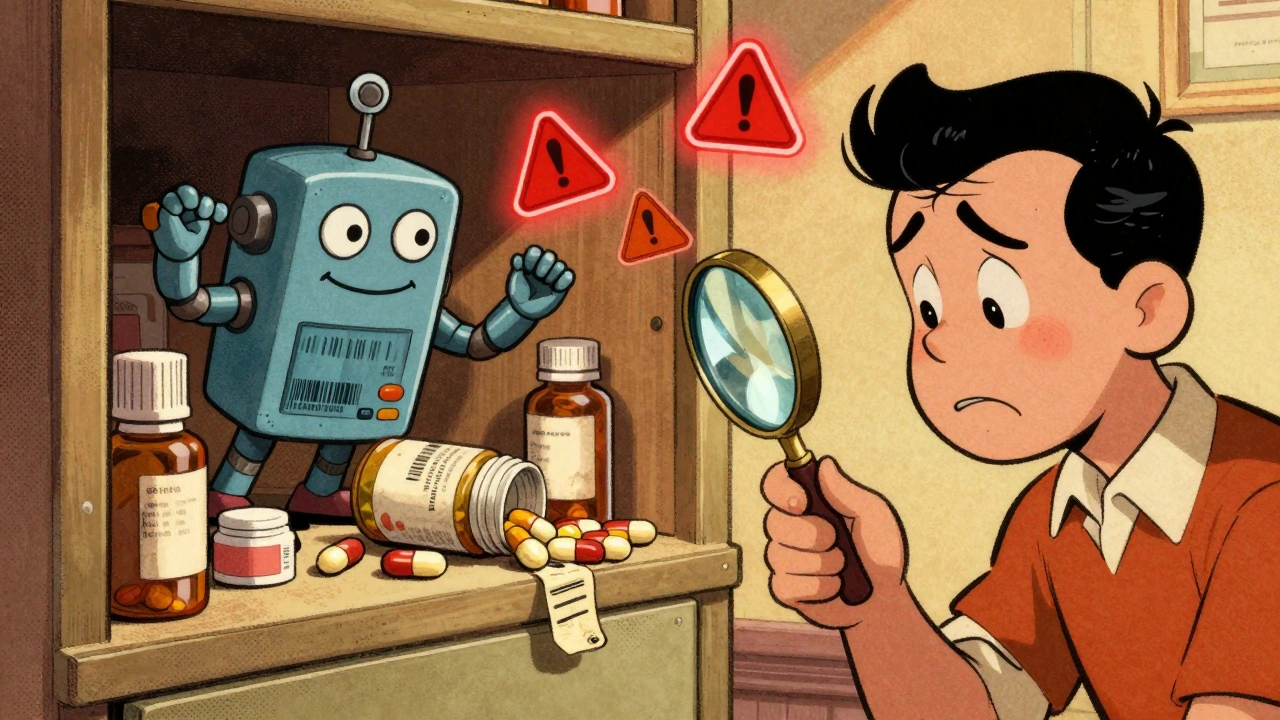
Every year, millions of pills, syrups, and injectables sit in medicine cabinets, hospital shelves, and ambulances long after they’ve lost their effectiveness. Some are harmless. Others? They can be dangerous. Expired medications don’t just lose potency-they can break down into toxic compounds. The FDA warns that using expired antibiotics, for example, may lead to treatment failure and even antibiotic resistance. Yet, in homes and clinics alike, people still rely on handwritten labels, memory, or guesswork to know if a drug is safe to take. It doesn’t have to be this way. Today, technology makes it possible to track medication expiration dates with near-perfect accuracy-and it’s already saving lives in hospitals, EMS units, and pharmacies across the world.
Why Manual Tracking Fails
Think about your medicine cabinet. Do you know exactly when that painkiller expired? Did you check the label last month, or did you just assume it’s still good because it’s in the original bottle? Most people don’t check. In fact, a 2024 study found that over 60% of households keep expired medications longer than six months past the printed date. In healthcare settings, the problem is worse. Nurses juggle dozens of patients, each with multiple prescriptions. Pharmacists manually count inventory in cluttered stockrooms. One wrong date, one missed label, and someone gets the wrong drug. It’s not just sloppy-it’s risky.RFID: The Game-Changer for Hospitals
The most powerful technology for tracking medication expiration is RFID-Radio Frequency Identification. Unlike barcodes, which require one item at a time to be scanned, RFID tags can be read from a distance, all at once. Imagine walking into a hospital pharmacy with a handheld scanner and, in under 30 seconds, seeing every single medication in a crash cart, refrigerator, or shelf-along with their exact expiration dates. That’s what RFID does. Systems like KitCheck use UHF RFID tags attached to each medication unit. These tags store the lot number, expiration date, and even the manufacturer’s batch info. When a nurse pulls a drug from a cabinet, the system logs it automatically. If a medication is within two days of expiring, the system flags it. No more guessing. No more missed dates.How RFID Works in Real Hospitals
Texas Children’s Hospital started using RFID to track 784 high-value medications costing over $100 each. Before, pharmacists spent hours every week manually checking inventory. Now, they do it in minutes. The system doesn’t just track location-it alerts staff when drugs are about to expire. One nurse told staff, “I used to dread the monthly expiration check. Now, I get a notification before it even becomes a problem.” Hospitals using RFID report a 15-20% drop in expired medication waste. That’s not just cost savings-it’s less environmental impact and fewer drugs going to landfills. And with over 900 hospitals in the U.S. now using RFID systems like KitCheck, it’s clear this isn’t a niche tool anymore. It’s becoming standard.eMAR: For Long-Term Care and Home Use
Not every facility needs RFID. Smaller clinics, nursing homes, and home care agencies use eMAR-Electronic Medication Administration Records. These are digital versions of the paper charts nurses used to fill out by hand. eMAR platforms like eVero connect directly to pharmacy systems. When a new prescription arrives, the system automatically logs the expiration date. Nurses log in with biometric scans (fingerprint or facial recognition) to give a pill. The system checks: Is this the right patient? Is this the right drug? Is it still within its expiration window? If not, the system blocks the action. It’s like a safety net that doesn’t sleep. In facilities serving people with intellectual and developmental disabilities, where medication errors can be especially dangerous, eMAR adoption has jumped 70% since 2020.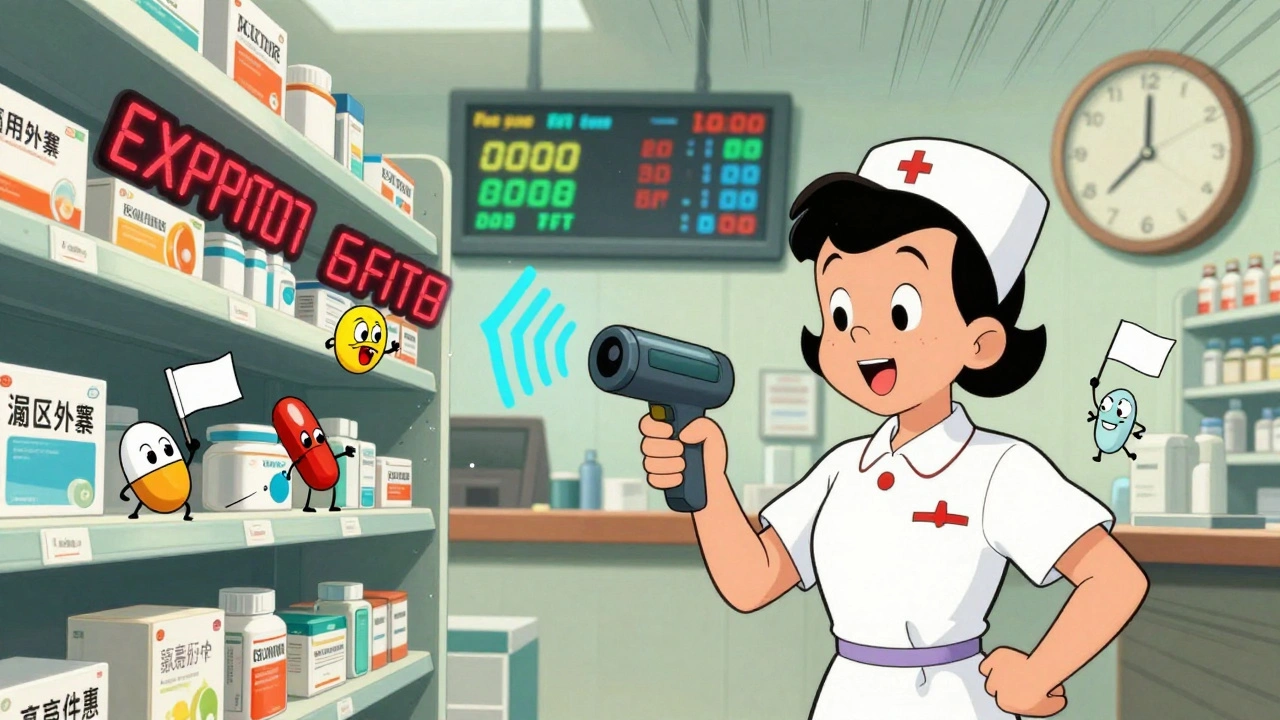
Automated Dispensing Cabinets (ADCs): Smart Storage
Closed-door pharmacies and ERs rely on Automated Dispensing Cabinets. These aren’t just locked boxes-they’re intelligent systems. Each drawer holds specific medications. When a clinician opens a drawer, the cabinet scans the item, logs the transaction, and updates the inventory in real time. The cabinet knows exactly when each drug expires. If a medication is out of date, the drawer won’t open. Even if someone tries to force it, the system records the attempt. TouchPoint Medical reports that 85% of pharmacists become fully proficient with ADCs within six weeks. And because they’re integrated with hospital networks, they prevent duplicate orders and reduce overstocking. One hospital cut its annual medication waste by $180,000 just by using ADCs more effectively.Mobile Solutions for EMS and Field Teams
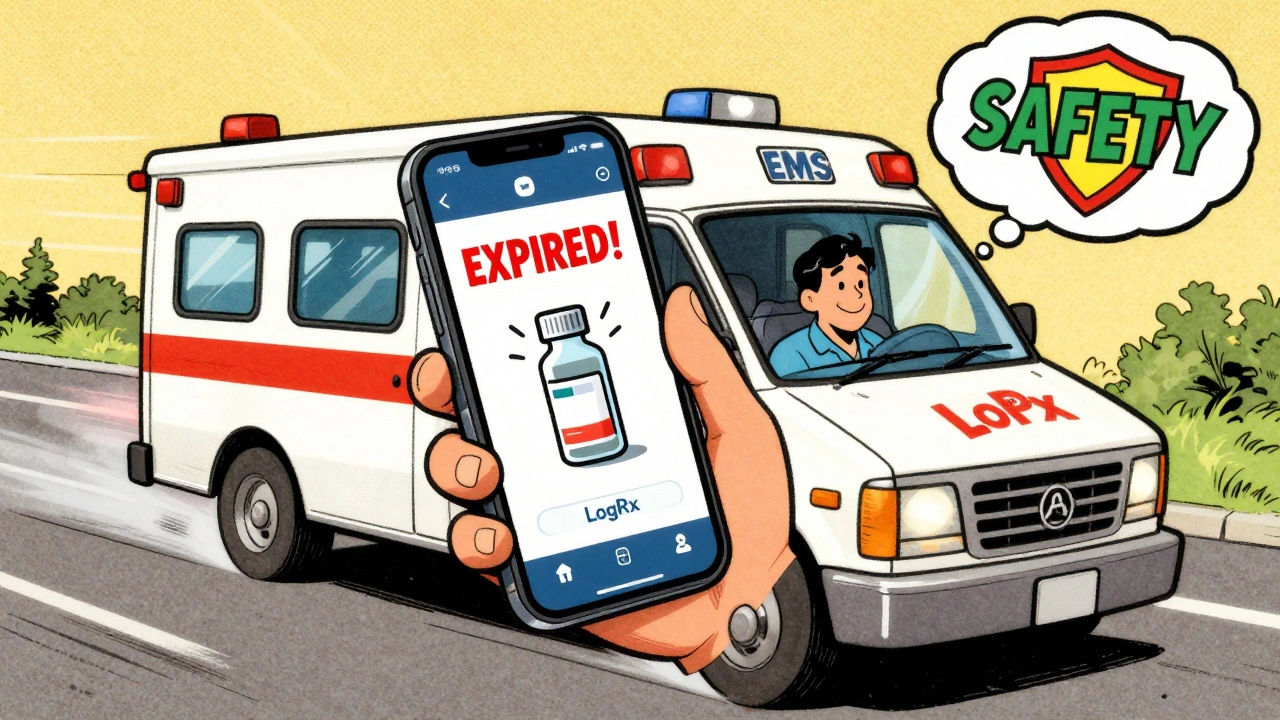
Emergency responders don’t have time to carry bulky scanners. That’s where LogRx comes in. This app runs on iPhones and Android phones-no extra hardware needed. EMS teams scan barcodes on medication vials using their phones. The app checks the expiration date against the current date. If a drug is expired, the app flashes red and blocks use. Portland Fire & Rescue started using LogRx in 2023. Within months, they reported a 60% drop in paperwork errors and zero incidents of expired medications being used in the field. “It’s not just about compliance,” said one paramedic. “It’s about knowing the drug in your hand will actually work when someone’s life is on the line.”What You Need to Get Started
If you’re considering this for a clinic, pharmacy, or even a home care service, here’s what you’ll need:- For hospitals: RFID tags on medications, scanners, cloud software, and staff training. Initial setup costs range from $50,000 to $200,000, depending on size. But most recoup costs in under a year through reduced waste and labor savings.
- For clinics and nursing homes: An eMAR subscription (typically $50-$150 per user/month), compatible tablets or computers, and integration with your pharmacy provider.
- For EMS and field teams: A smartphone, the LogRx app (free for public agencies), and barcode labels on all medications.
Most vendors offer free trials. Start small-test one cabinet, one shift, or one ward. Don’t try to overhaul everything at once.
Common Pitfalls and How to Avoid Them
Technology helps-but only if you use it right. Here’s what goes wrong:- Staff resistance: People hate change. One hospital saw 62% of staff push back in the first month. Solution? Involve them early. Let nurses help design the workflow.
- Bad integration: If your new system doesn’t talk to your existing pharmacy or EHR software, you’ll end up with duplicate entries and errors. Always ask: “Does this plug in?”
- Skipping tagging: RFID only works if every pill bottle, vial, and syringe has a tag. If you’re using KitCheck, expect 40-80 staff hours just to tag existing inventory. Don’t skip this step.
- Assuming it’s foolproof: No system is perfect. Always double-check high-risk drugs like insulin or epinephrine, even if the app says it’s good.
What’s Next? AI and Blockchain
The next wave is smarter. Intelliguard Health is testing AI that predicts which medications are likely to expire soon based on usage patterns. Instead of just alerting you when something expires, it tells you: “You’ll run out of this in 12 days. Order now.” In 2025, pilot programs are starting to use blockchain to track drugs from manufacturer to patient-so you know if a vial was stored properly in transit. These aren’t sci-fi ideas. They’re happening now.Final Thought: It’s Not About Tech-It’s About Safety
Technology doesn’t replace judgment. It supports it. A nurse still needs to know why a drug is being given. But now, she doesn’t have to waste time hunting for expiration dates. She can focus on the patient. Whether you’re managing a hospital pharmacy, running a home care service, or just trying to keep your family’s meds safe, there’s a tool for you. The question isn’t whether you can afford to use it. It’s whether you can afford not to.Can I use technology to track expiration dates at home?
Yes. While full RFID systems are designed for hospitals, you can use smartphone apps like Medisafe or MyTherapy to log your medications and set expiration alerts. These apps send push notifications when a pill is about to expire. They won’t scan barcodes automatically, but they’re far better than relying on memory or sticky notes.
Are expired medications always dangerous?
Not always-but it’s risky to assume they’re safe. The FDA says most solid medications retain potency for years past their expiration date. But liquids, insulin, antibiotics, and nitroglycerin degrade faster and can become toxic. Even if a pill looks fine, its chemical structure may have changed. When in doubt, don’t take it.
How accurate are RFID systems compared to manual checks?
RFID systems achieve 99-100% inventory accuracy. Manual methods typically hover between 65% and 75%. In one Texas hospital, staff found 14 expired medications during a manual audit. The RFID system had flagged 17-three of which were missed because they were hidden behind other items.
Do I need special hardware for RFID tracking?
Yes, for full RFID systems like KitCheck. You need RFID tags (attached to medications), scanners (handheld or fixed), and a server or cloud platform. But for basic tracking, you can use barcode scanners on smartphones or tablets with apps like LogRx-no extra hardware needed.
Is this technology only for large hospitals?
No. While big hospitals lead in adoption, smaller clinics, hospices, and EMS units benefit just as much. Systems like eVero and LogRx are designed for smaller teams. Some cost less than $100 per month. The key is matching the tool to your scale-not your budget.
How long does it take to implement these systems?
It varies. For a small clinic using eMAR, setup can take 2-4 weeks. For a hospital using RFID, expect 8-17 weeks: 2-4 weeks for assessment, 1-3 for installation, 2-6 for training, and 2-4 for testing. The longest part is usually getting staff comfortable with the new workflow.
What’s the biggest benefit of using these systems?
Reducing human error. Every system saves time, but the real win is safety. A single expired drug given to a child, an elderly patient, or someone in cardiac arrest can have deadly consequences. Technology doesn’t eliminate risk-but it makes it far less likely.

Just last week, I had to toss out three bottles of antibiotics because I forgot to check the dates. This post made me realize how easy it is to avoid this with apps like Medisafe. No more guessing. No more guilt. Just set a reminder and breathe.
It’s funny how we treat tech like magic when it’s really just a tool that amplifies human care. RFID doesn’t make nurses better-it just removes the noise so they can be better. The real breakthrough isn’t the tag on the bottle, it’s the moment a nurse doesn’t have to wonder if the drug will work. That’s dignity.
RFID? 😏 You think they’re not tracking *you* too? Every time you scan a pill, they’re logging your habits, your allergies, your panic attacks when you forget your meds… Big Pharma + hospitals + the government = one big surveillance pharmacy. 🕵️♀️💊 #MindTheTags
While the technological advancements detailed herein are indeed laudable, one must not overlook the fundamental epistemological issue: the assumption that automation equates to safety. Human oversight, though fallible, remains indispensable. To cede critical decision-making to algorithmic systems without robust fail-safes is not progress-it is abdication.
Man. I used to just toss expired stuff in the trash. Now I scan em with LogRx. Game changer. No more ‘uhhh… this looks fine?’
Life’s too short to guess with meds.
I’ve seen what happens when a diabetic gets the wrong insulin because someone missed an expiration date. It’s not a mistake. It’s a tragedy. This isn’t about saving money. It’s about not letting someone die because we were too lazy to use a damn app. If your clinic still uses paper, you’re not being traditional-you’re being dangerous.
For home users: Medisafe and MyTherapy are excellent, but don’t rely solely on push notifications. Set a recurring calendar alert too-phone batteries die, apps crash, and your brain forgets. I keep a small notebook next to my meds with the dates written in big letters. Tech helps, but redundancy saves lives. Also, always check the bottle. Even if the app says it’s good, look at the physical label. It’s a two-step safety net.
Love that EMS teams are using phone apps. No need for expensive gear. Just scan, check, move on.
Simple. Smart. Safe.
👏
RFID in hospitals? That’s just the beginning. Next they’ll be putting chips in our blood. You think they care if you live? No. They care if you pay. This isn’t safety-it’s control. And don’t tell me ‘it’s for your own good.’ I’ve seen what ‘for your own good’ looks like. 😡🇺🇸
Okay but… who’s gonna tag all the meds in a 500-bed hospital? 😭 I work in a pharmacy and we spent 3 weeks just labeling insulin vials. It’s a nightmare. And if you miss one? The whole system’s compromised. This tech sounds cool… until you’re the one stuck with the glue gun and a 10,000-count inventory. #RealTalk
As an Aussie paramedic, I’ve seen both sides. We use LogRx here too. It’s not perfect, but it’s 100x better than scribbling dates on duct tape. The real win? Parents feel safer. Kids feel safer. And honestly? We sleep better at night knowing we’re not giving out junk. Tech isn’t the hero-but it’s the sidekick who shows up when you need it most.
I’ve been reading this for 20 minutes. I still don’t know if I should get an app or just throw everything out. Maybe I’m just scared of being wrong.