
Every week, pharmacies receive dozens of drug recall notices-but not all are urgent. Knowing how to quickly identify which ones require immediate action can prevent dangerous medications from reaching patients. For pharmacies, pharmacy recall notifications aren’t just paperwork-they’re critical safety checks. The U.S. Food and Drug Administration (FDA) issued over 4,200 drug recalls in 2023, with Class II recalls making up 67% of all notifications. Missing even one urgent recall could put patients at risk. Here’s exactly how to set up, verify, and act on these alerts without wasting time.
Understand Recall Classifications
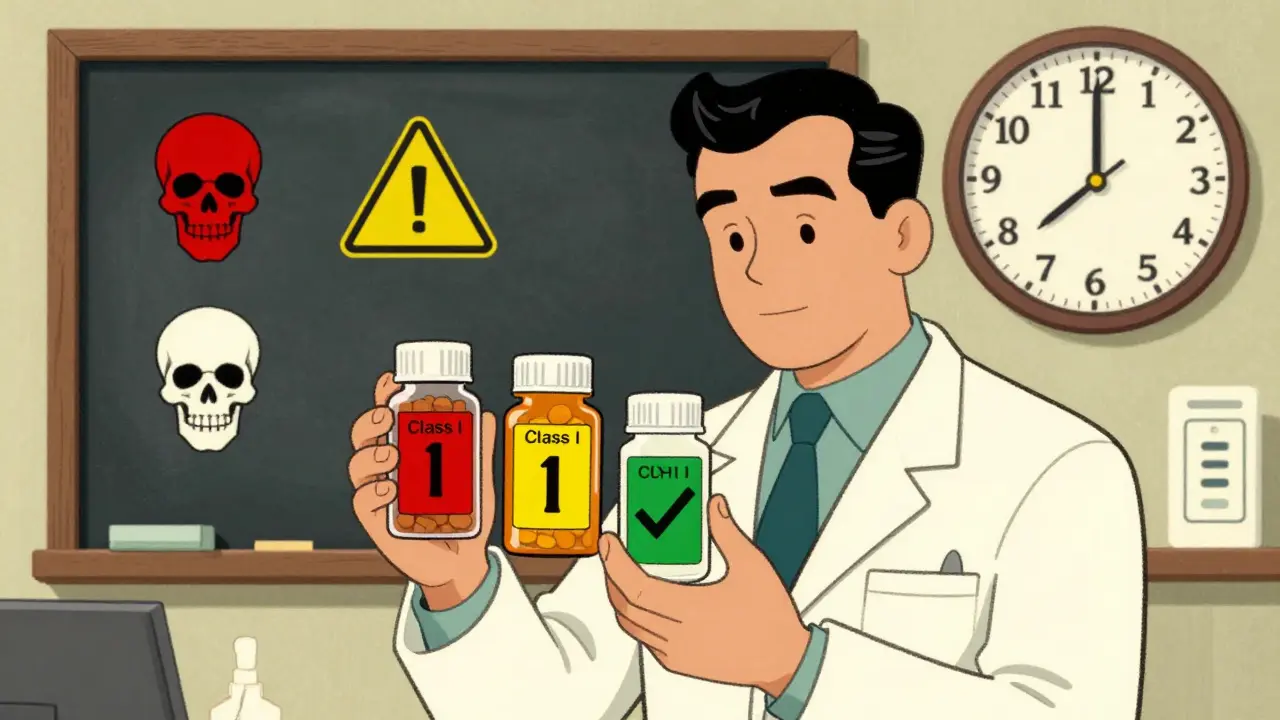
Not all recalls are the same. The FDA uses three categories to prioritize action:
- Class I: Highest risk. These involve products that could cause serious health problems or death. FDA Enforcement Policy Guide 1270.0 requires pharmacies to verify and remove these within 24 hours.
- Class II: Moderate risk. Products might cause temporary health issues or minor problems. Verification must happen within 72 hours.
- Class III: Lowest risk. Issues won’t harm health but violate labeling or manufacturing rules. These usually don’t require immediate removal.
When a recall arrives, the first step is confirming its classification. A Class I recall for contaminated insulin needs instant action, while a Class III recall for a mislabeled vitamin might just need a label update.
Set Up Multiple Notification Channels
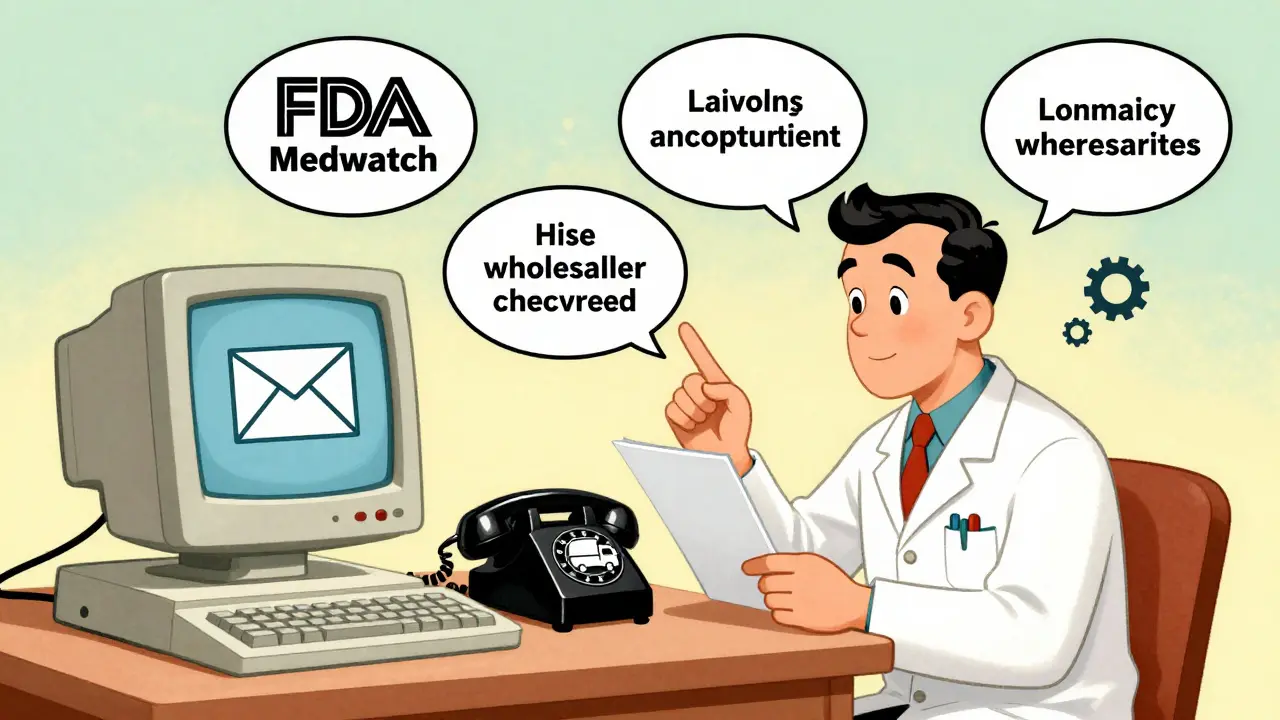
Relying on a single source for recall alerts is risky. The ASHP Guidance on Medication Recalls (2022) states: "Redundant notification systems should be established to ensure the facility receives recall notices." Here’s what to do:
- FDA MedWatch: Register for free email alerts at www.fda.gov/safety/medwatch. This sends real-time updates directly from the FDA.
- Wholesaler notifications: Most drug distributors like McKesson or Cardinal Health offer automated recall alerts. These often include specific lot numbers matching your inventory.
- Pharmacy management systems: Tools like QS/1 or PioneerRx automatically cross-reference FDA data with your inventory. QS/1 processes updates hourly and generates reports within 15 minutes.
According to the FDA’s 2022 Recall Effectiveness Assessment Report, integrated pharmacy systems achieve 99.2% delivery rates and 89.4% acknowledgment rates-far better than email alerts alone (62.3% acknowledgment).
Verify Recalls in Four Steps
Once you receive a notice, follow this verification process:
- Confirm classification: Check if it’s Class I, II, or III. Class I requires immediate action.
- Check NDC and lot numbers: Cross-reference the recalled product’s National Drug Code (NDC) and lot number against your inventory. NDC codes uniquely identify drugs, so ensure they match exactly.
- Review patient dispensing records: For Class I recalls, trace which patients received the affected medication. This is critical for notifying them.
- Remove from inventory: Physically pull recalled stock and quarantine it. Document the removal process for FDA compliance.
For example, if a blood pressure medication recall affects lot number 12345, your pharmacy system should flag only that specific lot-not the entire product line. This precision saves hours of manual work.
Avoid These Common Mistakes
Many pharmacies fail at recall verification due to avoidable errors:
- Single-channel reliance: Relying only on postal mail? The University of Florida found certified mail has a 47-hour average delivery time and 28.6% failure rate for urgent recalls.
- Ignoring batch-specific details: A 2023 Walgreens audit revealed 23% of verification failures happened because technicians couldn’t access inventory records after hours. Always ensure your system allows 24/7 access.
- Skipping patient notification: FDA rules require 100% patient notification for Class I recalls. If a recall affects a diabetes medication, you must contact every patient who received it-especially if they’re on sync programs.
Pharmacy Tech Forum user "RPh2020" shared: "Our Walgreens store gets 15-20 recall notices weekly via RedBook, but the system doesn’t differentiate between our inventory and general market recalls. This requires 2-3 hours weekly just to verify non-applicable notices." Using integrated systems like PioneerRx can filter out irrelevant alerts.
What’s Next for Recall Systems?
The FDA’s Recall Modernization Initiative (launched April 2022) is driving major changes:
- Structured electronic data using HL7 standards will replace manual paperwork by December 2025.
- Blockchain verification through projects like MediLedger is being tested by 12 major manufacturers and 3 pharmacy chains.
- AI-powered verification systems will reduce manual review time by 68% by 2025, according to ASHP’s 2023 Pharmacy Forecast.
These innovations mean faster, more accurate recalls. For now, focus on mastering current systems to keep patients safe.
How quickly must a pharmacy respond to a Class I recall?
FDA policy requires pharmacies to verify and remove Class I recalled products within 24 hours. This includes checking inventory, notifying affected patients, and documenting the action. Delays can lead to serious patient harm or regulatory penalties.
What’s the difference between NDC and lot numbers in recalls?
The National Drug Code (NDC) identifies the drug manufacturer, strength, and dosage form. The lot number specifies a particular batch of that drug. Recalls often target specific lot numbers-for example, a contaminated batch-so you only need to remove that exact batch, not the entire product line.
Can I rely solely on email alerts from the FDA?
No. FDA MedWatch email alerts have a 98.7% delivery rate but only 62.3% acknowledgment rate within required timeframes. The FDA recommends combining email with wholesaler alerts and integrated pharmacy systems to ensure timely action. Relying on one method risks missing urgent recalls.
What tools work best for independent pharmacies?
For small pharmacies, PioneerRx and QS/1 offer cost-effective recall modules. These integrate with wholesaler alerts and automatically filter relevant recalls. Independent pharmacies using these systems report reducing recall processing time from 7.2 hours to 1.4 hours on average.
How do I document recall verification?
FDA requires maintaining recall verification records for 3 years under 21 CFR 203.24. Use electronic audit trails to log: when the recall was received, which inventory was affected, patient notifications sent, and removal actions taken. Over 92% of pharmacies now use digital logs for this purpose.

Let's get this done! This guide is spot on. We can do this. Pharmacies need to step up. No excuses. Let's make it happen. We're all in this together. Let's go!
USA HANDLES RECALLS BEST NO NEED FOR ALL THIS COMPLEXITY
This guide is useless. Who cares about Class III recalls? Real problem is when pharmacies ignore Class I. They should be fined for not acting faster. 24 hours is too slow. Should be 12 hours. And why is the FDA even allowing these recalls? They should prevent them in the first place. Pharma companies are all crooks. This guide is a waste of time.
We need to consider global perspectives. In India, for example, recall systems are different. But this guide is useful. However, we must remember that not all pharmacies have the same resources. So maybe a tiered approach? But the FDA guidelines are a good start. Let's include more diverse voices in this conversation.
We should work together on this. Pharmacies need better systems. But we can't just rely on FDA. Wholesalers and pharmacies must collaborate. Let's build a shared database. It's possible. We need to act now.
I don't see why we need all these steps. It's just common sense. Anyone with half a brain could handle recalls. But maybe I'm too good for this job. The real issue is people not caring enough. But I'm too lazy to do anything about it.
THIS GUIDE IS TERRIBLE PHARMACIES SHOULD JUST CHECK FDA WEBSITE NO NEED FOR ALL THIS PEOPLE ARE TOO LAZY IVE SEEN SO MANY MISTAKES LIKE WHY DO THEY EVEN HAVE CLASS III ITS POINTLESS JUST RECALL WHOLE PRODUCT ITS SAFER I DONT KNOW WHY THEY DONT DO THIS ITS COMMON SENSE DOCUMENTATION JUST WRITE IT DOWN PAPER IS FINE NO ONE LISTENS TO ME IM ALWAYS RIGHT
Hmm, recall notifications are like life's little tests. Sometimes you get a Class I, which is like a wake-up call. But it's all about the bigger picture. We should focus on prevention rather than reaction. But the system is flawed. Pharmcy systems need better integration. FDA should do more. But maybe I'm overthinking. Just do your job.
This is really helpful. I like how it explains the different classes. It's important to know the difference between Class I and II. I've worked in a pharmacy before and sometimes it's hard to keep up. But the step-by-step is great. Just need to make sure all staff are trained. Maybe have a checklist. But overall, good guide.
I really appreciate how this guide breaks down the different recall classes. It's important to understand that Class I isn't just about speed but also about the severity. When you think about it, the FDA's classification system is actually quite smart. It's not just about the product but the potential harm. For example, contaminated insulin in Class I could kill someone, whereas a mislabeled vitamin might just be annoying. But what's often overlooked is the human element. Pharmacists are stressed enough without having to deal with all these alerts. Maybe we need better training or more support staff. Also, the part about patient notification-sometimes patients don't even know they're on a recalled medication. Like, if you're taking a blood pressure med and it's recalled, but you're not checking your pharmacy's alerts, you might keep taking it. So maybe there's a way to integrate this with patient apps or something. And what about the technical side? Like, if a pharmacy uses an old system, they might miss the alert. So maybe the government should subsidize new systems for small pharmacies. It's not just about following the rules but also about making sure everyone has access to the tools they need. I've seen pharmacies in rural areas struggle with this. They don't have the same resources as big chains. So maybe the FDA should have more support for smaller pharmacies. Also, the blockchain idea is interesting, but it's still in testing. We need to make sure that the current systems are solid before moving to new tech. But overall, this guide is helpful. It's a good start. We just need to keep improving.
Class I recalls must be handled immediately.