Missing a dose here or there might seem like a small thing, but for millions of people, it's a serious hurdle. When you don't take your meds exactly as prescribed, your treatment doesn't just slow down-it can actually stop working, or worse, let your condition get worse. In fact, over half of the people dealing with chronic illnesses struggle to stay on track with their prescriptions. This isn't just about memory; it's about how we track and manage our health. If you're wondering whether you're actually following your plan or if you're just guessing, it's time to move from guesswork to a system.
What Exactly is Medication Adherence?
Simply put, Medication Adherence is the degree to which a person's behavior matches the agreed-upon recommendations from their healthcare provider. It's not just about taking a pill once a day; it's about taking the right dose, at the right time, and for the right duration. According to the World Health Organization, this alignment is critical for the medication to actually do what it's supposed to do.
To really understand if you're adhering to your plan, you need to look at three distinct phases: initiation (did you actually start the med?), implementation (are you taking it as directed?), and persistence (how long did you keep it up before stopping?). If any of these three break down, your health outcomes can dip significantly.
The Different Ways to Measure Your Progress
There isn't one single "perfect" way to measure adherence. Instead, doctors and patients use a mix of direct and indirect methods. Some are highly technical, while others are as simple as a conversation.
Direct Methods (The High-Precision Tools)
Direct methods provide hard data. They don't rely on memory or honesty. Examples include:
- Electronic Monitoring: Using MEMS caps (Medication Event Monitoring Systems), which are special bottle caps that record every time the container is opened. While incredibly accurate, these are expensive and usually found in clinical trials rather than home medicine cabinets.
- Blood Tests: Measuring the concentration of a drug in your bloodstream to see if it's at the therapeutic level.
- Observed Therapy: A healthcare provider literally watching you take the medication.
Indirect Methods (The Practical Tools)
These are much more common because they're less invasive. They include:
- Pharmacy Records: Checking how often you refill your prescriptions.
- Self-Reporting: Using questionnaires or diaries to track your habits.
- Pill Counts: Physically counting the remaining tablets in a bottle.
| Method | Accuracy | Cost/Effort | Best Use Case |
|---|---|---|---|
| Electronic Caps (MEMS) | Very High | High | Clinical Research |
| PDC (Pharmacy Data) | Moderate | Low | Chronic Disease (Diabetes, Hypertension) |
| MARS-5 (Questionnaire) | Moderate/Low | Very Low | Quick Clinical Screenings |
| Pill Counting | Moderate | Low | Quick Checks between Visits |
Understanding the Metrics: PDC and MARS-5
If you look at your medical reports, you might see terms like PDC. Proportion of Days Covered (PDC) is a calculation that determines the percentage of days a patient has medication on hand based on their pharmacy fill dates. It's the gold standard for chronic therapies. For instance, if you have a 30-day supply and you refill it exactly every 30 days, your PDC is 100%. Most health experts, including the Pharmacy Quality Alliance, suggest a PDC threshold of 80% is necessary for the drug to provide its full clinical benefit. If you're below 80%, you're likely not getting the most out of your treatment.
On the other side, there's the Medication Adherence Report Scale (MARS-5), a validated 5-item questionnaire that helps patients self-reflect on their medication habits. It asks things like "Do you ever forget to take your medicine?" and lets you rate your behavior. While it's fast (taking under 2 minutes), it's prone to "social desirability bias"-meaning we often tell the doctor what they want to hear rather than what's actually happening.
Your Practical Medication Adherence Checklist
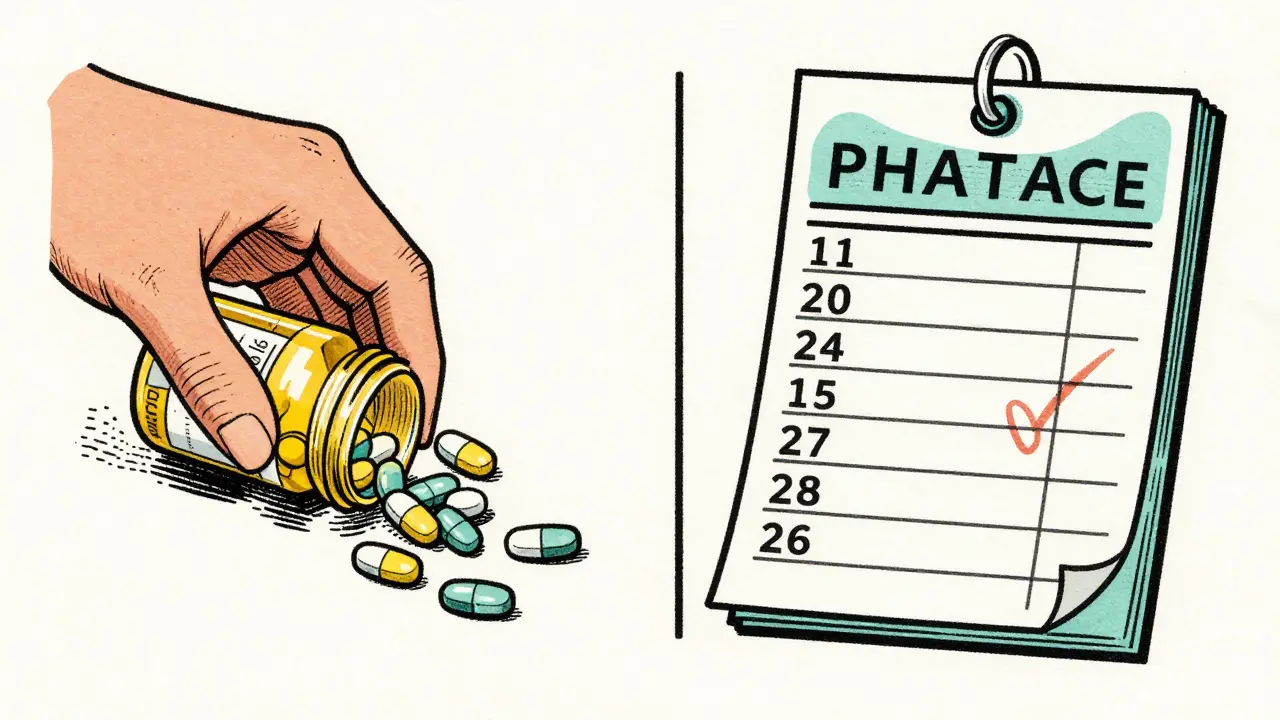
Since you probably don't have a MEMS cap on your bottle, you need a manual way to audit your habits. Use this checklist every month to see where you stand. If you check "No" to more than two of these, it's time to talk to your pharmacist about a better system.
Monthly Adherence Audit
- [ ] Consistency: Did I take my medication at the same time every day?
- [ ] Refill Timing: Did I request my refill at least 5 days before the bottle was empty?
- [ ] Dose Accuracy: Did I take the exact dose prescribed (no skipping or doubling up)?
- [ ] Tracking: Do I have a written or digital record of every dose taken this month?
- [ ] Symptom Link: Do I feel the expected positive effects of the medication?
- [ ] Barrier Check: Were there any days I skipped because of cost, side effects, or forgetfulness?
Why We Struggle and How to Fix It
Adherence isn't just about willpower. There are systemic barriers. For example, many people use multiple pharmacies, which fragments their records and makes it hard for doctors to see the full picture. Other times, the barrier is emotional-feeling judged by a doctor for missing doses can make a patient hide the truth.
To overcome this, try these concrete strategies:
- Smart Packaging: Look into cellular-enabled bottles or smart pill organizers that alert your phone when you've missed a dose.
- The BATHE Method: If you're a caregiver or patient, use the Background, Affect, Trouble, Handling, and Empathy approach to discuss struggles with a provider without feeling judged.
- Sync Your Refills: Ask your pharmacist to align all your chronic medications so you only make one trip a month.

The Future of Tracking: AI and Smart Tech
We're moving away from simple pill counts. AI-powered monitoring, like AiCure, now uses computer vision to verify that a patient has actually swallowed their medication. Additionally, some health systems are using predictive algorithms that scan electronic health records to identify patients at high risk of non-adherence before they even miss a dose, achieving accuracy rates as high as 87.4%.
Why is 80% PDC considered the magic number?
Clinical evidence across various chronic conditions, such as hypertension and diabetes, shows that when patients fall below 80% adherence, the therapeutic effectiveness of the drug drops sharply, leading to a higher risk of complications and hospitalizations.
Is a pill count as accurate as a pharmacy record?
Not necessarily. A pharmacy record (PDC) tells you if the medication was picked up, but it doesn't prove it was taken. A pill count is more direct but can be manipulated if a patient discards pills before the count. Both are indirect and less accurate than electronic monitoring.
What is the difference between MPR and PDC?
MPR (Medication Possession Ratio) can sometimes exceed 100% if you refill early, which can make you look more adherent than you are. PDC (Proportion of Days Covered) caps the total at 100%, providing a more realistic view of the actual days you had medicine available.
How long does it take to complete the MARS-5 test?
The Medication Adherence Report Scale (MARS-5) is designed for speed and typically takes less than 2 minutes to complete during a standard doctor's visit.
Can electronic monitoring be used at home?
Yes, though it's more common in trials. Some newer "smart bottles" like those from AdhereTech use cellular connectivity to track when a bottle is opened and can send reminders to the patient.
Next Steps for Better Adherence
If you've realized your adherence is lower than you'd like, don't panic. Start by identifying the root cause. Is it a cost issue? A side effect you're afraid to mention? Or just a busy schedule? Once you know why, you can pick the right tool. If you're forgetful, a smart pillbox is your best bet. If you're overwhelmed by multiple prescriptions, pharmacy synchronization is the way to go. Bring your monthly checklist to your next appointment to give your doctor a concrete starting point for a solution.