
Polypharmacy Risk Calculator
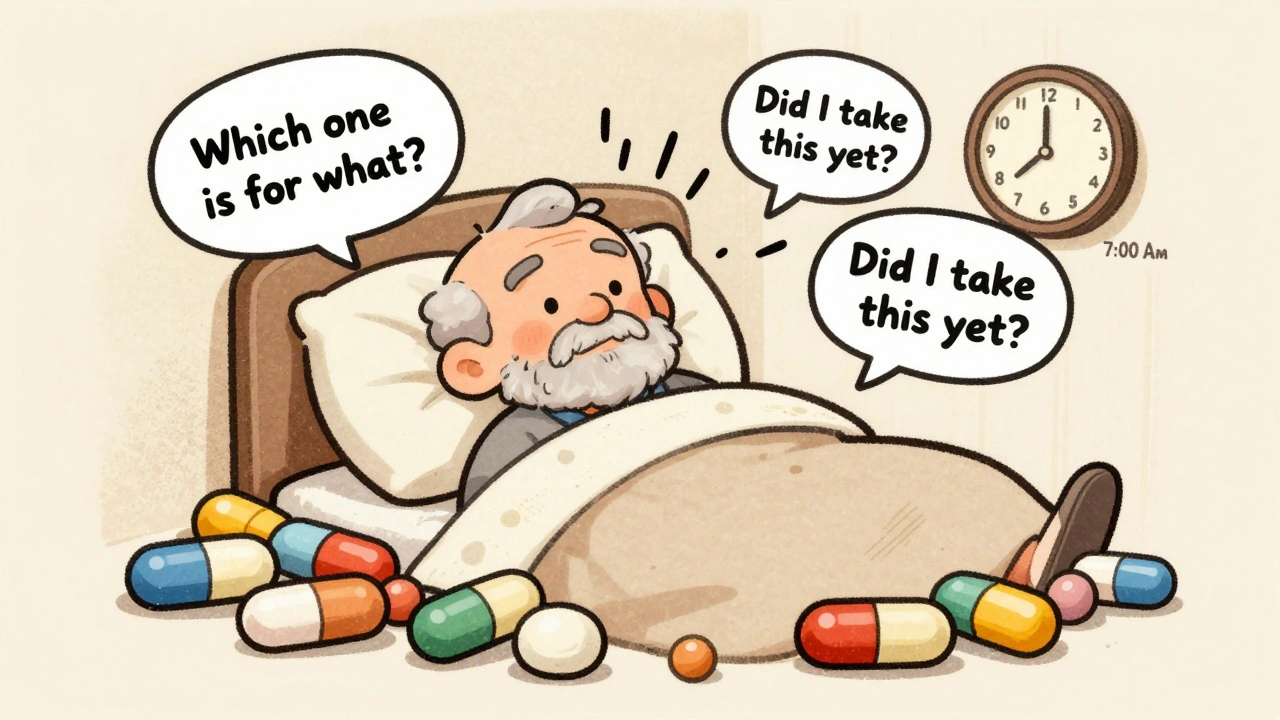
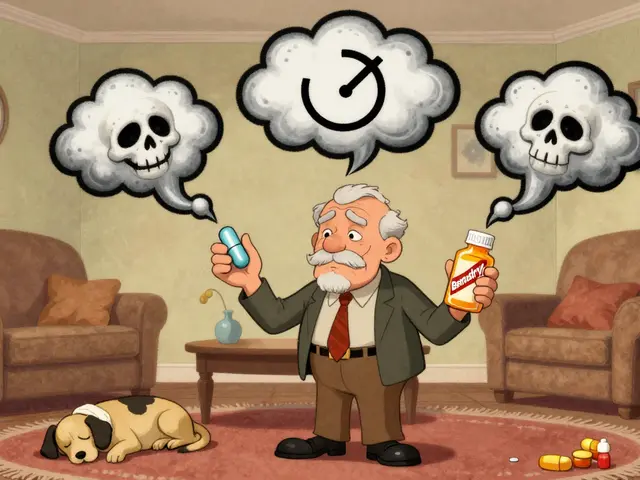
Imagine waking up every morning to a pile of pills-12 of them. Some for your blood pressure, others for your joints, a few for sleep, maybe one for acid reflux, and another because your doctor said to take it after the last one. You’re not sure which one does what, when to take it, or if you already took it. You skip a dose here and there because it’s too confusing. Then you start feeling dizzy, tired, or confused. You go to the doctor, and they add another pill to fix the new problem. This isn’t a story from a movie. It’s happening to millions of people, especially over 65, right now.
What Exactly Is Polypharmacy?
Polypharmacy isn’t just taking a few extra pills. It’s defined as regularly using five or more medications at the same time. That includes prescriptions, over-the-counter drugs like ibuprofen or antacids, and even supplements like magnesium or melatonin. It’s not always bad-sometimes you need multiple drugs to manage complex conditions like heart failure, diabetes, and kidney disease together. But when those medications aren’t carefully reviewed, they become a ticking time bomb.
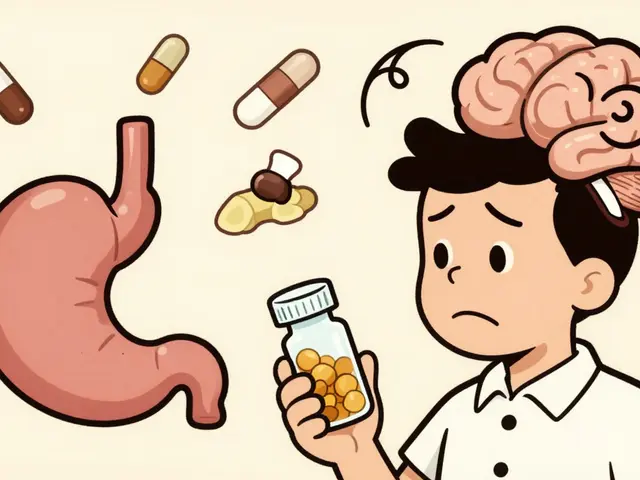
The real danger isn’t the number alone-it’s what happens when those drugs interact. Your body doesn’t handle five drugs the same way it handles one. As you age, your liver and kidneys slow down. That means drugs stick around longer, build up in your system, and start affecting things they weren’t meant to. A blood pressure pill might make you dizzy. That dizziness leads to a fall. The fall causes a fracture. Then you get a painkiller, a bone-strengthening drug, and an anticoagulant to prevent clots from immobility. Each new drug adds more risk. This cycle is called a medication cascade, and it accounts for 30-40% of unnecessary prescriptions in older adults.
Why More Medications Mean More Side Effects
Every medication you take comes with a list of possible side effects. When you take one drug, your body can usually handle it. Take five? The chances of something going wrong jump dramatically.
- People taking 5+ medications have a 50% higher risk of dangerous drug interactions.
- Those on 10+ medications are 28% more likely to die than people on 1-4 meds.
- Over 90% of adverse drug events in seniors are linked to polypharmacy.
Some of the most common side effects aren’t dramatic-they’re quiet and creeping. Memory problems. Constant fatigue. Balance issues. Confusion. These get mistaken for aging, but they’re often caused by meds. Anticholinergics (used for allergies, overactive bladder, or depression), benzodiazepines (sleep or anxiety pills), and NSAIDs (like ibuprofen) are the top three offenders. Together, they make up 45% of inappropriate prescriptions in older adults.
One 2018 study found that 68% of people over 65 taking multiple drugs reported a drop in quality of life. Another found that 42% of those on seven or more medications had trouble walking or moving around. And it’s not just physical-many people stop taking their meds because they can’t keep track. One survey showed 60% of seniors skip doses because the regimen is too complicated.
The Hidden Cost: Money, Time, and Health
It’s not just your body that suffers. Your wallet does too.
A patient taking 1-4 medications spends about $78 a month on drugs. Someone on 5-9 meds? That jumps to $317. For those on 10+, the average annual cost hits $5,200. That’s more than many seniors make in a month. Some have to choose between buying food or their heart medicine. One patient, Robert, 68, told a health blog he skipped his cholesterol pill for weeks because he couldn’t afford both it and groceries.
The healthcare system pays too. Polypharmacy leads to 24% more hospital admissions, 18% longer hospital stays, and 32% more emergency room visits. In the U.S. alone, avoidable costs tied to inappropriate polypharmacy hit $300 billion a year. That’s 16% of all medication spending.

When Polypharmacy Actually Helps
Before you think all multiple meds are bad, let’s be clear: sometimes, they save lives.
After a heart attack, the standard treatment includes four drugs: a beta blocker, a statin, an antiplatelet, and an ACE inhibitor. Together, they cut the risk of another heart attack or death by 50-60%. That’s not polypharmacy gone wrong-that’s precision medicine.
Same with someone who has diabetes, kidney disease, and high blood pressure. Each condition needs its own treatment. Stopping one could make the others worse. The problem isn’t having multiple meds-it’s having the wrong ones, or too many, or none being reviewed regularly.
What Can You Do? Deprescribing Is the Answer
Deprescribing isn’t about stopping everything. It’s about asking: Is this drug still helping me? Is it worth the risk?
The process takes time-usually 3 to 6 months. It’s not a quick fix. It involves:
- Getting a full list of every pill, supplement, and OTC drug you take.
- Reviewing each one with your doctor or pharmacist: Why was it prescribed? Is it still needed? Are there safer alternatives?
- Stopping or reducing one drug at a time, watching for changes.
The American Geriatrics Society recommends a full medication review at least once a year if you’re on five or more drugs. But only 35% of primary care doctors feel confident doing this. That’s why it’s up to you to ask.
Ask your doctor:
- “Which of these medications are absolutely necessary?”
- “Is there a simpler way to manage this?”
- “What happens if I stop this one?”
- “Could this be causing my dizziness or memory issues?”
Tools like MedWise, approved by the FDA in 2022, help doctors spot dangerous combinations. But they’re not everywhere yet. Don’t wait for tech to save you-start the conversation now.

Real Stories, Real Changes
A 78-year-old woman was taking 12 medications. She was constantly dizzy and falling. After a careful review, three unnecessary pills were stopped-two for mild acid reflux she didn’t even have symptoms of, and one for sleep that was interacting with her blood pressure drug. Within two weeks, her dizziness vanished. She stopped falling. She started going out again.
Another man, 72, was taking 17 pills a day. He couldn’t remember which ones he’d taken. He felt like a “pharmacy on legs.” After deprescribing, he dropped to six. His energy came back. He started gardening again.
These aren’t rare cases. They’re common. And they’re fixable.
The Bigger Picture: Why This Is Getting Worse
Our healthcare system is built for single diseases, not multiple ones. A cardiologist treats your heart. A neurologist treats your memory. A rheumatologist treats your joints. No one looks at the whole picture. Each specialist adds a drug. No one takes away.
Only 12% of medical schools in the U.S. teach polypharmacy. Only 28% of primary care doctors have systems to manage complex regimens. And Medicare only steps in if you’re on eight or more drugs.
By 2030, half of all adults over 65 will be on five or more medications. Without change, adverse drug events will rise by 40% and costs will climb $127 billion more by 2035.
This isn’t just a medical problem. It’s a human one. It’s about dignity. Independence. Safety. And it’s preventable.
What You Can Do Today
You don’t need to wait for your doctor to bring it up. Take action:
- Write down every medication you take-name, dose, reason, and time.
- Include vitamins, supplements, and OTC drugs. Don’t leave anything out.
- Bring this list to your next appointment. Ask: “Is everything here still needed?”
- If you feel worse after starting a new drug, speak up. Don’t assume it’s just aging.
- Ask if any drugs can be combined, lowered, or stopped.
It’s not about taking fewer pills for the sake of it. It’s about taking only what you truly need-so you can live better, not just longer.
What is considered polypharmacy?
Polypharmacy is defined as taking five or more medications regularly at the same time. This includes prescription drugs, over-the-counter medicines like pain relievers or antacids, and dietary supplements. It’s not just the number-it’s whether all the drugs are necessary, safe together, and still benefiting you.
Can polypharmacy cause falls in older adults?
Yes. Polypharmacy increases the risk of falls by 1.5 to 2 times. Medications like sedatives, blood pressure drugs, and anticholinergics can cause dizziness, low blood pressure, or confusion-all of which make falls more likely. Falls often lead to fractures, hospital stays, and loss of independence.
How can I reduce the number of medications I’m taking?
Start by making a complete list of everything you take, including supplements and OTC drugs. Bring it to your doctor and ask for a medication review. Focus on one drug at a time-never stop multiple meds at once. Ask if any drugs can be stopped, lowered, or replaced with non-drug options like exercise or diet changes. Deprescribing is a slow, safe process that takes months.
Are over-the-counter drugs safe to take with prescriptions?
Not always. Common OTC drugs like ibuprofen, antacids, sleep aids, and allergy pills can interact dangerously with prescriptions. For example, ibuprofen can raise blood pressure and harm kidneys when taken with ACE inhibitors. Melatonin can worsen drowsiness when mixed with benzodiazepines. Always tell your doctor or pharmacist about every OTC product you use.
Why do doctors keep prescribing more meds instead of stopping some?
Many doctors are trained to treat one condition at a time, not the whole person. They may not realize how many drugs you’re already taking, or they may fear missing something if they stop a medication. There’s also pressure to follow guidelines that focus on adding drugs for each condition. That’s why patient-initiated conversations about deprescribing are so important.
Is there a tool that helps check for bad drug interactions?
Yes. The FDA-approved MedWise tool helps clinicians identify dangerous combinations and high-risk medications. It’s used in some clinics and hospitals, but not everywhere. You can also use free online tools like Medscape’s Drug Interaction Checker-but always confirm results with your pharmacist or doctor. Never rely on apps alone.

I took 14 pills a day for years. One day I just stopped writing them down and started forgetting. Then I fell. No one told me to ask questions. I wish someone had.
Deprescribing is just lazy medicine. If you’re old enough to need meds you’re old enough to take them. The system isn’t broken it’s just working as designed. People want magic bullets but reality’s messy.
Look we’re all just lab rats in a pharmaceutical experiment 🤡 Nobody’s asking who profits from this. Doctors get paid to prescribe not to question. Pharma spends billions convincing us we need more pills. The real problem isn’t polypharmacy it’s capitalism wrapped in a white coat 💊🩺
This hit me hard. My mom was on 11 meds and she stopped recognizing me. We started deprescribing one by one and now she’s back to gardening and telling stories. It’s not magic it’s just listening. You don’t need to be brave you just need to ask. 🙏
It is, however, imperative to acknowledge that the statistical correlation between polypharmacy and adverse outcomes does not inherently imply causation. One must also consider confounding variables such as socioeconomic status, comorbidities, and healthcare access. The assertion that deprescribing is universally beneficial lacks rigorous longitudinal validation.
To everyone feeling overwhelmed: you are not alone. I’ve sat across from dozens of seniors who thought their foggy mind was just aging. It wasn’t. It was a pill. One at a time. One conversation at a time. You don’t need to be perfect. You just need to start. Bring the list. Ask the question. Your life matters more than the prescription pad. 🌱
People who take more than 5 meds are just lazy. I’m 70 and I take three. I walk 5 miles a day, eat clean, and never use OTC stuff. If you’re dizzy it’s because you’re not taking care of yourself. Stop blaming the pills and start blaming yourself.
…and yet… the system… is… catastrophically… broken… because… no… one… is… trained… to… think… holistically… and… also… the… pharmaceutical… lobby… owns… congress… and… also… you… can’t… just… stop… meds… without… a… specialist… who… is… on… vacation… for… three… weeks…
My uncle in India takes 8 pills. He asked his doctor one question: 'Which one keeps me alive?' Only three stayed. He smiles more now. Simple works.
I think the government is using this to track us. All these pills… they’re laced with microchips. That’s why they don’t want you to stop them. They need your data. I stopped everything. Now I drink lemon water and wear aluminum foil hats. I’m safe.
My grandma used to call her meds her 'little soldiers.' She’d line them up like toys. Then one day she just said 'I’m tired of the army.' We cut it down to four. She started humming again. Not because she was cured. Because she was finally herself. 🌅
OMG I just realized my dad’s 17 pills include one for nausea… from another pill 😱 I’m printing this and taking it to his next appointment. Thank you for writing this. 🙏💖
There’s a quiet grief in taking so many pills that you forget what it feels like to be whole. Not sick. Not fixed. Just… alive. I watched my mother become a list of symptoms and prescriptions. She didn’t die from disease. She died from being treated like a machine that needed constant tuning. Deprescribing isn’t about reducing pills. It’s about restoring dignity. And that… that takes courage. Not just from the patient. But from everyone around them. The system won’t change unless we make space for it to. And sometimes… that means asking the hard question… even when we’re scared of the answer.