When you're taking alfuzosin, a selective alpha-1A blocker used to treat symptoms of benign prostatic hyperplasia. Also known as Uroxatral, it helps relax muscles in the prostate and bladder neck to improve urine flow. But safety isn't just about whether it works—it's about what it can do to you when mixed with other meds or used by the wrong person. Many people assume because it's prescribed for a common condition, it's harmless. That’s not true. Alfuzosin can drop your blood pressure suddenly, especially if you're also on other drugs that lower it.
The biggest danger? Combining alfuzosin with PDE5 inhibitors, like sildenafil (Viagra) or tadalafil (Cialis), used for erectile dysfunction. These drugs work in similar ways—both relax smooth muscle. Together, they can send your blood pressure crashing. There are real cases of people passing out, needing emergency care, or even having heart issues after mixing them. Even if you take them hours apart, the risk doesn’t go away. The same goes for other alpha-blockers, like tamsulosin or doxazosin. Taking more than one won’t help—it just makes side effects worse.
Alfuzosin isn’t safe for everyone. If you have liver problems, your body can’t clear it properly. That means higher levels build up, increasing the chance of dizziness, fainting, or low blood pressure. People with low blood pressure to begin with should avoid it. And if you’ve ever had a reaction to similar drugs, don’t guess—talk to your doctor. It’s not a drug you can just start and forget about. You need to know when to sit down after taking it, how to watch for fainting, and which other meds to avoid.
You’ll find posts here that dig into similar drug safety issues—like how antibiotics spike INR in warfarin users, why mixing benzodiazepines with opioids can stop your breathing, and how herbal supplements like black cohosh can damage your liver. These aren’t random stories. They’re all part of the same pattern: prescription drugs seem safe until they’re mixed with something else. Alfuzosin is no different. The real question isn’t whether it helps with urination—it’s whether you’re taking it in a way that could hurt you. Below, you’ll find real cases, clear comparisons, and practical advice to help you avoid the traps others have fallen into.
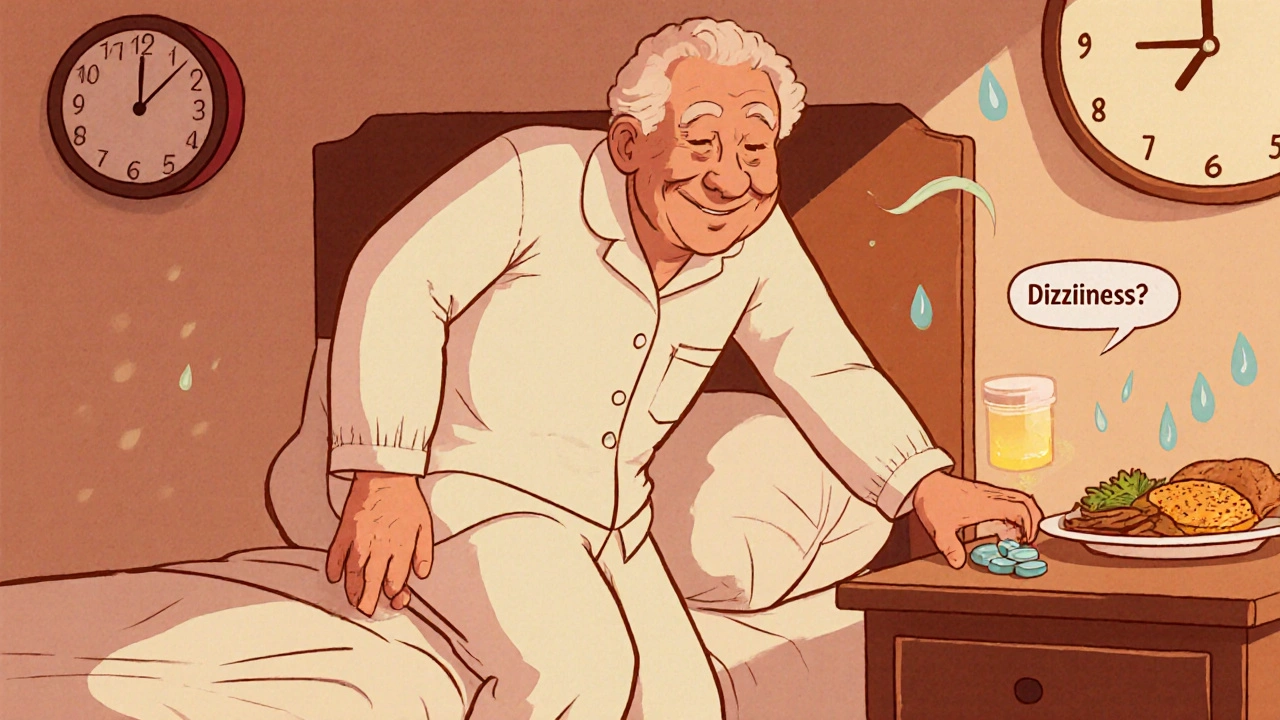
Learn how to reduce dizziness, fainting, and other side effects of alfuzosin by taking it correctly after meals, avoiding alcohol, moving slowly, and tracking symptoms. Safe use is possible with simple lifestyle adjustments.
full article