When you're prescribed alfuzosin, a medication used to treat urinary symptoms caused by an enlarged prostate. Also known as an alpha-blocker, it works by relaxing muscles in the prostate and bladder neck to improve urine flow. But like all drugs, it comes with risks. Many people take it without issues, but others experience side effects that can be mild—or in rare cases, serious enough to need medical attention.
One of the most common side effects is dizziness, especially when standing up too fast. That’s because alfuzosin lowers blood pressure, and if your body can’t adjust quickly, you might feel lightheaded or even faint. This isn’t just inconvenient—it’s dangerous if you’re climbing stairs, driving, or operating machinery. Another frequent complaint is fatigue. You might feel unusually tired, even if you’re sleeping fine. Less common but more alarming are symptoms like chest pain, rapid heartbeat, or fainting. These aren’t typical, but if they happen, stop taking it and call your doctor right away. Alfuzosin can also interact with other meds. For example, if you’re on nitrates for heart problems or other blood pressure drugs, combining them with alfuzosin can drop your pressure too low. Even some antifungal pills or antibiotics can change how your body processes alfuzosin, making side effects worse.
It’s not just about the drug itself—it’s about how it fits into your overall health. If you have liver problems, your body may not clear alfuzosin properly, leading to higher levels in your system and stronger side effects. That’s why doctors often start with a lower dose if you’re older or have liver disease. And if you’ve had surgery on your prostate before, your doctor might avoid alfuzosin altogether. It’s also worth noting that while alfuzosin helps with urinary symptoms from benign prostatic hyperplasia, a non-cancerous enlargement of the prostate gland common in older men, it doesn’t shrink the prostate. So if your symptoms are getting worse, it might mean the condition is advancing, not that the drug stopped working.
What you’ll find in the posts below aren’t just random articles—they’re real, practical guides based on actual patient experiences and clinical data. You’ll see how alfuzosin compares to other alpha-blockers, what to do if you miss a dose, how it stacks up against surgery, and why some men stop taking it because of side effects. There’s also info on how it interacts with other common meds like statins, antidepressants, and even over-the-counter cold pills. No fluff. No guesswork. Just what you need to know to stay safe and make smarter choices with your treatment.
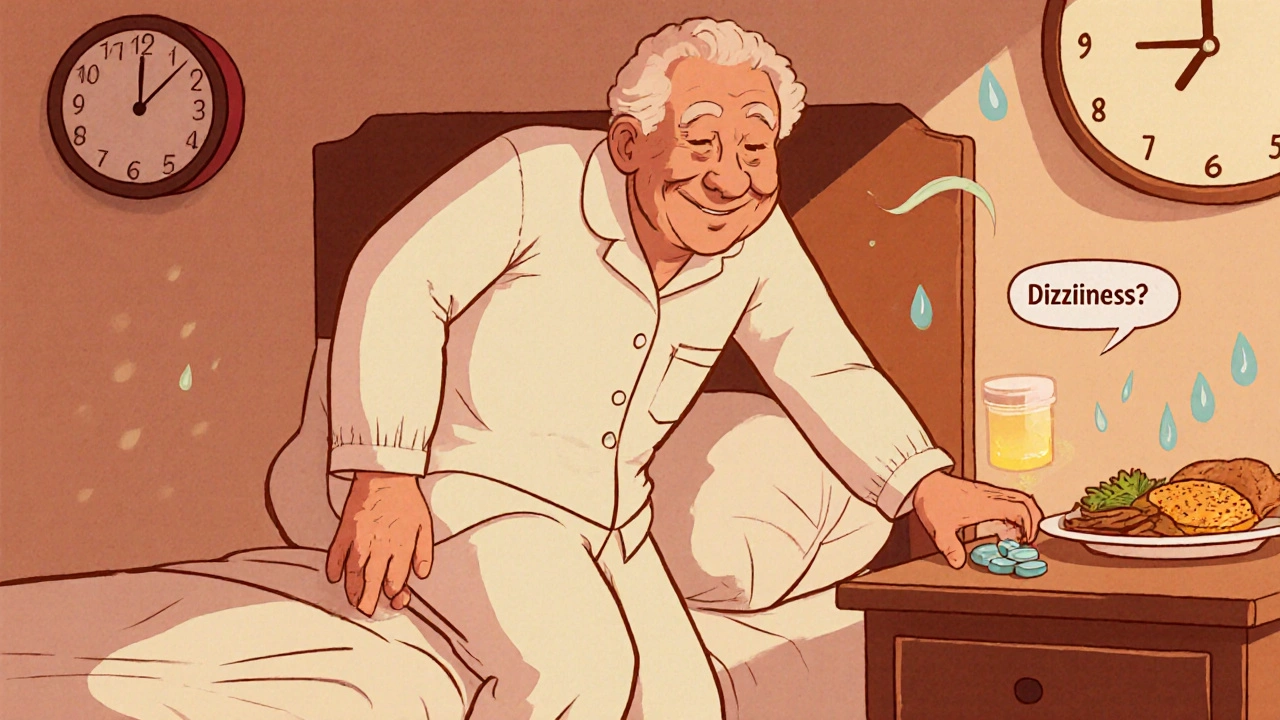
Learn how to reduce dizziness, fainting, and other side effects of alfuzosin by taking it correctly after meals, avoiding alcohol, moving slowly, and tracking symptoms. Safe use is possible with simple lifestyle adjustments.
full article