When you're dealing with alfuzosin, a selective alpha-1A blocker used to treat symptoms of benign prostatic hyperplasia (BPH). It's not a cure, but it helps relax muscles in the prostate and bladder neck so urine can flow more easily. Also known as Uroxatral, it's often prescribed when lifestyle changes aren't enough to ease trouble peeing, weak stream, or frequent nighttime trips to the bathroom.
Alfuzosin works differently than surgery or other BPH meds like finasteride. It doesn't shrink the prostate—it just makes it easier to empty. That’s why you might feel better in days, not weeks. But it’s not for everyone. If you have severe liver problems, low blood pressure, or take certain heart meds like nitrates, it can cause dangerous drops in blood pressure. Always tell your doctor about every pill you’re on, even over-the-counter ones. Some cold medicines, antidepressants, or erectile dysfunction drugs can clash with alfuzosin and make you dizzy or faint. This isn’t just a warning—it’s a real risk. One study in the Journal of Clinical Hypertension found that 1 in 12 men on alfuzosin with uncontrolled hypertension had a syncopal episode within the first two weeks.
Timing matters. Take alfuzosin once daily, right after the same meal each day. Don’t take it on an empty stomach—it affects how much gets into your system. Skipping meals or switching to a low-fat snack? That could make the drug less effective or cause unpredictable drops in pressure. Don’t crush or split the tablet. It’s designed to release slowly. If you miss a dose, skip it and go back to your normal schedule. Never double up. Side effects like dizziness, headache, or tiredness are common at first but usually fade. If you feel lightheaded standing up, sit or lie down. Keep a water bottle nearby. And never stop taking it suddenly unless your doctor says so—your symptoms could snap back worse than before.
Alfuzosin is often paired with other treatments. Some men combine it with 5-alpha reductase inhibitors like finasteride for long-term protection. Others use it while waiting for surgery. But it’s not a substitute for checking your prostate. Regular PSA tests and digital exams still matter. If you notice blood in your urine, sudden inability to pee, or sharp pain in your lower belly, call your doctor. Those aren’t normal side effects—they’re red flags.
What you’ll find in the posts below are real, practical insights from men who’ve used alfuzosin and others who’ve dealt with similar issues. You’ll see how it stacks up against tamsulosin, what to do if you can’t tolerate it, how alcohol affects it, and why some people stop taking it after a few weeks. No fluff. No marketing. Just what works, what doesn’t, and what your pharmacist won’t always tell you.
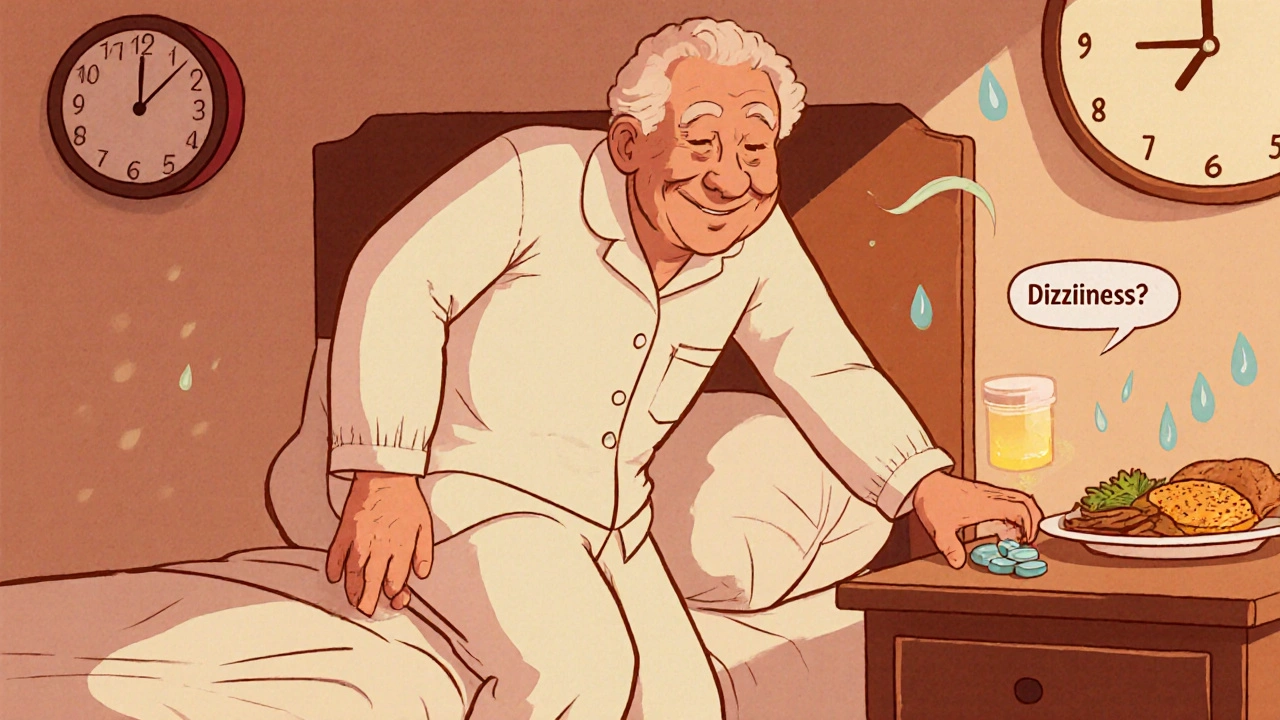
Learn how to reduce dizziness, fainting, and other side effects of alfuzosin by taking it correctly after meals, avoiding alcohol, moving slowly, and tracking symptoms. Safe use is possible with simple lifestyle adjustments.
full article