When you’re heading into a region where malaria prophylaxis, a preventive treatment taken before and during travel to areas with malaria risk. Also known as antimalarial medication, it’s not optional—it’s your best defense against a disease that kills over 600,000 people every year. Most people think it’s just about popping a pill, but the real question is: which one, when, and why? Not all antimalarials are the same. Some work better in certain countries. Some cause dizziness. Others mess with your sleep or stomach. And if you’re already on other meds—like antidepressants or blood thinners—some can interact dangerously.
Malaria prophylaxis isn’t one-size-fits-all. It depends on where you’re going, how long you’ll be there, and your health history. For example, in parts of Africa and Southeast Asia, atovaquone-proguanil, a combination drug often sold as Malarone. Also known as Malarone, it’s one of the most popular choices because it’s taken daily and stopped just a week after leaving the risk zone. But if you’re traveling to Southeast Asia where resistance is common, doxycycline might be your only solid option. Then there’s mefloquine—effective, but it can cause vivid dreams or anxiety in some people. And chloroquine? It’s useless in most places now because the parasite evolved around it decades ago. You need to match the drug to the region, not just pick the cheapest one.
Timing matters too. You usually start taking the pill a week or two before you leave. That’s not just to build up levels—it’s so your body can react to side effects before you’re stuck in a remote village. You keep taking it while you’re there. And you don’t stop the day you get home. You finish the full course—sometimes for four weeks after. Skip that, and you’re gambling with infection. Even if you feel fine. Even if you didn’t get bitten. The parasite can lie dormant for weeks before it shows up.
And don’t forget the basics. Pills aren’t enough. You still need mosquito nets, repellent with DEET, and long sleeves at dusk. No pill is 100% effective. But combine them, and your risk drops to near zero. Also, if you’re on other meds—like birth control, antacids, or even common painkillers—check for interactions. Some antimalarials reduce the effectiveness of other drugs. Others increase side effects. One study found that people taking doxycycline with oral contraceptives had higher chances of breakthrough bleeding. Not a dealbreaker, but something to know.
What you’ll find in the posts below isn’t just a list of pills. It’s the real talk about what works, what doesn’t, and what no one tells you until you’re already on the ground. You’ll see how travelers actually manage side effects, why some drugs are being phased out, and how to spot early signs of malaria even if you took your pills. You’ll also learn what to do if you forget a dose, how to handle vomiting while on treatment, and why some people get sick despite doing everything right. This isn’t theory. It’s what people actually use, struggle with, and survive.
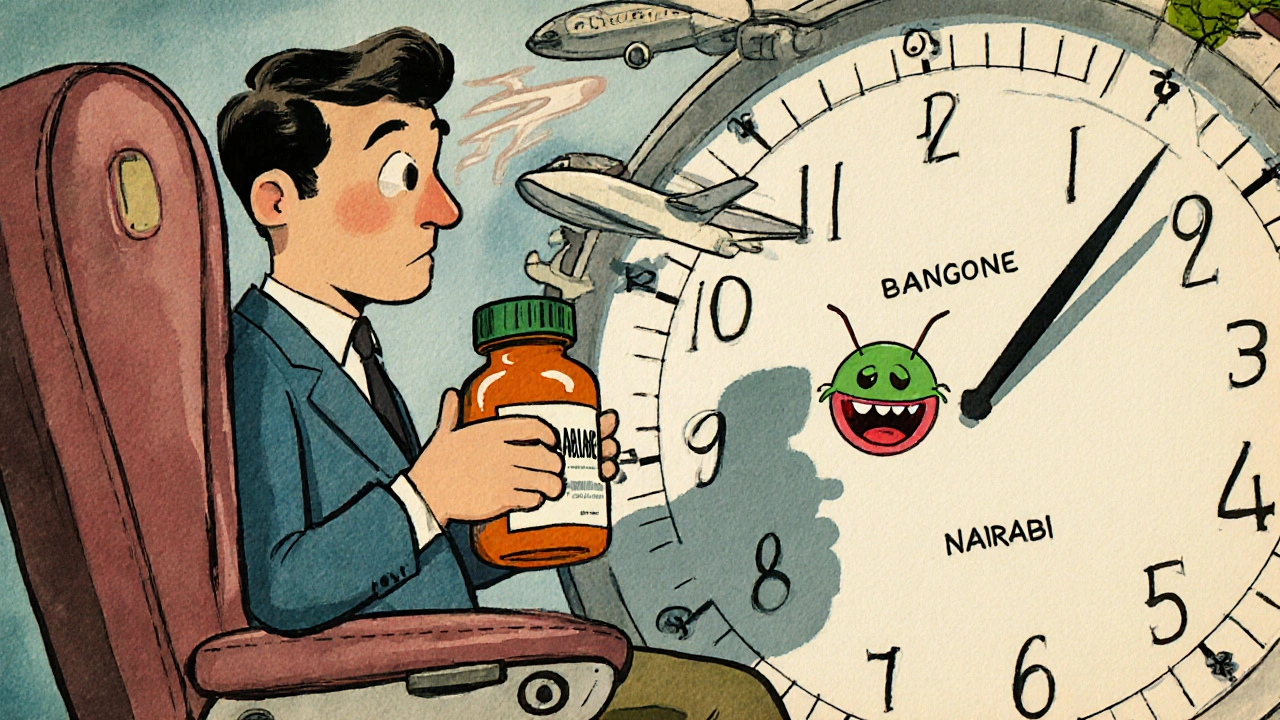
Learn how to time antimalarials and HIV medications across time zones to avoid treatment failure, drug resistance, and dangerous gaps in protection. Essential tips for travelers.
full article