When you’re taking alfuzosin, a medication used to treat symptoms of benign prostatic hyperplasia (BPH) by relaxing prostate and bladder muscles. It’s known for helping with urine flow, but it can also cause dizziness, low blood pressure, and fatigue—especially when you first start or change doses. Many people stop taking it not because it doesn’t work, but because the side effects feel worse than the original problem.
One of the biggest risks with alfuzosin, a type of alpha-blocker used for prostate issues is sudden drops in blood pressure, especially when standing up. This isn’t just uncomfortable—it can lead to falls or fainting. The fix isn’t always about lowering the dose. Often, it’s about timing. Taking alfuzosin right after your largest meal of the day slows absorption and reduces the chance of a sharp pressure drop. Avoid alcohol, which multiplies this effect, and don’t combine it with other blood pressure meds unless your doctor confirms it’s safe. Many people don’t realize that drug interactions, when alfuzosin is mixed with other medications like certain antibiotics or antifungals can turn mild side effects into serious problems.
Another common complaint is dizziness or lightheadedness. Simple habits make a big difference. Get up slowly—sit on the edge of the bed for 30 seconds before standing. Stay hydrated, especially in hot weather or after exercise. If you feel dizzy, sit or lie down immediately. Don’t ignore it. Some people think side effects mean the drug isn’t working, but often it just means your body needs time to adjust. Most side effects ease within a few weeks. If they don’t, talk to your doctor about switching to a different alpha-blocker like tamsulosin, which has a lower risk of blood pressure issues.
It’s also worth noting that alfuzosin doesn’t work the same for everyone. Your age, other health conditions, and what else you’re taking all matter. For example, if you’re on meds for heart disease or depression, your risk of side effects goes up. That’s why checking in with your pharmacist or doctor about your full medication list isn’t just smart—it’s essential. You wouldn’t drive a car without checking the oil, and you shouldn’t take alfuzosin without checking your drug combo.
There’s no magic pill to erase side effects, but there are real, proven ways to manage them. Small changes in how and when you take it, what you avoid, and how you move through your day can turn a frustrating experience into something manageable. The goal isn’t to stop taking alfuzosin—it’s to keep taking it safely so your symptoms stay under control.
Below, you’ll find real-world advice from people who’ve been there, plus clear breakdowns of what works, what doesn’t, and how to spot when something’s seriously wrong—like signs of infection or liver stress that might be linked to other meds you’re mixing in.
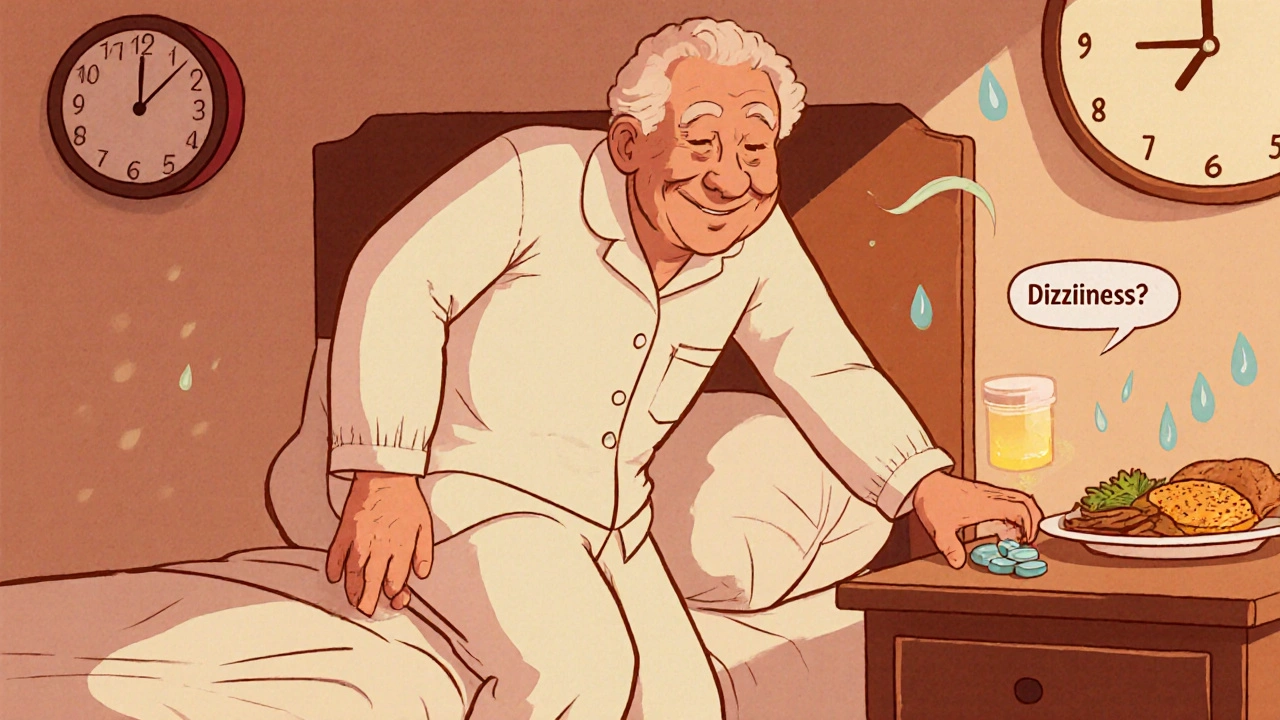
Learn how to reduce dizziness, fainting, and other side effects of alfuzosin by taking it correctly after meals, avoiding alcohol, moving slowly, and tracking symptoms. Safe use is possible with simple lifestyle adjustments.
full article