
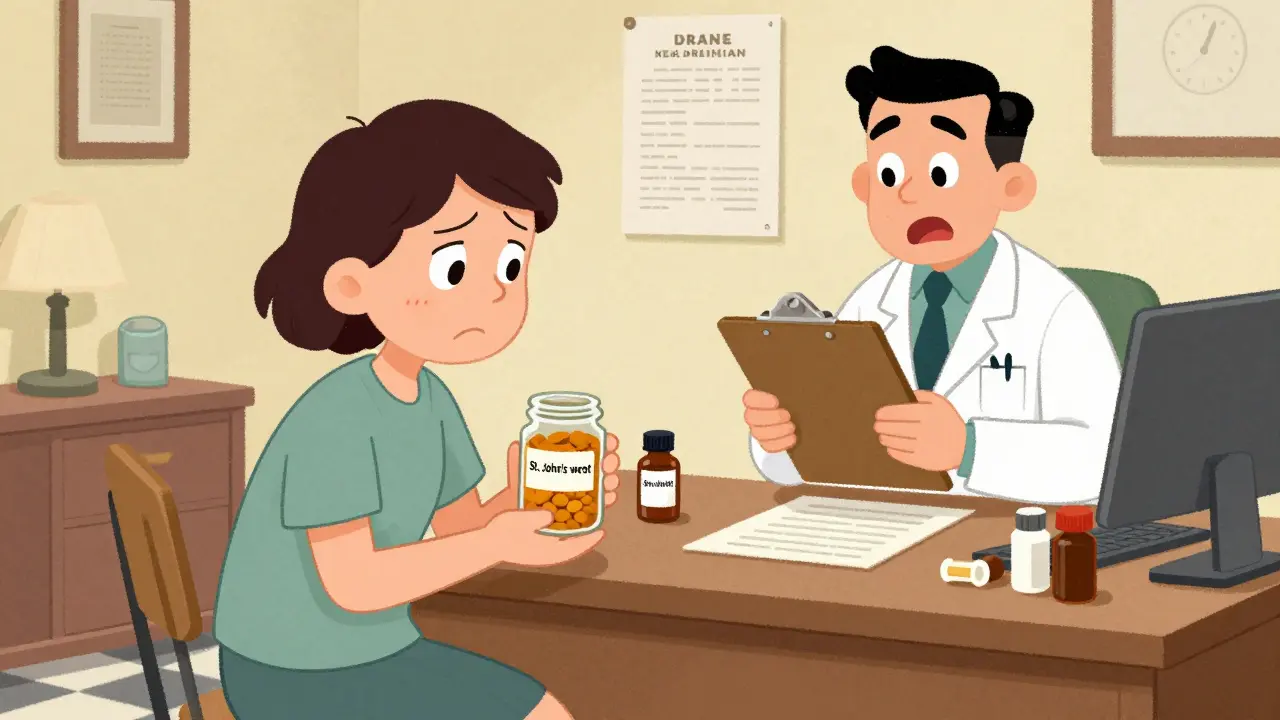
It’s not unusual to take a multivitamin, turmeric for joint pain, or St. John’s wort for low mood. Many people think these are harmless, natural, and safe-so why mention them to a doctor? But here’s the truth: supplements can be just as powerful-and just as risky-as prescription drugs. And if your provider doesn’t know you’re taking them, they could be making dangerous mistakes in your care.
Most People Don’t Tell Their Doctors-And That’s a Problem
Studies show that only about one in three people who take herbal remedies or dietary supplements actually tell their doctor. Even among people with chronic illnesses like diabetes, heart disease, or high blood pressure-people who are on multiple medications-disclosure rates stay below 50%. Why? Because most assume their doctor won’t care, or that supplements aren’t "real medicine." But that’s a myth. St. John’s wort, for example, can make birth control pills useless. Garlic supplements can thin your blood so much that you bleed during surgery. Green tea extract can interfere with chemotherapy. Turmeric, often taken for inflammation, can dangerously boost the effect of blood thinners like warfarin. These aren’t rare cases. They’re documented, preventable events.Your Doctor Isn’t Asking-But They Should Be
Doctors don’t always bring it up. In fact, research shows that only 13% of patients report their supplement use because their doctor never asked. The average office visit lasts 15 to 20 minutes. Doctors are juggling high blood pressure, cholesterol, diabetes, and mental health. Supplements? They’re not on the checklist. But here’s the flip side: when providers *do* ask directly, disclosure jumps from 33% to 78%. A simple question like, "Are you taking any vitamins, herbs, or supplements?" makes a huge difference. Even better: "What supplements are you currently using?"-not "Do you take any?"-because the second question assumes you do, and that changes how people answer.What You’re Probably Taking (And Why It Matters)
You might not think of these as "supplements," but they are:- St. John’s wort (for depression or anxiety)
- Garlic pills (for heart health)
- Turmeric or curcumin (for joint pain)
- Omega-3 fish oil (for inflammation)
- Melatonin (for sleep)
- Green tea extract (for weight loss)
- Black cohosh (for menopause)
- Vitamin D, magnesium, zinc (for general wellness)
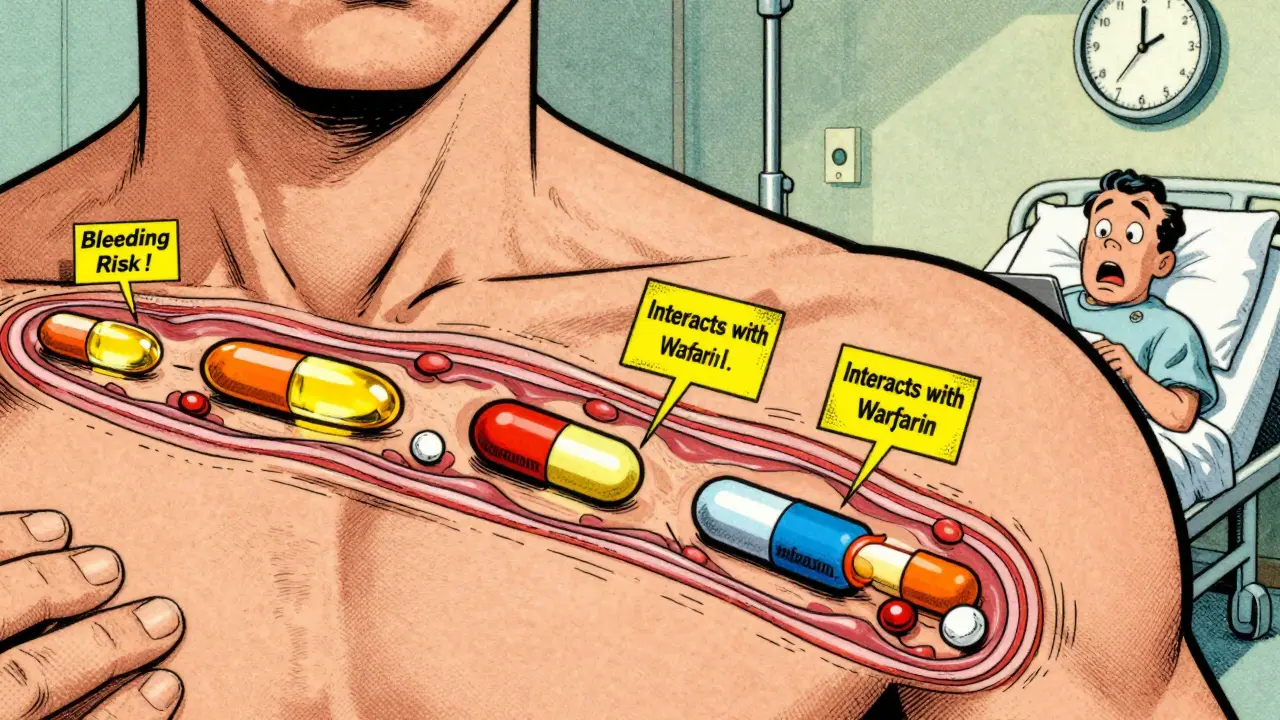
The "Natural = Safe" Trap
The biggest reason people don’t disclose? They believe "natural" means "safe." But that’s not true. Natural doesn’t mean harmless. Poison ivy is natural. Snake venom is natural. Many herbal remedies are concentrated plant extracts-some with active compounds stronger than pharmaceuticals. The FDA doesn’t test supplements for safety or effectiveness before they hit the shelf. The label might say "Made in the USA" or "Clinically Proven," but those claims aren’t verified. The only required label statement? "Not evaluated by the FDA. Not intended to diagnose, treat, cure, or prevent any disease." So if you’re buying something because it’s "all-natural," you’re not getting a guarantee-you’re getting a guess. And your doctor needs to know what that guess is.How to Tell Your Doctor-Without Feeling Judged
You might worry your doctor will dismiss you or scold you. But the data says otherwise. In a 2022 survey, 78% of people who disclosed supplement use said their provider gave them helpful advice. Sixty-three percent said it actually improved their trust in their doctor. Here’s how to make it easy:- Bring the bottles. Don’t just say "I take turmeric." Show the bottle. Ingredients vary wildly between brands. One might have 500mg of curcumin; another might have 50mg with piperine. Your doctor needs to see the exact product.
- Write it down. List every supplement, dose, and how often you take it. Include over-the-counter products like cough syrups or energy drinks with added herbs.
- Don’t wait for your annual checkup. Tell them the next time you’re in for a prescription refill, a lab test, or a new diagnosis.
- Use the phrase: "I’ve been taking this for X reason, and I wanted to make sure it’s okay with everything else I’m on."

What Happens When You Do Disclose?
When you tell your provider, you open the door to better care. They might:- Adjust your medication timing (e.g., take your thyroid pill 4 hours before your calcium supplement)
- Suggest a safer alternative (e.g., switch from St. John’s wort to a different mood support option)
- Order a blood test to check for interaction effects
- Warn you about upcoming surgery risks
- Help you stop something dangerous without making you feel foolish
The Bigger Picture: Why This Isn’t Just About You
Supplement use is rising. In 2022, Americans spent over $55 billion on them. Over 67% of Medicare beneficiaries take at least one. But most doctors get little training on this. Only 27% feel confident discussing supplements. That’s changing. Medical schools are now required to teach herb-drug interactions. Electronic health records will soon include mandatory supplement fields. Apps like MyMedList help patients track what they take and share it with providers. But none of that matters if you don’t speak up. Your safety doesn’t depend on better systems-it depends on you telling your doctor what you’re putting in your body.Final Thought: You’re Not Asking for Permission-You’re Protecting Yourself
You don’t need your doctor’s approval to take supplements. But you do need their awareness. This isn’t about being obedient. It’s about being smart. You’re not breaking any rules by taking them. But you *are* putting yourself at risk if you don’t tell someone who’s responsible for your overall health. Your body doesn’t know the difference between a pill from a pharmacy and a capsule from a health store. It only knows what’s in it. And your doctor needs to know, too.Do I really need to tell my doctor about vitamins and minerals?
Yes. Even common vitamins like vitamin K, vitamin E, or calcium can interfere with medications. Vitamin K reduces the effect of blood thinners like warfarin. Calcium blocks absorption of thyroid medication and some antibiotics. What seems like a harmless daily supplement can change how your other drugs work.
What if my doctor doesn’t know much about supplements?
That’s common. Most doctors get minimal training on supplements. But that doesn’t mean you shouldn’t tell them. Bring the bottle, mention the name and dose, and say you’re concerned about interactions. Many doctors will look it up during your visit or consult a pharmacist. Even if they don’t know the answer right away, knowing you’re taking it helps them monitor for side effects later.
Can herbal remedies cause serious side effects?
Yes. St. John’s wort can cause serotonin syndrome when mixed with antidepressants. Kava has been linked to liver damage. Comfrey and coltsfoot contain liver-toxic compounds. Black cohosh has been associated with liver injury in rare cases. These aren’t theoretical risks-they’re documented in medical journals and FDA reports.
Should I stop taking supplements before surgery?
Many should be stopped at least 1-2 weeks before surgery. Blood-thinning herbs like garlic, ginger, ginkgo, and fish oil can increase bleeding risk. Others, like echinacea or licorice, can affect blood pressure or anesthesia response. Always tell your surgeon and anesthesiologist what you’re taking-even if they don’t ask.
Is it okay to take supplements if I’m on prescription drugs?
Sometimes-but only if your doctor approves it. Many supplements interact with common medications: statins, blood pressure drugs, antidepressants, diabetes meds, and chemotherapy. What’s safe for one person might be dangerous for another. Never assume it’s okay just because it’s "natural." Always check with your provider first.
What if I forget to tell my doctor?
It’s never too late. If you realize you forgot to mention a supplement, call your doctor’s office or bring it up at your next appointment. Write it down and hand them the bottle. Most providers appreciate the honesty-even if it’s late. The goal is safety, not blame.
Do I need to tell my pharmacist too?
Absolutely. Pharmacists are trained to spot drug-supplement interactions. They see your full medication list every time you fill a prescription. Tell them about everything you take-even if you buy it online or at a health food store. They can flag potential problems before you even leave the pharmacy.
Are there any supplements that are always safe to take?
No. Even something as simple as vitamin C can interfere with certain cancer treatments or lab tests. Magnesium can lower blood pressure too much in people on beta-blockers. There’s no universal "safe" supplement. Safety depends on your health status, medications, and dosage. Always check with your provider before starting anything new.




Just had my pharmacist flag my turmeric + warfarin combo last week. She said it’s like adding extra thinning agent without telling your cardiologist. I thought it was just ‘natural anti-inflammatory’ - turns out, it’s not a free pass. Now I bring every bottle to every appointment. No shame in being safe.
Also, melatonin + beta-blocker? My BP dropped to 85/55 one night. Scary. Always ask the pharmacist. They’re the unsung heroes of drug safety.
Doctors dont know squat about supplements and neither do you. You take what you want. If you bleed out during surgery its your fault not theirs. Stop coddling people with this fearmongering. Natural doesnt mean safe? Says who the FDA who regulates nothing but corporate profits. Take your pills and shut up.
I get why people don’t tell their doctors. It feels like being scolded for eating kale. Like your wellness choices are suddenly a crime scene. But honestly? I brought my supplements list to my last visit and my doctor actually smiled. Said ‘thank you for being proactive.’ Turns out, she’s been wanting to ask for years. Maybe the problem isn’t us. Maybe it’s the system that makes us feel guilty for caring about our own bodies.
Supplements are the wild west of wellness - a glittery, overpriced, snake-oil carnival with a side of science. But here’s the kicker: some of those ‘snake oils’ are lifesavers for people who’ve been failed by conventional medicine. The real villain isn’t turmeric. It’s the system that treats natural remedies like gossip and pharmaceuticals like gospel. We need better education - not fear. And maybe a little more humility from both sides.
MY DAD DIED BECAUSE HIS DOCTOR DIDN’T ASK ABOUT HIS GINKGO BILBOBA!!!
I’M STILL CRYING. I’M STILL ANGRY. I’M STILL TELLING EVERYONE.
HE WAS ON WARFARIN. HE TOOK GINKGO FOR ‘MEMORY.’ HE HAD A STROKE DURING A SIMPLE KNEE SURGERY. THEY DIDN’T KNOW. THEY DIDN’T ASK. THEY DIDN’T CARE.
IF YOU’RE TAKING SOMETHING THAT’S NOT A PRESCRIPTION - TELL THEM. OR YOU’RE NOT JUST IRRESPONSIBLE - YOU’RE A TIME BOMB.
I’M NOT JUDGING. I’M JUST SAYING IT LIKE IT IS. MY DAD IS GONE BECAUSE NO ONE ASKED.
I started telling my doc about my fish oil and magnesium after reading this and she actually asked me what brand I use. I was so surprised. I thought she’d just nod and move on. She wrote it down and said she’d check interactions. Felt kinda nice to be seen for once. Also I brought the bottles. She laughed and said ‘this is why I love patients like you.’
Just say it. They’re not gonna bite.
Does anyone know if ashwagandha interacts with thyroid meds? I’ve been taking it for stress and my TSH went up last month. Not sure if it’s the supplement or just life being stressful. My doctor didn’t seem to know. I’m scared to stop it.
YESSSSSS 🙌 I’ve been telling people this for years!! 🌿💊
My mom took vitamin K daily for ‘bone health’ and her INR went haywire. She almost had a clot. We caught it because she told her doc. Don’t be shy. Bring the bottle. Take a pic. Text it. Do whatever it takes.
Love you. Stay safe. 💕
India is full of people taking ashwagandha, turmeric, and ayurvedic mixes without telling anyone. I saw a guy on a blood thinner take triphala for digestion and end up in ER. No one told the doctor. No one even knew what triphala was. We need more awareness here too. Not just in US. This is global.
Also - yes, pharmacist is your best friend. Talk to them. They know more than your doctor sometimes.
THEY’RE LYING TO YOU. THE FDA IS IN BED WITH BIG SUPPLEMENT. THEY LET THIS HAPPEN ON PURPOSE. THEY WANT YOU TO BLEED OUT SO THEY CAN SELL YOU MORE DRUGS. THEY KNOW GINKGO THINS BLOOD. THEY KNOW ST. JOHN’S WORT KILLS ANTIDEPRESSANTS. THEY DON’T CARE. THEY’RE MAKING BILLIONS.
STOP TRUSTING THE SYSTEM. STOP TELLING YOUR DOCTOR. BUY YOUR OWN TEST KITS. DO YOUR OWN RESEARCH. THEY’RE NOT YOUR FRIENDS.
THEY WANT YOU WEAK. THEY WANT YOU DEPENDENT.
THEY’RE LYING. I KNOW THIS BECAUSE I READ THE WHOLE INTERNET.
Ugh. Another ‘tell your doctor’ post. Newsflash: your doctor doesn’t care. They’re overworked, underpaid, and don’t know the difference between ashwagandha and aloe vera. You think they’re gonna look up your ‘natural remedies’? They’re just gonna nod and write ‘noncompliant’ in your chart.
And ‘bring the bottle’? Really? You think your 15-minute visit has room for that? Get real. This post is performative virtue signaling wrapped in fear.
I’m a pharmacist in India and I see this daily. People take multivitamins with antibiotics and wonder why they get diarrhea. Or take turmeric with diabetes meds and get hypoglycemia. They don’t know. They think ‘herbal = safe.’
But here’s the good part: when we ask them - really ask - ‘What are you taking?’ - they open up. They’re not hiding because they’re bad. They’re hiding because they’re scared of being judged.
So ask kindly. Listen. Don’t scold. That’s how change happens.
OH MY GOD I’M SO GLAD YOU SAID THIS!!
I took magnesium for sleep and my husband’s blood pressure dropped to 80/50!! He passed out at the dinner table!! I didn’t even know magnesium could do that!! I thought it was just a ‘calming mineral’!!
My doctor yelled at me!! I cried for three days!! I felt like a monster!!
Now I tell EVERYONE!! I write it on my forehead!! I send my supplement list to my ENTIRE FAMILY!!
YOU’RE NOT ALONE!! I’M HERE FOR YOU!!
AND YES I HAVE A THERAPIST!!
Supplements are a government mind control trick. The FDA allows them so they can track what you’re taking. They’re building a database of your health habits. Next thing you know, your insurance will charge you more if you take ‘too many’ vitamins. They want you dependent on drugs. Don’t fall for it.
Also - if you’re taking anything that’s not prescribed - you’re already being monitored. I know things.
It’s funny how we treat pharmaceuticals like sacred texts and herbs like witchcraft. But both are chemicals. Both interact. Both have side effects. The difference is one is regulated, the other isn’t - and that’s not a moral judgment, it’s a legal one.
Maybe the real question isn’t ‘should you tell your doctor?’
It’s: why do we let the system make us feel like we need permission to care for ourselves?