Key Takeaways
- Critical Save: Never use expired epinephrine, insulin, or liquid antibiotics; they degrade too fast.
- Low Risk: Solid pain relievers like ibuprofen often stay potent long after the date.
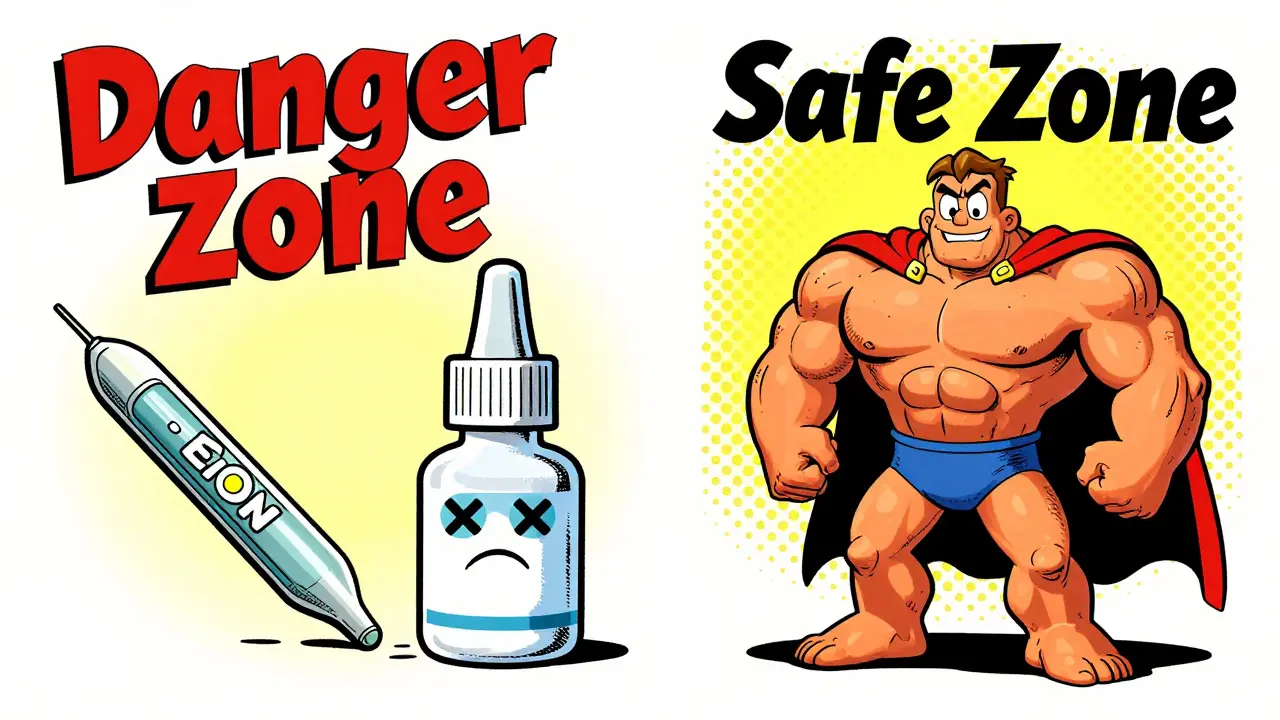
- The Danger Zone: Expired creams and eye drops can grow bacteria, leading to infections.
- Storage Matters: Bathroom cabinets are the worst place for meds due to heat and humidity.
- Maintenance: Do a full kit audit at least once a year.
The Science of the Date: What Actually Happens?
When you see an expiration date, you're looking at a guarantee from the manufacturer. The U.S. Food and Drug Administration (FDA) is the federal agency responsible for protecting public health by ensuring the safety, efficacy, and security of human drugs. They require these dates based on clinical testing to ensure the drug performs exactly as intended. But once that date passes, the drug doesn't necessarily become toxic.
Most of the time, the issue is potency. A 2019 FDA analysis showed that 88% of tested medications kept at least 90% of their strength past the expiration date, provided they were stored correctly. However, this doesn't apply to everything. While a tablet of aspirin might just be slightly weaker, a liquid medication can chemically break down or, worse, become a breeding ground for bacteria.
The "Never Use" List: High-Risk Medications
There are some medications where "close enough" isn't good enough. If these are expired, toss them immediately. In a life-or-death scenario, a sub-potent dose can lead to treatment failure.
- Epinephrine (like EpiPens): This is a life-saving drug for anaphylaxis. Stability data shows it can lose 20-30% of its potency within just six months of expiring. If you're fighting a severe allergic reaction, you need 100% strength, not a gamble.
- Nitroglycerine: Used for chest pain, these tablets oxidize rapidly. Once opened, they often need replacing every 3 to 6 months.
- Liquid Antibiotics: Suspensions degrade much faster than pills. Using a weak antibiotic can lead to incomplete treatment and potentially contribute to antibiotic resistance.
- Eye and Ear Drops: Because these are used in sterile areas of the body, the preservative systems break down over time. Using expired drops can introduce bacteria directly into your eye or ear.
The "Low Risk" Zone: Solid Analgesics
If you're looking at your bottle of expired OTC medications and see a few old tablets of ibuprofen or acetaminophen, you're in a different territory. Solid-dose medications are remarkably stable. According to a study by the U.S. Department of Defense, some unopened pain relievers maintained 90% potency up to 15 years past their date.
For a minor headache or a sore muscle, using a tablet that is 6 months to 2 years past its date is generally considered low risk. The drug isn't "expired" in terms of safety; it's just potentially slightly less effective. However, if the pill is crumbling, has changed color, or smells weird, that's a sign that it has reacted with moisture or air and should be thrown away regardless of the date.
| Medication Type | Stability Level | Potency Loss (Post-Exp) | Recommendation |
|---|---|---|---|
| Solid Pain Relievers (Ibuprofen) | High | Very Low (<10%) | Safe for minor use |
| Antihistamines (Benadryl) | Moderate | ~15% after 18 months | Generally safe |
| Topical Creams (Hydrocortisone) | Low | High (Sterility loss) | Replace immediately |
| Epinephrine Auto-injectors | Very Low | 20-50% within 6 months | CRITICAL replacement |
The Hidden Danger: Creams, Gels, and Topicals
Many people assume that since a cream isn't a "life-saving' pill, it doesn't matter if it's old. That's a mistake. The biggest risk with topicals isn't potency-it's contamination. Hydrocortisone creams, for example, can lose their sterility and develop bacterial growth. Imagine applying a bacteria-laden cream to an open wound; you're essentially inviting an infection into your skin.
The Institute for Safe Medication Practices has documented over 100 cases of skin infections linked to expired topical antibiotics. If your cream has separated (looks oily or chunky) or the smell has changed, it's a biohazard, not a medicine.
Storage: The Secret Killer of Medication
You can have a brand-new bottle of medicine, but if you store it in the bathroom, you're killing it. The average bathroom is a nightmare for drugs: high humidity and fluctuating temperatures. A study from Johns Hopkins found that meds in bathroom cabinets lost potency 40% faster than those kept in a cool, dry bedroom drawer.
Moisture is the enemy. This is why manufacturers use those little silica gel packets. When you move pills from their original bottle into a plastic weekly organizer, you strip away that protection. This can cut the effective shelf life of a medication by as much as 50%. If you want your first-aid kit to actually work when you need it, keep it in a cool, dark, and dry place-away from the shower steam.
How to Maintain Your First-Aid Kit
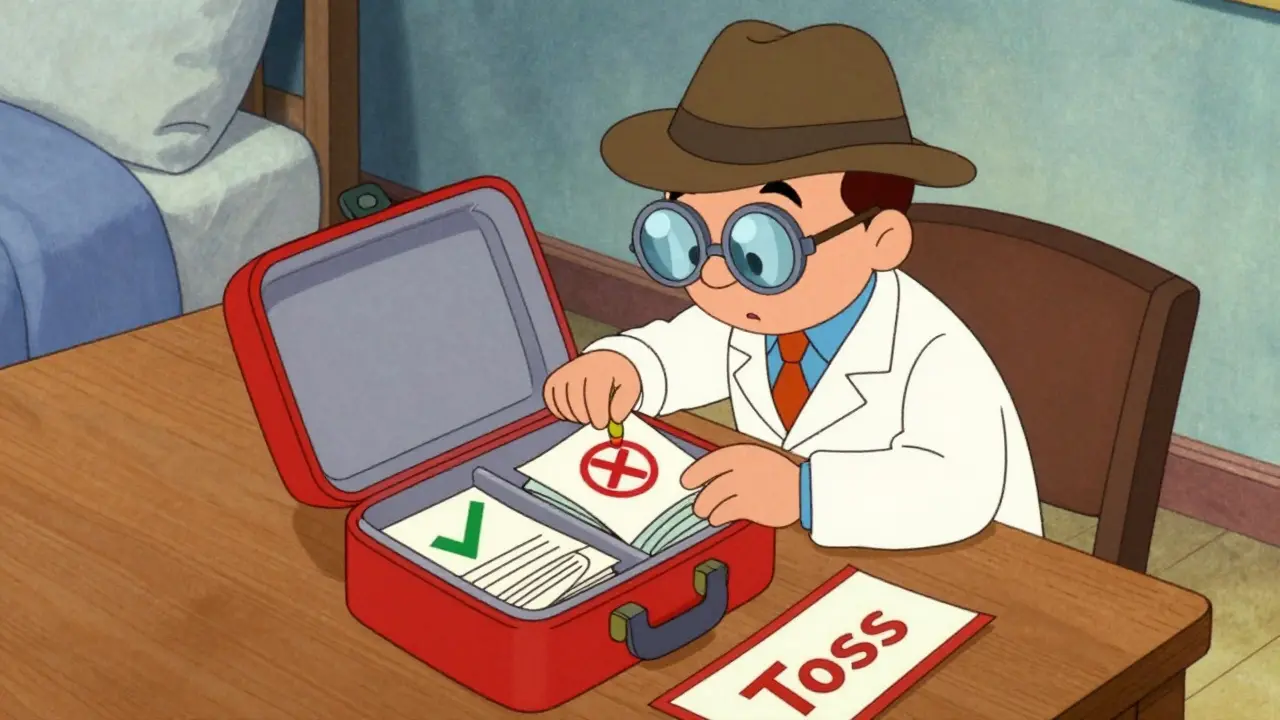
Don't wait for an emergency to find out your supplies are useless. A professional approach to kit maintenance involves a regular schedule. The American Red Cross provides a reliable framework for this. Instead of guessing, follow these steps:
- The Quarterly Scan: Every three months, do a quick visual check. Look for discoloration in liquids or crumbling in tablets.
- The Bi-Annual Date Check: Every six months, go through every single item and mark those expiring in the next 90 days.
- The Emergency Pre-empt: Replace epinephrine and nitroglycerine 30 days before they expire. You don't want to be at zero potency during a crisis.
- The Annual Overhaul: Once a year, empty the kit completely. Check the adhesive on bandages (they lose stickiness after 18 months) and ensure sterile gauze hasn't been contaminated.
Safe Disposal Practices
Once you've decided to toss something, don't just flush it down the toilet. Many medications can contaminate the water supply. The best move is to use a pharmaceutical take-back program. The DEA runs National Prescription Drug Take Back Days, and many local pharmacies now have drop-off bins for expired meds. If you must throw them in the trash, mix the pills with something unappealing like coffee grounds or kitty litter in a sealed bag to prevent pets or children from finding them.
Can I use expired aspirin for a heart attack?
In a true emergency where no other option exists, medical experts suggest that using sub-potent aspirin is better than nothing. However, you should seek immediate emergency medical care while taking it, as the effectiveness may be reduced.
Does a "discard after opening" date differ from an expiration date?
Yes. An expiration date is the manufacturer's guarantee for an unopened bottle. A "discard after opening" date (like for hydrogen peroxide or eye drops) accounts for the fact that once the seal is broken, air and bacteria enter the bottle, speeding up degradation.
Why do some pharmacies give shorter expiration dates than the manufacturer?
This happens when a pharmacist moves pills from the original manufacturer's bulk bottle into a smaller prescription vial. Because the pills are now exposed to air and lose their original protective packaging, the "beyond-use date" is typically shorter-often 6 to 12 months.
Will my adhesive bandages still work if they are expired?
They might, but they'll be less effective. Adhesive bandages typically lose about 40% of their stickiness after 18 months. More importantly, if the sterile packaging is compromised, the gauze pad inside is no longer sterile and could introduce bacteria to a wound.
Is it safe to use expired Benadryl for a mild itch?
Generally, solid antihistamines like diphenhydramine are quite stable and maintain most of their efficacy for a while after expiration. For a minor itch, it's low risk, but for a severe allergic reaction, you should always use a fresh dose.
Next Steps for Your Home Kit
If you're feeling overwhelmed, start with the "Criticals." Go to your kit right now and check your epinephrine, insulin, and liquid drops. If those are expired, replace them today. Next, move your kit out of the bathroom and into a linen closet or bedroom drawer. Finally, set a recurring calendar alert for every six months to do a quick date check. It takes ten minutes, but it ensures that when things go wrong, your tools actually work.