Senior Hydration & Diuretic Safety Checker
Use this tool to evaluate current hydration status and assess risk levels. Note: This is an educational tool and not a medical diagnosis.
| Risk Factor | Impact on Elderly Body | Resulting Danger |
|---|---|---|
| Thirst Response | 40% decline in perception | Not drinking even when dehydrated |
| Renal Function | Lower urine concentration ability | Faster fluid loss through urine |
| ADH Response | 40% drop in hormone effectiveness | Inability to conserve water |
Why Your Kidneys Are More Vulnerable
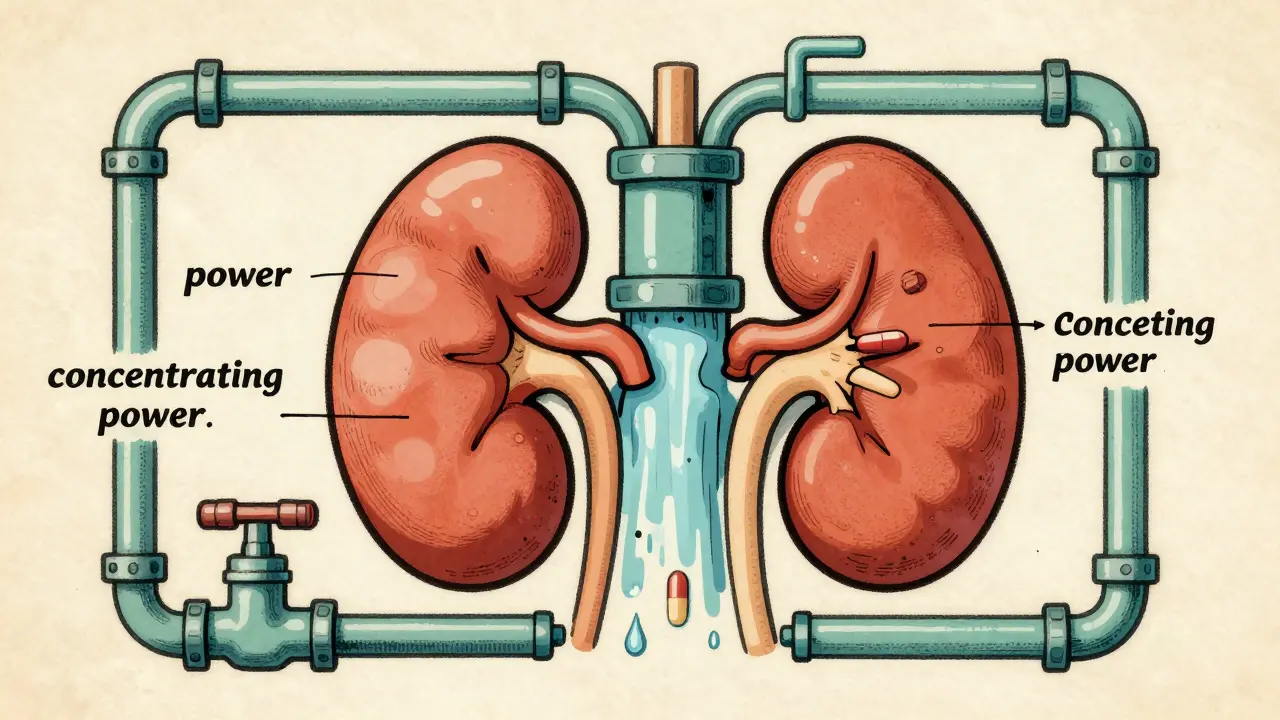
As we age, our kidneys lose their "concentrating power." While a young adult's kidneys can make urine very concentrated to save water, a senior's kidneys often can't. This means water just flows through the body more quickly, even if the person is already dehydrated. When you introduce Diuretics (often called water pills), you're adding a chemical push to get rid of sodium and water. Whether it's a loop diuretic like Furosemide or a thiazide like Hydrochlorothiazide, these drugs inhibit the kidney's ability to reabsorb salt. While this is great for lowering blood pressure or clearing fluid from the lungs in heart failure, it can lead to Acute Kidney Injury (AKI) if the patient doesn't stay hydrated. In some cases, serum creatinine levels-a marker of kidney function-can jump from 1.2 to 2.8 in just 48 hours, signaling a severe functional decline.Not All Water Pills Are the Same
It's a common mistake to think all diuretics work the same way. Depending on which one you're taking, the risks to your kidneys and electrolyte levels change.- Loop Diuretics (e.g., Furosemide): These are the "heavy hitters." They cause the most sodium and water loss (up to 25% sodium excretion). They are essential for heart failure but carry the highest immediate dehydration risk.
- Thiazides (e.g., Hydrochlorothiazide): These are milder on fluid volume but can be trickier with electrolytes. They are more likely to cause hyponatremia (dangerously low blood sodium levels).
- Potassium-Sparing Diuretics (e.g., Spironolactone): These have a lower risk of causing dehydration, but they can cause potassium levels to spike, which is dangerous for seniors with existing chronic kidney disease.
The Dangerous Mix: Diuretics and NSAIDs
One of the biggest pitfalls for seniors is the interaction between diuretics and over-the-counter painkillers. If you're taking a water pill and then take an NSAID like ibuprofen or naproxen for a sore joint, you're playing a dangerous game. These medications can increase the risk of AKI by 300% in elderly patients. NSAIDs constrict the blood flow to the kidneys, and when combined with the fluid loss from a diuretic, the kidneys can essentially "starve" for blood and oxygen, leading to rapid failure. If you are on a diuretic, always check with a pharmacist before taking an anti-inflammatory.Practical Strategies to Stay Safe
Staying hydrated isn't as simple as "drink more water," especially for someone who might be on a fluid restriction due to heart failure. You need a structured plan.- Scheduled Sipping: Instead of waiting for thirst, try drinking 150mL of water every two waking hours. This consistent approach has been shown to reduce AKI incidence by about 34% in assisted living settings.
- The "Daylight" Rule: To avoid waking up multiple times a night (nocturia), try to get 70% of your fluid intake between 8 am and 6 pm. This helps you stay hydrated during the day without ruining your sleep.
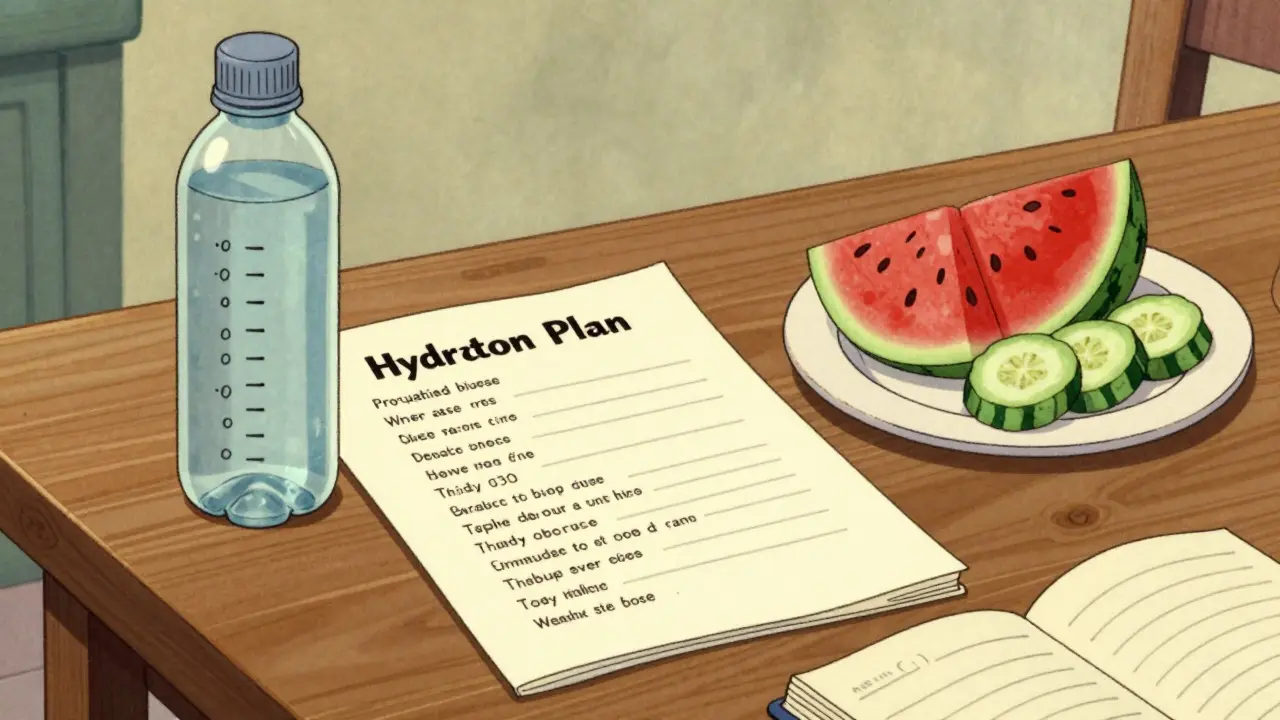
- Visual Cues: Use marked water bottles. Seeing exactly how much you've drunk is far more effective than guessing.
- Hydrating Foods: If drinking water feels like a chore, incorporate cucumbers, watermelon, and oranges into the diet.
Warning Signs You Can't Ignore
Many seniors can't tell when they are dehydrated because their bodies don't give the typical signals. Caregivers and patients should look for these "red flags" that require immediate medical attention:- Confusion: Sudden disorientation or "brain fog" is a common sign of severe dehydration in seniors.
- Oliguria: If urine output drops below 400mL per day, the kidneys are struggling.
- Blood Pressure Drops: A drop of more than 20mmHg in systolic pressure when standing up (orthostatic hypotension) suggests low fluid volume.
- Weight Loss: A sudden drop of more than 2kg in a single week can be a sign of dangerous fluid loss rather than healthy weight loss.
The Balancing Act: When More Water Isn't Better
There is a catch. For seniors with advanced Chronic Kidney Disease (CKD), too much water can be just as bad as too little. In stages 4 and 5 of CKD, the kidneys can't handle excess fluid, which can lead to pulmonary edema (fluid in the lungs). Research suggests a "U-shaped" relationship with water intake. For most CKD patients, the sweet spot is 1.5 to 2.0 liters daily. Going below 1 liter or above 3 liters has been linked to a faster decline in the kidney's glomerular filtration rate (eGFR). This is why an individualized plan from a doctor is non-negotiable-you cannot use a one-size-fits-all approach to hydration.Can I just drink a lot of water once a day to catch up?
No. "Catch-up" hydration is dangerous for elderly diuretic users. Rapidly flooding the system with water can cause serum sodium levels to drop too quickly, leading to hyponatremia, which can cause brain swelling and seizures.
How often should kidney function be checked?
Most specialists recommend serum electrolyte panels and creatinine checks every 3 to 6 months. However, if you change your dose or start a new medication, you should have a check-up much sooner.
Is it safe to take diuretics if I have a fever?
Fevers increase fluid loss through sweat and breathing. This puts you at a much higher risk for AKI. Consult your doctor immediately about whether to temporarily reduce your dose during an illness.
What is the best way to monitor hydration at home?
Daily weight checks are the most reliable tool. A sudden drop in weight usually means fluid loss. Additionally, keeping a simple log of fluid intake and urine output can help your doctor adjust your medication.
Why do these medications cause dizziness?
Dizziness occurs because the diuretic lowers the overall volume of blood in your vessels. When you stand up, gravity pulls blood away from your brain, and if your volume is already low, you may feel faint or fall.