
HIV Medication & Statin Interaction Checker
Check Your Statin & HIV Medication Combination
Enter your HIV medication and statin to see if they're safe to take together. This tool references guidelines from the FDA, New York State Department of Health, and University of Liverpool HIV Drug Interactions database.
Select your medications above to see interaction information.
When you’re living with HIV and also need to manage high cholesterol, combining HIV medications with statins isn’t just common-it’s often necessary. But it’s not as simple as taking two pills together. Some combinations can be dangerous, even life-threatening. The key isn’t avoiding statins-it’s choosing the right one, at the right dose, and knowing what to watch for.
Why This Combination Can Be Risky
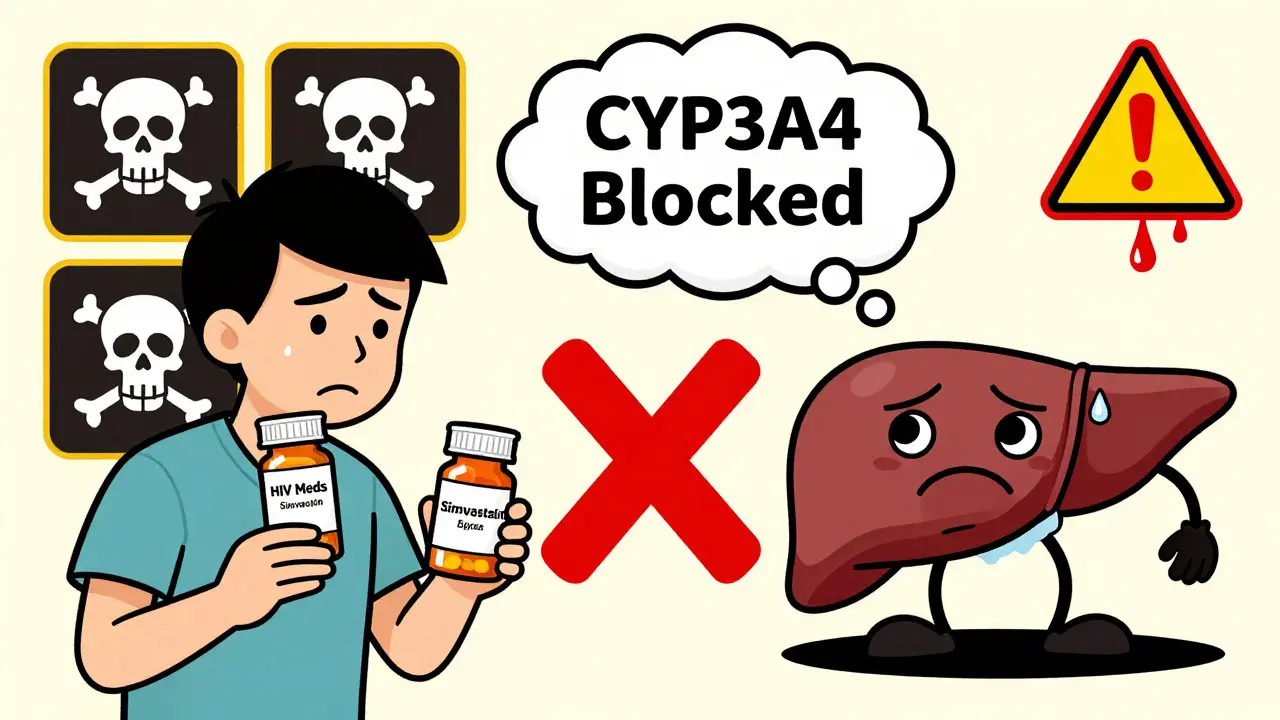
Many HIV medications, especially those with cobicistat or ritonavir, slow down how your body breaks down statins. These drugs are used as boosters to keep HIV meds working longer, but they also block a liver enzyme called CYP3A4. That same enzyme is responsible for clearing most statins from your bloodstream. When it’s blocked, statin levels build up-sometimes to dangerous levels. This isn’t theoretical. A 2016 FDA safety alert showed that when people took atorvastatin with darunavir/cobicistat, the statin’s concentration in the blood jumped by nearly 300%. That’s not a small bump. It’s enough to push muscle cells into breakdown mode, leading to a rare but serious condition called rhabdomyolysis. This can cause kidney failure, severe pain, and even death.Statins You Must Avoid Completely
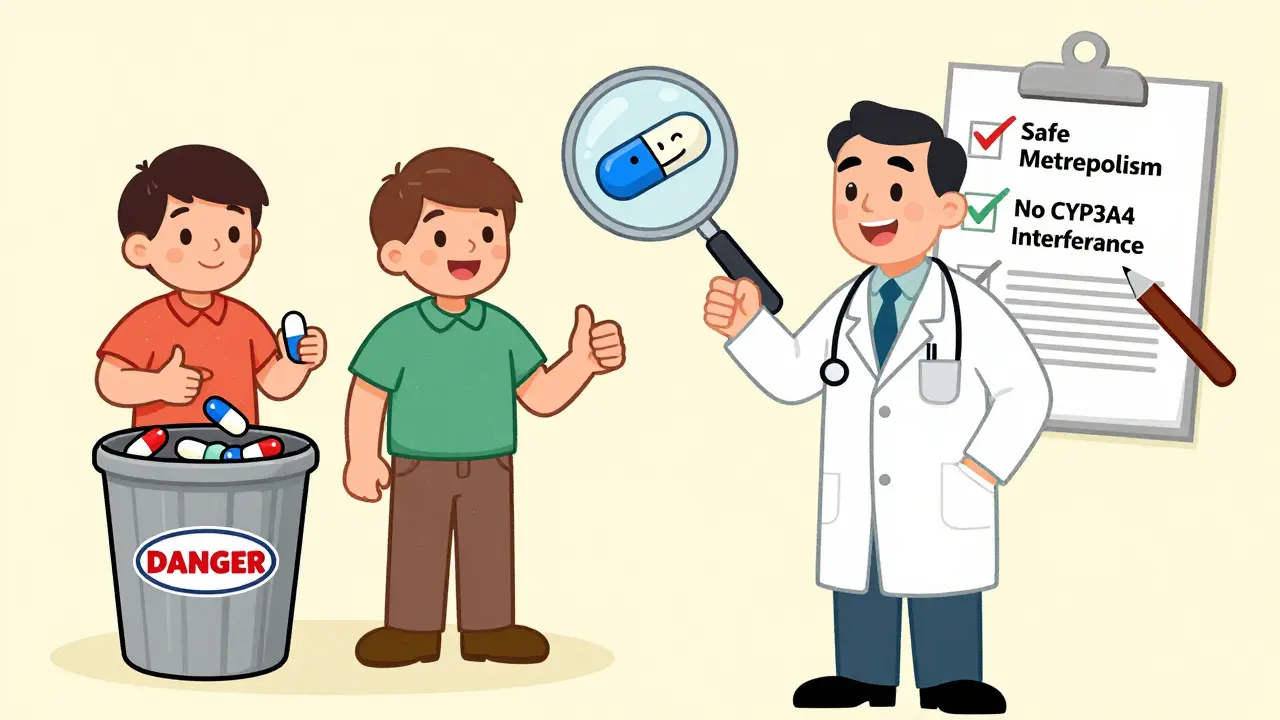
There are two statins you should never take if you’re on any HIV protease inhibitor or booster: simvastatin and lovastatin. These are the most dangerous combinations. The New York State Department of Health and the FDA both say they’re absolutely contraindicated. Why? Because they’re metabolized almost entirely by CYP3A4. When that pathway is blocked, these statins can reach levels 20 times higher than normal. Even a single dose of simvastatin with a boosted HIV regimen can trigger muscle damage. Many patients don’t realize they’re at risk because they’ve been on these statins for years before starting HIV treatment. If you’re switching HIV regimens, check your statin first. Don’t assume it’s safe.Safe Statin Options and Their Limits
Not all statins are created equal. Some are safer because they use different metabolic pathways. Here’s what works, and how much you can take:- Pitavastatin - Often the top choice. It’s processed mainly by glucuronidation, not CYP3A4. No dose limits needed with most HIV drugs.
- Pravastatin - Also low-risk. Doesn’t rely on CYP3A4. Safe with boosters, but you may need a higher dose to get the same cholesterol-lowering effect.
- Rosuvastatin - Can be used, but capped at 10 mg daily if you’re on ritonavir or cobicistat. Higher doses increase risk.
- Atorvastatin - Safe if kept under 20 mg daily with cobicistat. Some labels allow 40 mg, but 20 mg is the safer standard in HIV care.
- Fluvastatin - An alternative. Mostly processed by CYP2C9, so less affected by boosters. But it can still rise by about 2x with ritonavir-use with caution.
Integrase inhibitors like dolutegravir and bictegravir are the best partners for statins. They don’t interfere with liver enzymes much, so you can usually take standard doses of most statins without adjustment.
What to Watch For: Side Effects and Monitoring
Even with the right statin and dose, you still need to pay attention to your body. Muscle pain, weakness, or dark urine are red flags. These aren’t normal soreness after a workout. They’re signs your muscles are breaking down. Your doctor should check your creatine kinase (CK) levels before starting a statin and again after 4-6 weeks. Liver enzymes (ALT, AST) should also be monitored. If you’re over 65, have kidney issues, or take other meds like blood pressure drugs, your risk goes up. Don’t forget about other drugs you might be taking. Some calcium channel blockers, like felodipine, can also raise statin levels. If you’re on one, ask if there’s a safer alternative. And avoid gemfibrozil for triglycerides-it’s a known statin toxin. Fenofibrate or omega-3s are better choices.Why So Many People Still Get It Wrong
Despite clear guidelines, a 2023 survey found only 58% of primary care doctors routinely check for drug interactions before prescribing statins to HIV patients. That’s alarming. Many still rely on memory or outdated info. The problem isn’t just lack of knowledge-it’s complexity. There are over 98,000 documented drug interactions between HIV meds and other drugs, according to the University of Liverpool’s HIV Drug Interactions database. No one can memorize all of them. That’s why using a trusted tool like that database (updated monthly) is non-negotiable.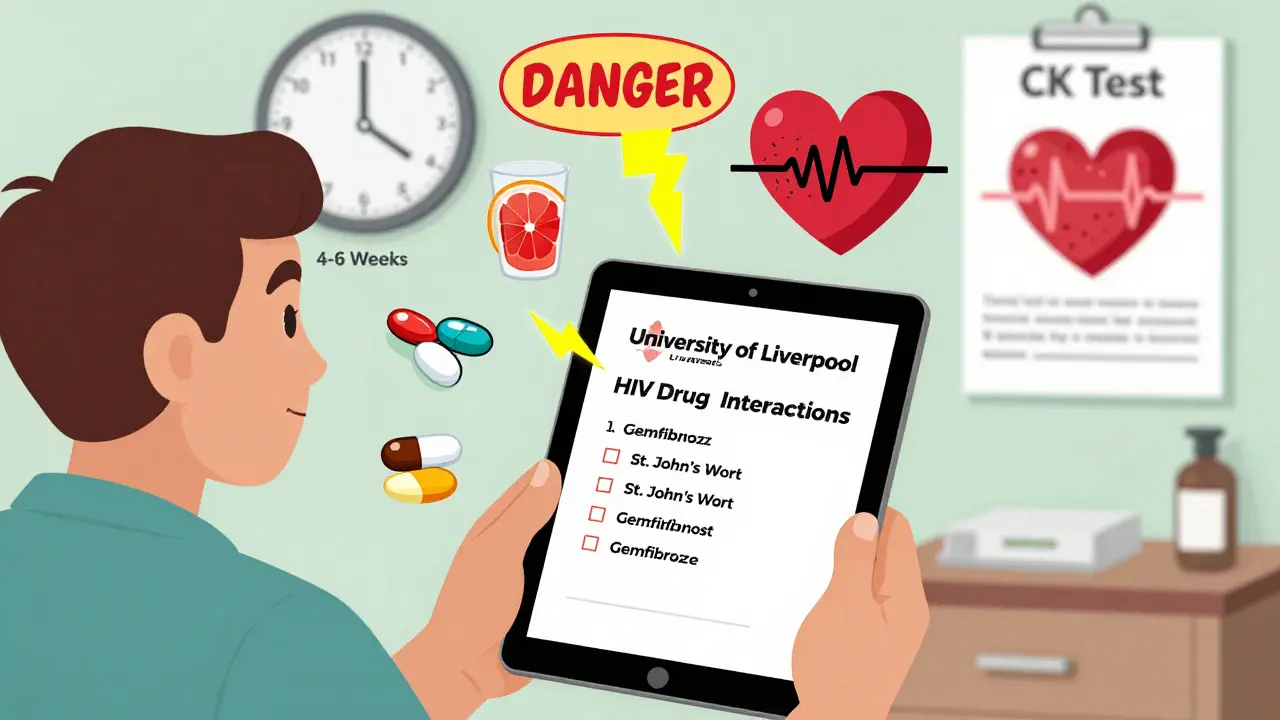
What You Can Do Right Now
If you’re on HIV meds and need a statin:- Check your current statin. If it’s simvastatin or lovastatin, talk to your doctor immediately.
- Ask which HIV drug you’re taking-is it boosted? Is it an integrase inhibitor?
- Use the University of Liverpool’s HIV Drug Interactions checker to verify your combo before taking anything new.
- Keep a list of all your meds-including supplements, OTC painkillers, and herbal products. Many people don’t realize things like St. John’s Wort or grapefruit juice can interfere too.
- Report any new muscle pain, weakness, or dark urine right away.
Statin use among people with HIV has improved since 2007, when about 15% were on contraindicated statins. By 2015, that dropped to under 5%. But only 40-60% of those who need statins are actually getting them. That means many are still at risk-not from the statin itself, but from untreated high cholesterol, which raises heart attack and stroke risk.
The Bigger Picture
HIV is no longer a death sentence. People are living longer, and with that comes age-related risks: high blood pressure, diabetes, and heart disease. Statins are one of the most effective tools we have to prevent heart attacks in this group. The goal isn’t to avoid them-it’s to use them safely. The science is clear: pitavastatin and pravastatin are the safest bets. Rosuvastatin and atorvastatin can work, but only if dosed carefully. And never, ever combine simvastatin or lovastatin with boosted HIV meds. Your health depends on knowing which combinations are safe. Don’t guess. Don’t assume. Check it. Every time.Can I take simvastatin with my HIV meds?
No. Simvastatin is absolutely contraindicated with all HIV protease inhibitors and pharmacokinetic boosters like cobicistat and ritonavir. Taking them together can raise simvastatin levels up to 20 times normal, leading to severe muscle damage or rhabdomyolysis. Switch to a safer statin like pitavastatin or pravastatin.
Is atorvastatin safe with darunavir/cobicistat?
Yes, but only at 20 mg daily or less. The U.S. product label for Symtuza (which contains darunavir/cobicistat) limits atorvastatin to 20 mg/day. Higher doses increase the risk of muscle toxicity. Always start low and monitor for side effects like muscle pain or weakness.
Which HIV medications don’t interact with statins?
Integrase strand transfer inhibitors (INSTIs) like dolutegravir and bictegravir have minimal impact on liver enzymes and rarely interfere with statins. You can usually take standard doses of most statins without adjustment when using these HIV drugs. They’re often the preferred choice if you need to start a statin.
What should I do if I feel muscle pain while on statins and HIV meds?
Stop taking the statin and contact your doctor immediately. Muscle pain, weakness, or dark urine can signal rhabdomyolysis-a medical emergency. Your doctor will likely check your creatine kinase (CK) levels and liver enzymes. Do not restart the statin without medical guidance.
Are there natural alternatives to statins for lowering cholesterol with HIV?
Diet, exercise, and weight management help, but they’re not enough for most people with HIV who have high cholesterol. There are no proven natural alternatives that match statins’ effectiveness. Supplements like red yeast rice contain a natural form of lovastatin and are just as dangerous when combined with HIV meds. Stick to prescribed, tested medications and avoid unregulated products.
How often should I get blood tests if I’m on both HIV meds and statins?
Before starting a statin, get a baseline CK and liver function test. Repeat at 4-6 weeks after starting or changing the dose. Then, check every 6-12 months if stable. More frequent testing is needed if you’re elderly, have kidney disease, or start new medications. Always report symptoms like muscle pain between visits.
Can I take omega-3s with my HIV meds and statins?
Yes. Omega-3 fatty acids (EPA and DHA) are safe and recommended for managing high triglycerides in people with HIV. They don’t interact with statins or HIV medications. Fenofibrate is another safe option. Avoid gemfibrozil-it increases statin toxicity and is not recommended.
Is it safe to take grapefruit juice with statins and HIV meds?
No. Grapefruit juice inhibits CYP3A4, just like cobicistat and ritonavir. Even small amounts can raise statin levels dangerously. Avoid it completely if you’re on atorvastatin, simvastatin, or lovastatin-and even with safer statins, it’s best to skip it to reduce risk.

Really appreciate this breakdown. I’ve been on dolutegravir and rosuvastatin for years and never realized how lucky I was that my HIV med doesn’t mess with statins. I just assumed all HIV meds were the same when it came to interactions. This is the kind of info that saves lives.
OMG I just checked my meds and I’m on simvastatin 😱 I thought it was fine because my doc said ‘it’s just cholesterol’-like that’s not a death sentence?? 🤯 I’m calling my pharmacist RIGHT NOW. Someone save me from my own doctor.
People are still taking simvastatin with HIV meds? How is this even possible? It’s not rocket science. If your doctor doesn’t know this, they shouldn’t be prescribing anything. I’m not mad-I’m just disappointed. This is basic pharmacology. You’re not a doctor just because you have a degree. 🙄
yo i had this exact thing happen last year. was on atorvastatin 40mg with darunavir/cobicistat and started getting this weird muscle cramp that felt like someone was twisting my hamstrings with pliers. ignored it for 3 weeks ‘cause i thought it was just gym soreness. then one morning couldn’t lift my leg. went to er, ck levels through the roof. they switched me to pitavastatin 4mg and boom-no more pain. also, grapefruit juice? never again. even the smell makes me nervous now. if you’re on boosted meds, just use the Liverpool checker. it’s free. don’t be lazy.
Let’s be honest: the entire medical establishment is built on obfuscation. Statins are prescribed because they’re profitable, not because they’re necessary. The real issue isn’t drug interactions-it’s that we’ve pathologized normal aging. Cholesterol isn’t the enemy. Inflammation is. But you won’t hear that from Big Pharma or their hand-picked guidelines. This entire post is just a glorified ad for pitavastatin. The real solution? Lifestyle. Fasting. Intermittent fasting. Not another pill.
Wait so you’re telling me I can’t drink grapefruit juice anymore? Like… ever? That’s my only joy in life. 😭
In my country, we don’t use these expensive statins. We use turmeric, neem, and prayer. Why do you Americans always need a pill for everything? Your bodies are weak because you eat too much processed food. This is not medicine. This is capitalism.
Big thanks to OP for laying this out so clearly. I’m a nurse in an HIV clinic and I see this mistake all the time-especially with older patients who’ve been on simvastatin for 15 years and then get diagnosed with HIV. Their primary care doc never updates their med list. I always print out the Liverpool interaction checker and hand it to patients. It’s a game-changer. Also, if you’re on integrase inhibitors? You’re golden. Most of my patients on dolutegravir take full-dose rosuvastatin with zero issues. Just don’t skip the CK check.
Only a true medical professional would cite the University of Liverpool’s database. Most people don’t even know it exists. I’m not impressed-I’m just validating the obvious. If you’re not using this tool, you’re not just negligent-you’re dangerous. Pitavastatin is the gold standard. End of story. Anyone who argues otherwise hasn’t read the 2023 JAMA study on CYP3A4 inhibition in co-infected patients.
So… let me get this straight. You’re telling me my doctor gave me a statin that could kill me… and I didn’t even know? And now I’m supposed to trust this whole system? 😏 What’s next? Are my HIV meds secretly controlling my thoughts? Are the guidelines written by Big Pharma in a secret bunker? I mean… why does this feel like a plot from a Netflix thriller? Also, anyone else think the fact that we need a database with 98,000 interactions is a sign we’re doing this all wrong? 🤔