
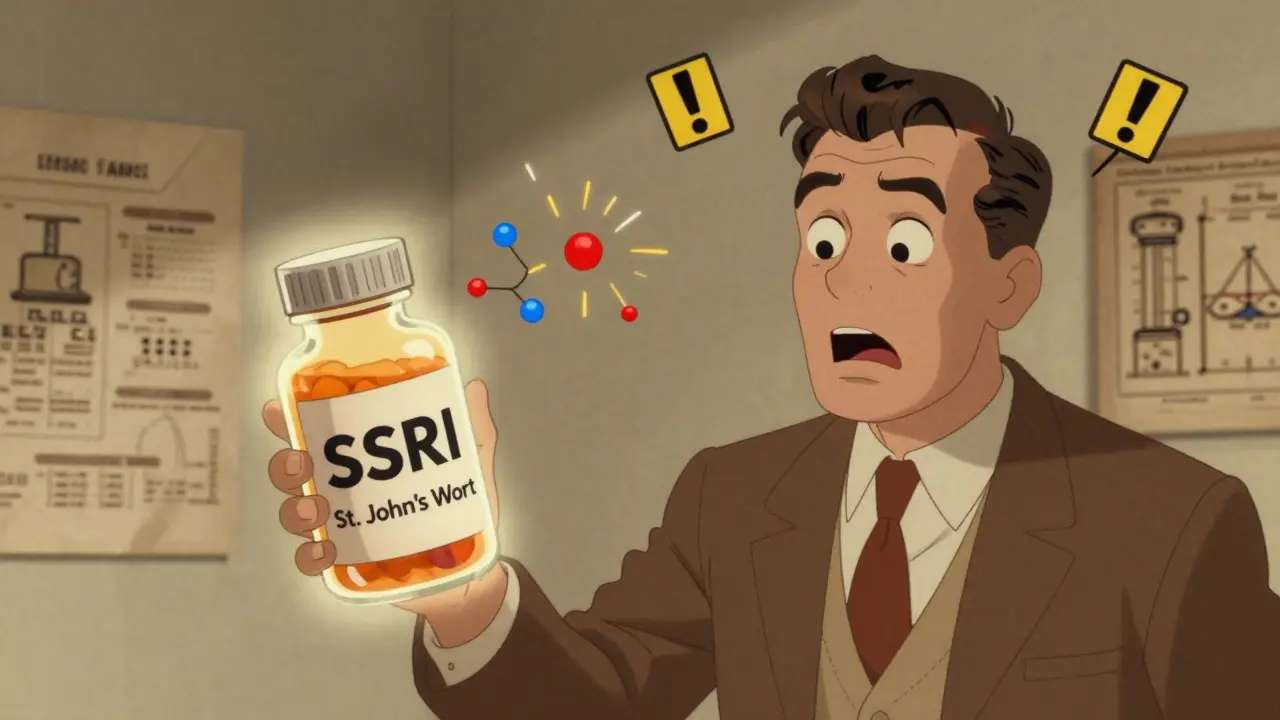
Combining St. John’s Wort with SSRIs isn’t just a bad idea-it can be life-threatening. Despite being sold as a "natural" remedy for depression, this herbal supplement interacts dangerously with common antidepressants like sertraline, escitalopram, and fluoxetine. The result? A dangerous spike in serotonin levels that can trigger serotonin syndrome-a condition that can escalate from mild shivering and nausea to seizures, high fever, organ failure, and death.
What Is St. John’s Wort?
St. John’s Wort (Hypericum perforatum) is a yellow-flowered plant used for centuries in Europe to treat mood disorders. Today, it’s sold in the U.S. as an over-the-counter supplement, often marketed as a safer, plant-based alternative to prescription antidepressants. Most products contain 0.3% hypericin and are dosed at 300 mg three times daily-900 mg total per day-to match the standardized regimens used in European clinical studies.
But here’s the catch: just because it’s "natural" doesn’t mean it’s safe. Unlike FDA-approved drugs, herbal supplements like St. John’s Wort aren’t required to prove safety or effectiveness before hitting store shelves. The FDA classifies it as a dietary supplement, meaning there’s no guarantee of consistent potency, purity, or labeling accuracy. That’s a problem when you’re mixing it with medications that have narrow therapeutic windows.
How St. John’s Wort Interacts with SSRIs
St. John’s Wort doesn’t just sit quietly in your system-it actively changes how your body handles other drugs. The main culprit is hyperforin, a compound in the plant that turns on a receptor called PXR. When PXR activates, your liver and intestines crank up production of enzymes like CYP3A4, CYP2C9, and CYP2C19. These enzymes break down medications faster, but that’s only half the story.
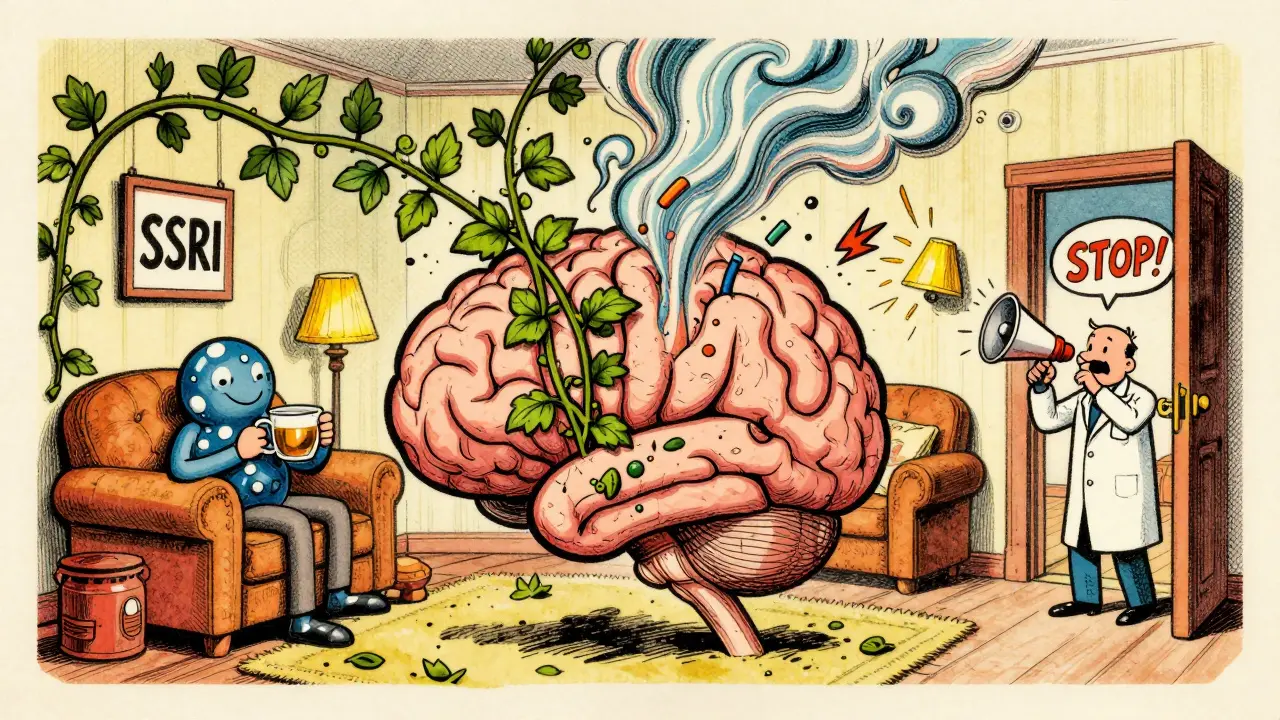
St. John’s Wort also acts like a weak serotonin reuptake inhibitor and a mild MAOI. That means it increases serotonin in your brain on its own. When you add it to an SSRI-medications designed to block serotonin reabsorption-you’re essentially pouring fuel on a fire. Your brain gets flooded with serotonin, and your body has no way to slow it down.
SSRIs metabolized by CYP2C19-like sertraline and escitalopram-are especially risky because St. John’s Wort speeds up their breakdown, causing unpredictable spikes and drops in blood levels. But even SSRIs like paroxetine and fluoxetine, which use different metabolic pathways, still carry serious risk due to their shared effect on serotonin levels.
Serotonin Syndrome: Symptoms You Can’t Ignore
Serotonin syndrome isn’t a vague side effect-it’s a medical emergency. Symptoms usually appear within hours to days after starting both substances together. Mild cases might look like:
- Shivering or tremors
- Sweating, flushing, or fever
- Nausea, diarrhea, or dizziness
- Restlessness or anxiety
Severe cases can include:
- High fever above 106°F (41.1°C)
- Muscle rigidity or spasms
- Confusion, hallucinations, or seizures
- Unstable blood pressure or heart rate
- Loss of consciousness
The Hunter Serotonin Toxicity Criteria is the gold standard for diagnosis: you need at least three of these symptoms-mental status changes, agitation, tremor, hyperreflexia, diaphoresis, shivering, or diarrhea-to confirm it. And once it starts, it can spiral fast. In documented cases, people have died within 24 hours of symptom onset.
Who’s at Risk-and Why Most People Don’t Realize It
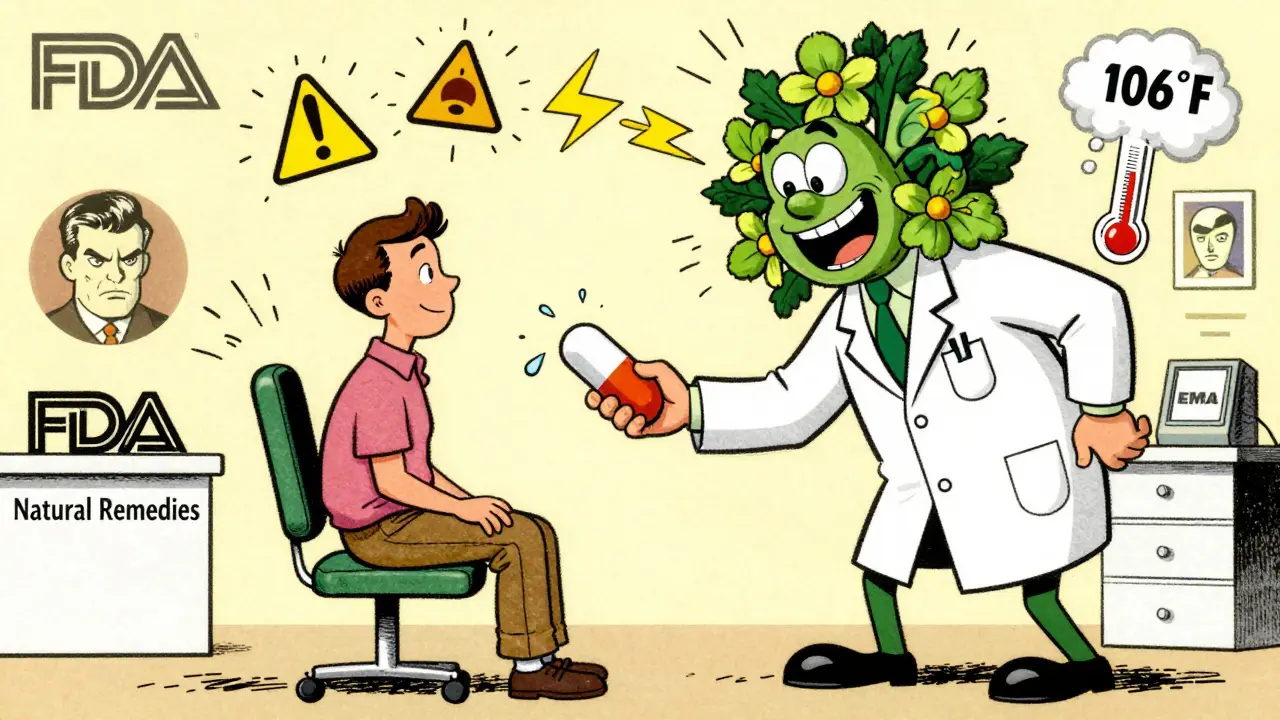
People who take St. John’s Wort often don’t tell their doctors. A 2021 study in JAMA Internal Medicine found that only 32.7% of supplement users disclosed their herbal use to healthcare providers. Why? Many believe "natural" equals "harmless." Others think it’s not a "real drug," so it doesn’t count.
But the data doesn’t lie. Between 2018 and 2023, the FDA issued 12 safety alerts about St. John’s Wort interactions. In Europe, 17 confirmed cases of serotonin syndrome linked to this combo were documented in 2025, with sertraline and paroxetine involved in nearly every severe case. One patient described in a 1998 case report developed symptoms so severe they mimicked sedative intoxication-slurred speech, confusion, and extreme drowsiness-all after combining paroxetine with St. John’s Wort.
And it’s not just SSRIs. St. John’s Wort also cuts the effectiveness of birth control pills (leading to unplanned pregnancies), blood thinners like warfarin, transplant drugs like cyclosporine, and even HIV medications. It can cause seizures in people taking epilepsy drugs like phenytoin. This isn’t a rare interaction-it’s predictable, preventable, and dangerously common.
What Doctors Say: Clear Guidelines, No Gray Area
There’s no debate among medical authorities. Every major organization agrees: do not combine St. John’s Wort with SSRIs.
- The American Psychiatric Association calls it contraindicated.
- The European Medicines Agency bans its use with any serotonergic drug.
- The Cleveland Clinic states bluntly: "The risks significantly outweigh any potential benefits."
- The Mayo Clinic warns it "might raise the risk of a buildup of high serotonin levels in the body."
- The FDA includes it in its top 10 dangerous supplement-drug interactions.
Even if you’re feeling better on St. John’s Wort, switching to an SSRI-or vice versa-requires a washout period. Experts recommend waiting at least two weeks after stopping St. John’s Wort before starting an SSRI. Why? Because hyperforin sticks around in your system, continuing to induce liver enzymes long after you’ve stopped taking it.
What Should You Do Instead?
If you’re using St. John’s Wort for depression, you’re not alone. In 2023, 12.3% of U.S. adults reported using it. But if you’re also on an SSRI-or thinking about starting one-talk to your doctor before making any changes.
There are safer, proven alternatives:
- SSRIs like sertraline and escitalopram are effective for mild to moderate depression and have decades of safety data.
- Cognitive behavioral therapy (CBT) has been shown to be as effective as medication for many people.
- Lifestyle changes-regular exercise, sleep hygiene, and sunlight exposure-can significantly improve mood without risk.
Don’t try to self-manage depression with supplements. Depression is a medical condition, not a vitamin deficiency. Using unregulated herbs alongside prescription drugs is like driving with your eyes closed-sometimes you get lucky, but the cost of one mistake is too high.
The Bigger Picture: Why This Problem Won’t Go Away
St. John’s Wort sales in the U.S. exceeded $156 million in 2022. It’s a $1.5 billion global industry. But regulation lags far behind science. In Canada, health officials restricted it to prescription-only in 2023 after 17 serotonin syndrome cases. The FDA is now pushing for mandatory warning labels on all packaging.
Meanwhile, researchers are exploring hyperforin-free versions of the herb that might keep the antidepressant benefits without the dangerous enzyme effects. But those aren’t available yet-and even if they were, they’d still carry serotonin risks.
For now, the message is simple: if you’re on an SSRI, don’t take St. John’s Wort. Period. No exceptions. No "just a little." No "I’ll stop the SSRI first." The interaction is too dangerous, too fast, and too deadly to gamble with.
Can I take St. John’s Wort with any antidepressants?
No. St. John’s Wort interacts dangerously with all antidepressants that affect serotonin, including SSRIs, SNRIs, MAOIs, and tricyclics. Even if you’re on a different class, the risk of serotonin syndrome remains. Always check with your doctor before combining any supplement with psychiatric medication.
How long does St. John’s Wort stay in my system?
Hyperforin, the active compound that causes drug interactions, can remain in your body for up to two weeks after you stop taking it. That’s why doctors recommend waiting at least 14 days before starting an SSRI or switching from an SSRI to St. John’s Wort. Don’t assume it’s gone just because you stopped taking it.
Is St. John’s Wort safer than antidepressants?
No. While it may seem safer because it’s "natural," it lacks the rigorous testing and dosage control of FDA-approved medications. It can cause serious, life-threatening interactions with common drugs. Antidepressants have known side effects, but they’re monitored, studied, and managed by clinicians. St. John’s Wort does not.
Can I use St. John’s Wort if I’m pregnant or breastfeeding?
No. The Mayo Clinic and other health authorities advise against using St. John’s Wort during pregnancy or breastfeeding due to insufficient safety data. It can cross the placenta and enter breast milk, potentially affecting the baby’s developing nervous system. Safer alternatives exist for perinatal depression.
What should I do if I accidentally took St. John’s Wort with my SSRI?
Stop taking St. John’s Wort immediately. Monitor yourself for symptoms like shivering, confusion, rapid heartbeat, or high fever. If you experience any of these, seek emergency medical care right away. Don’t wait. Serotonin syndrome can worsen quickly and requires prompt treatment-often including hospitalization, sedation, and serotonin-blocking drugs.
Next Steps: Protect Yourself
If you’re on an SSRI:
- Check every supplement you take-especially for depression, anxiety, or sleep.
- Ask your pharmacist to review your entire supplement list.
- Tell your doctor about every herb, vitamin, or tea you use-even if you think it’s harmless.
- If you’ve been taking St. John’s Wort, don’t quit cold turkey. Talk to your provider about a safe tapering plan.
- Consider non-drug options like CBT, exercise, or light therapy for mood support.
There’s no shortcut to mental health. What’s marketed as a natural solution can be a hidden danger. Your brain deserves more than guesswork. Stick with proven, monitored treatments-and always ask, "What else could this interact with?"


11 Comments
Write a comment