

Every year, thousands of people end up in the hospital because of a simple mistake: someone didn’t know what medications they were taking. It could be a forgotten pill, a duplicate prescription, or a supplement that clashed with a heart drug. These aren’t rare accidents. They’re preventable. And the fix starts with one thing: a clear, up-to-date medication list.
Why Your Medication List Matters More Than You Think
Think of your medication list like a backup copy of your health. It’s not just for doctors-it’s for you. When you’re rushed in an emergency room, or your primary care doctor is changing your blood pressure pills, having the full picture stops mistakes before they happen. The FDA says medication errors cause about 7,000 deaths in the U.S. every year. Many of those happen because someone didn’t tell the provider they were taking fish oil, ibuprofen, or that herbal tea they swear helps their sleep. The Joint Commission, which sets hospital safety standards, calls accurate medication lists a must-have. They’re required at every transition-when you leave the hospital, switch doctors, or even go to a pharmacy for a refill. A 2020 study found that if everyone kept a proper list, we could prevent 1.5 million dangerous drug events each year. That’s not theory. That’s real people avoiding falls, bleeding, kidney damage, or worse.What Goes on a Medication List? (The Exact Details)
A good list isn’t just a scribble on a napkin. It needs to be complete. Here’s what you need to include for every single item:- Drug name-both brand and generic (e.g., “Lipitor” and “atorvastatin”)
- Strength and dose-like “10 mg” or “500 mg”
- How often-“once daily,” “every 6 hours,” “as needed”
- How you take it-by mouth, injection, patch, inhaler
- Why you take it-“for high blood pressure,” “for arthritis pain,” “for vitamin D deficiency”
- When you last took it-especially important if you skip doses
- Who prescribed it-doctor’s name or clinic
Choose Your Format: Paper, App, or EHR
There’s no single best way. What works depends on how you live. Paper lists are simple. The FDA’s free “My Medicines” template is easy to print and fill out. You can carry it in your wallet. But paper doesn’t update itself. A JAMA study found that nearly half of paper lists were out of date within three months. If you use this method, keep it in the same place and update it every time you change something. Smartphone apps like Medisafe, MyTherapy, or CareZone are great for reminders. They can alert you when it’s time to take a pill, tell you if a new drug might interact with your current ones, and even notify your pharmacy when you’re due for a refill. A 2023 study showed users missed 28% fewer doses. But here’s the catch: only 35% of adults over 65 use them regularly. If you’re not tech-savvy, or your eyesight isn’t what it used to be, these can feel overwhelming. EHR-integrated lists (like MyChart from Epic or MyHealth from Kaiser) are the gold standard-if you’re in that system. They sync with your doctor’s records. When your cardiologist adds a new drug, it shows up in your portal. But if you see multiple doctors outside that network, your list might still be incomplete. Only 62% of U.S. hospitals have full reconciliation systems, and only 58% of primary care offices do.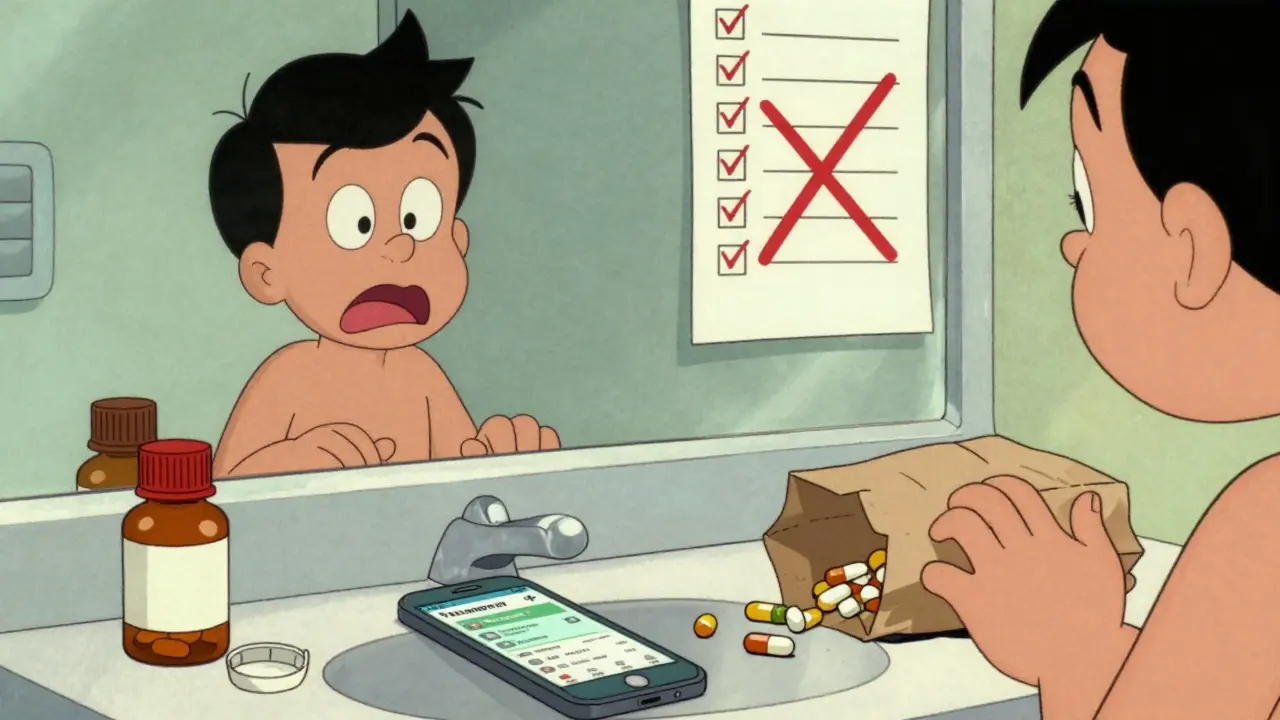
How to Keep It Updated (Without Getting Overwhelmed)
The biggest problem isn’t making the list. It’s keeping it current. Research shows 68% of patients forget to update their list after leaving the hospital. That’s dangerous. Here’s how to make updating easy:- Do a monthly check-When you organize your pillbox, look at your list. Add new meds. Cross out ones you stopped.
- Use the brown bag method-Every six months, empty your medicine cabinet into a bag. Bring it to your doctor. They’ll match what’s in the bag to your list. This catches hidden pills you forgot about.
- Take a photo of each bottle-Snap a picture of the label when you get a new prescription. Store them in a folder on your phone. If you’re ever unsure what a pill is, you’ve got proof.
- Set a calendar reminder-Schedule a 10-minute slot every January and July to review everything. Treat it like a dentist appointment.
What to Do When You See a New Doctor
Never walk into a new appointment without your list. Not even if you think “they’ll have it on file.” Bring your list-paper or phone. And ask: “Can we go over this together?” Doctors and pharmacists are trained to reconcile medications, but they’re busy. They won’t always dig deep unless you help. If you’re on five or more meds, you’re considered polypharmacy-and that’s when errors spike. A 2023 review found that when pharmacists did the reconciliation (not just the doctor), adverse drug events dropped by 31%. That’s a big difference. If your doctor doesn’t ask for your list, offer it. Say: “I keep a list to make sure nothing clashes. Can we check it together?”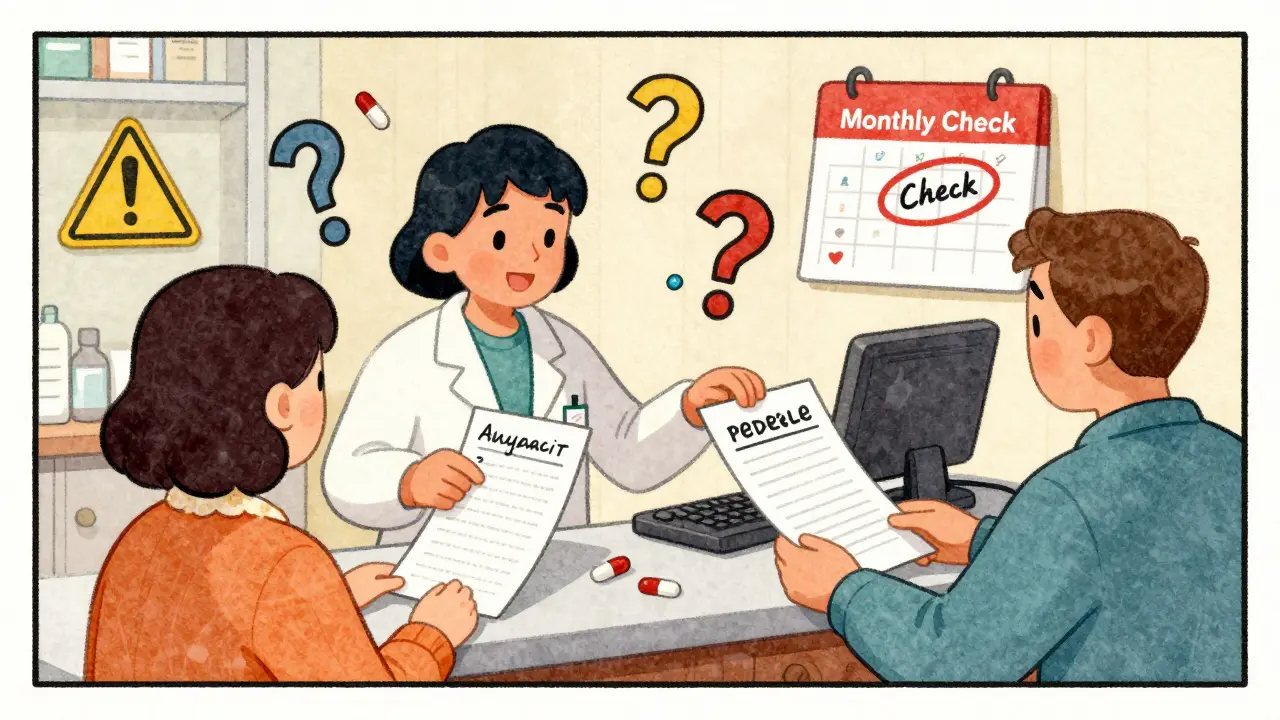
Red Flags: When Your List Is Doing More Harm Than Good
A bad list is worse than no list. It gives false confidence. Watch out for:- Lists older than six months
- Items with no reason listed (“just take it”)
- Medications you stopped but didn’t cross off
- Names written as “the blue pill” or “the one for my back”
- Missing allergies or reactions (“I get a rash from penicillin”)
Where to Get Help
You don’t have to do this alone.- The FDA’s “My Medicines” template is free and printable: just search for it online.
- The American Heart Association offers downloadable tracking sheets.
- If you’re on Medicare Part D, you’re eligible for free Medication Therapy Management (MTM) services. A pharmacist will sit down with you, review all your meds, and give you a written summary.
- Community pharmacies often offer this service-even if you don’t get your meds there.

Just had my mom’s med list updated last week-she was taking 3 different OTC sleep aids, none of which were documented. One was melatonin, one was diphenhydramine, and the third? A ‘herbal blend’ from a wellness influencer on Instagram. Her cardiologist nearly had a stroke. The FDA template? Print it. Laminate it. Tape it to the fridge. No excuses.
in nigeria, we don't have ehr systems. most people use a small notebook or just remember. but i started taking pics of pill bottles after my uncle had a bad reaction to ibuprofen + traditional herbs. now i keep a folder called 'meds' on my phone. simple, but it works. 😊
paper lists are obsolete. if you're not using carezone or medisafe you're basically playing russian roulette with your liver. also, 'as needed' is not a valid dose. fix your vocab. 🤦♀️
The structural integrity of medication reconciliation is fundamentally dependent on interdisciplinary coordination between primary care, pharmacy, and patient self-reporting. Without standardized ontologies for OTC agents and supplement nomenclature, the current paradigm remains fragmented and error-prone. A national interoperable registry-anchored to the NDC system-would mitigate 89% of polypharmacy-related adverse events. This is not opinion. It is biostatistical consensus.
My grandma uses the brown bag method every 6 months-and she brings snacks for the pharmacist. Now they call her ‘The Med Queen.’ 😄 She’s 82, doesn’t own a smartphone, but she’s got a shoebox full of bottle pics, a handwritten list taped to her mirror, and a pharmacy that knows her better than her kids. That’s the real win. No app needed. Just consistency + a little charm.
Wait-so if I’m on 7 meds and my doctor doesn’t ask for my list, am I supposed to just hand it over like a resume? What if they roll their eyes? Also, why do we assume patients are the ones failing here? Why isn’t the system built to auto-sync from pharmacies and EHRs? We’re asking humans to be living databases in a world designed for silos. That’s not patient responsibility. That’s systemic laziness.
Of course people forget to update their lists. They’re lazy. They think ‘I know what I’m taking.’ Then they die. This post is just a PSA for people who refuse to take responsibility for their own bodies. If you can’t manage 5 pills, maybe you shouldn’t be on 5 pills. End of story.
Medication lists aren’t about compliance. They’re about dignity. Every pill you take is a story-why you started, what you hoped for, what you feared. A list isn’t just data. It’s a map of your survival. When you update it, you’re not just avoiding a drug interaction. You’re saying: ‘I’m still here. I’m still trying.’ That’s the quiet revolution no study can measure.