
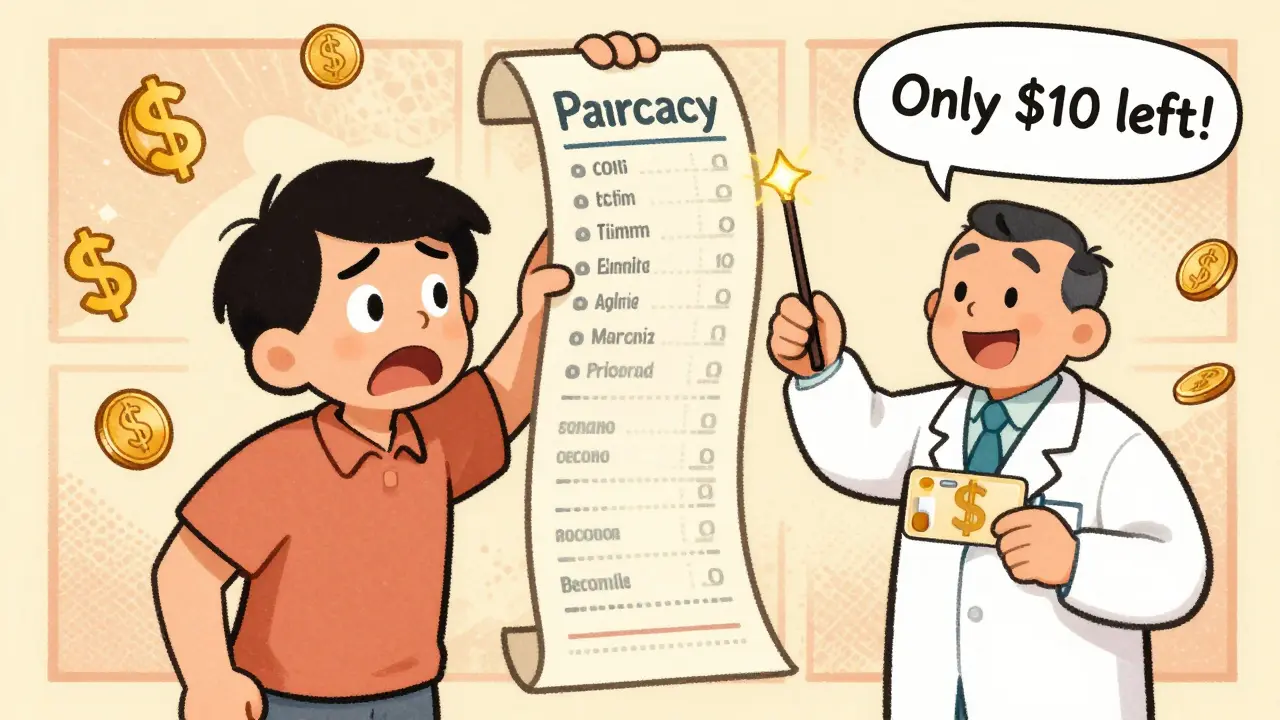
Getting prescribed a life-changing medication is only the first step. For many, the real challenge comes when they open the pharmacy receipt and see the price tag. A single month’s supply of a specialty drug can cost hundreds-or even thousands-of dollars. But what if you didn’t have to pay that full amount? That’s where prescription assistance programs come in. These are direct support systems run by pharmaceutical companies themselves, designed to help patients afford the drugs they need. Unlike insurance discounts or generic alternatives, these programs are built by the makers of the medication, offering real relief when the system falls short.
Two Kinds of Help: Copay Cards and Free Medications
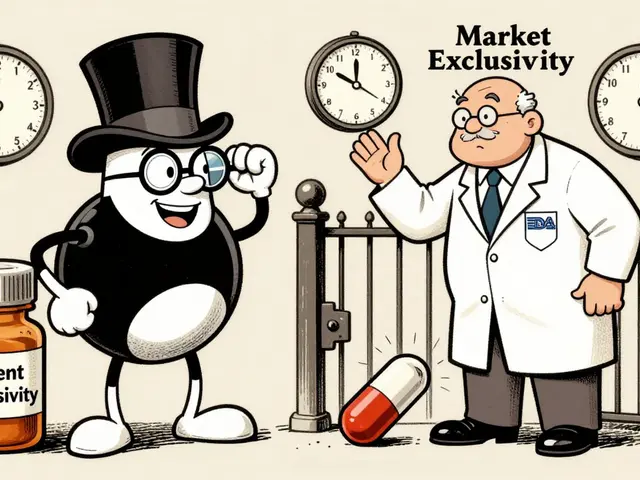
There are two main types of manufacturer assistance programs, and they serve very different people. The first is copay assistance, usually delivered as a card or coupon you present at the pharmacy. These are meant for people who have insurance but still struggle with high out-of-pocket costs like copays, deductibles, or coinsurance. For example, if your insurance says you owe $150 for your asthma inhaler, a copay card from the drugmaker might cover $140 of that, leaving you to pay just $10. Some programs cap the savings at $200 per month or $10,000 per year, depending on the drug. These cards are common for specialty medications-like those for rheumatoid arthritis, multiple sclerosis, or rare cancers-where generics aren’t available. The second type is called a Patient Assistance Program (PAP). These are for people without insurance, or those whose insurance doesn’t cover the drug at all. PAPs don’t just reduce your cost-they often give you the medication for free. To qualify, you usually need to prove your income is below 200% to 400% of the Federal Poverty Level. For a family of four in 2023, that meant earning less than $60,000 a year. Programs like Teva’s Cares or Pfizer’s Patient Assistance Program have helped millions get access to drugs they couldn’t otherwise afford.Who Gets Help-and Who Doesn’t
Not everyone qualifies, and the rules are messy. Copay assistance programs are great for people with private insurance, but they often don’t work if you’re on Medicare or Medicaid. In fact, 78% of state Medicaid programs ban the use of these cards because they believe it pushes doctors to prescribe more expensive brand-name drugs instead of cheaper generics. Even worse, if you’re on Medicare Part D, the money from a copay card doesn’t count toward your out-of-pocket spending that gets you out of the coverage gap. That means you could be stuck paying full price longer than you should. PAPs have their own restrictions. Many won’t help if you have any kind of government insurance-even if that insurance doesn’t cover your specific drug. A 2024 report from the Centers for Medicare & Medicaid Services found that 62% of PAPs exclude patients with Medicaid or Medicare, no matter how low their income. So if you’re on Medicare and your drug isn’t covered, you’re often left with no options from the manufacturer.How It Works: From Application to Pharmacy
Getting help isn’t always simple. For copay cards, the process is quick. You visit the drugmaker’s website, fill out a short form, and get a digital or printed card. You hand it to the pharmacist when you pick up your prescription, and the discount is applied automatically. No paperwork after that-unless you need to renew it annually. PAPs are more involved. You’ll need to provide proof of income (like tax returns or pay stubs), proof of residency, and a letter from your doctor confirming you need the medication. The application can take 45 to 60 minutes to complete. Some programs require you to reapply every year. Others give you a year’s supply upfront and send refills automatically. The Medicine Assistance Tool (MAT), run by the pharmaceutical industry, lets you search over 900 programs in one place. It’s free, confidential, and connects you directly to the right program.
The Hidden Costs and Controversies
These programs save lives-but they’re not without problems. Critics say copay assistance keeps drug prices high. By making expensive brand-name drugs cheaper for patients, manufacturers reduce the pressure to lower prices. A 2022 study in JAMA Internal Medicine found these programs increased total drug spending by $1.4 billion a year because doctors prescribed more costly drugs when patients didn’t feel the full cost. Another issue? Insurance companies are fighting back. Many now use “copay accumulator” programs, which means the money from your card doesn’t count toward your deductible. So even if your copay card covers $100 of your $150 drug, your insurance still treats you as if you paid $150. That delays when you reach your out-of-pocket maximum, meaning you pay more over time. And while $24.5 billion in assistance was given out in 2022, that money doesn’t fix the bigger problem: drug pricing. The National Institutes of Health points out that no one is tracking how many people actually use these programs or whether they’re working long-term. There’s no system to measure if these programs are helping people stay healthy-or just keeping them alive while prices keep climbing.What’s Changing in 2025
Regulation is catching up. As of early 2024, 22 states have passed laws to limit or require transparency around copay assistance. California now requires drugmakers to report exactly how much they spend on these programs. The federal government is also stepping in. In late 2023, the Department of Health and Human Services proposed new rules to make these programs more transparent. Some experts predict federal limits on copay accumulators could come soon. Technology is helping too. The Medicine Assistance Tool now connects directly with major pharmacy systems. When you apply for a copay card, the discount can be loaded right into your pharmacy’s system-no card needed. You just show your ID at pickup.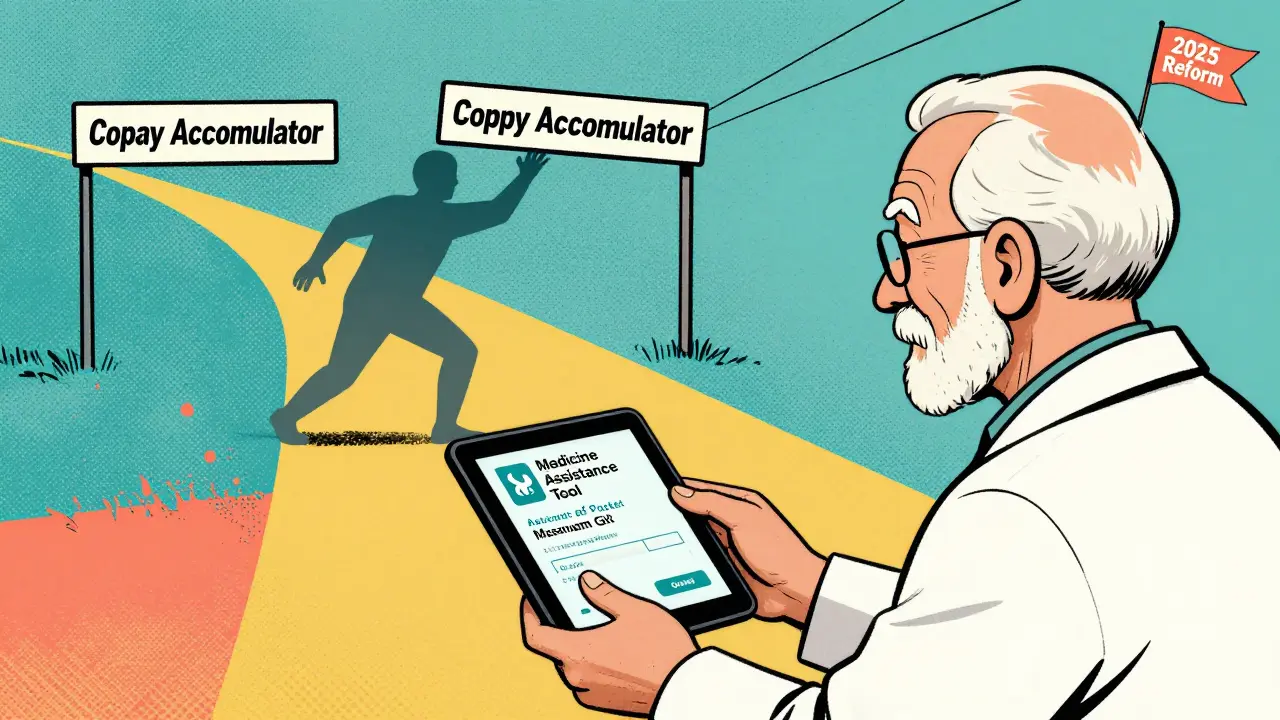
What You Should Do Now
If you’re struggling to pay for your medication, don’t assume you’re out of options. Start here:- Check the Medicine Assistance Tool (MAT) to see what programs your drug offers.
- Look up your drug’s manufacturer website directly-many have their own assistance pages.
- If you’re uninsured or underinsured, apply for a PAP. Even if you have Medicare, check if your drug is excluded from coverage-some PAPs still help.
- Ask your pharmacist or doctor. They often know which programs are easiest to use.
- Don’t give up if you’re denied. Some programs have appeals processes, or you can reapply if your income changes.
Real Impact, Real Numbers
In 2022, pharmaceutical companies helped 12.7 million people afford their prescriptions. That’s more than the population of Australia. For someone with diabetes, a $300 insulin prescription might drop to $15. For someone with cancer, a $10,000 monthly drug might become free. These programs are not perfect, but they’re the only safety net many people have. The truth? We shouldn’t need them. Drug prices should be fair. But until that changes, these manufacturer programs are a lifeline. If you’re eligible, use them. They’re designed for you-and they’re free to access. Don’t let confusion or shame stop you. Your health matters more than the paperwork.Can I use manufacturer assistance if I have Medicare?
You can use manufacturer copay assistance if you have Medicare, but it won’t count toward your out-of-pocket maximum for Medicare Part D. This means you’ll stay in the coverage gap longer. For PAPs, most programs exclude Medicare beneficiaries entirely-even if your drug isn’t covered. Always check the specific program rules.
Do I need to be a U.S. citizen to qualify for these programs?
Most manufacturer assistance programs are only available to U.S. residents, not citizens. You need to prove you live in the U.S., usually with a utility bill or lease agreement. Non-citizens with legal residency can qualify if they meet income requirements. These programs are not available in Australia or other countries.
Can I use a copay card with a generic drug?
No. Copay assistance programs are only offered for brand-name drugs. Generic versions don’t have these programs because they’re already much cheaper. If you’re paying too much for a brand-name drug, ask your doctor if a generic is available and appropriate for your condition.
How long does it take to get approved for a PAP?
Approval can take anywhere from a few days to six weeks, depending on the program and how quickly you submit your documents. Some programs offer emergency supplies while you wait. If you’re in urgent need, call the program directly and ask about fast-track options.
Are these programs really free to use?
Yes. There are no fees to apply for or use manufacturer assistance programs. Be careful of third-party websites that charge for help-they’re not affiliated with the drug companies. Always use official sources like the Medicine Assistance Tool or the manufacturer’s own website.
What if my income changes after I’m approved?
You must report changes in income. If you earn more than the limit, your assistance may stop. If you earn less, you might qualify for more help. Some programs automatically recheck your eligibility each year, but it’s best to update them yourself to avoid gaps in coverage.
This is actually life-changing info. I didn’t know copay cards existed until my mom got her rheumatoid arthritis med covered down to $5. Pharmacies don’t always tell you this stuff-thank you for laying it out.
Been there. My brother’s on a $900/month cancer drug. PAP got it down to zero. No hype, no BS-just real help when the system fails. Don’t be ashamed to ask.
In Nigeria, we don’t have these programs. If you can’t pay, you don’t get the med. This post is a wake-up call-why can’t more countries do this?
Big Pharma’s got you hooked. They raise prices so they can ‘help’ you with coupons. It’s a scam. They want you dependent. The government’s in on it too. Wake up, sheeple. 💀
They’re not helping… they’re manipulating. Copay cards? More like corporate mind-control. The FDA’s in bed with them. You think this is charity? Nah. It’s a PR stunt to avoid price caps. 🤫
While I appreciate the practical utility of these programs, one must interrogate the structural epistemology of pharmaceutical paternalism. The very existence of these assistance mechanisms reveals a profound failure of distributive justice in healthcare capitalism. One cannot help but wonder whether the moral economy of ‘charity’ is, in fact, a mechanism of deferred accountability.
Why do we even need this? 😒 Drug companies are greedy. End of story. Just make meds cheap. I’m tired of jumping through hoops just to breathe.
I used to think I was alone in this. Then I found MAT. Got my insulin for $10. I cried in the pharmacy. This isn’t just about money-it’s about dignity. Thank you for writing this.
Stop letting corporations play savior. We need single-payer. Not charity. Not coupons. Real reform. This is band-aid on a bullet wound.
It is imperative to acknowledge, with the utmost gravity, that the proliferation of pharmaceutical copay assistance programs constitutes a systemic abdication of public health responsibility by both legislative and regulatory bodies. The normalization of corporate benevolence as a substitute for equitable healthcare infrastructure represents not merely a policy failure, but a moral regression of unprecedented magnitude. One must question the ethical integrity of a society wherein life-saving therapeutics are contingent upon discretionary corporate largesse, rather than universal entitlement. Furthermore, the absence of federal oversight regarding the allocation and efficacy of these programs renders them, in practice, opaque instruments of market distortion, which may inadvertently incentivize the prescription of higher-cost pharmaceuticals over clinically equivalent generics-thereby exacerbating overall expenditure without demonstrable improvement in patient outcomes. This is not aid; it is a structural pathology.
As a Canadian, I’m both impressed and disturbed. We don’t have these programs because we have universal coverage-but the fact that Americans need this at all speaks volumes. I hope this inspires change north of the border too.
They’re tracking you through the MAT app. I read it on a forum. They’re selling your data to insurance companies so they can raise your premiums later. Don’t sign up. They’ll use your info to deny you later. 🚨
Just applied for my dad’s MS med. Got approved in 3 days! 🎉 Life’s hard but this? This is a win. Thank you for sharing this. 🙌
My cousin in India needs this. He pays $200 a month for insulin. I’m sending him this link. Thank you for making it so clear.