When your body mistakes a allergic reaction to medication, an immune system overresponse to a drug that can range from mild itching to fatal shock. Also known as drug allergy, it’s not just a side effect—it’s your body fighting something it thinks is dangerous. Unlike nausea or dizziness, which are common pharmacological effects, a true allergic reaction involves your immune system releasing histamine and other chemicals. That’s why symptoms like hives, swelling, or trouble breathing show up hours or even days after taking the pill.
Some drugs are more likely to trigger this than others. Antibiotics like penicillin, painkillers like aspirin or ibuprofen, and seizure meds like phenytoin are common culprits. But even something as simple as a local anesthetic or contrast dye used in imaging can set off a reaction. And here’s the catch: you can take a drug safely for years, then suddenly react to it the next time you use it. That’s why anaphylaxis, a sudden, full-body allergic emergency that can block airways and crash blood pressure is so dangerous—it doesn’t care if you’ve used the drug before.
It’s not just about the drug itself. drug interactions, when two or more medicines interfere with each other’s metabolism or effects can make a mild reaction worse. For example, if you’re on a medication that slows down how your liver breaks down drugs, a normally safe dose of an antibiotic might build up to toxic levels and trigger an immune response. That’s why taking five or more pills at once—what doctors call polypharmacy, the use of multiple medications, often increasing the risk of unexpected reactions—can turn a simple allergy into a hospital visit.
Most reactions are mild: a rash, itchy skin, or a stuffy nose. But if you feel your throat tightening, your lips swell, or your chest gets tight, don’t wait. Call emergency services. Anaphylaxis kills fast—and epinephrine works best when given right away. Keep an EpiPen if you’ve had one before. And if you’re unsure whether your reaction was allergic or just a side effect, talk to your doctor. Skin tests and blood work can help confirm it.
Many people confuse side effects with allergies. If you got dizzy after taking a blood pressure pill, that’s likely not an allergy. But if you broke out in hives after taking the same pill? That’s your immune system speaking. The difference matters because allergies mean you must avoid the drug forever. Side effects? Maybe you can switch to another in the same class. This collection of articles dives into real cases where medications turned dangerous—not because they were bad drugs, but because the body responded in ways no one expected. You’ll find stories about deadly combos like colchicine and clarithromycin, how fluoroquinolones can silently damage tendons, and why some people react to generic versions while others don’t. These aren’t hypotheticals. These are real people who learned the hard way. What you’re about to read could help you avoid the same mistake.
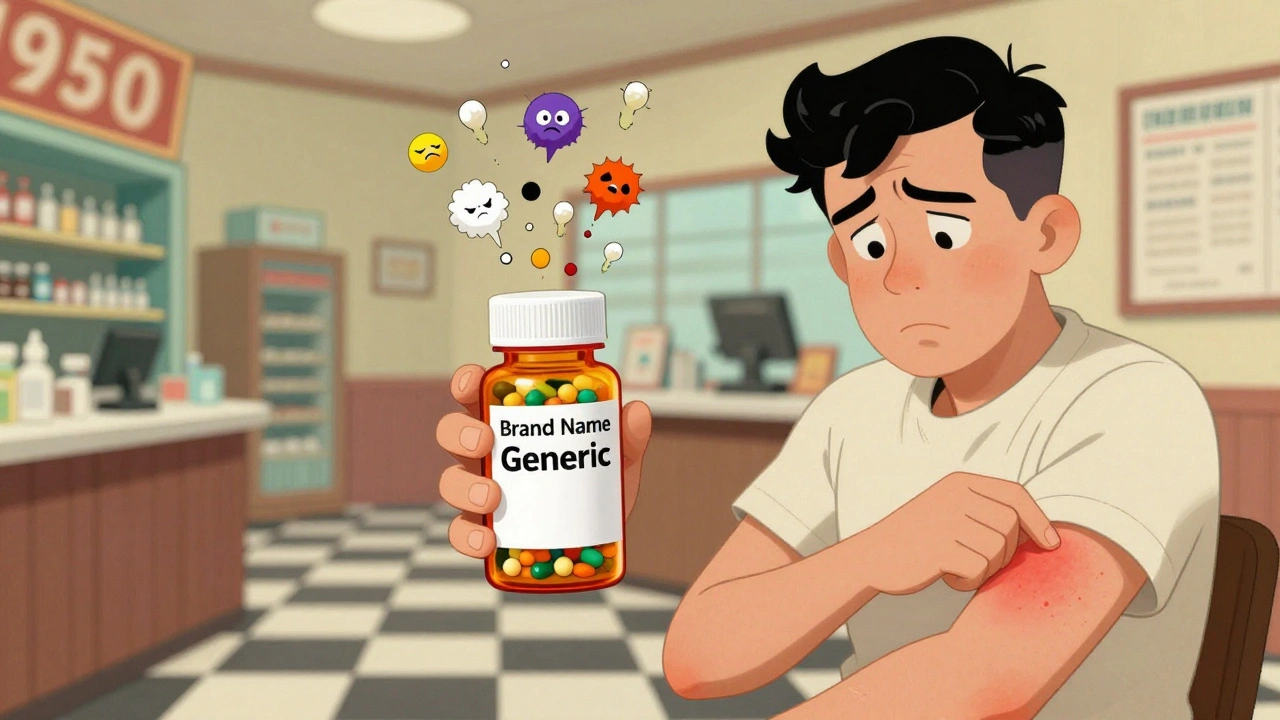
Generic medications can cause allergic reactions due to inactive ingredients like lactose, gluten, or dyes - not the active drug. Learn when to seek emergency care and how to avoid future reactions.
full article