When you switch from a brand-name drug to a generic, you’re not just saving money—you’re trusting that the active ingredient is the same. And it is. But anaphylaxis from generics, a severe, life-threatening allergic reaction triggered by medications, even when they’re chemically identical to brand versions. Also known as severe drug allergy, it doesn’t care if the pill is made by Pfizer or a small factory in India—it cares about what’s in it, and what’s mixed in with it. The active ingredient in a generic is required by law to match the brand. But the fillers? The dyes? The coating? Those can be totally different. And those are often the real culprits when someone has a reaction.
Think of it like this: two people eat the same apple. One is fine. The other breaks out in hives and can’t breathe. The apple is the same. But maybe one person is allergic to the wax on the skin, or the pesticide residue, or even the dust from the packing line. With generics, the same thing can happen. A person might have never reacted to the brand-name version because it used lactose as a filler. But the generic uses corn starch. Or maybe the brand used a red dye that’s been banned in the EU, and the generic uses a different dye that’s new to their system. These aren’t just "inactive" ingredients—they’re chemicals your body might react to. And when you’re allergic, even tiny amounts can trigger anaphylaxis, a rapid, whole-body allergic response that can shut down breathing and blood pressure. It’s rare, but it’s real. And it’s not always caught until it’s too late.
Some people don’t realize they’re reacting to a generic until they switch. They’ve taken the brand for years with no issues. Then they get a new prescription, the pharmacy hands them a different-looking pill, and within minutes, their throat swells. This isn’t just bad luck—it’s a gap in how we think about drugs. We assume bioequivalence means safety equivalence. But bioequivalence, the scientific standard that proves a generic delivers the same amount of active drug into the bloodstream as the brand, doesn’t test for allergic potential. It doesn’t check for dye sensitivity. It doesn’t screen for gluten or lactose in the filler. And if you’ve had a reaction before, you might not even connect it to the pill you took that day.
That’s why knowing your triggers matters. If you’ve ever had a rash, swelling, or trouble breathing after taking any pill—even over-the-counter—you need to track the exact name and manufacturer. Write it down. Show it to your pharmacist. Ask: "Is this the same filler as the last one?" Most won’t know. But you should. And if you’ve ever been told "it’s just a generic, it’s the same thing," remember: the same active ingredient doesn’t mean the same experience. The difference could be life or death.
Below, you’ll find real stories and science-backed posts that break down how generic drugs are made, why people react differently, what ingredients to watch for, and how to protect yourself when switching medications. No fluff. Just what you need to stay safe.
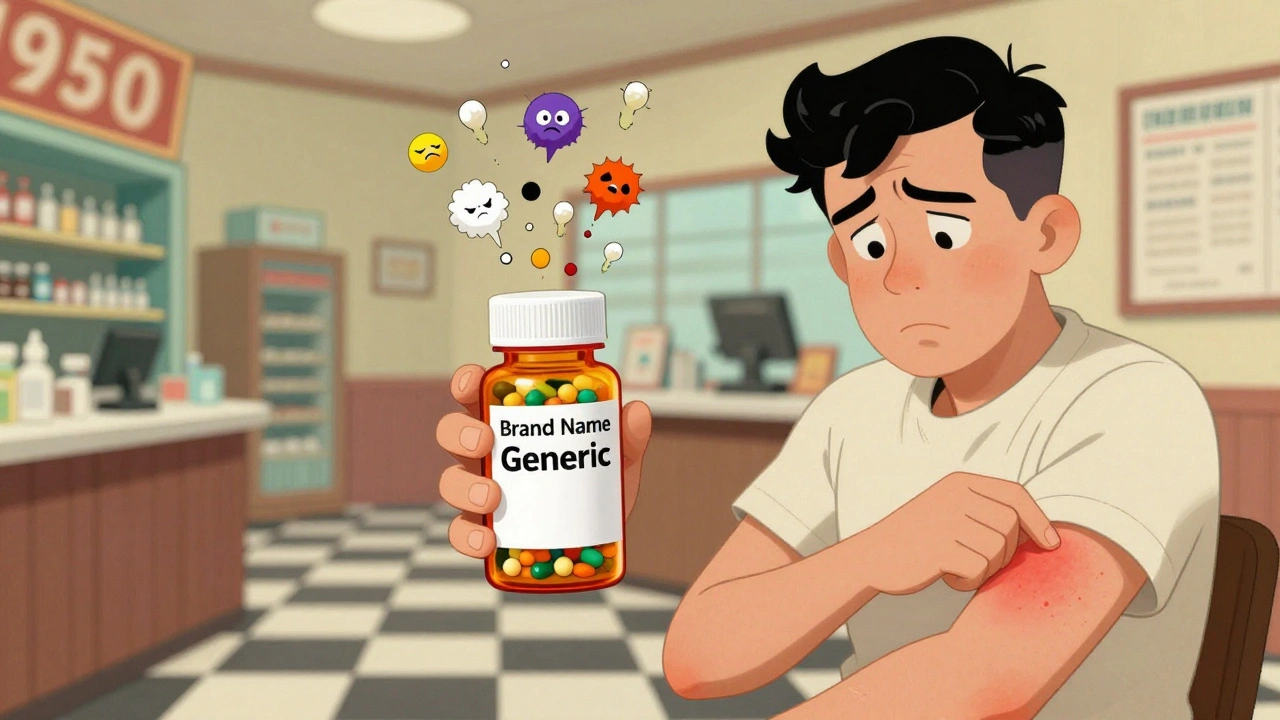
Generic medications can cause allergic reactions due to inactive ingredients like lactose, gluten, or dyes - not the active drug. Learn when to seek emergency care and how to avoid future reactions.
full article