When you're on a blood thinner like warfarin, a common anticoagulant used to prevent dangerous blood clots. Also known as Coumadin, it works by slowing down your body's clotting process. But even small changes in what you take—like a new antibiotic or a daily supplement—can throw off its balance. That’s where anticoagulant interactions, harmful overlaps between blood thinners and other substances that change how they work become dangerous. These aren’t just theoretical risks. Real people end up in the hospital because they took ibuprofen with warfarin, or started eating more kale without telling their doctor.
INR monitoring, a blood test that measures how long it takes your blood to clot is your main safety net. If your INR is too low, you’re at risk for clots. Too high, and you could bleed internally. That’s why doctors check it regularly—especially when you start or stop something new. Many drug interactions, when one medication changes how another is processed by the liver or kidneys happen because of enzymes like CYP3A4 or P-gp. For example, clarithromycin (an antibiotic) can make warfarin way too strong, just like colchicine does. Even over-the-counter stuff like St. John’s wort or garlic supplements can mess with your levels. You don’t need to avoid everything—but you do need to know what’s safe and what’s not.
Some of the most common troublemakers? Anticoagulant interactions with NSAIDs like ibuprofen, certain antibiotics, antifungals, and even some herbal products. They don’t just add up—they multiply risk. A 2023 study found that nearly 1 in 5 older adults on warfarin had at least one risky combo they didn’t know about. The good news? Most of these are preventable. Talk to your pharmacist before taking anything new. Keep a list of every pill, patch, and powder you use. And if you’re on a blood thinner, never assume something is "too small" to matter. Your body doesn’t care if it’s a prescription or a vitamin. It only cares about what’s in your system.
Below, you’ll find real-world stories and science-backed advice on how these interactions play out—whether it’s how antibiotics kill your blood thinner’s effect, why magnesium can interfere with bone meds while you’re on warfarin, or how even a simple change in diet can shift your INR. These aren’t hypotheticals. They’re cases real people have lived through. And if you’re taking a blood thinner, they could be your next warning sign.
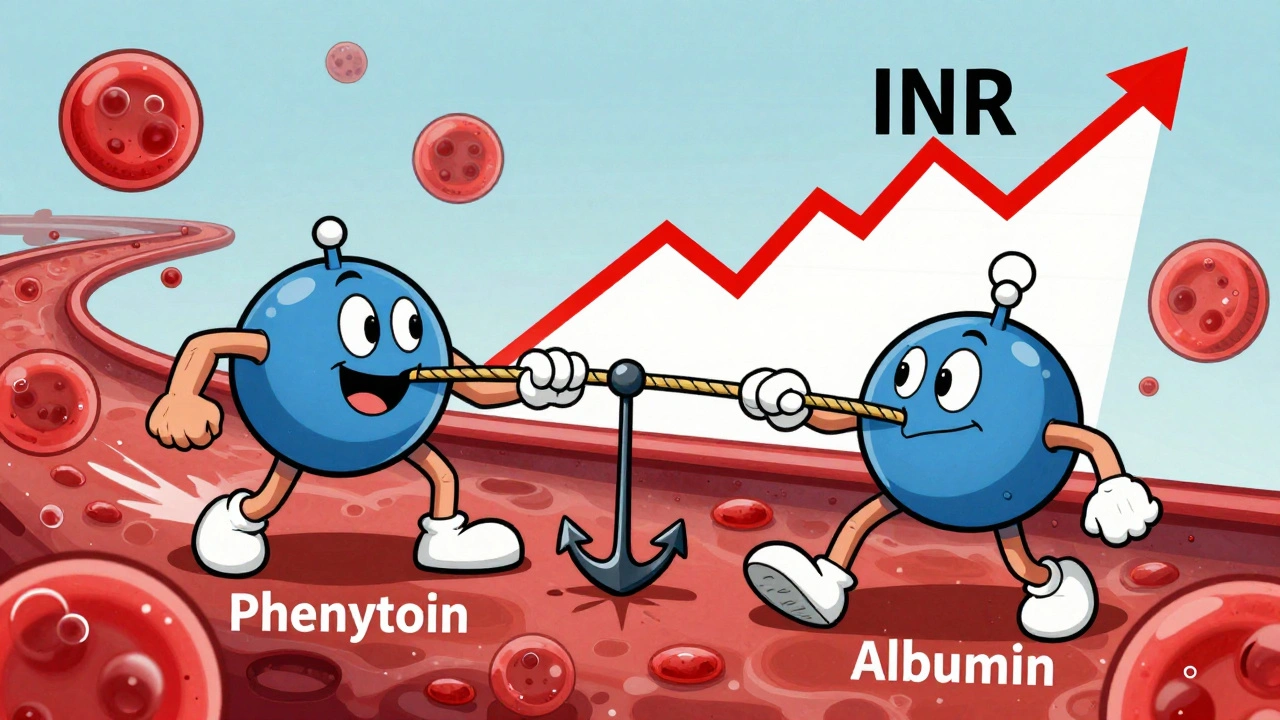
Phenytoin and warfarin interact in two phases: an early spike in INR from protein displacement, followed by a dangerous drop due to enzyme induction. This requires close INR monitoring and careful dose adjustments to avoid bleeding or clotting.
full article