When you take an antipsychotic, a class of medications used to treat psychosis, schizophrenia, and severe mood disorders. Also known as neuroleptics, these drugs work by changing brain chemistry—but that change doesn’t come without risks. Many people assume side effects are just drowsiness or weight gain, but the real dangers often hide in how these drugs interact with other medications you’re already taking.
Take polypharmacy, the practice of taking five or more medications at once. It’s common among older adults or those with multiple health conditions, and it turns antipsychotic side effects from manageable into life-threatening. For example, mixing an antipsychotic with a macrolide antibiotic like clarithromycin can trigger deadly toxicity by blocking how your body breaks down the drug. The same goes for combining antipsychotics with antidepressants—while serotonin syndrome is rare, it’s real, and it can strike fast. You won’t always feel it coming: confusion, high fever, rapid heartbeat, and muscle rigidity are early signs. If you’re on more than one psychiatric or heart medication, you’re already in a higher-risk group.
And it’s not just about the active ingredients. Generic versions of antipsychotics are chemically identical, but the fillers—lactose, gluten, dyes—can trigger allergic reactions in sensitive people. Some side effects aren’t from the drug itself, but from what’s added to make it pill-shaped. Then there’s the timing: taking an antipsychotic with certain supplements like magnesium or on an empty stomach can change how much gets absorbed. Even something as simple as drinking grapefruit juice can mess with your levels.
What makes this even trickier is that many side effects are delayed. Movement disorders like tardive dyskinesia might not show up for months or years. Weight gain can creep in slowly, then spiral. Blood sugar spikes, liver stress, low white blood cell counts—these are silent risks that only show up on lab tests. That’s why monitoring isn’t optional. Regular blood work, weight checks, and honest conversations with your doctor aren’t just good practice—they’re survival tools.
There’s no one-size-fits-all when it comes to antipsychotics. What works for one person might cause severe side effects in another. And the more medications you add to the mix, the more unpredictable it gets. That’s why so many of the posts below focus on what happens when antipsychotics meet other drugs: antibiotics, antidepressants, painkillers, even herbal supplements. You’ll find real-world examples of dangerous combinations, how to spot warning signs, and what steps to take before your next refill. This isn’t theoretical. These are the mistakes people make—and the fixes that actually work.
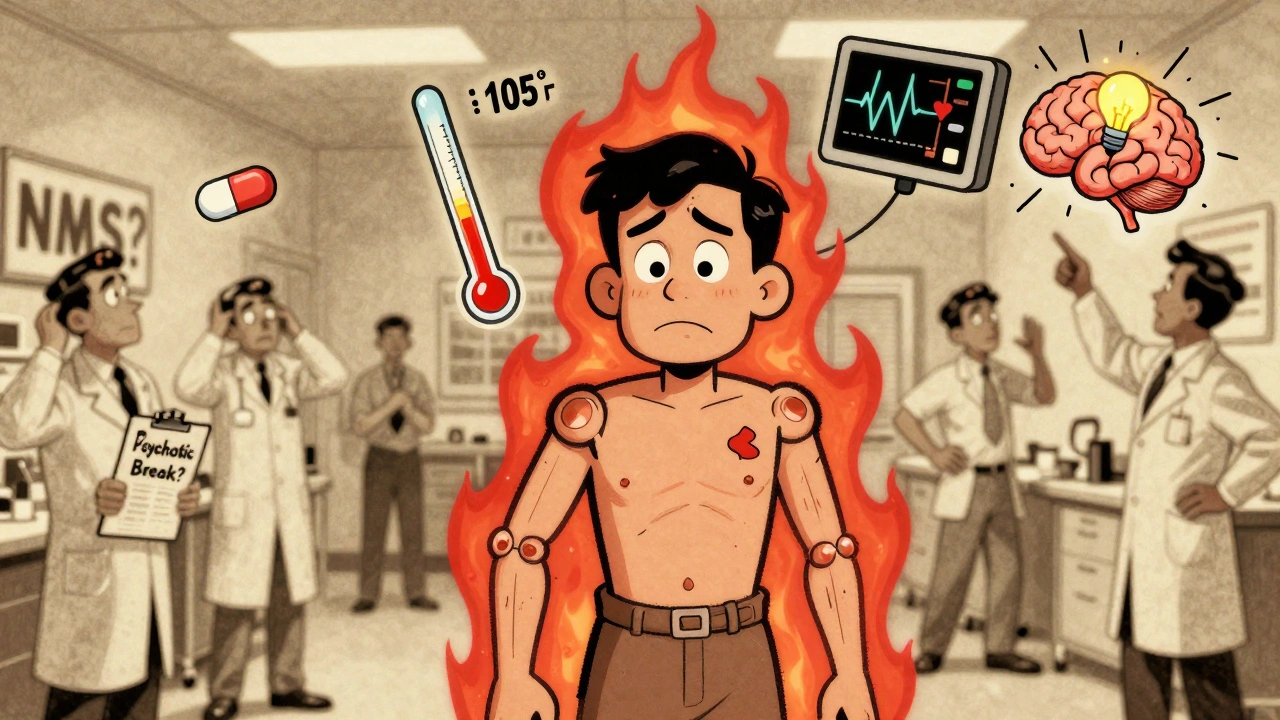
Neuroleptic Malignant Syndrome is a rare but life-threatening reaction to antipsychotics and other dopamine-blocking drugs. Recognizing its four key symptoms-rigidity, fever, mental changes, and autonomic instability-can save lives.
full article