When you're prescribed antiviral adherence, the consistent and correct use of antiviral medications to treat viral infections like HIV, hepatitis, or herpes. Also known as medication compliance, it's not just about taking your pills—it's about taking them at the right time, in the right dose, and for the full length of treatment. Skip a dose here, stop early there, and you're not just risking a relapse—you're giving the virus a chance to fight back.
antiviral drugs, medications designed to block the replication of viruses in the body work best when they maintain steady levels in your bloodstream. Miss a dose of your HIV antiviral, and the virus can start multiplying again. Miss a few, and it might mutate into a strain that no longer responds to the drug. This isn't theoretical. Studies show that poor adherence to hepatitis C antivirals can cut cure rates in half. The same goes for herpes suppressive therapy—irregular use leads to more outbreaks and higher chances of spreading the virus.
drug resistance, when a virus evolves to survive despite antiviral treatment is one of the biggest threats in modern medicine. It doesn't just hurt you—it makes treatments less effective for everyone. That’s why antiviral adherence isn’t a personal choice, it’s a public health action. Think of it like turning off a leaky faucet: if you only fix it partway, the water keeps flowing. Same with viruses—they don’t care if you felt better after five days. They only care if the drug is still in your system.
You’re not alone in struggling with this. Life gets busy. Side effects happen. Pills get lost. But the solutions aren’t complicated: set phone alarms, use pill organizers, link doses to daily habits like brushing your teeth, and talk to your pharmacist if the cost or schedule is a problem. Many antivirals now come in once-daily forms, and some programs offer free delivery or financial help. The goal isn’t perfection—it’s consistency.
What you’ll find below are real-world guides on how to manage antiviral treatments, avoid dangerous interactions, and understand why skipping doses can backfire—whether you're on Valtrex for herpes, antivirals for hepatitis, or something else entirely. These aren’t theory pieces. They’re practical, no-fluff advice from people who’ve been there: how to handle missed doses, what to do when side effects hit, and how to tell if your treatment is still working. No jargon. No scare tactics. Just what you need to stay in control.
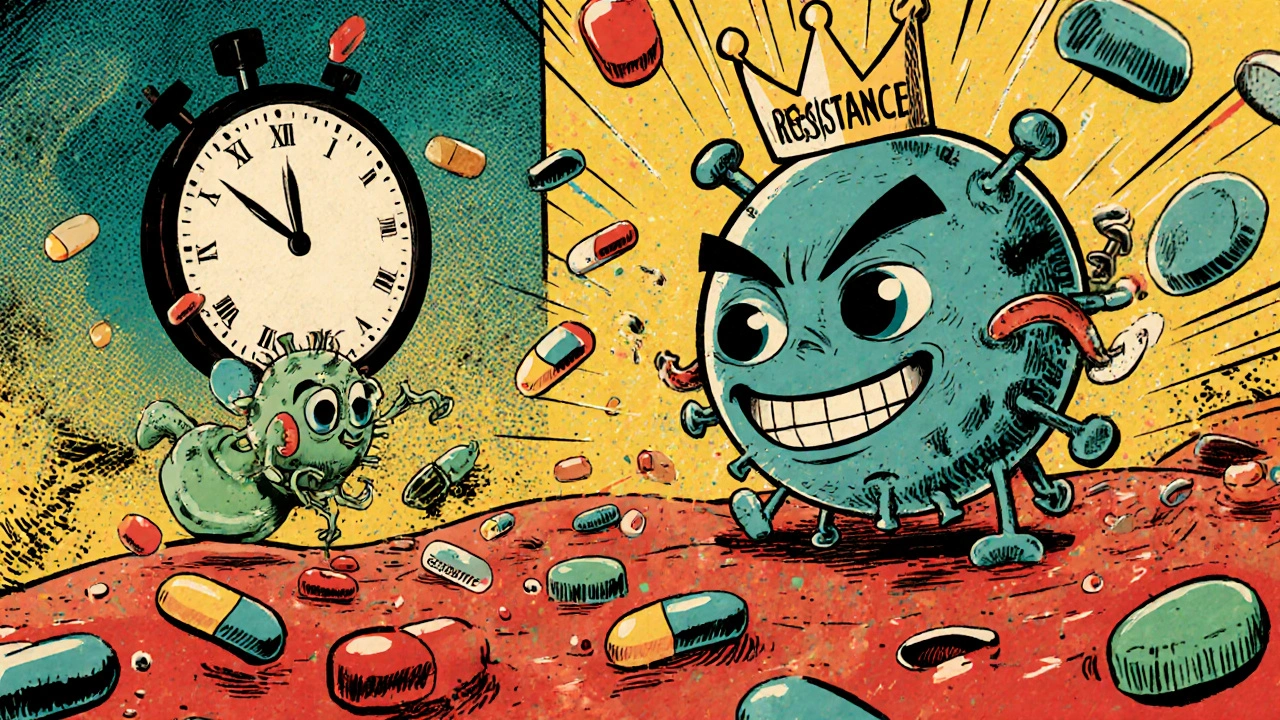
Antivirals can save lives, but resistance and side effects are real risks. Learn how resistance develops, what side effects to expect, and practical tips to stay on track with your treatment for better long-term outcomes.
full article