When hiccups won’t stop—days, even weeks—baclofen, a muscle relaxant originally used for spinal cord injuries and multiple sclerosis. Also known as Gablofen, it works by calming overactive nerves in the spinal cord that trigger the hiccup reflex. Most people never need it for hiccups, but for those with chronic, disruptive cases, it’s one of the few options that actually works.
Doctors don’t reach for baclofen right away. First, they try simple fixes: holding your breath, sipping ice water, or swallowing sugar. If those fail and hiccups drag on past 48 hours, it’s no longer just annoying—it’s exhausting. Sleepless nights, trouble eating, even cracked ribs can happen. That’s when baclofen comes in. Studies show it reduces hiccup frequency in up to 80% of patients who haven’t responded to other treatments. It doesn’t cure the root cause, but it quiets the signal that makes your diaphragm spasm. The key is low doses: 5 to 10 mg three times a day. Too much can cause drowsiness, dizziness, or weakness—especially if you’re older or taking other sedatives.
Baclofen isn’t a magic pill. It works best when hiccups stem from nerve irritation, like after surgery, brain injuries, or tumors pressing on the vagus nerve. It’s less likely to help if hiccups are caused by acid reflux or anxiety. That’s why doctors check for underlying issues first. You might need an endoscopy, a CT scan, or blood tests to rule out something more serious. And if you’re already on antidepressants, benzodiazepines, or opioids, mixing them with baclofen can make you too sleepy or even affect your breathing. That’s why this isn’t something to try on your own.
What you’ll find below are real cases and drug interactions that matter. You’ll see how baclofen fits into the bigger picture of stubborn hiccups, how it compares to other options like gabapentin or chlorpromazine, and why some people respond while others don’t. You’ll also learn about risks tied to long-term use, how to spot withdrawal symptoms if you stop suddenly, and what to do if your doctor says no. These aren’t theoretical discussions—they’re based on real patient experiences and clinical reports. If you’ve been living with hiccups that won’t quit, this collection gives you the facts you need to talk to your doctor with confidence.
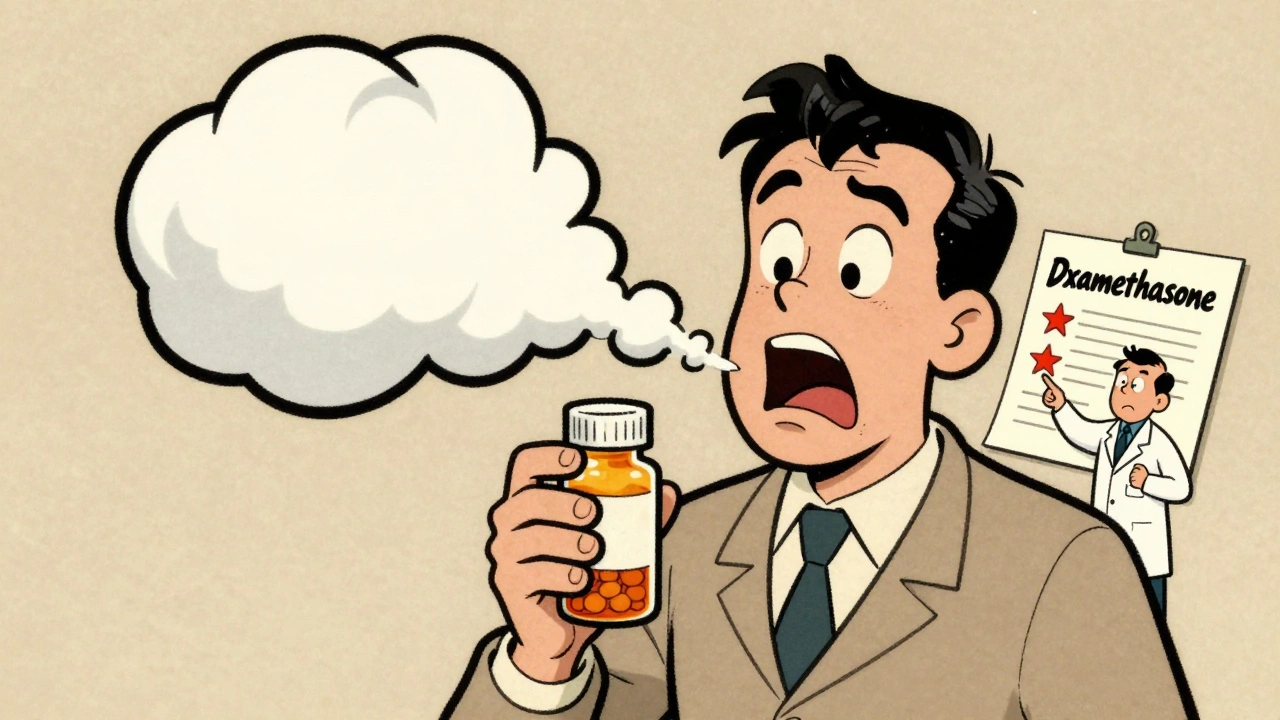
Many medications, especially steroids and opioids, can trigger persistent hiccups. Learn which drugs are most likely to cause them, what actually works to stop them, and how to talk to your doctor about this overlooked side effect.
full article