
Medication Hiccup Risk Checker
Check if Your Medication is Causing Hiccups
Medication-induced hiccups are often overlooked but common. This tool helps determine if your medication could be the cause and provides guidance on next steps.
Risk Assessment Results
Key Information
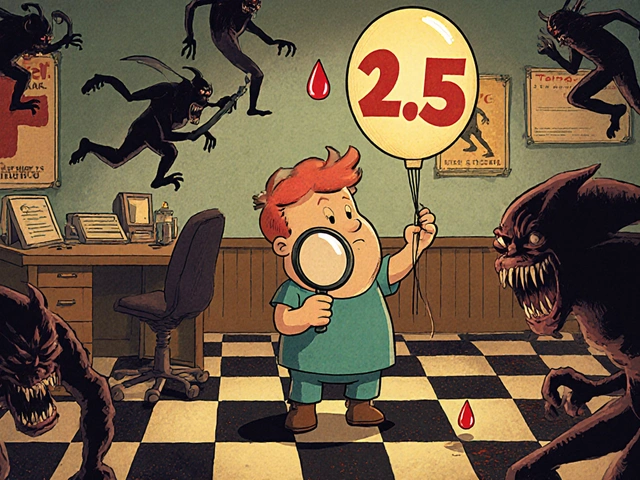
The Naranjo Scale is a tool doctors use to determine if a drug caused a side effect. A score of 6 or higher means it's 'probable' the drug caused the hiccups.
For persistent hiccups (more than 48 hours), medical evaluation is recommended. Common treatments include:
- Swallowing a teaspoon of granulated sugar (72% success rate)
- Gargling ice water (65% success rate)
- Holding breath for 10-15 seconds
Most people think hiccups are just a silly, temporary nuisance-something that happens after eating too fast or drinking soda. But when hiccups stick around for days, or even weeks, they’re not funny anymore. They can keep you from sleeping, eating, or even talking without interruption. And surprisingly, a lot of the time, they’re not caused by what you ate-they’re caused by the medications you’re taking.
Why Your Medicine Might Be Making You Hiccup
Hiccups aren’t random. They’re a reflex triggered by a specific nerve pathway in your brainstem. The vagus and phrenic nerves send signals to your diaphragm, causing it to spasm. Then your vocal cords snap shut, making that classic ‘hic’ sound. Medications mess with this system in different ways-some irritate the nerves directly, others change brain chemistry, and some swell your stomach, which presses on the nerves.
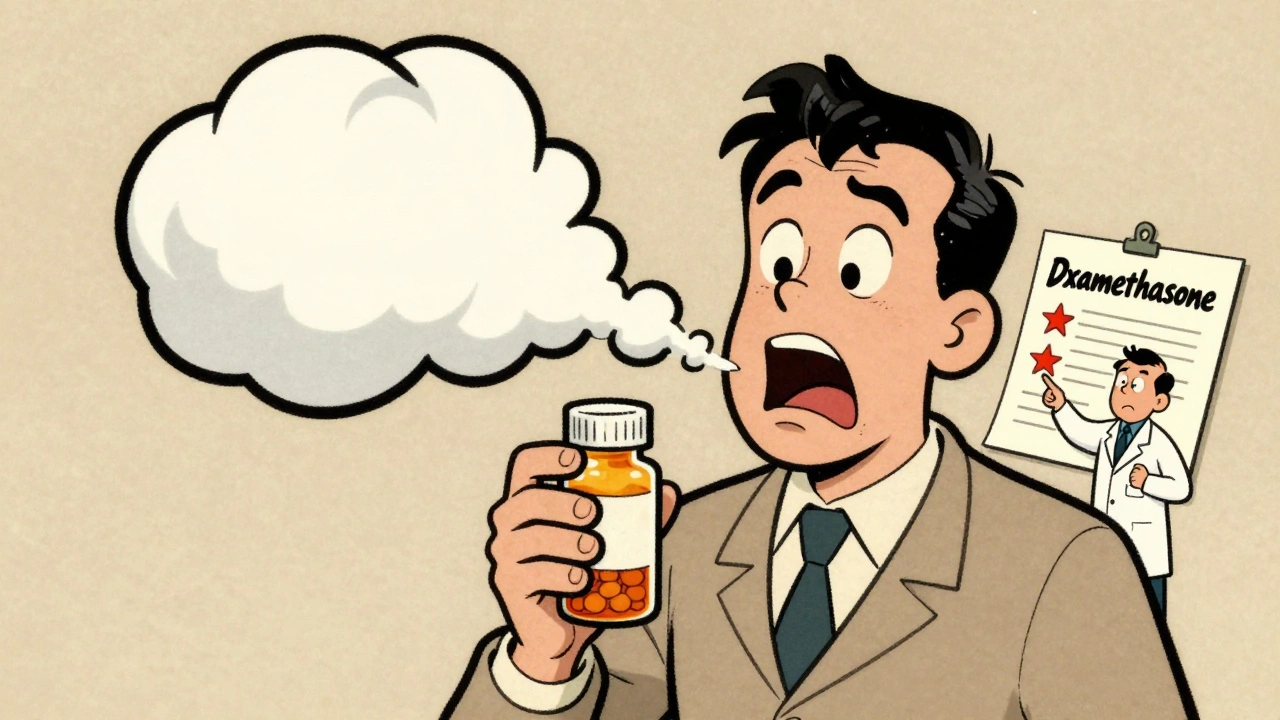
The most common offenders? Corticosteroids like dexamethasone and prednisone. In cancer patients getting chemotherapy, dexamethasone is often given to reduce nausea. But in up to 41% of those cases, it triggers hiccups. One study found that 97% of patients who got hiccups from dexamethasone were men, and most started within hours of taking the first dose. Even a low dose-4mg-is enough to set it off.
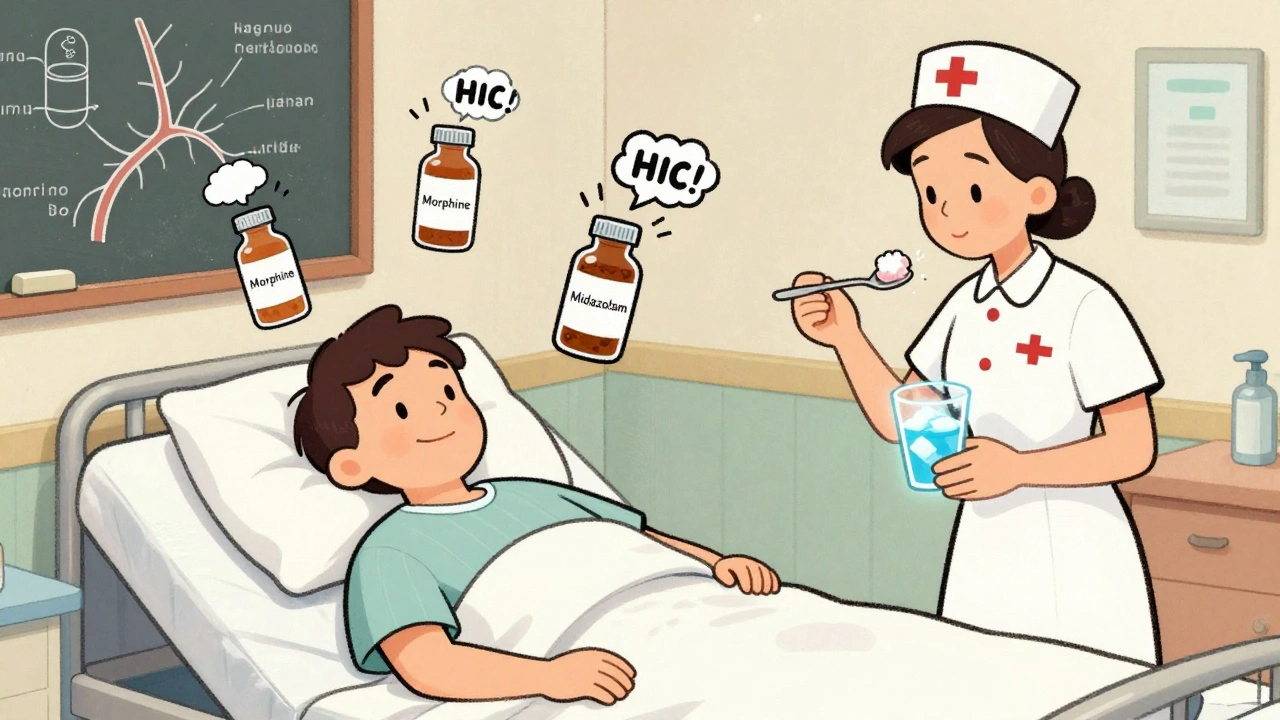
Opioids like morphine are another big culprit. About 5 to 7% of people taking them for chronic pain report hiccups. The drug relaxes the lower esophageal sphincter, letting air into the stomach. That distension pushes up on the diaphragm and triggers the reflex. Benzodiazepines like midazolam, used before surgery, cause hiccups in nearly 10% of patients. And while antibiotics like azithromycin rarely cause them, there are documented cases-like one in 2023 where a man developed hiccups after taking moxifloxacin for tuberculosis.
Here’s the problem: most drug labels don’t list hiccups as a side effect. So when a patient starts hiccuping after beginning a new medication, doctors often look for something else-GERD, a brain tumor, even a heart problem. A 2019 study found that 35% of these cases get misdiagnosed because no one connects the dots.
What Medications Are Most Likely to Cause Hiccups?
Not all drugs are created equal when it comes to triggering hiccups. Some have a much higher risk than others. Here’s what the data shows:
| Medication | Typical Dose | Hiccup Incidence | Why It Happens |
|---|---|---|---|
| Dexamethasone | 4-20 mg daily | Up to 41% | Activates steroid receptors in the hiccup reflex arc |
| Prednisone | 20-60 mg daily | 15-25% | Similar mechanism to dexamethasone; causes gastric irritation |
| Morphine | 5-30 mg daily | 5-7% | Relaxes esophageal sphincter → stomach distension |
| Midazolam | 5-15 mg IV before surgery | 8-12% | Alters GABA receptors in brainstem |
| Cisplatin | 50-100 mg/m² | 10-15% | Often combined with dexamethasone; additive effect |
| Azithromycin | 500 mg daily | 0.5-2% | Rare, but documented cases via vagal irritation |
What’s interesting is that some drugs only cause hiccups when combined. Dexamethasone alone might trigger them in 10% of people. But when it’s paired with cisplatin, the rate jumps to over 40%. That’s why oncology teams now often give baclofen prophylactically to patients starting this combo.
What to Do If You’re Hiccuping After Starting a New Drug
If you started a new medication and now you can’t stop hiccuping, don’t panic-but don’t ignore it either. Here’s what to do:
- Check the timeline. Did the hiccups start within 24-72 hours of beginning the drug? That’s a strong clue.
- Don’t stop the drug yourself. Especially if it’s for cancer, pain, or a serious condition. Talk to your doctor first.
- Use the Naranjo Scale. It’s a simple tool doctors use to guess if a drug caused a side effect. You answer questions like: ‘Did symptoms improve after stopping the drug?’ and ‘Are there other possible causes?’ A score of 6 or higher means it’s ‘probable’ the drug caused it.
- Try simple home fixes. Swallowing a teaspoon of granulated sugar has a 72% success rate in stopping hiccups. Gargling ice water works 65% of the time. Holding your breath for 10-15 seconds can reset the reflex. These aren’t just myths-they’re backed by studies in JAMA Internal Medicine and the American Academy of Family Physicians.
If the hiccups last more than 48 hours, you’re in the ‘persistent’ category. That’s when you need medical help. If they go on for more than a month, it’s ‘intractable’-and that’s rare, but serious. Around 1,000 cases are reported in the U.S. each year, and most of them are linked to medications.
What Treatments Actually Work?
There’s only one FDA-approved drug for hiccups: chlorpromazine (Thorazine). It’s an old antipsychotic, and it works by blocking dopamine receptors in the brainstem-exactly where the hiccup reflex is controlled. Doses are low: 25-50mg a day. It’s effective in about half of patients. But it comes with side effects: drowsiness, dizziness, low blood pressure. That’s why it’s usually a last resort.
More commonly, doctors reach for baclofen first. It’s a muscle relaxant that acts on GABA-B receptors. In steroid-induced hiccups, it works 60-70% of the time. Start with 5mg three times a day. If that doesn’t work, bump it to 10mg. Many patients report relief within hours. One patient on Reddit said his 5-day hiccup streak vanished in two hours after switching from dexamethasone to ondansetron and starting baclofen.
Other options include gabapentin, nifedipine, and metoclopramide-but they’re less proven. A new drug called GBX-204, a GABA-B agonist, just got FDA breakthrough designation in June 2023. Phase 3 trials showed 82% of patients stopped hiccuping with 10mg daily-better than baclofen. It’s not on the market yet, but it’s coming.
When You Can’t Stop the Medication
Some people can’t stop taking the drug that’s causing the hiccups. Cancer patients need dexamethasone with cisplatin. Chronic pain patients need opioids. In these cases, the goal isn’t to stop the drug-it’s to prevent the hiccups from starting.
Studies show that giving baclofen at 5mg twice daily before starting dexamethasone cuts the hiccup rate from 41% down to just 13%. That’s a huge win for quality of life. One oncology clinic in Texas started this protocol in 2022. They went from 12 patients a month needing hospital visits for uncontrollable hiccups to fewer than two.
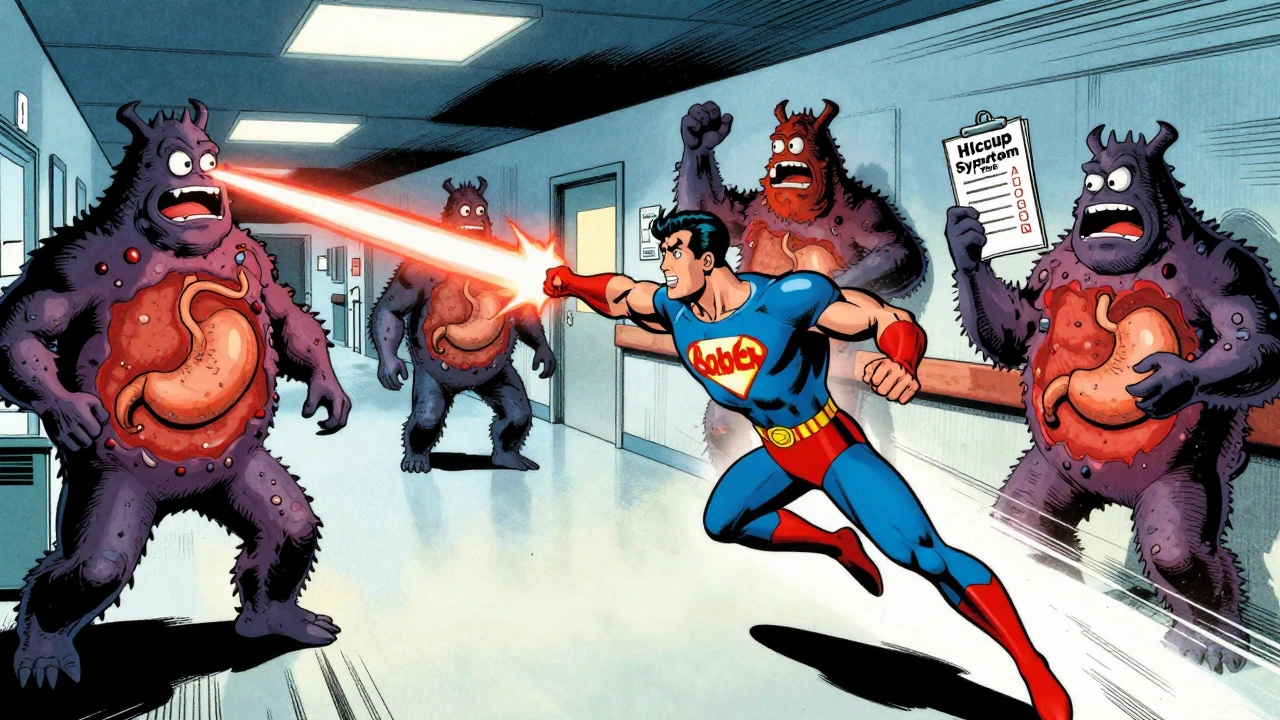
And it’s not just about comfort. Persistent hiccups can lead to weight loss, dehydration, exhaustion, and even broken ribs from the constant spasms. The American Society of Clinical Oncology now recommends tracking hiccups with the Hiccup Symptom Score (HSS) in all cancer patients on steroids. That tool helps catch problems early.
Why This Isn’t Getting More Attention
Despite how common and disruptive medication-induced hiccups are, they’re still overlooked. Why? Because they’re not life-threatening. Doctors are trained to look for cancer, heart attacks, strokes-not hiccups. And patients don’t always mention them unless they’re asked.
A 2023 FDA safety report found that only 37% of healthcare providers correctly identified medication-induced hiccups in a national survey. That’s alarming. But change is happening. The FDA updated dexamethasone’s label in 2021 to list hiccups as a ‘clinically significant adverse reaction.’ The European Medicines Agency now requires hiccup data for all new CNS drugs. And in January 2024, the American Medical Association gave it its own ICD-10 code: R09.2-MIH. That means it’s officially recognized in medical records.
There’s also growing evidence that fixing hiccups saves money. A 2022 analysis found that proper management could save the U.S. healthcare system $28.7 million a year by reducing unnecessary CT scans, ER visits, and hospital stays.
So if you’re hiccuping after starting a new pill, don’t brush it off. It might not be your stomach. It might not be stress. It might be your medicine. And the fix might be simpler than you think.

15 Comments
Write a comment