When doctors prescribe something for anxiety, panic attacks, or trouble sleeping, one of the most common names you’ll hear is benzodiazepines, a class of central nervous system depressants used to calm brain activity. Also known as benzos, these drugs work by boosting the effect of GABA, a natural chemical in your brain that slows down nerve signals. That’s why they help with racing thoughts, muscle tension, and even seizures—but they’re not harmless. Many people take them for a few weeks and stop without issue, but others end up stuck in a cycle of dependence because the body adapts fast.
Benzodiazepines don’t exist in a vacuum. They interact with alcohol, a substance that also slows brain activity, and can turn a normal night into an emergency. Mixing them with opioids, sleep aids, or even some antidepressants raises the risk of breathing problems, coma, or death. Even over-the-counter sleep supplements like melatonin or valerian root can add up when combined with these drugs. And if you’ve been taking them for more than a few weeks, stopping cold turkey can trigger seizures, hallucinations, or extreme anxiety—benzodiazepine withdrawal, a medically recognized condition that requires careful tapering, isn’t something to handle alone.
Not all benzodiazepines are the same. Some, like alprazolam, act fast and wear off quick, which makes them tempting for panic attacks but risky for daily use. Others, like diazepam, last longer and are sometimes used to manage withdrawal from other drugs. Clonazepam might be prescribed for seizures, while lorazepam is often used in hospitals for acute anxiety. The dose, duration, and your age all change how safe they are for you. Older adults are especially vulnerable to falls and confusion, and even short-term use can mess with memory.
You’ll find posts here that dig into real-world issues: how these drugs interact with warfarin or antidepressants, why some people struggle to quit, and what alternatives exist for long-term anxiety management. You’ll also see how people navigate side effects like drowsiness, dizziness, or brain fog—and what to do when a prescription feels more like a trap than a solution. There’s no one-size-fits-all answer, but knowing the risks, recognizing the signs of dependence, and understanding your options can make all the difference.
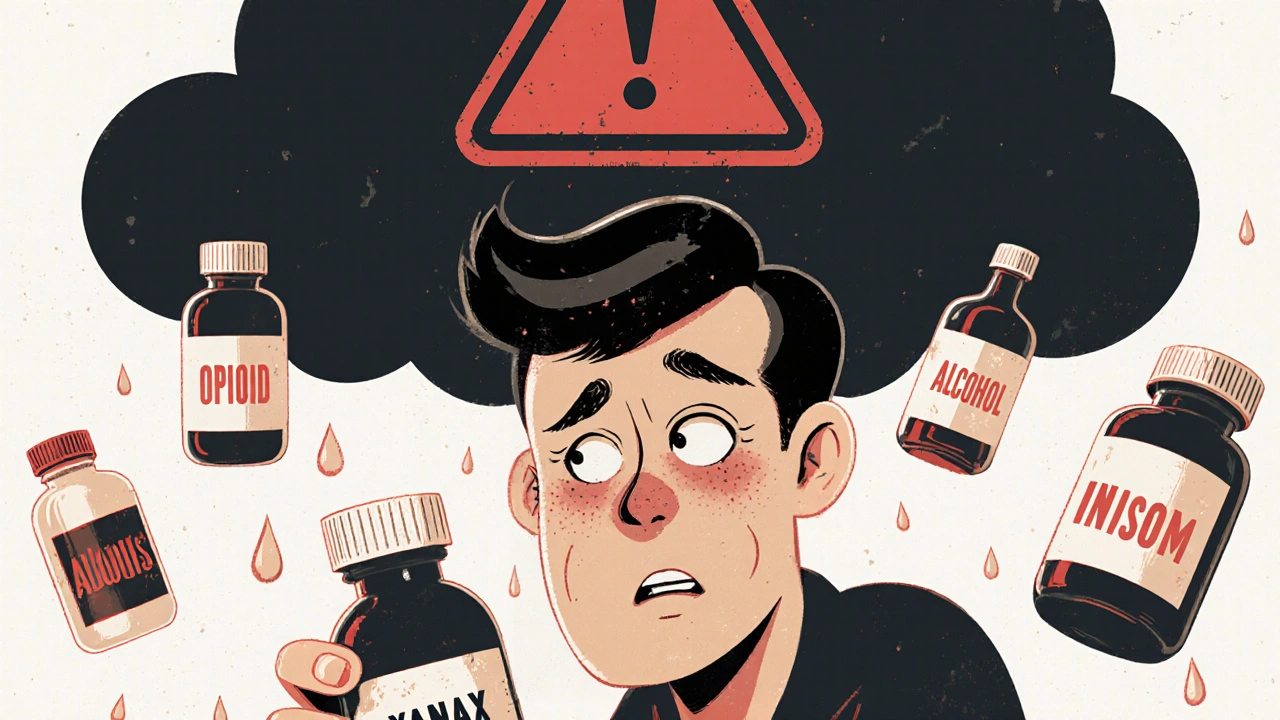
Benzodiazepines like Xanax and Valium offer fast anxiety relief but carry serious risks when mixed with opioids, alcohol, or sleep aids. Learn why this combo can stop your breathing-and what safer alternatives exist.
full article