When you take black cohosh, a herbal supplement often used to ease menopause symptoms like hot flashes and night sweats. Also known as Actaea racemosa, it’s not a drug—but that doesn’t mean it’s harmless. Many people assume natural equals safe, but black cohosh can interfere with medications, especially those affecting the liver or hormones.
It interacts with hormone-related supplements, including estrogen therapies and birth control pills, potentially making them less effective or increasing side effects. It also shares metabolic pathways with drug interactions, particularly with medications processed by the liver’s CYP450 enzyme system, like some antidepressants, statins, and blood thinners. If you’re on any prescription meds, mixing them with black cohosh could raise your risk of liver damage, dizziness, or even bleeding.
There’s no official warning label on most black cohosh bottles, and many users don’t realize they’re putting themselves at risk. Studies have linked it to rare cases of liver injury, especially when taken long-term or with other liver-stressing substances like alcohol or acetaminophen. Even if your doctor didn’t mention it, you should always tell them about every supplement you’re taking—not just the pills.
If you’re using black cohosh, pay attention to signs like yellowing skin, dark urine, unusual fatigue, or stomach pain. These could mean your liver is struggling. Stop taking it and get checked. Also, avoid it if you have a history of liver disease, breast cancer, or blood clots. It’s not a one-size-fits-all solution, and it’s not always the best choice—even if it’s sold as "natural."
The posts below cover real cases and science-backed advice on how herbal supplements like black cohosh play out in real life—with prescriptions, with other herbs, and with your body. You’ll find what works, what doesn’t, and what could hurt you if you’re not careful.
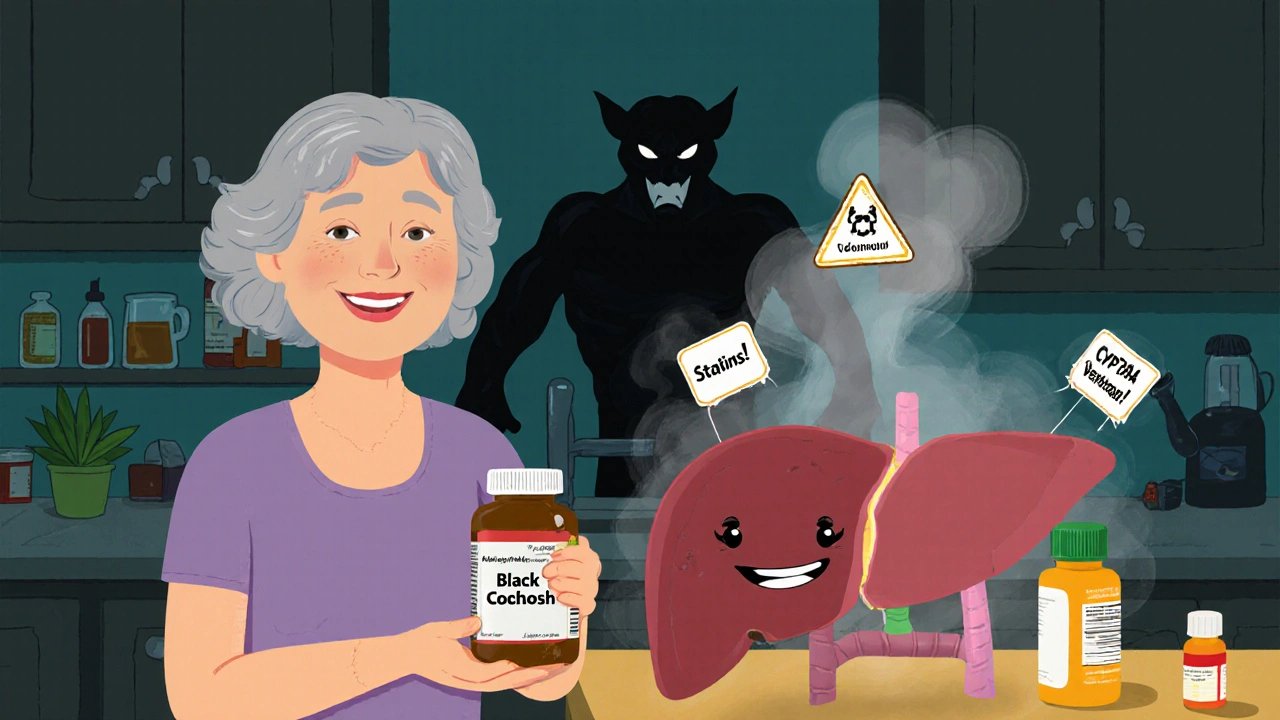
Black cohosh may help with menopause symptoms, but it carries a real risk of liver damage-especially when mixed with common medications like acetaminophen, statins, or antibiotics. Learn what you need to know before taking it.
full article