When people turn to black cohosh, a herbal supplement often used for hot flashes and menopause symptoms. Also known as Actaea racemosa, it's marketed as a natural alternative to hormone therapy. But what many don’t realize is that even natural doesn’t mean safe—black cohosh has been tied to rare cases of liver damage, serious harm to the liver that can lead to failure.
It’s not common, but when it happens, it’s serious. People have ended up in the hospital with jaundice, nausea, dark urine, and extreme fatigue after taking black cohosh for weeks or months. The liver doesn’t always warn you before it’s hurt. Some cases showed up after just a few weeks of use. And it’s not just about the dose—some people seem more sensitive than others, even on low amounts. If you’re taking black cohosh and also using other meds—like statins, thyroid pills, or antidepressants—the risk goes up. That’s because herbal-drug interactions, when plant-based supplements interfere with how prescription drugs are processed can overload the liver’s ability to clean toxins.
There’s no blood test that confirms black cohosh is the cause, so doctors have to rule out everything else first. If you’ve been using it and feel off, stop immediately and get your liver checked. A simple ALT and AST blood test can catch early signs of trouble. And if you’ve had liver issues before? Skip it entirely. The FDA and European health agencies have issued warnings. You won’t find black cohosh on any official list of safe, proven treatments for menopause. It’s a gamble with your liver. And unlike pharmaceuticals, herbal products aren’t tightly monitored for purity or consistency—what’s in the bottle might not match the label.
What you’ll find in the posts below isn’t just a list of warnings. It’s a clear-eyed look at how supplements like black cohosh fit into the bigger picture of medication safety. You’ll see how other herbs can hurt your liver too, how to spot early signs of toxicity, and why mixing natural products with prescriptions is riskier than most think. There’s also real advice on what to do if you’ve already been taking it—and how to talk to your doctor without sounding like you’re dismissing your own choices. This isn’t fear-mongering. It’s about making smart, informed decisions when your health is on the line.
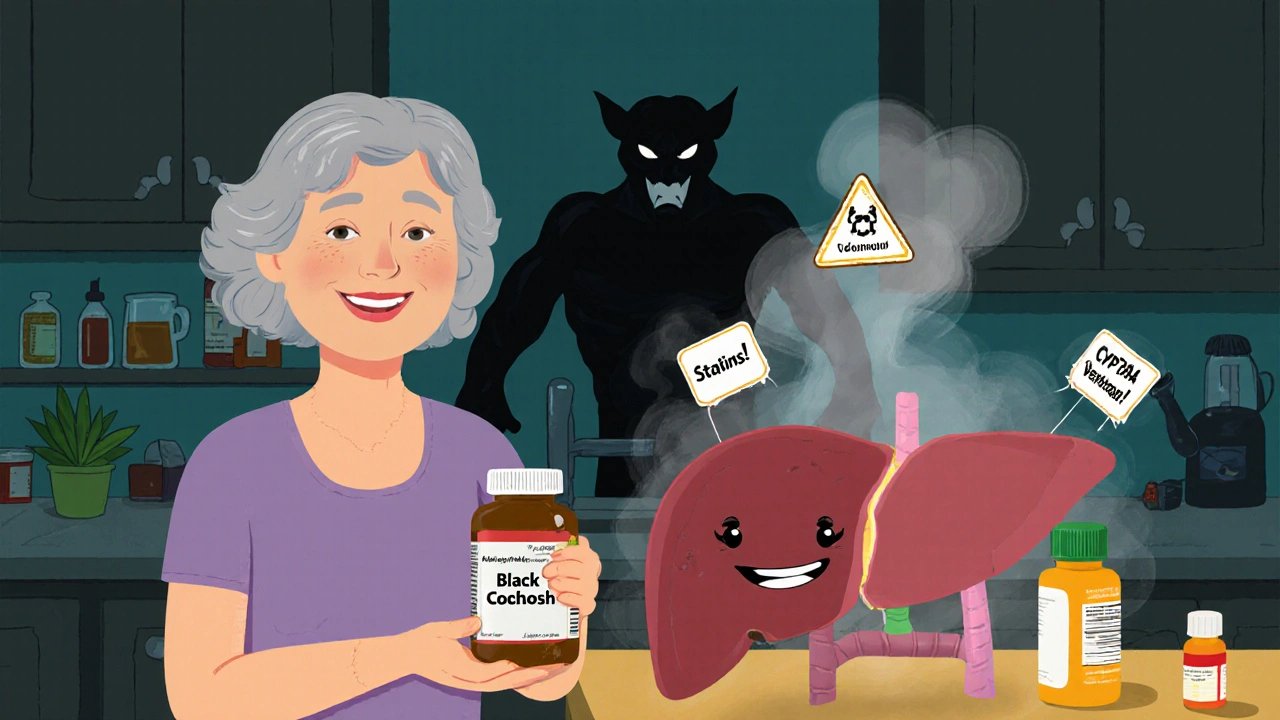
Black cohosh may help with menopause symptoms, but it carries a real risk of liver damage-especially when mixed with common medications like acetaminophen, statins, or antibiotics. Learn what you need to know before taking it.
full article