When hiccups won’t stop—days or even weeks on end—most people try home remedies. But for persistent cases, chlorpromazine, a first-generation antipsychotic that blocks dopamine receptors in the brain. Also known as Thorazine, it’s one of the few medications with solid evidence for stopping intractable hiccups. It’s not prescribed for hiccups because it’s a miracle cure. It’s prescribed because, when nothing else works, it does.
Chlorpromazine doesn’t just calm psychosis. It also quiets the brainstem circuits that trigger the hiccup reflex. That’s why doctors reach for it when hiccups are linked to neurological issues, chemotherapy, or after surgery. It’s not a first-line treatment. It’s a last-resort one. But when someone’s been hiccuping for 72 hours straight, unable to eat, sleep, or talk, that last resort becomes the only option. The FDA even approved it for this use back in the 1950s, and it’s still in the guidelines today.
But here’s the catch: chlorpromazine isn’t harmless. It’s an antipsychotic, and that means it comes with real risks. Drowsiness, low blood pressure, dry mouth—those are common. But more serious side effects like neuroleptic malignant syndrome, a rare but deadly reaction to dopamine-blocking drugs—can happen, especially in older adults or those on other medications. That’s why you never take it without medical supervision. And why it’s not something you should try after a few too many beers. The same drug that stops hiccups can also cause fever, muscle stiffness, and confusion if misused.
Chlorpromazine’s use for hiccups is tied to its effect on dopamine, the same pathway involved in movement and nausea. That’s why it’s sometimes used for severe nausea too. But it’s not the only dopamine blocker that helps. Other antipsychotics like haloperidol have been used off-label too. But chlorpromazine has the most data behind it. It’s not about being the newest drug. It’s about being the one that’s been tested, tracked, and trusted for decades.
What you’ll find in the posts below isn’t just a list of articles. It’s a collection of real-world cases where drugs interact, side effects surprise, and treatments work in unexpected ways. You’ll see how polypharmacy, taking multiple medications at once can turn a simple fix into a dangerous mix. You’ll learn why drug interactions, when two medicines interfere with each other matter more than you think—especially when one of them is a powerful brain-altering drug like chlorpromazine. And you’ll see how even rare side effects, like agranulocytosis, a sudden drop in white blood cells, can show up when least expected.
This isn’t about guessing what works. It’s about knowing what’s been proven, what’s risky, and when to walk away from home remedies and toward real medical help. If you or someone you know is stuck with hiccups that won’t quit, this isn’t just curiosity—it’s a guide to what comes next.
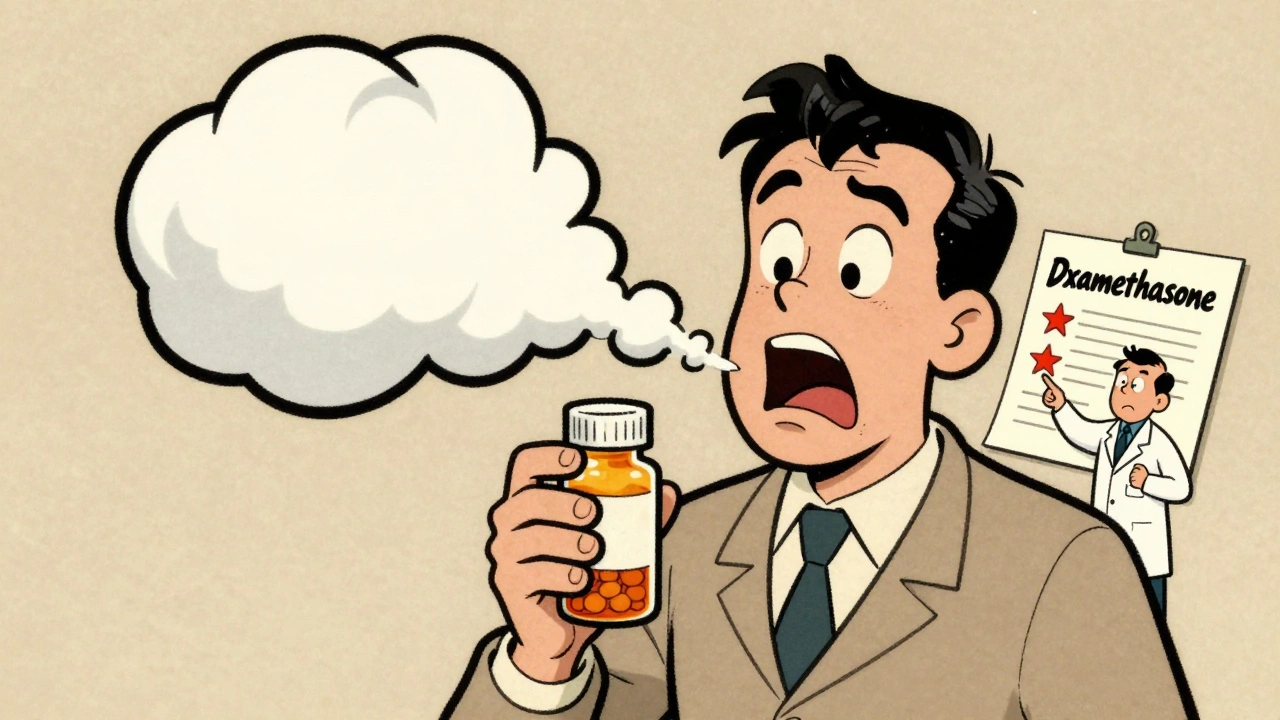
Many medications, especially steroids and opioids, can trigger persistent hiccups. Learn which drugs are most likely to cause them, what actually works to stop them, and how to talk to your doctor about this overlooked side effect.
full article