When you take clarithromycin, a common antibiotic used for lung and skin infections with colchicine, a drug used to treat gout and familial Mediterranean fever, you’re mixing two medications that can dangerously build up in your body. This isn’t just a theoretical risk—it’s a real, documented danger that sends people to the ER every year. The problem? Clarithromycin blocks the enzyme that normally breaks down colchicine, causing levels to spike. That spike can lead to muscle damage, kidney failure, or even death—especially if you’re over 65, have kidney problems, or are also taking a statin like atorvastatin.
Many people don’t realize that clarithromycin doesn’t just interact with colchicine. It also messes with other drugs that rely on the same liver pathway, including some cholesterol meds, blood thinners, and even certain heart rhythm drugs. One study found that patients taking both clarithromycin and colchicine had a 15-fold increase in colchicine toxicity compared to those taking colchicine alone. And it’s not just about dosage—timing matters too. Even if you space them out, the enzyme-blocking effect lasts days after you stop the antibiotic. That’s why doctors now avoid prescribing clarithromycin to anyone on colchicine unless there’s absolutely no alternative. If you’re on colchicine for gout and your doctor suddenly switches your antibiotic from amoxicillin to clarithromycin, ask why. There are safer options like azithromycin that don’t carry this risk.
What makes this even trickier is that the symptoms of toxicity don’t always show up right away. You might feel fine for a few days, then suddenly develop muscle pain, weakness, nausea, or irregular heartbeat. These aren’t just "side effects"—they’re warning signs of something serious. If you’re taking both drugs, get a blood test to check your kidney function and muscle enzymes. And if you’re on a statin too, you’re at even higher risk. That’s why the FDA issued a safety alert in 2011 specifically warning about this combo. It’s not about being paranoid—it’s about being informed. The good news? You don’t have to live with this risk. Talk to your pharmacist or doctor about switching to a different antibiotic or adjusting your colchicine dose. Your body will thank you.
Below are real patient stories and medical insights about how drug interactions like this one play out in practice—from how polypharmacy increases your risk to why generic versions don’t change the danger. You’ll find clear, no-fluff advice on what to ask your doctor, what symptoms to track, and how to avoid ending up in the hospital because of a simple medication mix-up.
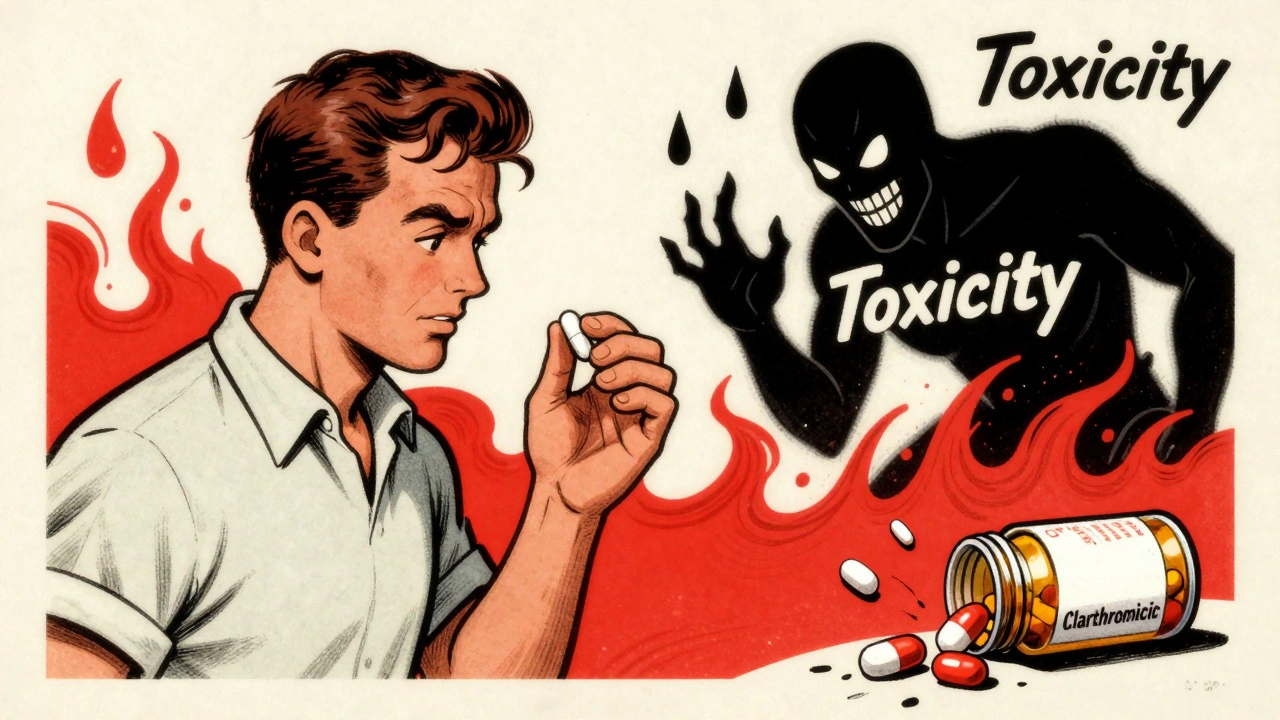
Colchicine and macrolides like clarithromycin can cause deadly toxicity when taken together due to CYP3A4 and P-gp inhibition. Learn how this interaction works, which antibiotics are safe, and what to do if you're on both.
full article