When you take colchicine, a medication used to treat gout and familial Mediterranean fever with macrolide antibiotics, a class of drugs including erythromycin and clarithromycin used for bacterial infections, your body can’t process the colchicine properly. This leads to a dangerous buildup in your system—raising the risk of severe muscle damage, kidney failure, and even death. This isn’t a rare theoretical concern. Real cases have been documented in older adults and people with kidney problems who were prescribed both drugs at the same time.
The problem happens because macrolides block an enzyme called CYP3A4 that normally breaks down colchicine. When that enzyme is shut down, colchicine sticks around longer than it should. The result? Toxic levels. Even small doses of colchicine can become harmful when mixed with clarithromycin or erythromycin. Azithromycin is safer—it doesn’t interfere as much—but doctors still need to be cautious. This interaction doesn’t just affect gout patients. People taking colchicine for other conditions, like pericarditis, are just as vulnerable. And it’s not just antibiotics. Some antifungals and heart meds like verapamil can cause the same issue. What makes this especially dangerous is that symptoms don’t show up right away. You might feel fine for days, then suddenly develop muscle weakness, nausea, or irregular heartbeat. By then, it’s often too late.
There’s no room for guesswork here. If you’re on colchicine, always tell your doctor or pharmacist about every other medication you’re taking—even over-the-counter pills or herbal supplements. Ask specifically: "Could this interact with my colchicine?" If you’re prescribed a macrolide while already taking colchicine, don’t just take both. Ask if there’s a safer alternative. Sometimes, switching from clarithromycin to azithromycin is enough. Other times, you might need a different antibiotic entirely. Monitoring isn’t optional. Blood tests for kidney function and muscle enzymes can catch problems early. And if you’re over 65, have kidney disease, or take statins too, your risk is even higher. This isn’t a "maybe" situation. It’s a clear, well-documented danger that’s been proven in hospitals and clinics around the world.
Below, you’ll find real-world cases, practical tips for avoiding this interaction, and other dangerous drug combos you might not know about. These aren’t theoretical warnings—they’re lessons learned from people who got hurt because no one told them.
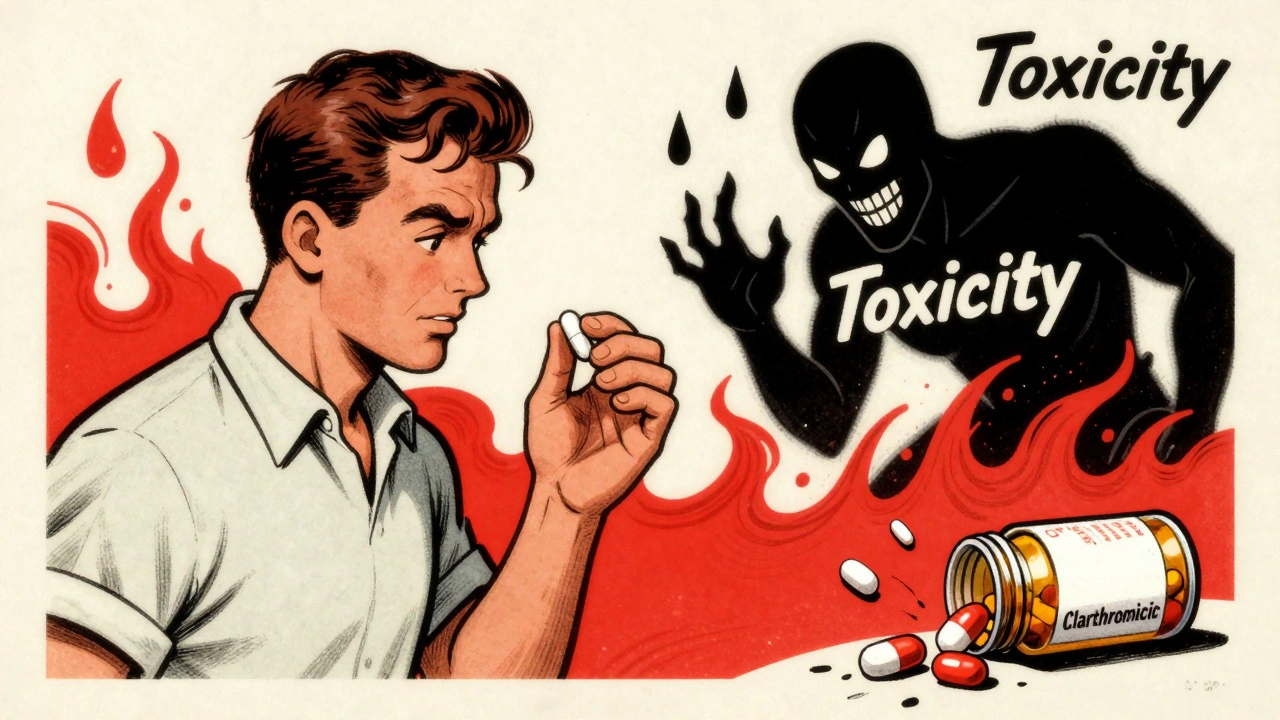
Colchicine and macrolides like clarithromycin can cause deadly toxicity when taken together due to CYP3A4 and P-gp inhibition. Learn how this interaction works, which antibiotics are safe, and what to do if you're on both.
full article