When colchicine toxicity, a dangerous reaction to excessive doses of the gout medication colchicine, often mistaken for a flu-like illness or food poisoning. Also known as colchicine overdose, it can lead to multi-organ failure and death if ignored. This isn’t just a rare side effect—it’s a real emergency that shows up in hospitals every year, often because people think "more is better" when their gout flares up.
Colchicine is powerful. It works by stopping inflammation at the cellular level, but the line between helping and harming is thin. A normal dose for gout is 0.6 mg once or twice a day. Toxicity starts around 0.5 mg per kilogram of body weight—roughly 35 mg for a 70 kg person. That’s over 50 pills. Sounds impossible? It’s not. People accidentally take too much because they forget they already took a dose, or they double up thinking it’ll stop the pain faster. Others mix it with other drugs that slow its breakdown, like statins or antibiotics, turning a safe dose into a deadly one.
Drug toxicity, the harmful effect of medications when they build up in the body. Also known as medication side effects, it’s not just about colchicine—many drugs behave this way. But colchicine is especially tricky because it doesn’t cause vomiting right away. The first signs—nausea, diarrhea, stomach cramps—look like a bad stomach bug. By the time muscle weakness, numbness, or irregular heartbeat show up, it’s often too late for simple fixes. Older adults, people with kidney problems, or those on multiple medications are at highest risk. One study tracked 47 cases of severe colchicine toxicity over five years. Nearly half ended in intensive care. Three died.
What makes this worse is that many patients don’t know they’re on colchicine. It’s sometimes prescribed under brand names like Colcrys or Mitigare, and others get it from pharmacies abroad without proper instructions. Some even buy it online as a "natural gout remedy," unaware of how narrow its safety window is.
If you or someone you know takes colchicine and suddenly feels awful—especially after taking more than the prescribed amount—don’t wait. Call emergency services. Tell them exactly what was taken and when. There’s no antidote, but early treatment with IV fluids, monitoring, and sometimes blood filtration can save lives. Don’t rely on home remedies. Don’t wait to see if it "passes." This isn’t food poisoning. It’s a medical crisis.
Below, you’ll find real cases, common mistakes, and clear guidance on how to avoid colchicine toxicity. You’ll learn which drugs make it more dangerous, how to spot early warning signs, and what to do if you’re caring for someone on this medication. These aren’t theoretical tips—they come from actual patients who got too close to the edge and lived to tell the story.
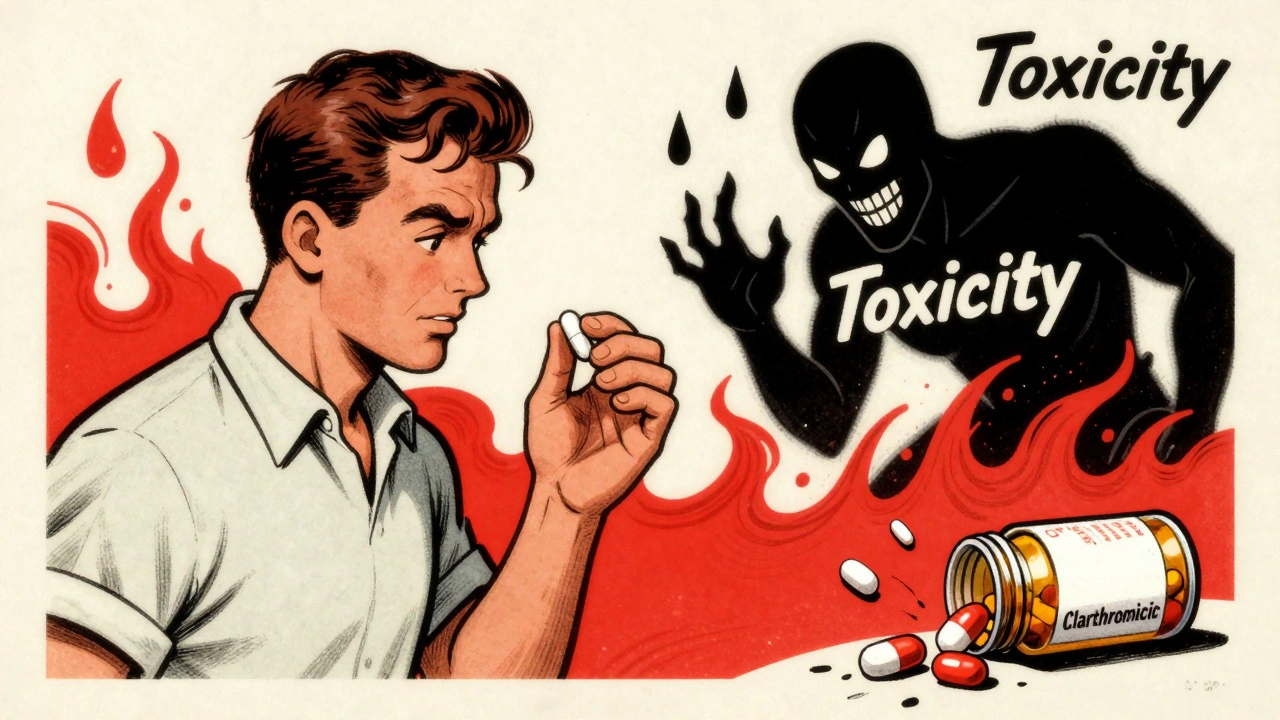
Colchicine and macrolides like clarithromycin can cause deadly toxicity when taken together due to CYP3A4 and P-gp inhibition. Learn how this interaction works, which antibiotics are safe, and what to do if you're on both.
full article