When your body breaks down drugs, it relies on enzymes like CYP2C9, a liver enzyme that processes about 15% of commonly prescribed medications. Also known as cytochrome P450 2C9, it’s one of the main players in how your body handles painkillers, blood thinners, and even some diabetes pills. If this enzyme gets blocked or slowed down—by another drug, supplement, or even your genes—it can cause dangerous buildups of medication in your system. This isn’t theoretical. Real people end up in the hospital because their warfarin or ibuprofen didn’t clear properly, and no one told them why.
CYP2C9 doesn’t work alone. It often teams up with other enzymes like CYP3A4, a major drug-metabolizing enzyme that handles over half of all medications and transporters like P-gp, a cellular pump that pushes drugs out of cells to limit their effects. That’s why combining colchicine with clarithromycin is risky—it’s not just one enzyme being blocked, it’s a chain reaction. Same goes for NSAIDs and fluoroquinolones: even if they don’t directly touch CYP2C9, they can mask symptoms or pile on side effects that make things worse. And if you’re on multiple meds, like many older adults are, these interactions aren’t just possible—they’re likely.
Some people are born with slower versions of CYP2C9. That’s called pharmacogenomics, and it means two people taking the same dose of the same drug might have totally different outcomes. One might feel fine. The other could bleed internally from warfarin or crash from a standard dose of celecoxib. Doctors rarely test for this unless something goes wrong—but you can ask. If you’ve had unexplained side effects, hospital visits, or sudden changes in how a drug works, it might not be bad luck. It could be your CYP2C9.
What you’ll find below isn’t a textbook. It’s real-world stories from people who’ve been there: the hiccups triggered by steroids, the tendon tears masked by NSAIDs, the deadly mix of colchicine and antibiotics. These aren’t rare edge cases. They’re the direct result of how CYP2C9 and other enzymes interact with everyday meds. You won’t find vague warnings here. You’ll find specifics: which drugs to watch, what symptoms to track, and how to talk to your pharmacist before the next refill.
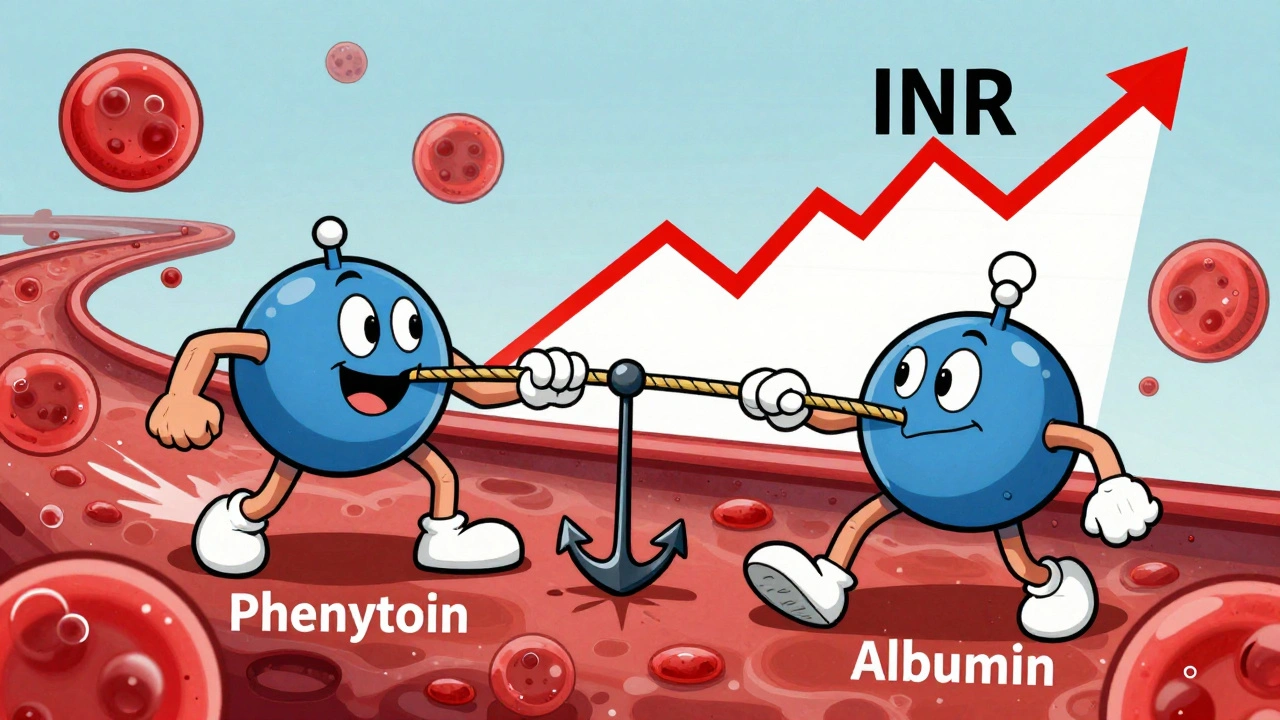
Phenytoin and warfarin interact in two phases: an early spike in INR from protein displacement, followed by a dangerous drop due to enzyme induction. This requires close INR monitoring and careful dose adjustments to avoid bleeding or clotting.
full article