When your body breaks down medications, one of the main tools it uses is an enzyme called CYP3A4, a liver enzyme responsible for metabolizing over half of all prescription drugs. Also known as cytochrome P450 3A4, this enzyme is the gatekeeper that determines how fast drugs like statins, blood thinners, and antidepressants leave your system. If something blocks CYP3A4—what we call CYP3A4 inhibition—those drugs stick around longer than they should. That can turn a safe dose into a dangerous one.
Common culprits behind CYP3A4 inhibition include grapefruit juice, certain antibiotics like clarithromycin, antifungals like ketoconazole, and even some herbal supplements like St. John’s wort. These don’t just slow down drug breakdown—they can cause levels of your medication to spike. For example, if you’re on simvastatin for cholesterol and eat grapefruit daily, your muscle damage risk can jump dramatically. Or if you take a blood thinner like apixaban with a strong inhibitor like ritonavir, your chance of internal bleeding goes up fast. This isn’t theoretical—it’s why people end up in the ER.
The same enzyme that handles your cholesterol drug also processes painkillers, anti-anxiety meds, and even some cancer treatments. That’s why polypharmacy, taking five or more medications at once is so risky. Each new pill adds another layer of potential interference. And it’s not always obvious. You might not realize your blood pressure med is being affected because your antibiotic was prescribed by a different doctor. That’s why checking for CYP3A4 inhibition isn’t just for pharmacists—it’s something you need to ask about every time you start a new drug.
It’s not all bad news. Sometimes, doctors use CYP3A4 inhibition on purpose. For example, low-dose ritonavir is added to other HIV drugs to boost their effect by slowing their breakdown. But that’s a controlled, monitored use. Outside the hospital, you don’t get to choose when your body’s enzymes get blocked. You just have to know the signs: unexplained dizziness, muscle pain, extreme fatigue, or nausea after starting a new medication or adding a supplement. If you’re on anything long-term, it’s worth asking your pharmacist: "Could this interact with my CYP3A4?" It’s a simple question that could save you from a serious reaction.
What you’ll find below are real-world stories of how CYP3A4 inhibition shows up in daily life—from dangerous mixtures with antibiotics to hidden risks in common supplements. These aren’t theory papers. They’re cases where people got hurt because no one talked about enzyme interactions. Some of these posts show how to spot trouble before it hits. Others reveal how generic drugs and timing mistakes can quietly sabotage your treatment. You won’t find fluff here. Just facts, fixes, and the kind of practical advice you need to stay safe when your body’s chemistry is working overtime.
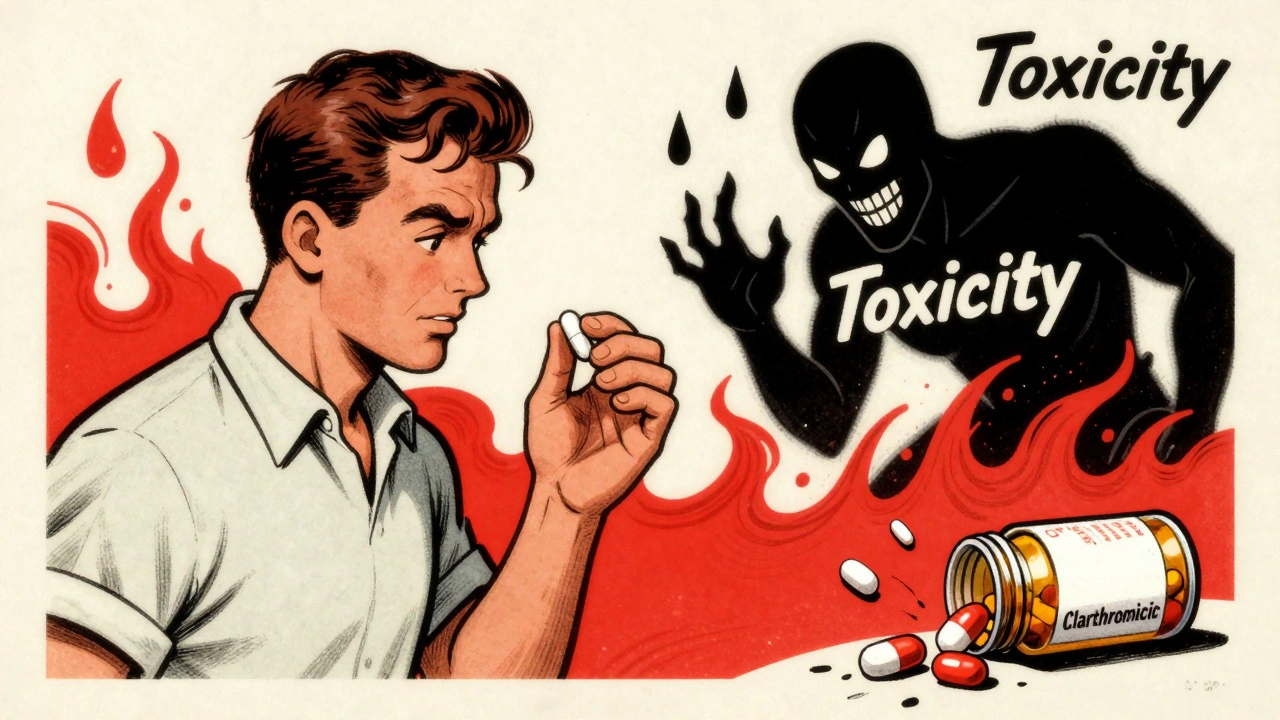
Colchicine and macrolides like clarithromycin can cause deadly toxicity when taken together due to CYP3A4 and P-gp inhibition. Learn how this interaction works, which antibiotics are safe, and what to do if you're on both.
full article