When it comes to depression treatment, a range of medical and non-medical approaches used to reduce symptoms of persistent low mood, loss of interest, and fatigue. Also known as antidepressant therapy, it’s not one-size-fits-all—what helps one person might do nothing for another, or even cause harmful side effects. The most common starting point is SSRI, a class of antidepressants that increase serotonin levels in the brain to improve mood. Also known as selective serotonin reuptake inhibitors, these include drugs like Zoloft and Prozac, which are often prescribed because they’re generally safer than older options. But SSRIs aren’t the only path. Many people try therapy, exercise, or supplements like St. John’s Wort—though mixing those with prescription meds can be risky, as shown in posts about black cohosh and liver damage or benzodiazepine interactions. You need to know what’s safe to combine.
Depression treatment doesn’t happen in a vacuum. It’s affected by other conditions you have, other drugs you take, and even your daily habits. For example, if you’re on warfarin for blood thinning, certain antidepressants can spike your INR levels and raise bleeding risk. Or if you’re taking diabetes meds like meglitinides, sudden mood changes from depression might mess with your meal timing and trigger dangerous low blood sugar. Even something as simple as alcohol can make depression worse and interfere with how well your meds work. The posts here don’t just list drugs—they show you how depression treatment connects to real-world health risks, from liver strain to drug interactions you didn’t even know about.
There’s no magic pill. Some people find relief with SSRIs alone. Others need a combo of therapy, lifestyle shifts, or even switching to different meds like SNRIs or atypical antidepressants. And while some turn to supplements hoping for a natural fix, many of those interact badly with prescription drugs—just like black cohosh with statins or alcohol with benzodiazepines. The key is understanding how your body responds to each piece of the puzzle. Below, you’ll find real comparisons: Zoloft vs other antidepressants, how common meds can clash, and what alternatives actually have evidence behind them. No hype. No guesswork. Just what you need to make smarter choices about your mental health.
Comprehensive guide to antidepressant types, safety warnings, side effects, and practical usage tips for patients managing depression and anxiety.
full article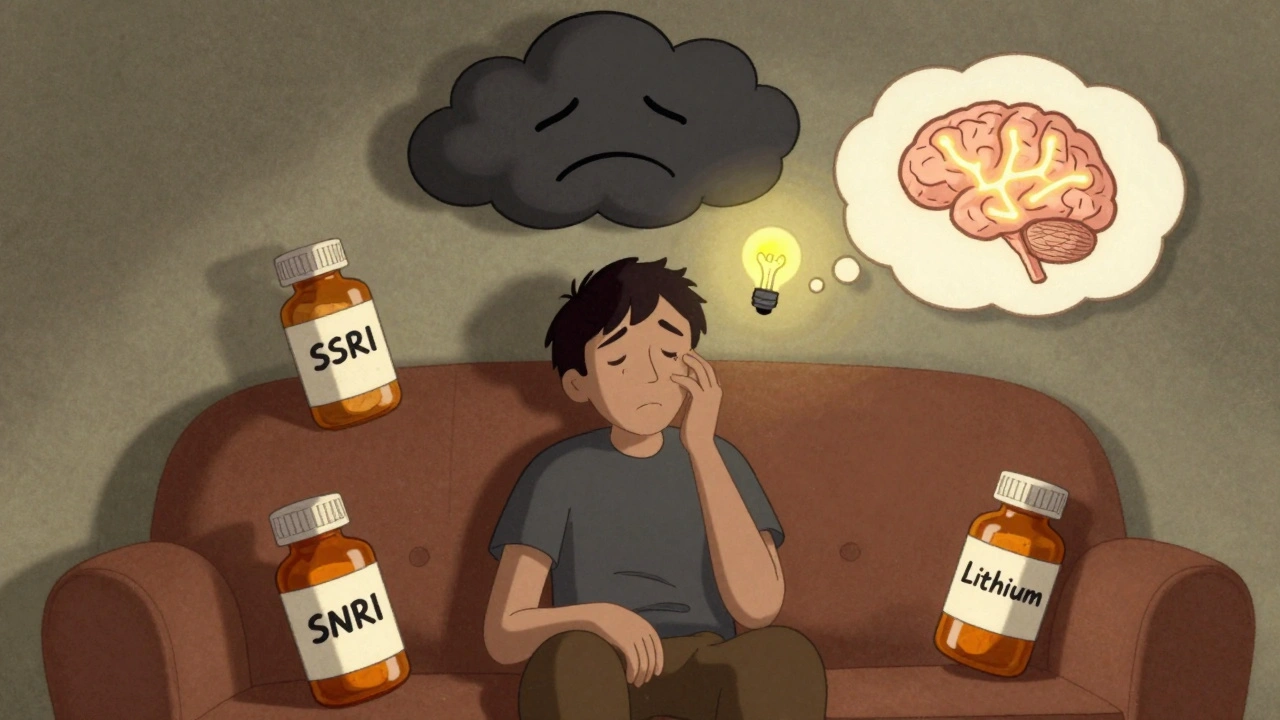
When standard antidepressants fail, treatment-resistant depression requires advanced strategies like augmentation with aripiprazole, esketamine, or rTMS. Learn what actually works based on clinical trials and real-world outcomes.
full article
Therapy helps relieve depression symptoms by changing negative thought patterns, rebuilding motivation, and restoring connection. Evidence-based approaches like CBT and behavioral activation offer real, lasting relief-even when medication isn't enough.
full article