
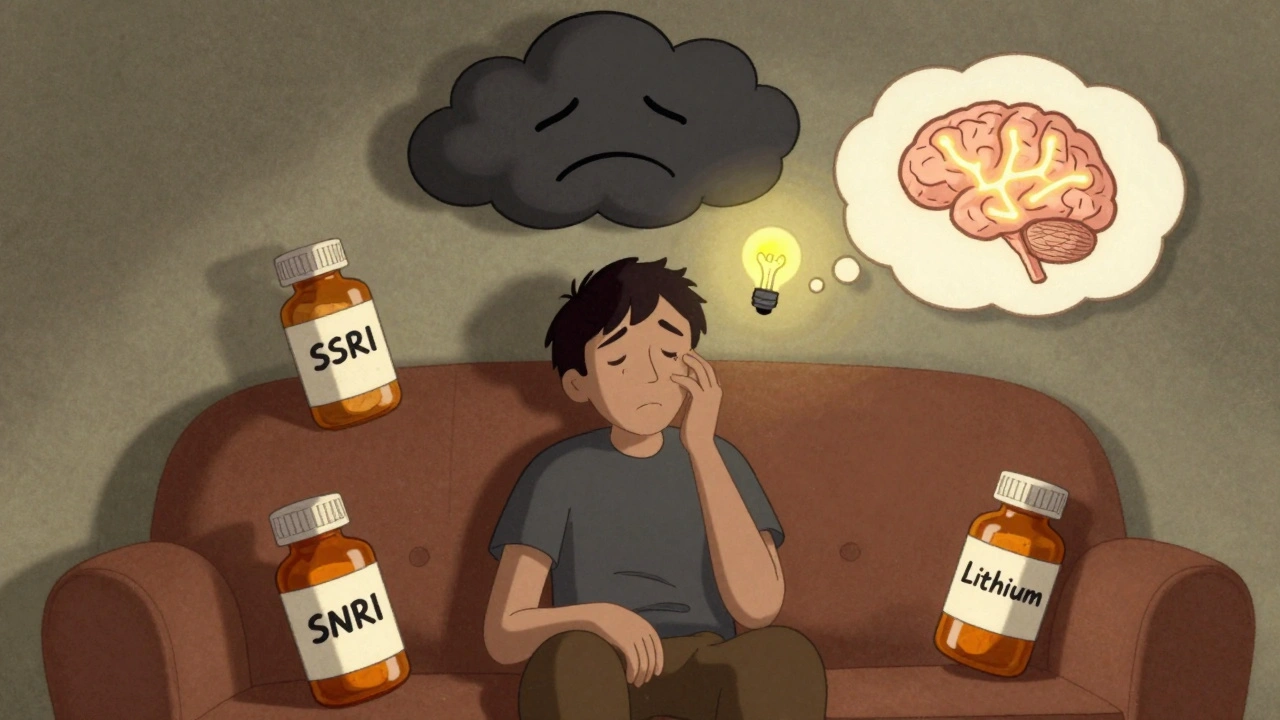
When antidepressants stop working, it’s not just frustrating-it’s exhausting. You’ve tried the pills, maybe even switched a few times, and still, the weight hasn’t lifted. This isn’t weakness. It’s treatment-resistant depression (TRD), a real and recognized condition that affects 30-40% of people with major depression after two adequate trials of standard antidepressants. The Sequenced Treatment Alternatives to Relieve Depression (STAR*D) trial, which tracked over 2,800 patients, showed that nearly half didn’t respond to the first drug they tried. For many, the path forward isn’t more of the same-it’s something different.
What Counts as Treatment-Resistant Depression?
TRD isn’t just ‘not feeling better.’ It’s when two different antidepressants, taken at the right dose for at least six to eight weeks, don’t lead to meaningful improvement. Many people assume they just need to wait longer or try one more pill. But if you’ve done that already and still feel stuck, you’re not alone-and you’re not broken. TRD is a clinical reality with specific treatment pathways built around it.
The problem isn’t always the drug. Sometimes, it’s the dose, timing, or even undiagnosed conditions like thyroid issues or bipolar disorder. That’s why doctors start by ruling out mimics before jumping to advanced options. But if everything checks out and depression persists, it’s time to consider augmentation-or moving beyond pills entirely.
Augmentation: Adding to What You’re Already Taking
Augmentation means adding another medication to your current antidepressant, not replacing it. It’s a smart strategy because it avoids the risk of starting over with a new drug that might not work either. The FDA has approved several options specifically for this purpose.
Aripiprazole (Abilify) is one of the most studied. In the VAST-D trial, which followed over 1,500 patients, 24.8% achieved remission when aripiprazole was added to an existing antidepressant. That’s higher than switching to another drug alone. It’s also one of the better-tolerated options, though side effects like restlessness (akathisia) affect up to 25% of users.
Brexpiprazole (Rexulti) works similarly but at lower doses. It’s often chosen for patients who can’t handle the jitteriness of aripiprazole. Quetiapine extended-release (Seroquel XR) is another option, especially for those with insomnia or anxiety alongside depression. At 300 mg/day, it helped nearly half of patients respond in clinical trials-but sedation and weight gain are common. Some gain 5-7% of their body weight over time.
Olanzapine-fluoxetine (Symbyax) combines an antipsychotic with an SSRI. It’s effective, but the weight gain and metabolic risks make it a second-line choice for many. Lithium, used for decades, still holds a place in guidelines. It works best when blood levels are kept between 0.3 and 0.6 mEq/L. Regular blood tests are required, but for some, it’s the difference between staying stuck and finally feeling like themselves again.
Other agents like liothyronine (a thyroid hormone) and modafinil (a wakefulness agent) show promise too. A 2022 network meta-analysis found liothyronine doubled the odds of response compared to placebo. Modafinil helped patients with fatigue and brain fog-common complaints in TRD. And lisdexamfetamine, though not FDA-approved for depression, is sometimes used off-label for energy and motivation.
Therapy Isn’t Just for Mild Cases
Many assume therapy is for people who aren’t ‘sick enough’ for medication. That’s wrong. Cognitive behavioral therapy (CBT), when added to medication, has an effect size of 1.58-stronger than many drugs. It helps rewire thought patterns that keep depression going. Studies show it reduces relapse rates even after medication is stopped.
Other therapies like interpersonal therapy and mindfulness-based cognitive therapy also help. But CBT is the most researched. It’s not about ‘talking it out.’ It’s structured, goal-oriented, and often includes homework. You learn to catch negative thoughts, test their truth, and replace them with something more realistic. For TRD, this isn’t a luxury-it’s a necessary tool.
Advanced Therapies: When Pills Aren’t Enough
For those who’ve tried multiple augmentations and still feel trapped, it’s time to look beyond pills. Two therapies have solid evidence: rTMS and esketamine.
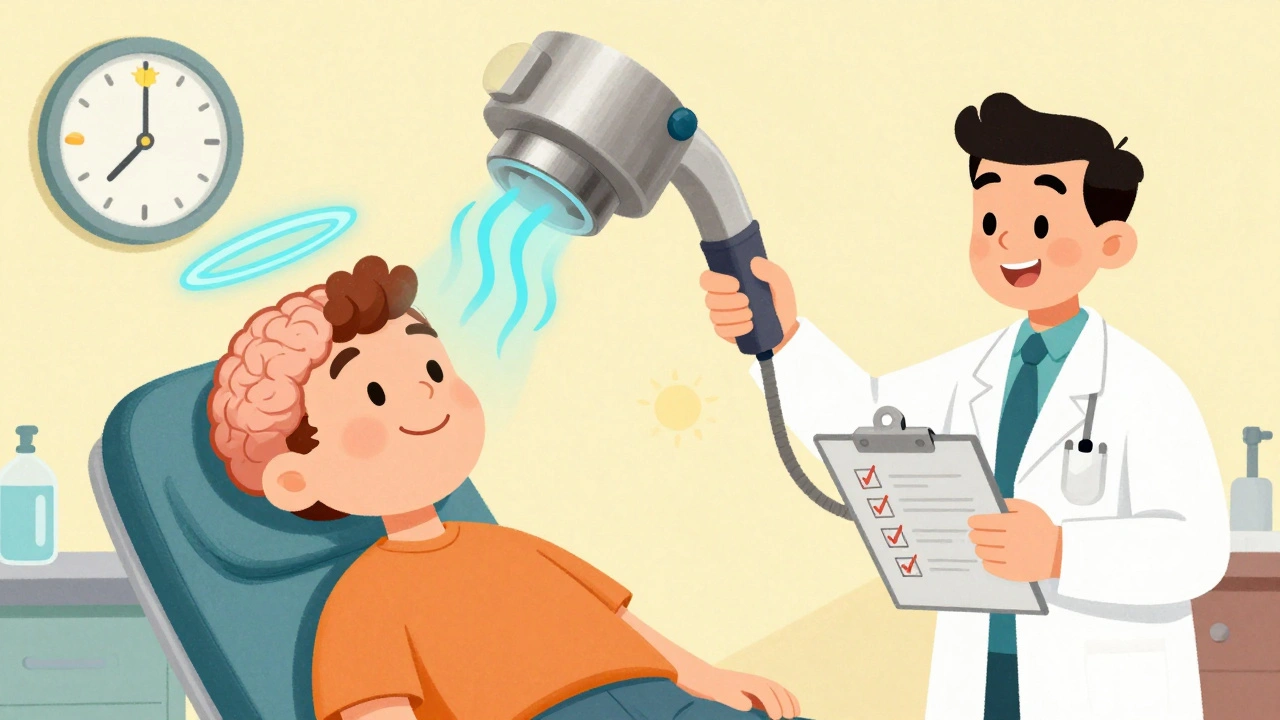
Repetitive transcranial magnetic stimulation (rTMS) uses magnetic pulses to stimulate underactive brain regions linked to mood. Over 50 clinical trials, involving more than 10,000 patients, show it works. About half respond. One in three go into full remission. No anesthesia. No memory loss. You sit in a chair for 20-40 minutes, five days a week for four to six weeks. Side effects? Mild headache or scalp discomfort. Many patients return to work the same day.
Esketamine nasal spray (Spravato) is the first rapid-acting antidepressant approved by the FDA since the 1980s. In the TRANSFORM-2 trial, 70% of patients saw improvement within four weeks-compared to 47% on placebo. It works in hours, not weeks. But there’s a catch: it must be administered in a certified clinic. You’re monitored for two hours after each dose because it can cause dissociation-feeling detached from your body or surroundings. That happens in nearly 60% of users. It’s not hallucinations. It’s more like floating. Most find it tolerable, especially when they know what to expect.
The Future: What’s on the Horizon?
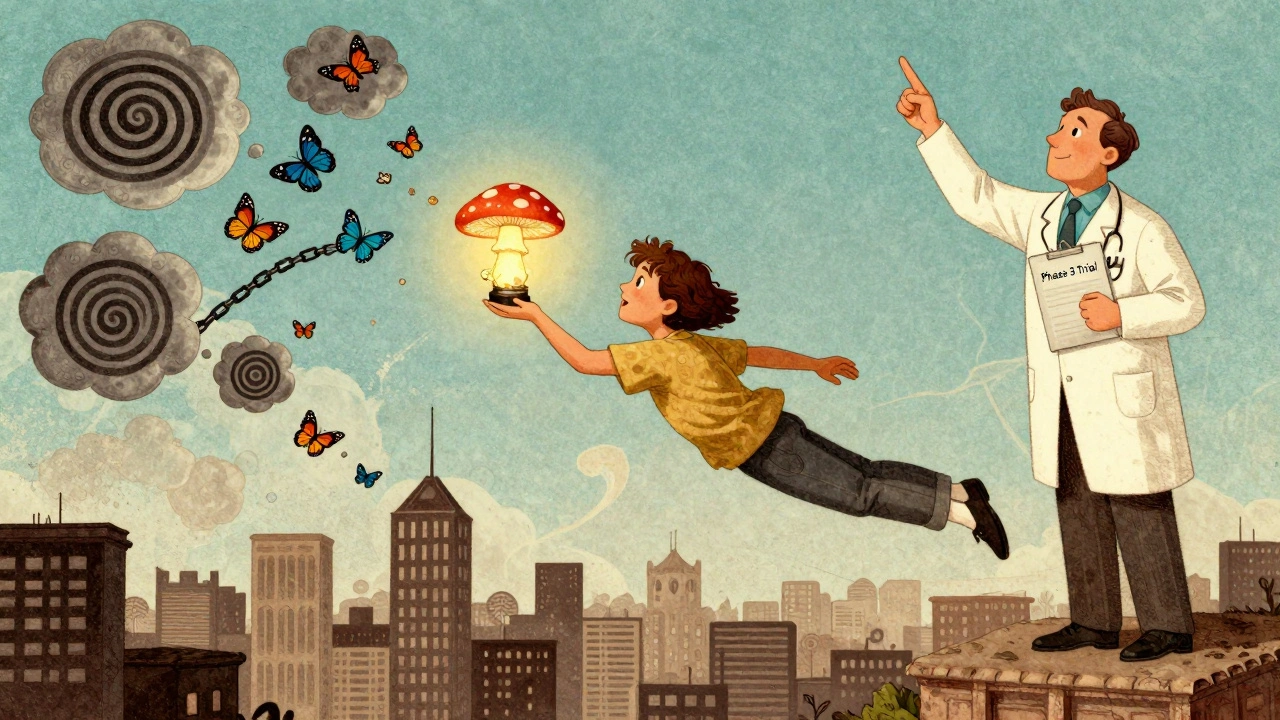
Science is moving fast. Psilocybin, the active compound in magic mushrooms, showed a 71% response rate in a small 2020 JAMA Psychiatry trial-compared to just 9% in placebo. It’s not legal yet, but Phase 3 trials are underway. If approved, it could be given in controlled settings with therapy support.
Another exciting path is targeting inflammation. A 2022 study found that patients with high levels of C-reactive protein (a marker of inflammation) responded better to infliximab, a drug used for autoimmune diseases. Those with high inflammation had a 30.5% remission rate with infliximab-nearly double the placebo group. This suggests depression isn’t one disease. It’s many. And treatment needs to match the biology.
Deep brain stimulation (DBS), which implants electrodes in the brain, showed a 92% response rate in a tiny 2017 study. But it’s still experimental. It’s invasive, expensive, and only offered in research centers. Still, for the most severe cases, it’s hope.
What Doesn’t Work as Well as You Think
Not all augmentations are equal. Some drugs, like ziprasidone and mirtazapine, have high dropout rates because of side effects. Others, like risperidone, show mixed results. A 2019 meta-analysis in the British Journal of Psychiatry found that only a few agents had clear, consistent benefits over placebo. That’s why guidelines stress matching the treatment to your symptoms.
If you’re fatigued, modafinil or lisdexamfetamine might help. If you’re anxious and sleeping poorly, quetiapine could be better. If you’ve had sexual side effects from SSRIs, bupropion augmentation is often a good fit. There’s no one-size-fits-all.
Real-World Results: The Hard Truth
Even with all these options, the numbers are sobering. The EU-NEURD registry found that only 28.4% of TRD patients achieve remission with standard augmentation. That means over 70% still struggle. This isn’t failure. It’s the reality of a complex illness. The goal isn’t perfection-it’s progress. One step better. A little more energy. A few more good days.
And here’s what matters most: you’re not alone. TRD is common. It’s not your fault. And there are more tools now than ever before. The key is persistence-not just in trying treatments, but in finding the right team. A psychiatrist who listens. A therapist who understands. A support system that doesn’t give up on you.
Where to Go From Here
If you’re stuck in TRD, start by asking your doctor:
- Have I had two adequate trials of different antidepressants?
- Have I ruled out medical causes like thyroid problems or sleep apnea?
- Am I on the right dose and duration?
- What augmentation options fit my symptoms and side effect profile?
- Have I tried therapy alongside medication?
- Am I a candidate for rTMS or esketamine?
Don’t wait for the perfect solution. The best treatment is the one you’ll stick with. Sometimes, that’s a low-dose antipsychotic. Sometimes, it’s rTMS. Sometimes, it’s a combination of both. The path isn’t linear. But it’s possible.
What is the most effective augmentation for treatment-resistant depression?
Aripiprazole, brexpiprazole, and quetiapine extended-release are the most studied and FDA-approved options. Aripiprazole has the best balance of effectiveness and tolerability, with around 25% remission rates in large trials. Lithium and liothyronine also show strong evidence, especially for patients with bipolar features or fatigue. The best choice depends on your symptoms, side effect history, and medical conditions.
Is esketamine (Spravato) safe for long-term use?
Esketamine is approved for up to one year of maintenance use after an initial 4-week induction phase. Long-term safety data beyond that is still being collected. The main risks are dissociation during administration and potential for abuse, which is why it’s only given in certified clinics with monitoring. Most patients tolerate it well, especially when combined with ongoing therapy. It’s not a cure, but it can break the cycle of treatment failure.
How does rTMS compare to electroconvulsive therapy (ECT)?
Both are effective, but rTMS is less invasive. ECT requires anesthesia and can cause memory loss, especially around the treatment period. rTMS doesn’t require sedation and has no known memory side effects. Response rates are similar-around 50% for both-but rTMS is often preferred for patients who want to avoid anesthesia or have concerns about cognitive effects. ECT is still the gold standard for the most severe, life-threatening cases.
Can therapy alone treat treatment-resistant depression?
For most people with TRD, therapy alone isn’t enough. Depression at this stage involves biological changes in the brain that need medication or brain stimulation to address. But when combined with medication, therapy significantly improves outcomes. It helps you manage negative thinking, rebuild routines, and reduce relapse risk. Think of it as the foundation that supports the other treatments-not a replacement.
Why do some people not respond to any treatment?
Depression isn’t one illness-it’s many. Some types are driven by inflammation, others by stress hormones, sleep disruption, or genetic factors. Current treatments are still broad. We’re only beginning to match treatments to biological profiles. For example, patients with high inflammation respond better to anti-inflammatory drugs like infliximab. Personalized medicine is the future, but it’s not mainstream yet. That’s why persistence and trying different combinations matters.
Is psilocybin available for treatment-resistant depression right now?
No, not legally in most places. Psilocybin is still in Phase 3 clinical trials and is not approved by the FDA or other major regulators. Some countries allow compassionate use in research settings, but it’s not widely available. If you’re considering it, be cautious of unregulated clinics. The data is promising, but it’s not ready for general use yet.


so like... we spend billions on pills that kinda sorta maybe work and the real answer is either zapping your brain with magnets or snorting ketamine in a clinic like a bad rave? i mean, i get it, science is cool, but also... we’re just trying not to cry in the shower anymore. why does it have to be so dramatic?
The complexity of treatment-resistant depression demands a nuanced approach. Each intervention carries distinct risks and benefits. Aripiprazole offers measurable remission rates without the sedation seen with quetiapine. rTMS provides a non-invasive alternative to ECT. The data is clear. What matters most is matching the treatment to the individual. Patience and precision are essential.
ok but like... who decided that adding antipsychotics to antidepressants was a good idea? i mean, you’re already depressed and now you’re gonna be on a drug that makes you feel like a zombie with a caffeine addiction? and psilocybin? are we just gonna start handing out mushrooms like candy now? this is what happens when doctors run out of ideas and start watching TED Talks at 2am
It's important to clarify that augmentation isn't a one-size-fits-all strategy. Aripiprazole has the strongest evidence for remission in TRD, particularly when fatigue and anhedonia dominate the symptom profile. Lithium remains underutilized despite its robust data, especially in patients with cyclical mood patterns. For those with prominent anxiety or insomnia, quetiapine XR remains a pragmatic choice. The key is not just efficacy, but tolerability and alignment with comorbid conditions. Always consider metabolic and neurological side effect profiles before initiating augmentation.
Why are we even talking about this like it’s a puzzle? It’s not. It’s a system designed to keep people dependent on pharmaceuticals. rTMS? Expensive. Esketamine? A corporate cash cow. And don’t get me started on ‘therapy’-as if talking about your feelings fixes a chemical imbalance caused by capitalism, loneliness, and bad sleep hygiene. We need systemic change, not more pills and zaps.
So let me get this straight... you’re telling me the only thing that works is either a drug that makes you gain 10 pounds, or a nasal spray that makes you feel like you’re floating out of your body, or a machine that makes your scalp hurt? And this is supposed to be progress? I’m just glad I never trusted doctors to begin with. At least my cat doesn’t charge me $800 for a 20-minute session.
Just wanted to say this post gave me hope. I’ve been stuck for years. Tried the usual suspects, felt like a lab rat. Then I got rTMS. It wasn’t magic, but it was the first time in a long time I woke up and didn’t dread the day. Therapy helped me hold onto it. You’re not broken. You’re just waiting for the right combo. And yeah, it’s messy. But you’re not alone. Keep going. One step. One day. You’ve got this.
As someone from India where mental health care is still stigmatized, I’m so glad this exists. Here, people still think depression is ‘just sadness’ or ‘lack of faith’. The science you shared? It’s revolutionary. rTMS is almost unheard of. Esketamine? A dream. But I’m sharing this with my cousin who’s been on three SSRIs and still cries at night. Knowledge is power. Thank you for writing this with such care. You made someone feel seen.