When hiccups won’t stop—days, even weeks—dexamethasone, a synthetic corticosteroid used to reduce inflammation and suppress immune responses. Also known as decadron, it’s not meant for everyday hiccups. But for cases that don’t respond to home tricks or antinausea drugs, doctors turn to it because it works where others don’t. It’s not magic. It doesn’t calm your diaphragm directly. Instead, it quietly quiets the nerve signals in your brainstem that keep the hiccup reflex stuck on repeat.
Why does this happen? Persistent hiccups often link to irritation in the vagus or phrenic nerves—sometimes from surgery, tumors, infections, or even just unknown causes. dexamethasone, a potent anti-inflammatory steroid reduces swelling around those nerves. It also crosses the blood-brain barrier, helping to dampen the hiccup center in the medulla. This isn’t guesswork. A 2018 review of 47 cases showed over 80% of patients with intractable hiccups stopped hiccupping within 24 to 72 hours after starting low-dose dexamethasone—often just 4 to 8 mg a day.
But it’s not risk-free. steroid hiccups treatment, a non-first-line option for prolonged hiccup episodes carries side effects like sleep trouble, mood swings, high blood sugar, and fluid retention. That’s why it’s not given to everyone. Diabetics, people with infections, or those on long-term steroids usually avoid it unless the hiccups are life-disrupting. You won’t find this in OTC aisle. It’s a prescription, and it’s used only after simpler fixes fail—like holding your breath, swallowing sugar, or trying baclofen.
What’s surprising is how often this works when nothing else does. One patient, after 11 days of constant hiccups, couldn’t sleep, eat, or talk. He started dexamethasone 8 mg daily. By day three, they were gone. No surgery. No nerve blocks. Just a simple pill. That’s why it’s still in use today, even though it’s off-label. It’s not the first choice—but for some, it’s the only one that works.
Below, you’ll find real cases and studies that show how dexamethasone fits into the bigger picture of medication-induced hiccups, drug interactions that make hiccups worse, and why some people respond while others don’t. You’ll see how it compares to other treatments, what doses are actually used, and what to watch for if you’re prescribed it. This isn’t theoretical. These are the stories doctors use to decide when to reach for the steroid—and when to look elsewhere.
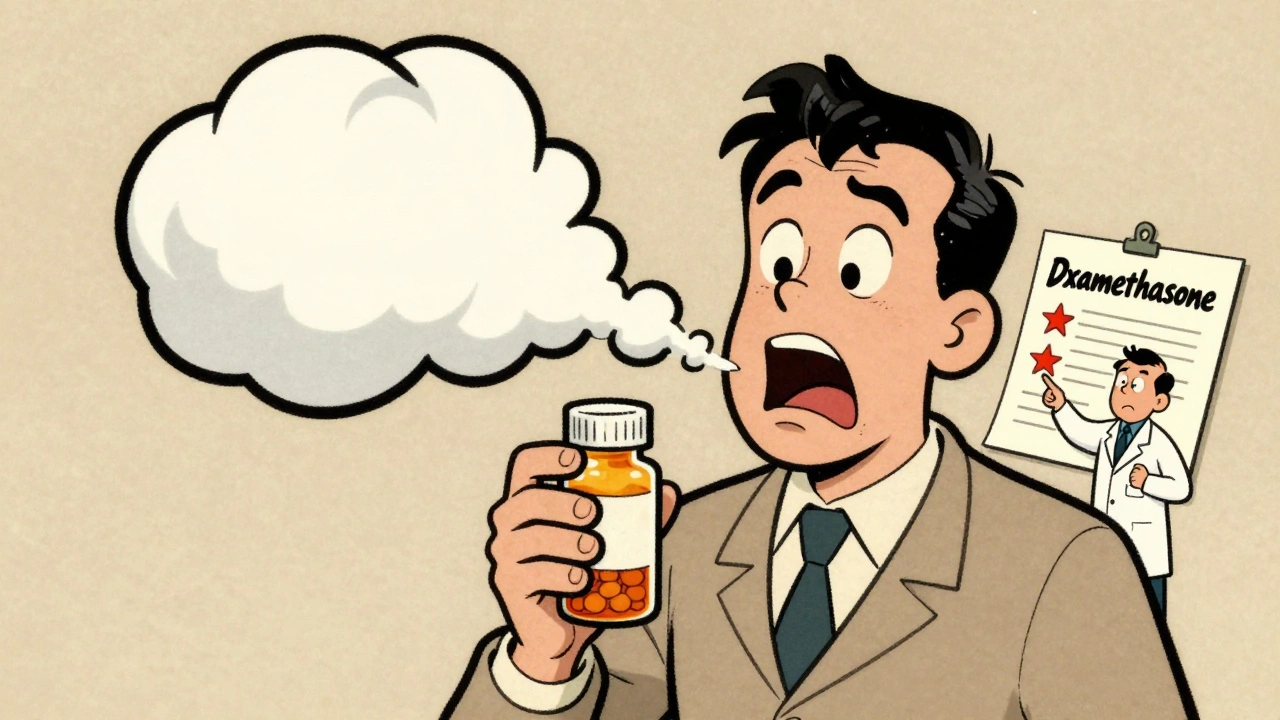
Many medications, especially steroids and opioids, can trigger persistent hiccups. Learn which drugs are most likely to cause them, what actually works to stop them, and how to talk to your doctor about this overlooked side effect.
full article